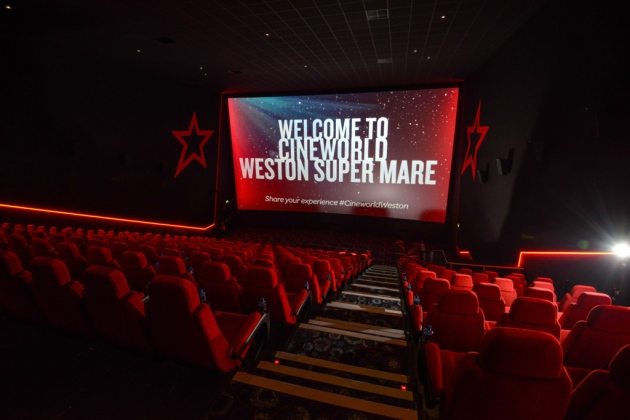
Odeon & UCI Cinemas Group took another step forward in their digital cinema rollout this week by announcing their selection of Unique Digital’s software suite to help them manage digital content and equipment in converted theatres.
With 1,802 screens spread across 202 venues in seven countries, Odeon is Europe’s largest cinema circuit. They are so large in fact, that Odeon struck their own virtual print fee (VPF) agreements with Hollywood studios. Rather than rely on a deployment entity such as Arts Alliance Media or XDC, Odeon is handling the rollout all on their own.
However, it wouldn’t make much sense for Odeon to build their own digital cinema management software. That’s where Unique Digital comes in. [Full Disclosure: I have ongoing business dealings with Unique]. Odeon has selected to deploy Unique’s Rosetta Bridge, a theatre management system (TMS) and Cinema Accord, a back office system focused on managing digital content, keys and VPF agreements.
Based in London, and with offices in Dublin, Ireland and Bergen, Norway, Unique is one of Europe’s leading providers of software and network solutions that give motion picture exhibitors the ability to manage and support their cinema operations, including all content and equipment. In February, Unique was selected by Norway’s Film & Kino to help convert 90% of the country’s movie screens to digital.
Read More »
Popularity: 2% [?]
Late last week Vue Entertainment, the United Kingdom’s third largest movie theatre chain, was sold to a private equity firm. Doughty Hanson & Co. will reportedly cough up GBP £450 million (USD $730 million) to take over the circuit. The news was picked up primarily by business and trade publications, though depending on how events play out it could actually prove to be rather significant.
Based in London, Vue began it’s life in 1998 as SBC International Cinemas. With backing from Boston Ventures, co-founder and chief executive Tim Richards had opened six theatres by 2003. That was the year SBC pulled off a huge coup by acquiring the much larger Warner Village Cinema chain for £221 million (USD $353.6 million) and rebranding the company as Vue Entertainment. With 42 venues and 384 screens Vue became the third largest exhibitor in the U.K.
Then in June of 2006, Vue announced a management buyout of the company. The Bank of Scotland helped finance the deal which was estimated at £350 million (USD $644 million). By that time Vue had grown to 544 screens across 55 cinemas. Vue’s executive team took a controlling 52 percent share of the company with Coller Capital Ltd. taking a 29 percent ownership and Och Ziff Capitam Managment Group holding a 19 percent stake.
Today Vue operates 68 cinemas accounting for 678 screens throughout the U.K. and Ireland. Over last several years the company has been responsible for about half of all the multiplexes built in the U.K. They also own one theatre in Portugal and another in Taiwan. But that number could soon grow quite rapidly. Bloomberg suggested that Vue might use some of the cash from the Doughty Hanson sale to buy the U.K.’s largest circuit, Odeon, or possibly Cineworld. Another scenario has Vue scooping up a European theatre chain outside the U.K. Of course, they could always expand by opening new cinemas.
Read More »
Popularity: 2% [?]
Executives at Walt Disney Studios must be breathing a huge sigh of relief having reached a deal with Odeon Cinemas in the United Kingdom and Italian exhibitors to show their upcoming tentpole release “Alice In Wonderland”. Additionally, Disney reached an accord with AMC Theatres to show the Tim Burton helmed film in North America when it is released on March 5th.
After announcing their plans to release “Alice In Wonderland” on DVD in June, just three months after its theatrical release rather than the usual four months, Odeon, the U.K.’s largest cinema chain, publicly threatened to boycott the film. So did exhibitors in Italy. AMC never made any public statements about a boycott, but delayed signing any agreement to show the film. Most of the details about the agreements were kept private by both parties, but according to a story in Variety, here is what we know:
- In the U.K. Disney will not begin advertising the DVD until six to eight weeks after the film hits theatres.
- In Italy, Disney will release three big movies during the summer, rather than waiting until fall. Traditionally, the summer box office grosses have been tepid compared with those in autumn. “Prince of Persia: The Sands of Time” will open on August 20th, while “Toy Story 3″ and “The Sorcerer’s Apprentice” will also open have summer playdates.
- Disney has extended the release of “Alice In Wonderland” on DVD from 12 weeksafter its theatrical to 13.
In the U.K., assurances were given that the studio won’t begin advertising for the DVD until six or eight weeks after the theatrical bow. It’s likely that exhibs elsewhere asked for the same terms.
Read More »
Popularity: 27% [?]
Surely Walt Disney Studios was hoping their upcoming release “Alice In Wonderland” would generate a lot of media attention before it hits theatres on March 5th, though they probably weren’t trying to create the kind of buzz the picture received over this past week. Theatre owners in North America and Europe protested when the studio announced it would move up the DVD release of the movie to early June, just three months after Tim Burton’s adaptation of Lewis Carroll’s classic is distributed theatrically.
The announcement was made on February 8th by Disney’s CEO, Bob Iger, during an earnings call and seemed to come as a surprise to many. A surprising number of newspapers, websites and radio shows beginning running numerous stories about the dispute just two days later and through the course of last week. In fact, the Los Angeles Times managed to sum up the latest battle over movie release windows rather nicely:
The flare-up illustrates how an arcane topic once only of interest to Hollywood executives can affect moviegoers around the world.
The L.A. Times, along with The Wrap, touched on the fact that studios have been meeting with key North American exhibitors (probably Regal Cinemas, AMC Theatres and Cinemark) to negotiate a deal on shortening theatrical release windows. These meetings weren’t done surreptitiously. In January John Fithian, President of the National Association of Theatre Owners, told attendees of the International Cinema Technology Association’s tech conference that theatrical windows would be changing to help studios maximize revenues from home releases:
“As a person who represents the cinema industry I’m not going to tell you that we’re very happy that that model is going to change, but it has to. But it has to change logically and it has to change with studios and exhibitors sitting down together and analyzing the models. It’s not a great secret, this is happening. Leading studio executives, leading cinema representatives are talking about what these models should look like. The good news is we’re all at the table talking. That’s much better and much more cooperative than if studio x decided just to abandon the model and release a major picture in the cinema and in the home roughly at the same time. That’s not going to happen. What’s going to happen is some scientific thinking and some research and a deliberative process to maximize the model for the studios without killing the model for exhibition.”
Read More »
Popularity: 29% [?]