


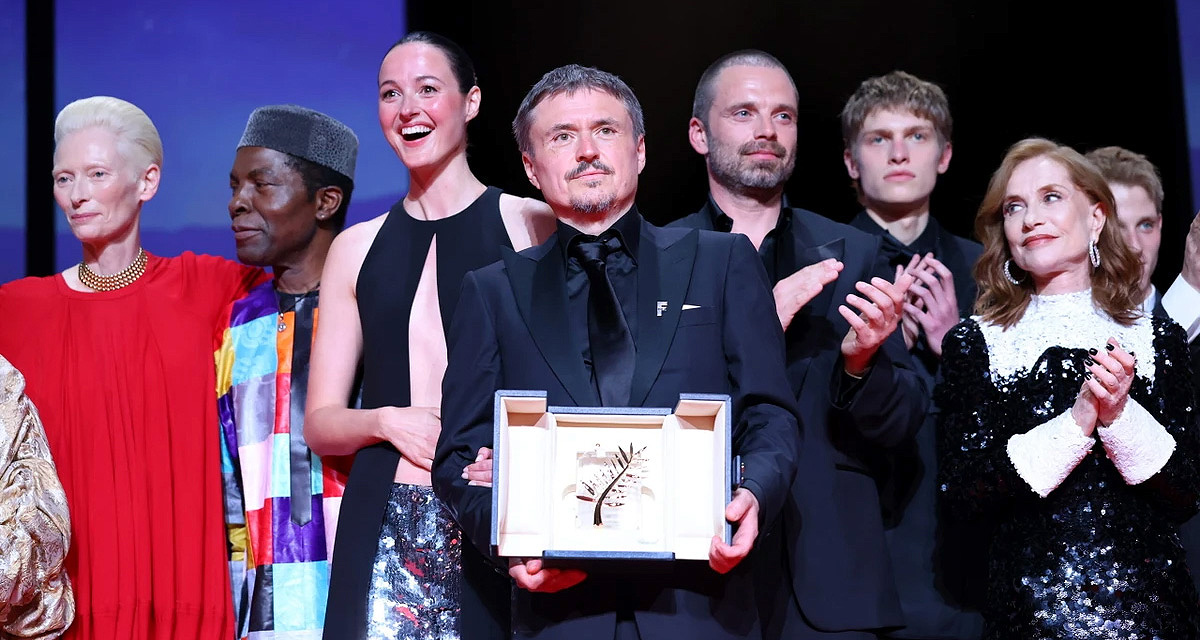
Cristian Mungiu’s “Fjord” was awarded the Palme d’Or at the 79th Cannes Film Festival on Saturday, May 23, giving the Romanian filmmaker his second win of the festival’s top prize, nearly two decades after “4 Months, 3 Weeks and 2 Days” took the Palme in 2007.
The Norway-set drama, starring Sebastian Stan and Renate Reinsve, centers on a Romanian family whose move to a Norwegian village exposes a widening gulf between cultural tradition, state authority and contemporary ideas of care, punishment and belonging. In a competition full of moral gray zones, geopolitical unease and families under pressure, “Fjord” gave the jury a work that felt both classically Cannes and very much of the current moment.
In accepting the award, Mungiu framed the film as a call for tolerance at a moment of ideological hardening. Speaking after the ceremony, he described “Fjord” as “a plea for tolerance, inclusion and empathy,” adding that people need to “double-check your beliefs every now and then” when confronting opposing views.
The win also extended one of the most unlikely streaks in modern specialty distribution: Neon has now backed the Palme d’Or winner for seven consecutive years, following “Parasite,” “Titane,” “Triangle of Sadness,” “Anatomy of a Fall,” “Anora,” “It Was Just an Accident” and now “Fjord.” At some point, a streak becomes less a coincidence than an acquisition strategy with unnervingly good timing.
This year’s competition jury was presided over by South Korean filmmaker Park Chan-wook, the first Korean artist to serve as Cannes jury president. He was joined by Demi Moore, Ruth Negga, Laura Wandel, Chloé Zhao, Diego Céspedes, Isaach De Bankolé, Paul Laverty and Stellan Skarsgård. Together, the nine-member jury selected the winners from 22 films in competition during a festival that ran from May 12 to 23.
At the jury’s post-awards press conference, Park offered the kind of deadpan candor one hopes for after nearly two weeks of Croisette solemnity. “Quite honestly, I really didn’t want to award the Palme d’Or to any film,” he said. “Why? Because I’ve never won one myself! But anyway, we had no choice! And of course, ‘Fjord’ definitely deserved the Palme d’Or.”
That line landed as a joke, but it also pointed to the task facing this year’s jury. The 2026 competition did not produce one overwhelming consensus title so much as a cluster of strong, difficult, politically alert films. The jury’s solution was to spread the wealth. Sometimes that can look like indecision. This year, with so many ties and shared awards, it also looked like a jury unwilling to pretend that one film, one performance or even one directing achievement had clearly settled the argument.
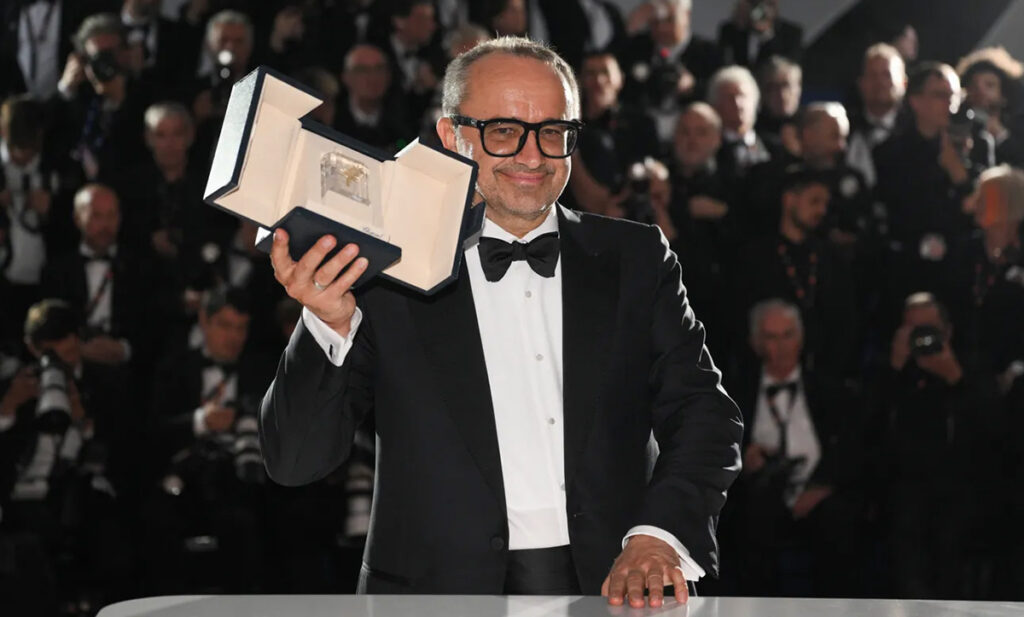
The Grand Prix, Cannes’ second-place prize, went to Andrey Zvyagintsev’s “Minotaur,” a Russian drama set against the backdrop of the war in Ukraine. Zvyagintsev used his acceptance speech to directly address Vladimir Putin, saying, “Put an end to this slaughter.” The moment gave the ceremony one of its clearest political charges, a reminder that Cannes may be a festival of cinema, but it has rarely been able, or willing, to keep the world outside the Palais.
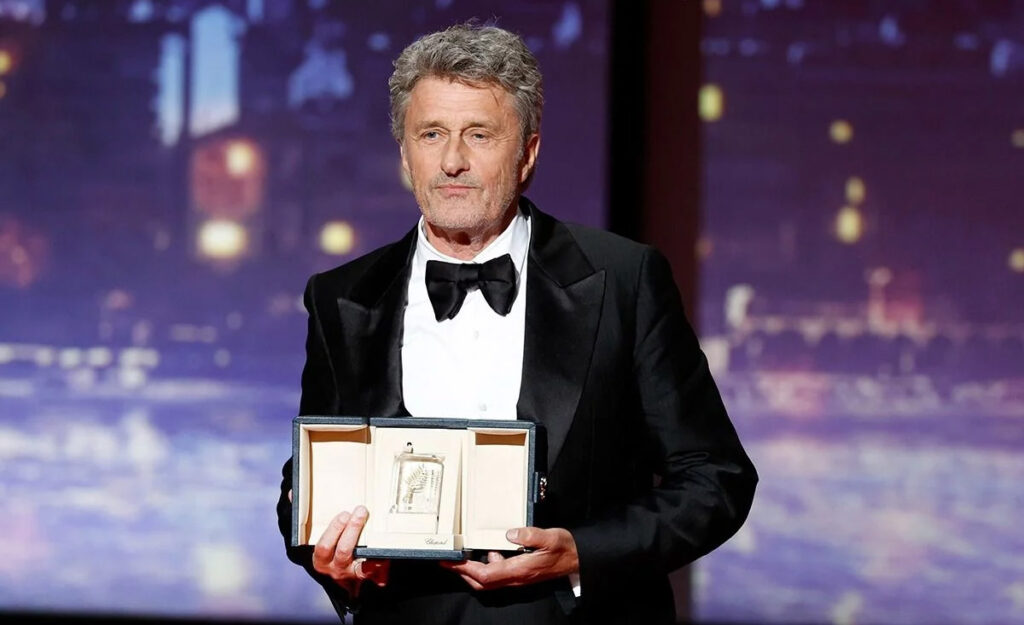
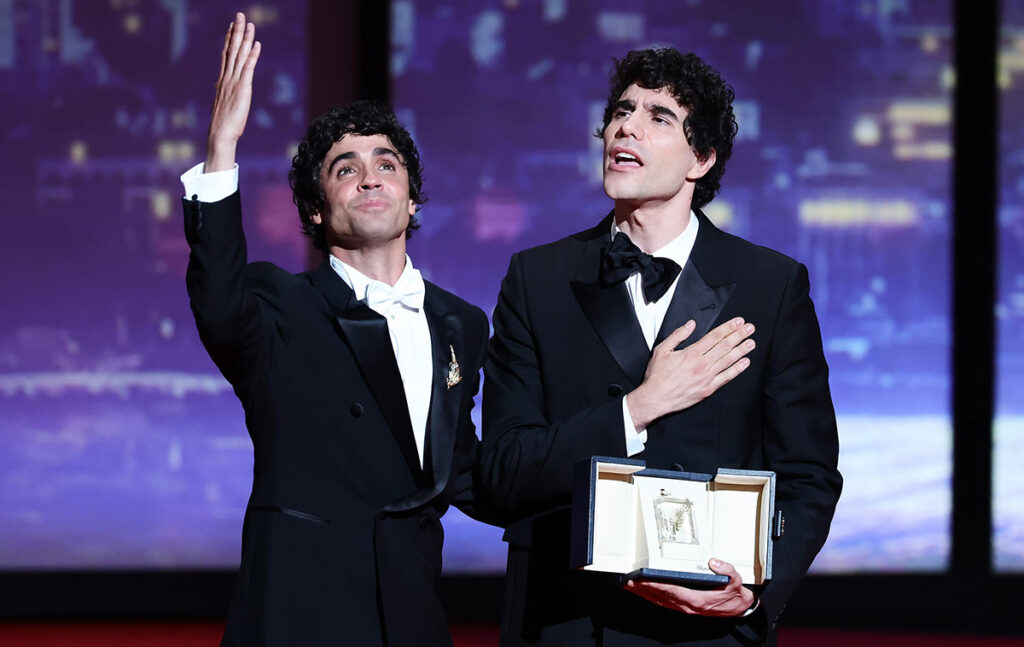
The Best Director Prize was shared by Paweł Pawlikowski for “Fatherland” and Spanish filmmakers Javier Calvo and Javier Ambrossi for “La Bola Negra.” For Pawlikowski, the award marked a return to a Cannes prize he previously won for “Cold War” in 2018. For Calvo and Ambrossi, better known collectively as Los Javis, it marked a major international breakthrough with their first Cannes competition entry.
The split may have been the first real indication that Park’s jury was less interested in hierarchy than in mapping the contours of its own enthusiasm. Pawlikowski and Los Javis do not exactly occupy the same cinematic neighborhood. One represents a severe, formalist European tradition; the other a more expansive, contemporary Spanish sensibility. Awarding both was either a compromise or a statement and, in Cannes terms, those are often the same thing.
The Jury Prize went to Valeska Grisebach’s “The Dreamed Adventure”, while Emmanuel Marre won Best Screenplay for “A Man of His Time.” The CST Award for Best Artist-Technician also went to “A Man of His Time” editor Nicolas Rumpl, with the commission praising the film’s “subtle editorial choices.”
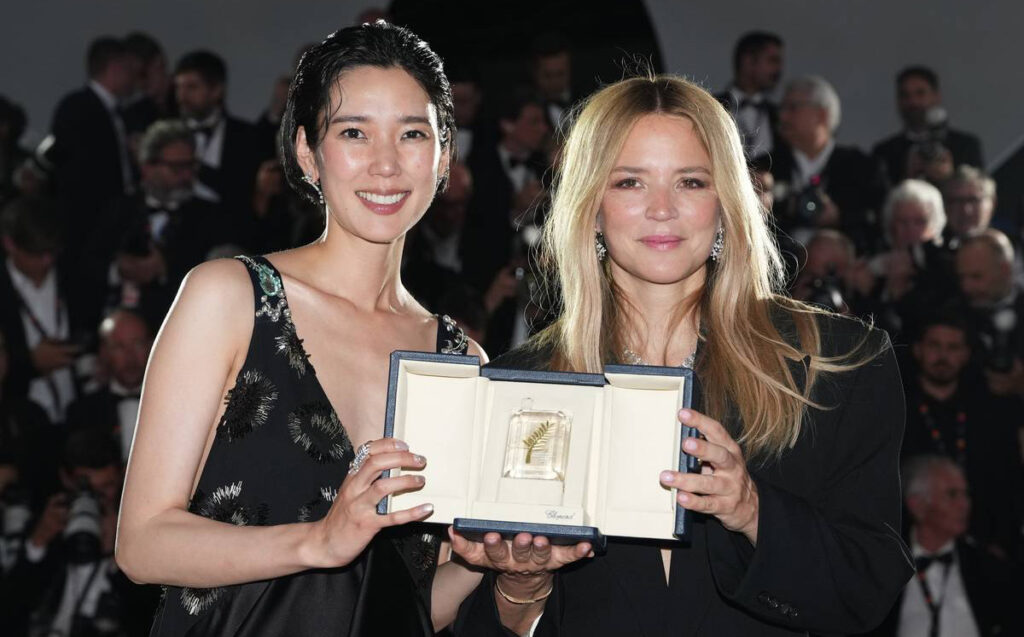
Both acting prizes were shared as well. Virginie Efira and Tao Okamoto won Best Performance by an Actress for Ryusuke Hamaguchi’s “All of a Sudden”, while Emmanuel Macchia and Valentin Campagne won Best Performance by an Actor for Lukas Dhont’s “Coward.” The double-duo result gave the evening the faint air of a jury that had started handing out prizes and then realized it did not want to stop. Yet the explanation made sense. Chloé Zhao said the jury was moved by “the tenderness in the relationships depicted in these films,” adding, “We fell in love not only with the actors but especially with the loving relationships we saw on screen.”
In his own remarks, Macchia said he hoped “Coward” would help young people “learn to love themselves,” a sentiment that fit neatly with the jury’s stated interest in performances built not around star turns, but around emotional connection. Cannes acting prizes can sometimes feel like coronations. This year they felt more like acknowledgments of chemistry — of performances that only fully existed in relation to another person.
Beyond the main competition, the Caméra d’Or, awarded to the best first feature across the festival’s sections, went to Marie-Clémentine Dusabejambo’s “Ben’Imana,” the first film from Rawanda to ever be selected by Cannes. The Short Film Palme d’Or was awarded to Federico Luis for “Para Los Contrincantes.”
In Un Certain Regard, Sandra Wollner’s “Everytime” took the section’s top prize. Abinash Bikram Shah’s debut feature “Elephants in the Fog” won the Jury Prize, while Louis Clichy’s “Iron Boy” received the Special Jury Prize. Bradley Fiomona Dembeasset won Best Actor for “Congo Boy,” and the Best Actress award was shared by Marina de Tavira, Daniela Marín Navarro and Mariangel Villegas for Valentina Maurel’s “Siempre Soy Tu Animal Materno.”
The 2026 edition opened on May 12 with “The Electric Kiss” and unfolded under a festival poster honoring “Thelma & Louise,” featuring Susan Sarandon and Geena Davis from Ridley Scott’s 1991 Cannes closer. Geena Davis appeared during the closing ceremony, while Barbra Streisand, who had been due to receive an honorary Palme d’Or, was honored in absentia after a knee injury prevented her from traveling.
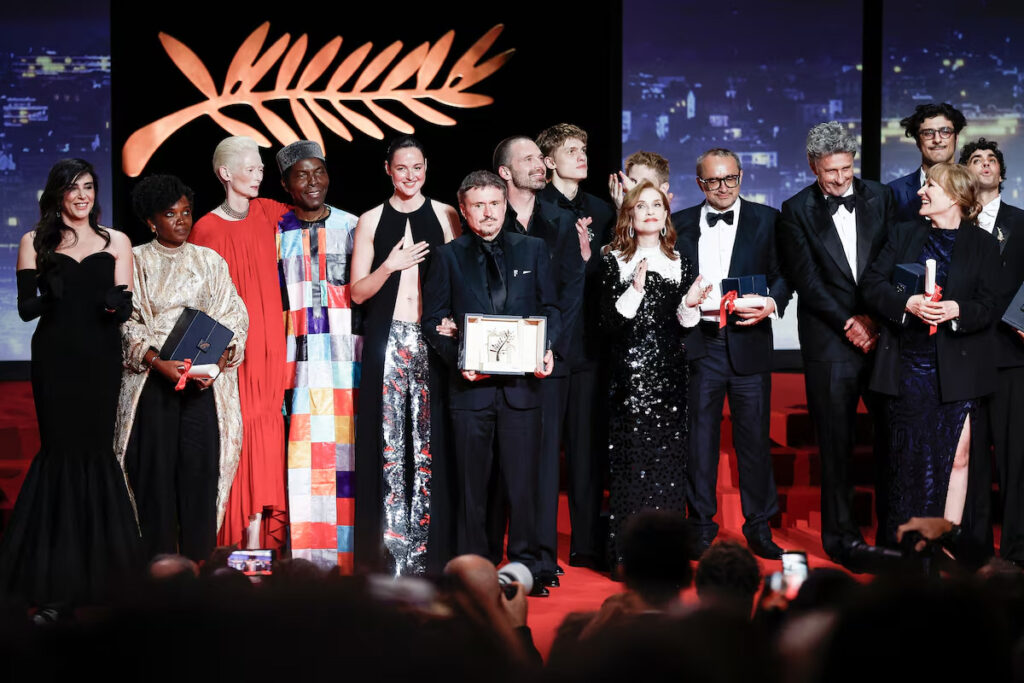
If the festival’s 79th edition did not deliver the kind of broad Hollywood presence or consensus breakout that sometimes defines Cannes, its final awards reflected a familiar Croisette pattern: politically engaged cinema, fiercely authored films and a jury willing to divide the spoils rather than anoint a single dominant narrative.
At the jury press conference, Ruth Negga likened the experience to “one masterclass after another,” while Isaach De Bankolé described the jury room as “a microcosm, a tiny world made up of nine people with their own ideas and suggestions.” He added that the group came away with “even more ideas,” and spoke of the value of listening and, when necessary, changing one’s mind. That may be the most generous way to read this year’s abundance of shared prizes. Less a failure to choose than a public record of the jury’s internal negotiations.
For Mungiu, however, the night ultimately belonged to a very select club. With “Fjord,” he became only the tenth filmmaker to win the Palme d’Or twice, joining a lineage that Cannes reserves for artists whose work does more than survive the Croisette’s pressure cooker. It leaves with the festival’s highest endorsement — and, thanks to Neon’s remarkable run, with a ready-made awards-season narrative already waiting on the other side of the red carpet.

- The Paramount-Warner Merger Is Permanent. The Guardrails for Movie Theatres Are Not - September 22, 2026
- Cinemas Aren’t Just Marketing Movies Anymore. They’re Marketing Auditoriums - September 15, 2026
- The Cinema Concession Stand Is Becoming a Marketplace - September 11, 2026