


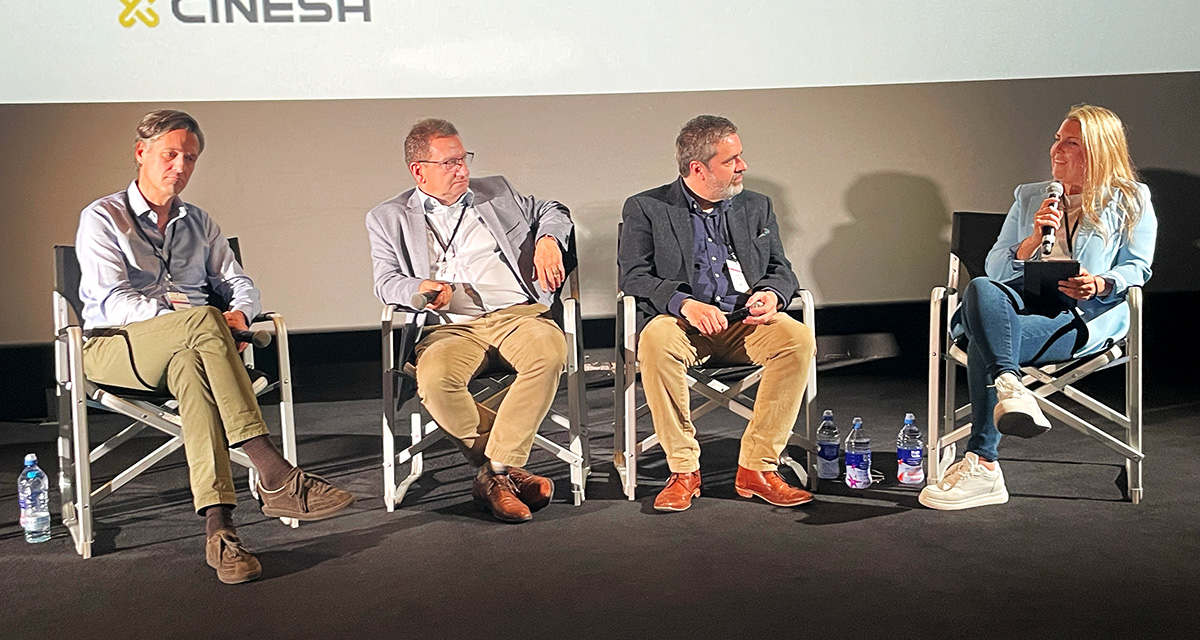
Three award-winning cinema operators at the 2026 ICTA Barcelona Cinema Technology Experience explain why memorable design, hospitality and flawless execution increasingly matter as much as what appears on the screen.
When cinema executives talk about competition, the conversation usually turns to streaming. Netflix. Disney+. The endless supply of entertainment now available from the comfort of the living room.
Karl Geraghty has a different view.
“Netflix doesn’t worry me at all,” said the head of Stella Cinemas. “The theatre down the road worries me more than Netflix.”
Geraghty was speaking during the International Cinema Technology Association’s Barcelona Cinema Technology Experience as part of a panel featuring the organization’s 2025–2026 EMEA Award winners. Moderated by CinemaNext’s Araceli Vaello, the discussion brought together Geraghty; Gregory Theile, CEO of Germany’s Kinopolis Group; and Tomasz Jagiełło, CEO of Poland’s Helios Cinemas.
Their companies operate very different businesses: a single-screen destination cinema in Dublin, a major multiplex circuit in Poland and a technologically ambitious new-build cinema in Hamburg. Yet they arrived at remarkably similar conclusions about what makes audiences choose one cinema over another – and, increasingly, what makes them leave home in the first place.
Competing for the Entire Evening
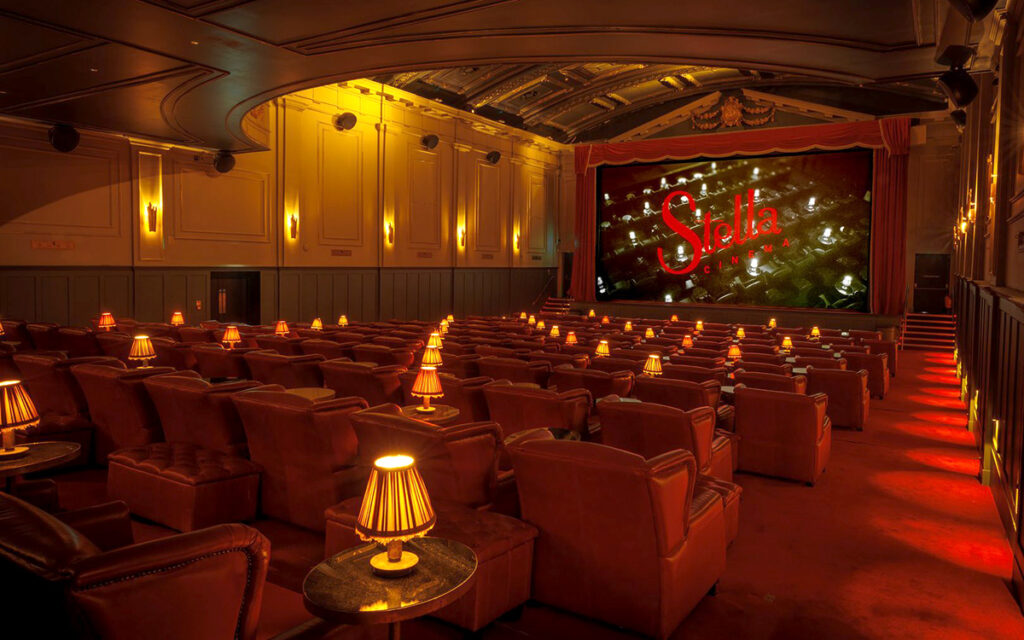
For Geraghty, Stella Cinema is competing not only with other cinemas, but with restaurants, cocktail bars, theatres, concerts and every other leisure activity vying for consumers’ limited time and discretionary income.
Stella’s goal is therefore not simply to show a film. It is to become the place people choose for the entire evening.
“We don’t just want “The Devil Wears Prada’ to do well,” Geraghty said. “We want Stella to be the ultimate place to go and see it.”
That philosophy influences everything from food and beverage to marketing and customer service. With only one screen, Stella may attract a completely different audience from one week to the next. The cinema therefore adjusts its cocktails, promotions and style of engagement to complement each film and the customers likely to attend it.
“The experience we’re selling for ‘The Devil Wears Prada’ would be very different from the experience we were selling for ‘Hamnet,’” Geraghty explained. “We have to pair the experience with the film.”
At Stella, that proposition is marketed as “a proper night out.”
“People will get dressed up to come to Stella,” Geraghty said. “They’re going to us because of the cocktails, the food and the level of service. That is what we sell.”
The Experience Is Only as Strong as Its Weakest Touchpoint
The emphasis on hospitality was notable given the setting. This was, after all, a cinema technology conference. Yet throughout the discussion, technology repeatedly took a supporting role to design, service and the complete customer journey.
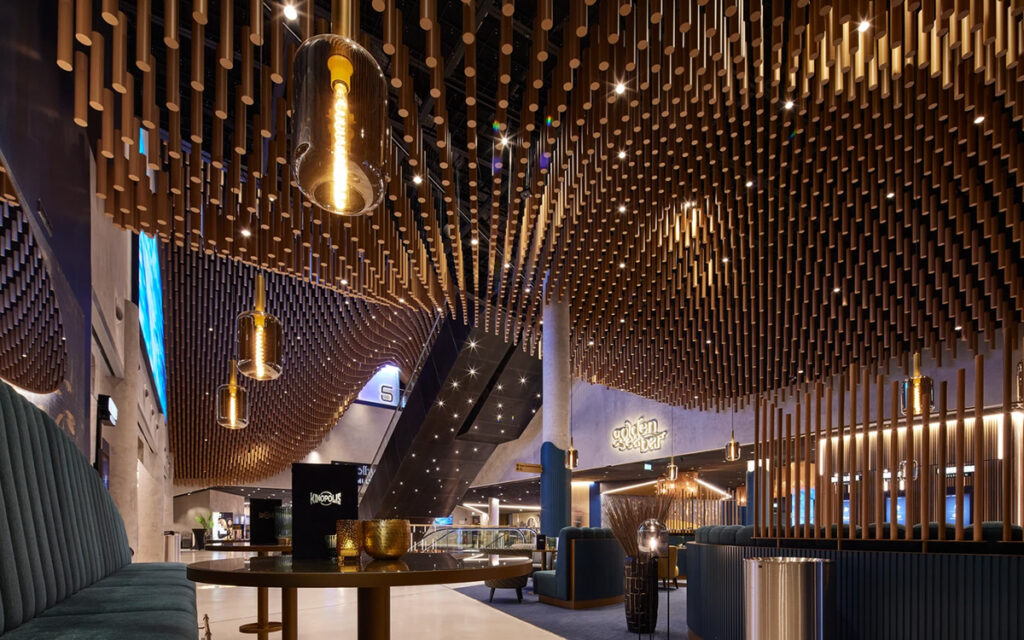
That did not mean technology was unimportant. Theile stressed that excellent projection and sound remain essential. Kinopolis’ award-winning HafenCity cinema in Hamburg includes the city’s only Dolby Cinema and its only auditorium with D-BOX seating.
But technical excellence alone cannot rescue a disappointing visit.
“The experience is always as strong as the weakest touchpoint,” Theile said. “You might have 4K laser projection and Dolby Atmos, but if the waiting line is too long, if the app doesn’t work or if the restrooms aren’t clean, people will leave the cinema saying it wasn’t worth the money.”
Content can bring audiences through the doors despite an unremarkable building, Jagiełło acknowledged. But exhibitors cannot assume that will be enough to build loyalty.
Theile made a similar distinction.
“If you have the best and most modern theatre but you don’t have the content, nobody will show up,” he said. “The other way around, they might come once, but not a second time if the experience doesn’t meet their expectations.”
Creating Places People Want to Share
Jagiełło argued that moviegoing has become less habitual since the pandemic. Audiences increasingly respond to individual titles and the urgency created by concentrated marketing campaigns.
“People go to see the movie, not to go to the cinema,” he said.
That makes it more important for the cinema itself to become a destination – an interesting place where customers want to spend time and tell others they were there.
“Cinema must become a place people like to visit,” Jagiełło said. “They want to take a photograph and inform their friends that they are here, and their friends want to be there as well.”
Helios now considers social-media shareability when developing new projects. At one cinema, a decorative wall made from vintage VHS tapes became an unexpectedly popular backdrop for customer photographs.
“It has nothing to do with technology,” Jagiełło said. “It’s just an idea – creating funny, entertaining places where people would like to take a picture.”
Kinopolis approached its HafenCity cinema with a similar goal. Customers reach the lobby by escalator beneath a dramatic ceiling installation made from approximately 9,000 suspended tubes. The visual surprises continue through the bar and into auditoriums that have each been given a distinct design.
“It’s about surprising customers,” Theile said. “It’s about surpassing their expectations.”
He cautioned, however, that exhibitors should not simply install an obvious “selfie point” and expect customers to cooperate.
“The customer won’t take the bait,” Theile said. “It’s really the whole surrounding. They have to feel it.”
The most effective social-media marketing is therefore organic: a photograph of a cocktail, a glimpse of an auditorium or some other detail that communicates that a customer is enjoying an experience worth sharing.
For Stella, that peer-to-peer recommendation is particularly valuable.
“I don’t think most of our audience are necessarily going to Stella because of the company or because of me,” Geraghty said. “They’re going to go because their friends have told them, ‘This is the experience.’”
Premium Must Be Something Customers Can Feel
The panelists also questioned whether the cinema industry sometimes overestimates audiences’ understanding of technical specifications.
Jagiełło framed the issue in practical terms: Which investments will customers actually pay more to experience?
“People are ready to pay for recliners,” he said. “They’re not ready to pay extra for sound. They’re not ready to pay extra for picture quality.”
Customers may pay more for a recognized premium brand that incorporates superior projection and sound, Jagiełło added, with IMAX providing the clearest example. In that case, audiences understand and trust the overall proposition without necessarily knowing how the technology works.
Theile agreed that exhibitors and suppliers can become too focused on specifications.
“We overestimate the capability of our customers to understand what we are doing,” he said. “They have no idea about nits, foot-lamberts or resolution.”
There remains an audience for distinctive technologies, especially when a cinema offers something unavailable elsewhere in its market. But visible or tangible improvements – recliners, additional space, comfort and hospitality – are often easier to communicate and monetize.
The cinema industry may also be concentrating too much of its innovation inside auditoriums.
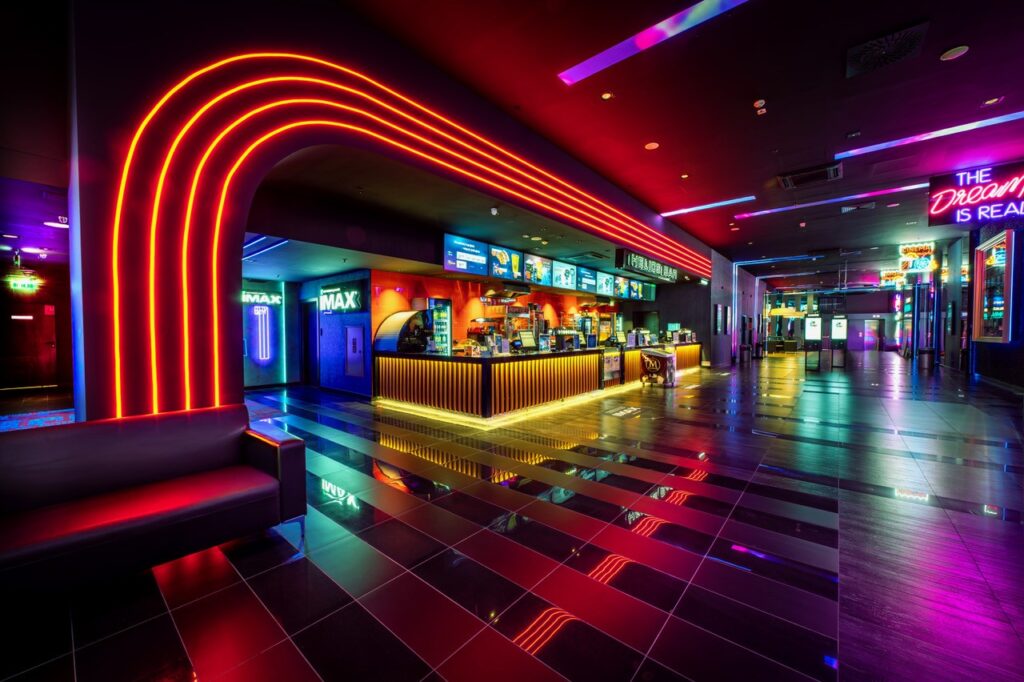
“I’m missing lobby solutions,” Jagiełło told the technology suppliers in the room. “Everyone is focused on the screen, the picture, the sound and the chairs. But the experience is not only here. The experience starts at the door.”
Charging More Without Leaving Audiences Behind
All three exhibitors supported charging appropriately for better experiences, though their different business models produced very different pricing realities.
Stella charges EUR €23 (USD $26) for a standard ticket, which Geraghty said is by far the highest cinema ticket price in Ireland. Nevertheless, the 215-seat venue regularly sells out.
“I don’t see any reason why cinemas should be paid less, or why people should pay less for cinemas,” he said. “But we have to up our experience. We have to up our game.”
Helios operates in a market where tickets generally range from approximately EUR €5 to EUR €10, with the upper end reserved for a genuinely premium experience. Jagiełło said pricing data showed that some customers would adjust the day or time of their visit to secure a lower price, while a much larger group appeared relatively insensitive to such differences.
That creates room for a broader price range, preserving affordable entry points while charging more for experiences with clearly higher value.
“Premium must be premium to stay premium,” Jagiełło said. It also requires standard auditoriums and standard seating against which that premium can be measured.
Theile likewise warned that the industry cannot allow cinema to become unaffordable. Operators need premium options capable of commanding EUR €17, EUR €18 or EUR €20 while also maintaining prices that allow families and more cost-conscious customers to attend.

The Refurbishment Trap
Behind the discussion of design, technology and pricing was a more difficult economic problem.
Many multiplexes are now between 20 and 25 years old. They remain profitable, Jagiełło said, but not profitable enough to finance the substantial investment required to transform them for contemporary audiences.
“Most investment goes to prime locations and prime cities,” he explained. “There are thousands of cinemas where there are simply not enough resources to transform them.”
The result is a refurbishment trap: buildings that generate enough money to continue operating in their present form, but not enough to fund the changes needed to remain competitive over the long term.
“If we do not adapt and if we do not change, many cinemas will have no road for further activity,” Jagiełło warned.
That challenge extends well beyond Poland. Across mature cinema markets, exhibitors are confronting venues that still function but no longer surprise, delight or provide audiences with a compelling reason to choose them over every other possible night out.
The panel offered no single formula for overcoming that problem. A boutique cinema in Dublin cannot be operated like a national circuit in Poland, nor can every existing multiplex reproduce the architecture or technology of a new-build venue in Hamburg.
What the three operators shared was a belief that investment should begin with a clear understanding of what customers value – not with a checklist of what a modern cinema is assumed to require.
Content remains essential. Technology is fundamental. But audiences judge the evening by everything surrounding them: the building, the seating, the service, the cocktails, the queue, the app and even the restrooms.
Award-winning cinemas are not necessarily created by doing more. They are created by making better choices.
And their competition is not simply Netflix or the multiplex across town. It is every other memorable way a customer could spend the evening.
Editor’s note: This feature is part of Celluloid Junkie’s coverage of the 2026 ICTA Barcelona Cinema Technology Experience. See more reporting from the seminar below.
More from ICTA Barcelona

- The Paramount-Warner Merger Is Permanent. The Guardrails for Movie Theatres Are Not - September 22, 2026
- Cinemas Aren’t Just Marketing Movies Anymore. They’re Marketing Auditoriums - September 15, 2026
- The Cinema Concession Stand Is Becoming a Marketplace - September 11, 2026