


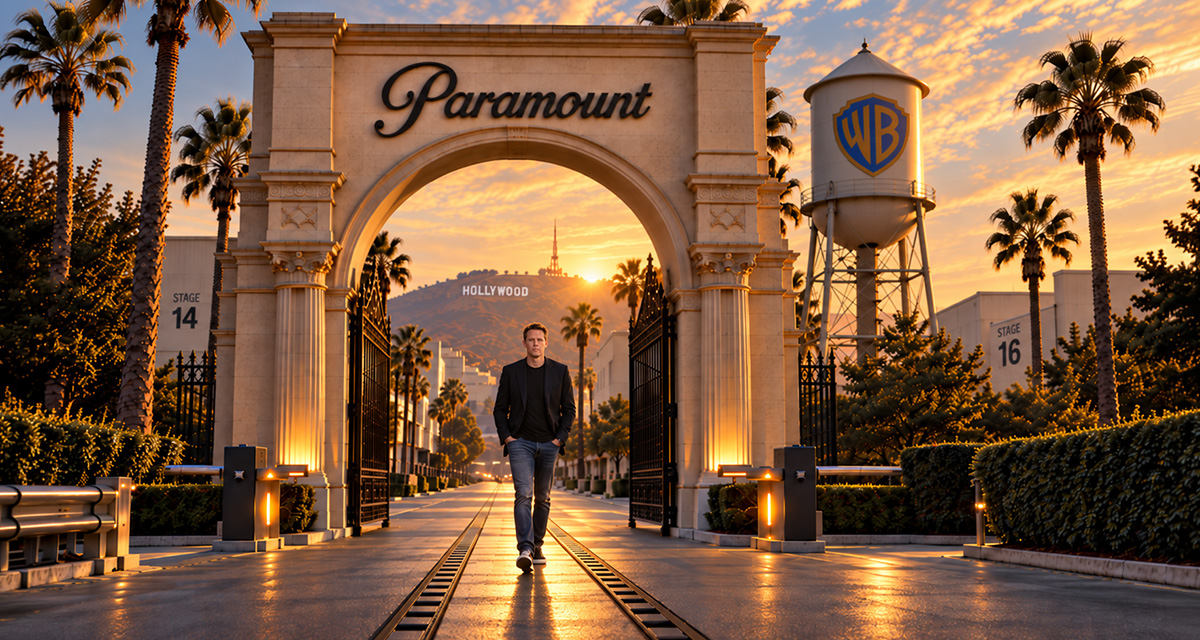
The state settlement puts theatrical output, windows, rental terms and catalogue access into a court order, but allows a permanent merger to close without the structural remedies California and the other state attorneys general once demanded.
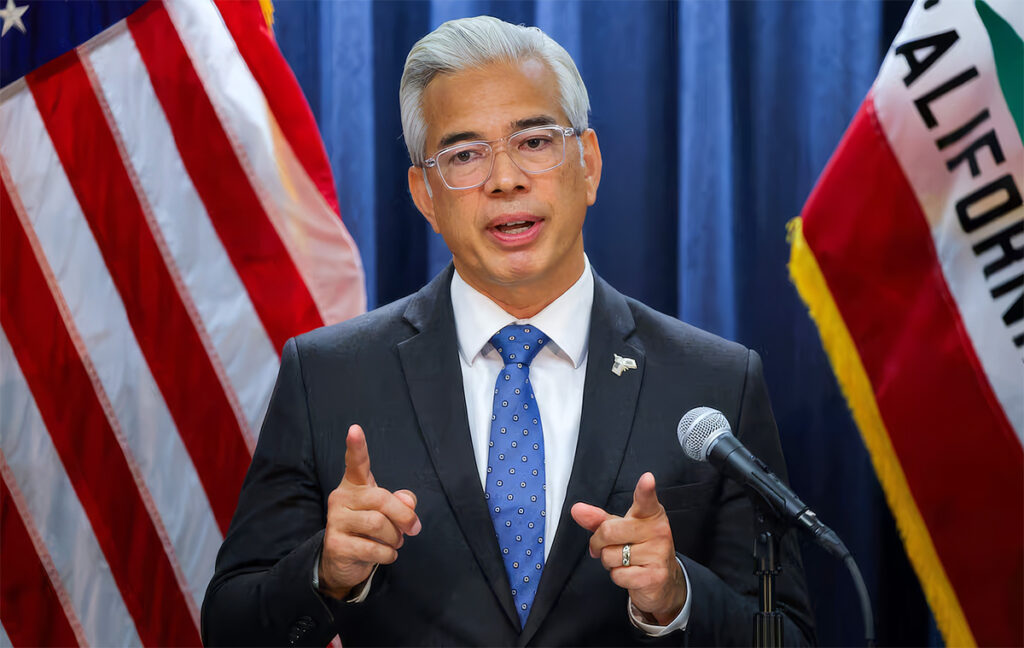
California Attorney General Rob Bonta had a peculiar assignment on Monday: announce the settlement in his antitrust lawsuit that effectively clears the way for Paramount Skydance to acquire Warner Bros. Discovery while making clear that he still does not think the two companies should merge.
“This settlement is not a vote of support for this merger,” Bonta said at a September 21 press conference. His written statement was similarly careful, calling the agreement “the best course of action” rather than suddenly discovering virtues in combining two of Hollywood’s five remaining major film distributors.
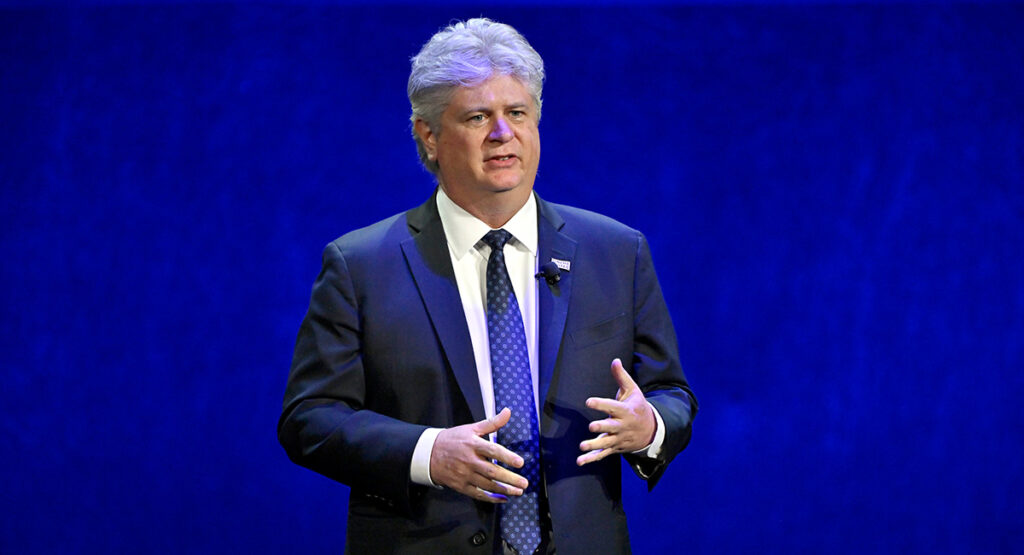
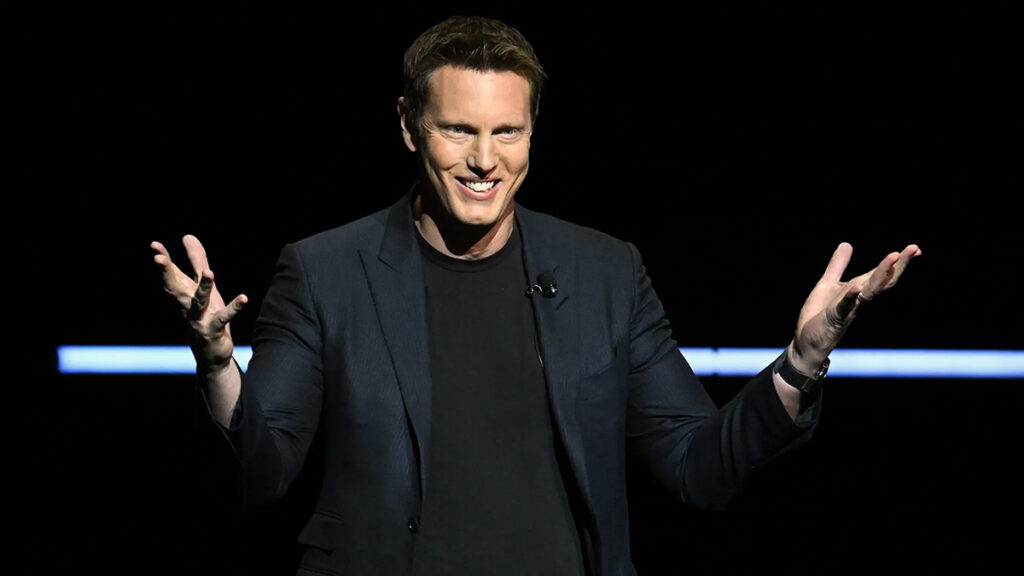
Paramount CEO David Ellison sounded significantly less conflicted. In a memo to employees after both the states and Writers Guild of America settled their antitrust lawsuits, Ellison said Paramount now has “complete clearance for this merger” and expects the transaction to close in approximately two weeks.
Between those two statements lies one of the most consequential Hollywood antitrust settlements in decades.
This was a merger much of Hollywood did not want, involving a company whose last several decades have already been defined by difficult combinations, restructurings and breakups. Cinema operators did not get the merger stopped. More than 5,000 actors, directors, writers and other industry workers signing a public letter did not get the merger stopped. The Writers Guild did not get the merger stopped. Ultimately, a lawsuit brought by 12 state attorneys general did not get the merger stopped either.
What those efforts did produce was a set of protections intended to cushion some of the consequences — for a while.
And before getting to what movie theatres received, it is worth stating what Bonta did not get; There is no structural remedy that Paramount must undertake before it can acquire Warner Bros.
No studio is being spun off. No cable network must be sold. Warner Bros. Pictures and Paramount Pictures are not required to remain separately controlled competitors. The merger closes intact.
That is rather noteworthy for a case in which Bonta repeatedly argued that a structural competitive problem required structural remedies rather than promises about future corporate behavior. Instead, the structural remedies wound up becoming the punishment if Paramount violates the behavioral remedies Bonta once said were insufficient.
But we’ll come back to that.
This Time, They Put It in Writing
For theatrical exhibition, the settlement is considerably more substantial than the headline promise that Paramount-Warner will release “30 movies a year” suggests.
For cinema operators, the headline terms of the proposed five-year consent decree are unusually specific:
- 30 theatrical releases annually for years one and two, rising to 32 for years three through five
- At least 20 wide releases annually, rising to 21, with “wide” defined as 2,000 screens
- A 45-day exclusive theatrical window and 90-day SVOD holdback
- At least 20% of the slate must have production/acquisition budgets of at least $50 million and reach 3,000 screens
- Marketing support comparable to similar releases
- Three years of protection around existing film-rental terms
- Five years of continued access to the Paramount and Warner Bros. catalogues
- USD $30 million per-film consequences for output shortfalls, with Miramax divestiture after an uncured breach
Just as important are the anti-gaming provisions behind those headlines. A film released on fewer than 600 U.S. screens does not count unless it expands to 1,000 within 30 days. Re-releases, commemorative editions and repackaged versions of previously released intellectual property do not count at all. At least four films each year must qualify as Independent Films, though the definition is considerably looser than the label implies: any film based on an original screenplay qualifies, even if developed and financed entirely in-house. The word “independent” is doing some unusually heavy lifting. Separately, the decree creates a USD $5 million-a-year fund to acquire independent films. And at least half of the annual slate must be produced or jointly produced by the combined company — a qualification that becomes important later. The decree also calls its USD $50 million/3,000-screen titles “tentpoles,” a fairly modest budget threshold for what the industry usually means by that word.
For anyone who has spent the past decade listening to theatrical promises made during studio mergers, the important difference is obvious.
This time, somebody put them in writing. In an industry where assurances have become a depreciating asset, that is incredibly important, even if it does not make the underlying consolidation any easier to trust.
That matters given that movie theatre owners have been here before.
When Disney acquired 21st Century Fox in 2019, exhibitors repeatedly warned that combining two major suppliers of theatrical films would eventually mean fewer films and greater negotiating leverage for the surviving studio. The state attorneys general later cited what happened next: Disney and Fox averaged roughly 28 wide releases every single year before combining; from 2022 through 2025, the merged company released 54… in total.
The lesson exhibition carried forward from Disney-Fox was not simply that studios sometimes make optimistic promises before mergers. It was that those promises have limited value once the merger is complete and the negotiating leverage has changed.
Cinema United’s position earlier this summer was therefore remarkably specific. The trade association wanted a long-term commitment to theatrical output backed by meaningful exclusivity and marketing; protection against higher film-rental terms; safeguards ensuring theatres of all sizes could obtain films without programming restrictions that undermined local decision-making; and continued reasonable access to both studios’ libraries.
The state settlement meaningfully addresses three of those four demands, with perhaps the most consequential being film rental.
For the first three commitment years, Paramount-Warner must maintain rental terms consistent with the pre-merger “best practices” of Paramount and Warner Bros. for each exhibitor. The language includes honoring existing rental rates and terms and establishing a benchmark based on the terms each studio offered that same exhibitor before closing.
That is not a universal film rental freeze, and it does not mean a single-screen independent suddenly receives AMC’s economics under a most-favored-nation deal. What it does is anchor each exhibitor to its own pre-merger relationship with Paramount and Warner Bros. and attempts to prevent the combined company from immediately using its increased leverage to impose materially worse terms. The precise application of the decree’s “higher of the rental rate schedule” language will bear watching, even if the verbiage is convoluted.
For theatre owners who remember the rental changes that followed Disney-Fox, that is not a minor provision.
The decree also requires both Paramount and Warner Bros. film catalogues to remain available to exhibitors throughout the commitment period on terms broadly comparable to those offered during 2025, with limited exceptions around major reissues.
Cinema United President and CEO Michael O’Leary was broadly positive about the settlement, saying the agreement “accomplishes many of exhibition’s objectives.” He pointed to increased film production, theatrical exclusivity and wide distribution, protection against cost increases and continued access to both studios’ catalogues, while acknowledging that “no settlement can eliminate all risk from a merger of this size.”
Notably absent from O’Leary’s statement was Cinema United’s earlier demand for broad film access and programming autonomy for theatres of every size. The decree contains no comparably explicit prohibition on minimum-play requirements, clean-screen demands or other booking conditions that can be particularly burdensome for smaller operators. That omission matters beyond this deal: had such limits been written into a federal consent decree, they could have established a benchmark other distributors would have had a much harder time ignoring.
Thirty Movies Is Not Thirty Paramount-Warner Productions
There is another important distinction buried beneath the whole “30 movies” clause.
The decree requires Paramount-Warner to release 30 films in the first two years and 32 thereafter. It only requires half of them to be produced or jointly produced by the combined company.
Thirty movies sounds somewhat different once you read the verbs.
In the first two years, only 15 must be produced or co-produced by Paramount-Warner. In the final three years, the number is 16. A Legendary-style arrangement in which an outside company originates or substantially finances a project while Warner participates as co-producer and distributor can satisfy that requirement. The remaining films can be acquired for distribution.
That may be perfectly satisfactory to a theatre owner whose immediate concern is having attractive movies to put on screens. A ticket buyer does not particularly care which corporate balance sheet financed the negative cost.
But it matters enormously when analyzing what the merger does to Hollywood’s industrial structure. The decree guarantees a pipeline of movies. It does not guarantee the survival of the two independent studio pipelines that existed before the merger. Again, see Disney-Fox for how that turned out.
There is no requirement that Paramount Pictures and Warner Bros. Pictures maintain separate greenlight processes, acquisition departments, distribution strategies or corporate priorities. One independent buyer of scripts, talent and projects still disappears when the companies combine. That means ParaBros or Warnermount or whatever the name of the new company is, may be trying to make more movies than they do today, with what will likely be fewer human resources.
The first two years’ 30-film floor is also less expansive than it might sound. Paramount itself said earlier this year that it planned 15 theatrical releases in 2026 and that Warner Bros. also had 15 on its calendar. In other words, the initial 30-film commitment largely makes the combined companies’ already-planned level of output enforceable rather than requiring an immediate increase above it. The meaningful additions are the definitions, release thresholds, windows, marketing requirements and enforcement provisions surrounding that number.
The Exhibitors Who “Flipped”
The settlement is already producing a convenient narrative in which theatrical exhibitors — particularly AMC, Regal and Cinemark — helped collapse the states’ case by switching sides.
There is some truth buried inside what is surely convenient shorthand. Bonta’s lawsuit alleged that the merger would harm theatres. When the three largest U.S. circuits individually reached accommodations with Paramount and publicly supported a negotiated path toward closing, the states were left arguing that exhibition needed protection while several of its largest companies were saying they had found a way forward.
That unquestionably complicated the litigation. But saying exhibitors simply “flipped” mistakes a negotiation for an ideological conversion. AMC, Regal and Cinemark appear to have reached the practical conclusion that Paramount would probably acquire Warner Bros. one way or another. They used the period in which Ellison badly needed industry support to negotiate commitments before the merger closed.
While AMC has the size and financial might to protect AMC, a regional circuit with 30 screens — much less an independent operator with one or two — cannot negotiate with Paramount from remotely the same position.
That imbalance is precisely why Cinema United’s August position mattered. The trade group did not endorse the merger. It said that if Bonta and Paramount were going to negotiate a resolution, any settlement needed protections covering output, windows, film rental, booking practices and catalogue access across the exhibition market.
As we previously detailed, Cinema United changed tactics. It did not suddenly announce that eliminating one of five major theatrical distributors was a wonderful idea. That nuance has been increasingly lost as the merger reaches the finish line.
The decisions by AMC, Regal and Cinemark unquestionably made Bonta’s case harder. It is difficult to argue that theatres need protection from a transaction their three largest operators have decided they can live with. But blaming exhibitors for the settlement confuses a loss of leverage with the decision to settle. Exhibitors did not settle the lawsuit. Twelve attorneys general did.
The Structural Remedy That Became a Penalty
Which brings us back to the biggest contradiction in the agreement.
Bonta spent weeks distinguishing between behavioral promises and structural remedies. On September 18, just days before settlement, Reuters reported that he continued to regard structural remedies as the most effective way to protect competition.
Yet, the final decree requires no structural change before Paramount acquires Warner Bros. Instead, the agreement contains two possible future divestitures.
If Paramount-Warner fails to hit the annual theatrical-release requirement, it gets six months to cure the shortfall. If it still fails, the combined company must divest its ownership interest in Miramax. Separately, Paramount owes USD $30 million for every missing film, whether or not the shortfall is subsequently cured. None of that money goes to exhibitors: 50% goes to union health and retirement trusts, 40% to the Motion Picture & Television Fund and 10% to the National Association of Attorneys General Fund. In other words, it is a deterrent, not a make-whole remedy for the theatre that did not get the movie.
Should Paramount eventually fail to release enough movies, the answer to excessive studio concentration is therefore, apparently, to sell Miramax.
Sure, Miramax possesses a valuable library and recognizable intellectual property, of which Paramount owns a 49% stake. What it does not possess is anything resembling the scale, distribution infrastructure or current production output of Warner Bros. Pictures or Paramount Pictures. Selling it after a violation would be a structural action. But it would not recreate the major independent theatrical distributor eliminated by the merger.
The cable remedy, however, is more substantial. Paramount and Warner Bros. must negotiate basic-cable carriage separately for five years and cannot use their combined leverage to tie the two portfolios together. (Why the same kind of remedy wasn’t applied to theatrical distribution is a mystery.) An uncured violation can ultimately force the divestiture of BET — a network Paramount has shopped in recent years — along with VH1, Comedy Central and several other cable networks.
That would be a meaningful structural penalty. But again, it is a penalty for violating a behavioral remedy, not a structural remedy imposed on the merger itself.
Wall Street’s reaction was more mixed than a simple thumbs-up or thumbs-down. Warner Bros. Discovery shares rose more than 10% Monday as closing risk receded, while Paramount fell nearly 3%. With many settlement terms already circulating before the announcement, the moves are better read as a repricing of certainty and deal costs than as an antitrust verdict on Bonta’s concessions.
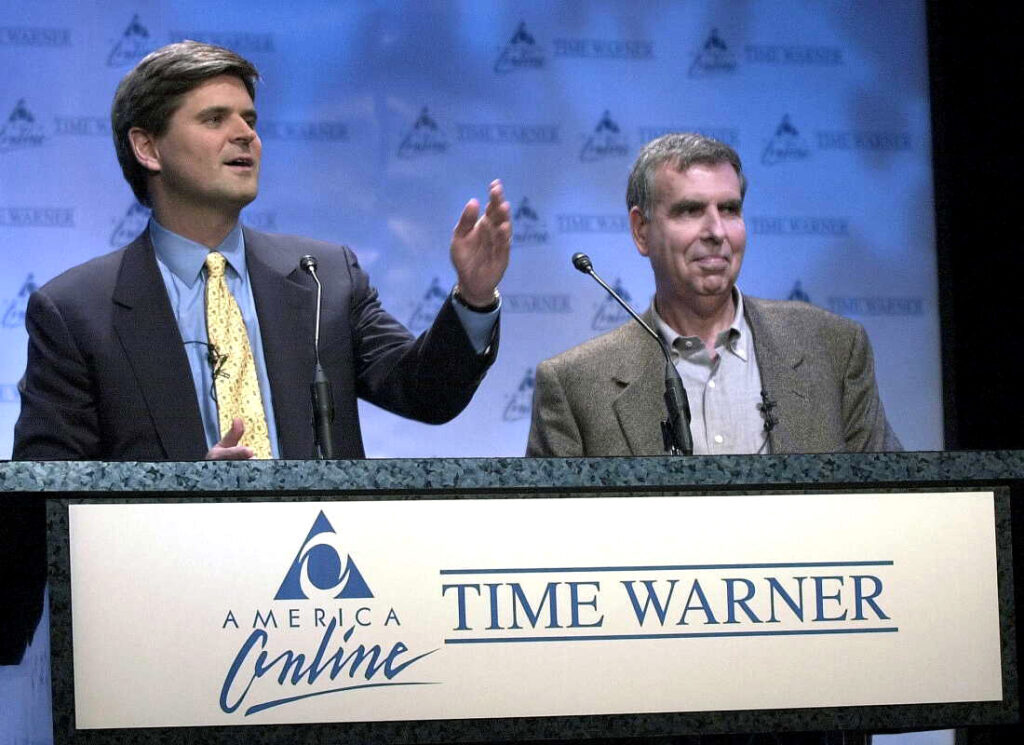
Five Years Is Not A Long Time When It Comes to a Warner Bros. Merger
There is another fundamental mismatch in the settlement; The merger is permanent. Most of the protections are not.
The commitment period covers five full calendar years following closing. Worse, after only two full commitment years, Paramount-Warner may ask the court to modify the decree if it can demonstrate that the restrictions impair its ability to operate successfully or compete effectively and that the requested modification is not substantially likely to lessen competition. Paramount bears the burden of proving that case, so this is not an automatic two-year escape clause. It is nevertheless an explicit opportunity to seek relief from a settlement being sold publicly as a five-year commitment.
Five years is on the very low end of where this agreement should land. The Justice Department’s consent decree permitting Comcast to acquire NBCUniversal imposed behavioral conditions for seven years. The original Live Nation-Ticketmaster decree ran for ten. When DOJ later alleged that Live Nation had repeatedly violated that settlement, the decree was strengthened and extended another five-and-a-half years.
Indeed, a Justice Department antitrust official once described the central problem with temporary behavioral merger remedies using Comcast-NBCUniversal: when the decree expired, the merger remained. The department contrasted those temporary restrictions with structural relief intended to solve the competitive problem permanently.
That observation could have been made about the Paramount-Warner agreement. For an industry that greenlights films years before audiences see them, five years is not especially long. Ten would have covered something closer to multiple complete development and release cycles and provided a far longer test of how the combined company behaved once integration was complete.
Warner Bros., meanwhile, has spent much of the past quarter-century demonstrating that its mergers deserve a warranty longer than five years.
AOL and Time Warner combined in 2001, only for major pieces of that empire eventually to be spun back out. AT&T acquired Time Warner in 2018 and then, less than four years later, separated WarnerMedia and combined it with Discovery to create Warner Bros. Discovery in April 2022. Now Warner Bros. Discovery is preparing to disappear into Paramount Skydance.
The corporate structure keeps changing. The WB water tower, on the other hand, seems to have remarkable job security.
Enforceable — But By Whom?
Then there is the word “enforceable,” which has appeared repeatedly in descriptions of the settlement… and appropriately so.
This is not simply a David Ellison promise from a CinemaCon stage. The commitments sit inside a federal consent decree overseen by the U.S. District Court for the Northern District of California. Paramount must appoint an internal compliance monitor. An independent monitoring trustee, jointly selected by Paramount and a committee of the states, receives access to relevant personnel and records and reports on compliance. The CEO and general counsel must certify compliance annually.
That is somewhat meaningful since an antitrust decree does not enforce itself.
If Paramount disputes compliance, any of the plaintiff states can bring an enforcement proceeding in federal court. The decree requires notice and a meet-and-confer process before enforcement litigation, with non-binding mediation also available.
More importantly for exhibitors, theatre owners are not third-party beneficiaries of the decree. The agreement expressly says no outside person or entity may claim rights as a beneficiary under it. Meaning, if an exhibitor believes Paramount-Warner has violated the rental, catalogue, window or output commitments, the theatre cannot simply march into federal court and enforce the decree itself. It needs the states to care. And it needs them to continue caring three, four or five years from now, potentially under different attorneys general, after the merger has ceased to dominate Hollywood headlines.
The decree also includes a force-majeure provision covering events including wars, pandemics, strikes, labor disruptions, supply-chain failures and economic recessions. Paramount is excused only to the extent such an event actually prevents performance, and the states may ask the court to review an invocation of the provision. It is not the blank check some critics have suggested.
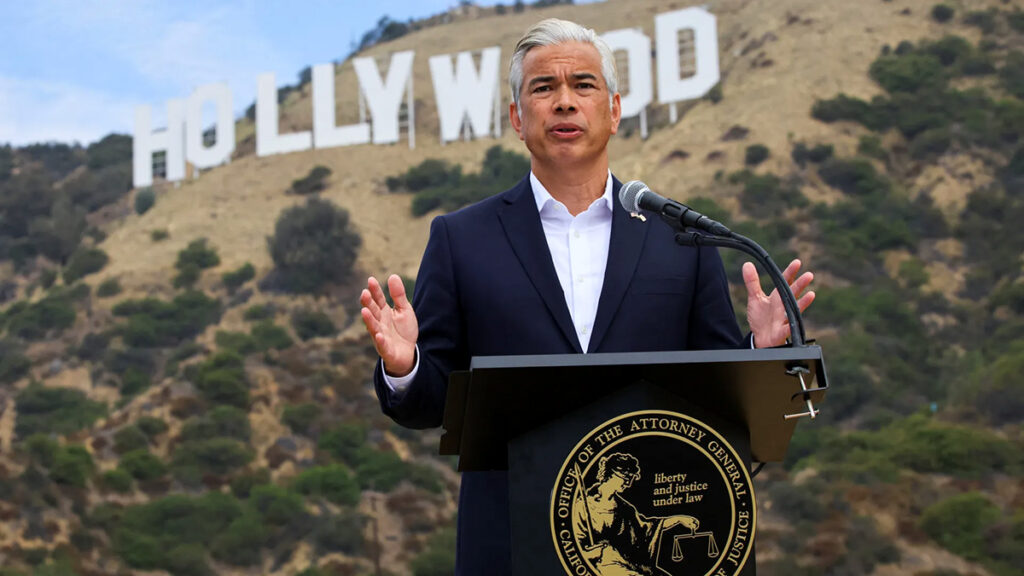
Bonta Ran Out of Room — Not Reasons
None of this means the states had an easy path to victory if they continued litigating. The exhibitors were only one part of a much broader squeeze. By September, Bonta’s room to maneuver had narrowed considerably.
California political figures had pressed for a resolution. Paramount was threatening a possible (if impractical) relocation of corporate operations. Federal regulators had already cleared the transaction. The Justice Department had even intervened in the recent bond dispute on Paramount’s side of the procedural question. And every additional delay increased Paramount’s financial exposure under the merger agreement.
At Monday’s press conference, Bonta did not pretend he had suddenly become enthusiastic about the transaction. He defended the settlement as the strongest practical result available while continuing to say he would have preferred the companies remain separate. That is worth taking seriously. Litigation has risk, and antitrust plaintiffs do not get to substitute certainty about their own theory for certainty about what a judge will ultimately decide. But that does not make the difference between Bonta’s original position and his final settlement disappear.
The states sued over what they characterized as a structural reduction in competition. They settled for temporary behavioral protections backed by monitoring, monetary consequences and structural penalties for future violations.
That is a legitimate settlement strategy. It is not the structural solution Bonta spent much of the summer saying was necessary. The decree is not insubstantial outside exhibition: it also requires at least USD $1.5 billion in incremental U.S. production spending over five years, with higher domestic-production thresholds if new federal and state tax credits are enacted, and creates a News Editorial Independence Board for CNN and CBS News. Both are meaningful commitments. Neither changes the merger’s structure. Bonta has said he intends to pursue tax-credit legislation that could trigger the higher production requirements.
What Exhibition Actually Won
Calling the settlement a victory for theatrical exhibition would probably be an overstatement, even if being considered of primary importance during a USD $110 billion merger was a nice change of pace.
Exhibitors did not ask for the number of major film distributors to fall from five to four. Cinema United spent months arguing that such concentration would increase studio bargaining power, threaten output and make smaller operators particularly vulnerable. The merger still does all of the structural things they worried about.
But in a deal they were increasingly unlikely to prevent, exhibitors did accomplish something they failed to secure during Disney-Fox: important protections were written into an enforceable court order rather than left in an executive’s talking points. The particulars are familiar by now, but the achievement is straightforward: output, release width, theatrical windows, catalogue access, film-rental terms and consequences for noncompliance are no longer merely negotiating promises; they are written into a federal consent decree.
That will be important beyond Paramount-Warner.
The next time Hollywood decides that three major film distributors would be more efficient than four — because apparently this remains an evergreen corporate brainstorming exercise — Cinema United and individual exhibitors will not begin negotiations with a blank sheet of paper.
They can point to Paramount-Warner.
If one merged studio could accept minimum output, defined release widths, theatrical windows, catalogue access and film-rental protections, the next studio combination will have to explain why those provisions suddenly became impossible. That may prove to be one of the more durable results of this entire fight.
The battle also demonstrated something else. Disney-Fox moved through the regulatory process without anything approaching the sustained resistance Paramount-Warner encountered. This transaction required months of litigation, a federal no-close order, negotiations with major exhibitors, concessions to organized labor, thousands of entertainment-industry opponents, intervention by political leaders, settlement with 12 states and a 32-page federal consent decree.
Paramount got its merger. Nobody contemplating the next one can reasonably conclude that it was effortless. Whether that makes another combination less likely is impossible to know. It certainly increases the regulatory, financial and reputational cost that anyone considering such a move will have to price into the transaction.
For Hollywood stakeholders, the list of unambiguous winners is fairly short. David Zaslav stands to be handsomely rewarded for completing the transaction, while David Ellison gets the company he fought so hard to buy and avoids the enormous financial consequences of a failed deal. For theatrical exhibitors, the achievement is more defensive than triumphant: they did not make the merger desirable; they forced some of the risks exposed by Disney-Fox to be acknowledged and turned corporate promises into enforceable obligations.
Now comes the harder part. The protections have to survive integration, economic pressure, management changes, future litigation over their meaning and the simple passage of time. They exist for five commitment years, with Paramount permitted to seek modification after two.
Paramount and Warner Bros. will still be one company in year six. Most of the obligations intended to make that combination tolerable will not. That is when the industry will find out what this settlement was really worth

- Cinema Owners Have Invested $2.7 Billion in Theatres. What Is That Money Buying? - October 1, 2026
- The Paramount-Warner Merger Is Permanent. The Guardrails for Movie Theatres Are Not - September 22, 2026
- Cinemas Aren’t Just Marketing Movies Anymore. They’re Marketing Auditoriums - September 15, 2026