



At CineEurope’s Executive Roundtable, leaders from exhibition, distribution and filmmaking argued that returning content is proving audience demand remains resilient. The harder task is making films discoverable, accessible and capable of creating lasting cinema habits.
For nearly six years, the cinema business has been living one year ahead of itself.
Next year would bring the stronger film slate. Next year would restore attendance. Next year would finally mark the beginning of a sustained theatrical recovery.
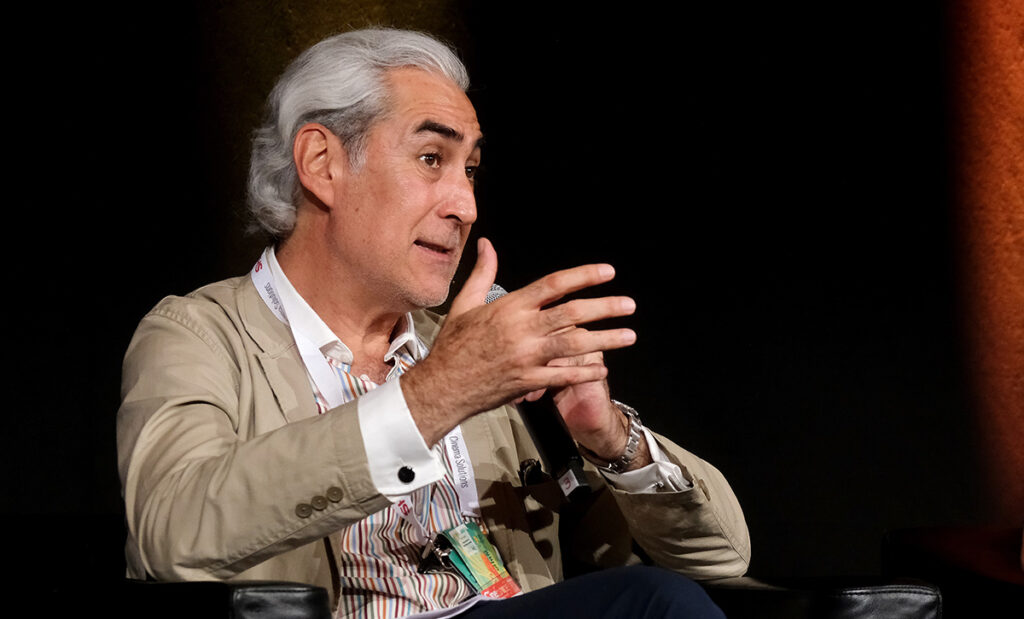
“For the past six years, we have been the industry of tomorrow,” Javier Sotomayor, President of Cineworld International, told attendees at CineEurope in Barcelona. “Next year will be the year. Next year will be the year. Next year will be the year.”
This time, he believes the industry may finally have arrived at that elusive tomorrow.
“I believe this is the year,” Sotomayor said. “This is the start of the takeoff.”
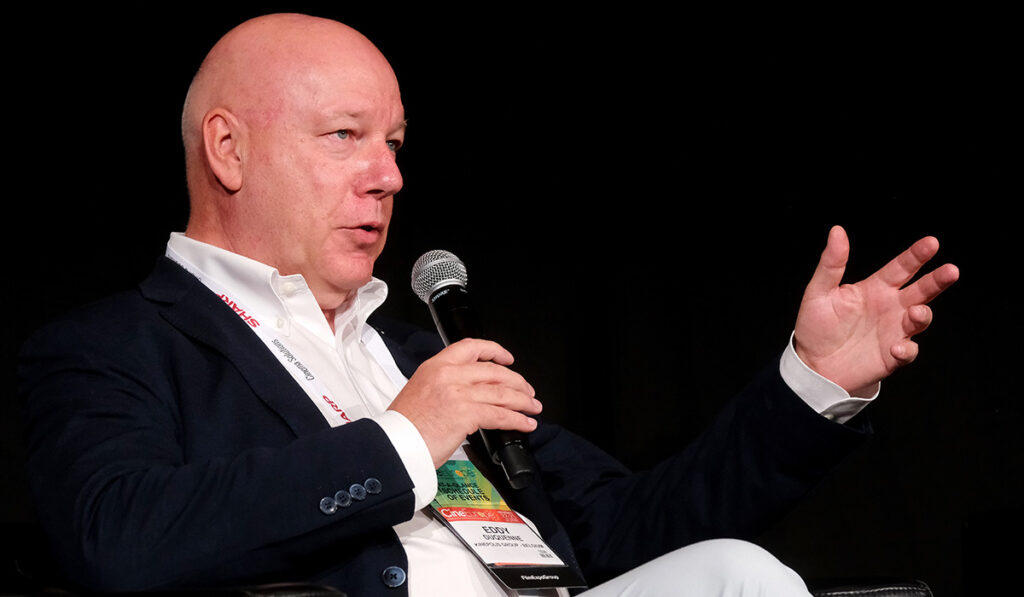
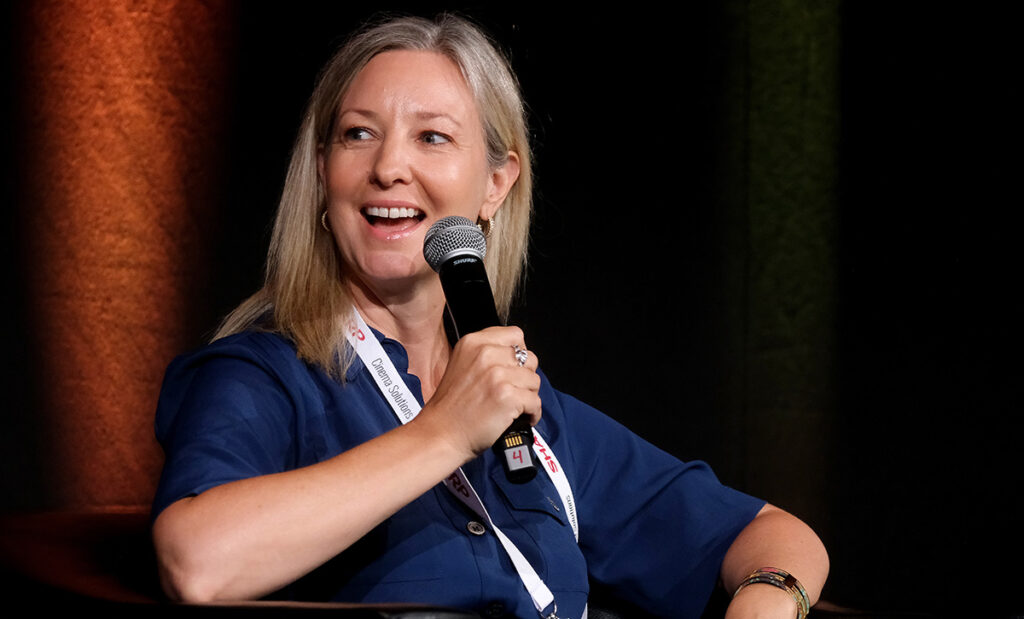
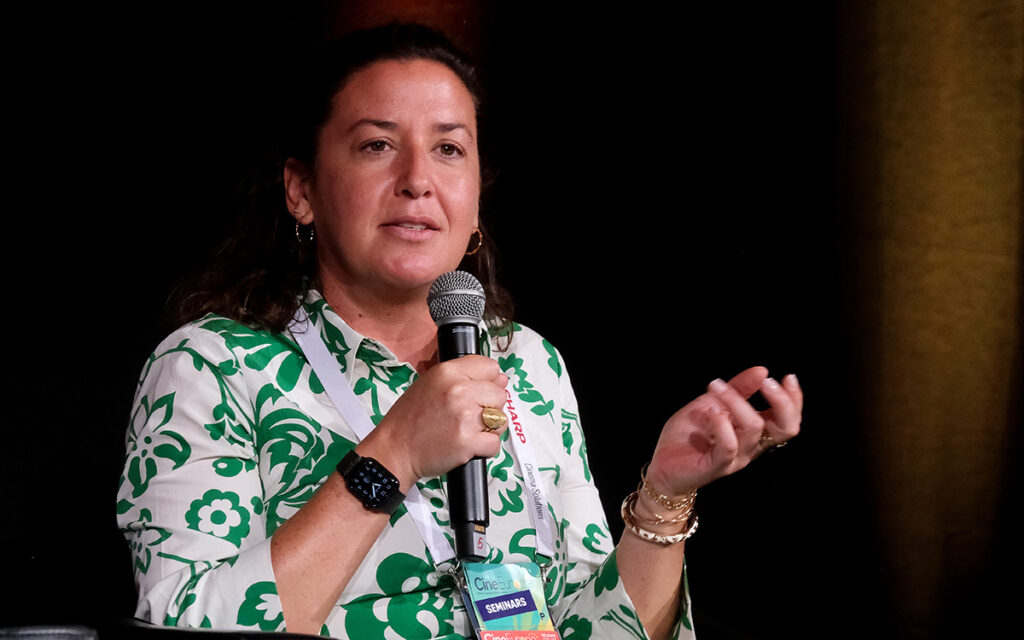
Sotomayor’s cautiously optimistic assessment came during CineEurope’s Executive Roundtable, held as the convention marked its 35th anniversary. Moderated by Sharon Reid, Director of Marketing and Partnerships at Cinema First, the discussion brought together Sotomayor; Kinepolis Group CEO Eddy Duquenne; Laure de Boissard, Managing Director of Pathé Cinémas France; Anna Marsh, CEO of STUDIOCANAL and Deputy CEO and Chief Content Officer of CANAL+; and French screenwriter and director Cécilia Rouaud.
The anniversary framing invited a certain amount of looking backward, from the arrival of the multiplex and home video to digital ticketing, luxury seating and premium large formats. Yet the panel’s more consequential argument was about what comes next.
The industry’s recent difficulties, the speakers suggested, were not evidence that audiences had permanently abandoned cinemas. They were primarily the result of an insufficient and inconsistent flow of films.
A healthier supply is now beginning to test that diagnosis. But more films will not, by themselves, guarantee a complete recovery. Exhibitors and distributors must still make audiences aware of what is playing, give a wider variety of films enough screens and time to find their public, preserve the accessibility of cinema-going and create experiences that turn an occasional visit into a habit.
An Audience Waiting for Films
Duquenne offered the panel’s clearest diagnosis of the post-pandemic theatrical market.
“Don’t forget that in 2025 we were working with one-third fewer wide releases,” he said, referencing the pandemic production shutdowns, labor strikes and a period in which several major studios directed considerable resources toward streaming.
Duquenne argued that the performance of major titles – and of less predictable successes – has steadily undermined the idea that the underlying appetite for cinema-going has disappeared.
“The good news is that we don’t have a demand issue,” he said. “If you have a big blockbuster, it is breaking new box-office records after opening weekend. We had a supply issue.”
The first half of 2026 provided encouraging evidence. A more consistent mix of Hollywood releases, local productions, genre films and unexpected breakouts gave audiences more reasons to return regularly rather than waiting months between obvious theatrical events.
De Boissard said the effect extends beyond the performance of any individual film. Successful releases create a broader sense that cinemas are once again places where something is happening.
“When you have a strong lineup with different kinds of movies that people want to see, you have positive momentum around the moviegoing experience,” she said. “The media is talking about success in cinema. It gives people the idea to go.”
That momentum had been particularly visible in France, where films including “Marsupilami” and STUDIOCANAL’s “Gourou” (“Guru”) performed alongside major American releases and horror titles such as “Obsession” and “Backrooms.”
“The more you go to the cinema, the more you want to go to the cinema,” de Boissard said.
For Marsh, the value of theatrical success also extends well beyond the revenue generated during a film’s initial run. She pushed back against the suggestion that cinemas primarily provide studios with an opportunity to pay off production costs before titles move into subsequent windows.
“When you release a movie theatrically, you’re setting it up for success for years to come,” Marsh said. “You’ve got the marketing buzz, the publicity and the talkability, but it becomes a theatrical asset for many years. It’s not just about amortization. It’s long-term value.”
Sotomayor agreed that content remains the initial driver. But getting audiences through the doors is only the first part of the job.
“Content brings people in, but the experience will make people come back,” he said. “That is our duty. That is our responsibility.”
Selling Films, Not Only Cinemas
A fuller release calendar solves one problem while intensifying another.
Audiences now have access to more entertainment, across more platforms, than at any point in cinema history. Even within theatrical exhibition, the number of films, formats and programming options can make it difficult for individual titles to break through.
Duquenne said consumer research conducted by Kinepolis repeatedly identifies awareness as a leading barrier to attendance.
“People don’t know what we have on screen,” he said.
That has required exhibitors to reconsider the distinction between promoting their venues and marketing the films inside them.
“Thirty-five years ago, we didn’t do marketing,” Duquenne said. “The only thing we did was branding: ‘We are the best cinema.’ The studios were attracting visitors. Today, we need to attract visitors. We need to learn to sell movies.”
The observation gets to the heart of the industry’s next challenge. Restoring the number of wide releases may repair the supply chain, but it does not guarantee that audiences will know those films exist. Outside the handful of titles capable of generating blockbuster-level awareness, films increasingly arrive without penetrating the wider cultural conversation.
De Boissard said exhibitors and distributors can no longer treat marketing as two separate assignments, with distributors promoting titles and cinema operators concentrating on their brands.
“It is not the distributor’s job to do the entire marketing and for us to do our brand marketing,” she said. “We need to communicate together and work ahead to make sure people are aware of a film that is being released.”
That cooperation must become more specific as audiences become more fragmented. The goal is not simply to tell the largest possible number of people that a film exists, but to identify the communities most likely to respond to it.
Sotomayor argued that each cinema should function as “the heart of the community where it is placed.” The growing diversity of those communities gives exhibitors an opportunity to expand their programming beyond films traditionally identified as local content.
A cinema in the United Kingdom, for example, may serve a sizable Polish, Tamil or Punjabi population. Yet relying only on historical ticketing data can obscure that demand if the venue has never programmed or promoted films for those audiences.
“If we haven’t played any Polish content, then we don’t have data that Polish content works,” Sotomayor said. “But there are other tools that we can use to identify those local communities.”
Theatrical programming can therefore move from a largely passive model – waiting to see what distributors supply and what audiences have previously purchased – to what Duquenne described as “active movie programming” built around customer clusters and the demographic realities of individual catchment areas.
Local content, in that context, does not necessarily mean content produced in the country where a cinema is located.
“With the cultural influence of a particular country, or the diaspora in other countries, it becomes more and more relevant,” Sotomayor said. “We have the tools to identify those opportunities, and we should do that.”
Reaching future audiences will also require introducing young people to cinemas before they have established entertainment habits elsewhere.
Reid pointed to the work of UK film education charity Into Film, whose annual festival brings schoolchildren into cinemas around the country. According to Into Film, more than one-third of participating children are experiencing a movie theatre for the first time.
Marsh described that introduction as an industry responsibility.
“If nobody ever has the opportunity as a young child to see their first film, how will they ever know?” she asked. “It’s a real responsibility to work with young people from all walks of life and all corners of every country.”
The objective is larger than generating admissions for a single family release. The first cinema visit can begin a habit that carries across genres, life stages and generations.
Choice Requires Screens
The panel repeatedly returned to the importance of giving audiences choice. Yet having more films available does not necessarily mean audiences will have a meaningful opportunity to see them.
Marsh welcomed the exhibitors’ stated commitment to variety before making a direct plea on behalf of distributors and producers.
“We need the screens,” she said. “We’re fighting for screen space. We’re fighting to be held from one week to the next. We’re fighting to hold that screen drop week to week.”
The comment exposed a tension underneath the industry’s improving content supply. More films may be entering the market, but each must compete for finite screens against established franchises, premium-format commitments and the next wide release arriving only days later.
A film that is removed before awareness and word of mouth have developed cannot contribute much to the diversity the industry says it wants to offer.
“Every movie made is a miracle,” Marsh said. “Every window of exploitation is extremely important for the continued health and profitability of these movies, so we can reinject that success back into the industry.”
Reid raised research presented earlier at CineEurope concerning the difficulty “mid-tier” films have in securing visibility and theatrical traction. Marsh questioned whether the category itself was useful.
“I think it’s kind of weird – ‘mid-tier,’ whatever that means,” she said. “A movie can be made for any budget. You just have to make it for the number you feel the market can support and ensure that as much of that money as possible goes on screen, that it looks gorgeous and that it is undeniably cinematic.”
For Marsh, the more meaningful criteria are the quality of the storytelling, the authenticity of the filmmaker’s perspective and whether the film offers audiences something they did not already know they wanted.
“It’s not necessarily about asking the audience what they want,” she said. “They don’t know what they want. But when they see it, then they know they want it.”
Her answer did not make the commercial challenge disappear. Films still must be financed according to plausible market potential, and exhibitors still must allocate screens according to demand. But treating “mid-tier” as a fixed creative or commercial identity can become self-fulfilling if it limits a film’s release before audiences have had an opportunity to respond.
Rejecting the category does not eliminate the practical constraints behind it. Exhibitors still have a finite number of screens, and a film’s initial allocation and early box-office performance – not the terminology used to describe its budget – will determine whether it receives enough time to find an audience.
A healthy theatrical market needs tentpoles. It also needs enough room for films whose potential is less obvious on opening day.
Attendance Before Revenue
The same question of choice runs through the industry’s accelerating investment in premium formats, luxury seating and enhanced food and beverage.
Premiumization has helped exhibitors increase revenue per visitor while giving audiences experiences that clearly differentiate cinemas from home viewing. De Boissard said Pathé has also found that premium locations attract younger customers.
According to figures she cited during the session, the average age of customers falls by between six and eight years when Pathé converts a cinema to its premium model. She added that one out of every two tickets sold by the circuit during the previous year went to a customer under 35.
“Younger audiences want specific experiences,” de Boissard said. “The traditional experience of a standard auditorium is still an amazing experience that you don’t get at home. Having a great screen, great sound and sharing emotions with people is a premium experience compared with television.”
Duquenne put the economics more succinctly.
“Content drives customers,” he said. “Premiumization drives revenue.”
Yet premiumization cannot become the only version of cinema audiences are offered. Sotomayor warned against judging recovery solely through rising box office if that growth is driven by higher average ticket prices while fewer people attend.
“It is worrying that box office continues to grow if attendance drops,” he said. “At Cineworld International, we believe that we should bring people back. I would put, in terms of priority, attendance first.”
Premium offerings allow cinemas to segment upward, Sotomayor said, but operators should also be prepared to create simpler and more affordable models suited to smaller markets. A city of 50,000 to 80,000 people may not be capable of supporting recliners, extensive food menus or multiple premium large formats. It may nevertheless be able to support a well-run cinema offering strong presentation and a more limited range of amenities.
“Cinema needs to keep being accessible for the masses,” Sotomayor said.
Duquenne maintained that even premium cinema remains relatively affordable compared with many other out-of-home activities and argued that customers tend to protect occasional cinema visits even when household purchasing power is under pressure. Kinepolis seeks to keep premium upgrades optional, he said, allowing audiences to select the format and price point appropriate for each occasion.
That distinction matters. Premiumization is most effective when it expands the number of available choices rather than replacing the accessible standard experience.
The industry must therefore measure recovery in more than monetary terms. Revenue per patron is important, particularly for an exhibition business with substantial fixed costs. But rebuilding attendance, frequency and cinema-going habits will determine whether the current recovery has a durable foundation.

“I Need to Make Errors”
The roundtable’s closing discussion about artificial intelligence might have seemed disconnected from questions of film supply and audience recovery. Instead, it clarified the role technology can – and cannot – play in addressing them.
The exhibitors saw potential operational uses throughout the business. AI could help analyze audience clusters, improve film scheduling, identify the most appropriate screens and showtimes, support marketing campaigns and reduce administrative work. Duquenne was particularly enthusiastic about AI-assisted dubbing, which could make local-language films more accessible in international markets.
De Boissard said Pathé had created an AI division spanning exhibition, production and back-office operations to explore how the technology could be applied. The purpose, she argued, was not necessarily to replace creative work but to simplify routine tasks and give people more time to concentrate on work requiring human judgment.
Rouaud remained less certain that speed and simplification should automatically be treated as progress.
Discussing AI from the perspective of a writer and director, she compared herself to “a kid driving a truck” – aware that the tool was powerful but unsure how it should be controlled or where it was heading.
Some filmmakers she knows use AI as a research assistant or creative sparring partner. Rouaud said she already has human collaborators who serve that purpose. More importantly, she resisted the idea that the inefficiencies of creativity are flaws waiting to be removed.
“I believe in the long time it takes to create,” she said. “We are running after gaining time – going quick, being fast – and I don’t recognize myself in this. I need to take time to create because it is part of the process.”
Her most direct answer also became the panel’s clearest defense of the human uncertainty behind the films the rest of the industry is trying to market, program and monetize.
“I need to be lost,” Rouaud said. “I need to make errors. I need to be human.”
Rouaud was not rejecting technology. She was asking the industry to understand its purpose before deploying it simply because it promises efficiency.
“Why would I like to simplify my life?” she asked. “More time for what? We need meaning.”
That question applies beyond artificial intelligence.
A stronger flow of films can repair the supply shortage that has constrained cinemas since the pandemic. Data can help exhibitors find underserved audiences. Premium formats can generate additional revenue. More sophisticated marketing can improve discoverability. AI may eventually optimize everything from programming to dubbing.
But none of those tools explains why people leave their homes to sit in a dark auditorium beside strangers.
At the beginning of the session, the panelists described cinema as one of the few remaining places where people gather to experience the same story and emerge wanting to discuss, debate or even argue about what they have seen. That enduring human appeal is why the current supply recovery matters.
The films may finally be returning in sufficient numbers. The cinema business must now ensure audiences can find them, afford them and have enough reasons to come back.
Editor’s note: This feature is part of Celluloid Junkie’s coverage of the seminars presented at CineEurope 2026 in Barcelona. See more reporting from the sessions below.
More from CineEurope 2026

- Cinema Owners Have Invested $2.7 Billion in Theatres. What Is That Money Buying? - October 1, 2026
- The Paramount-Warner Merger Is Permanent. The Guardrails for Movie Theatres Are Not - September 22, 2026
- Cinemas Aren’t Just Marketing Movies Anymore. They’re Marketing Auditoriums - September 15, 2026