


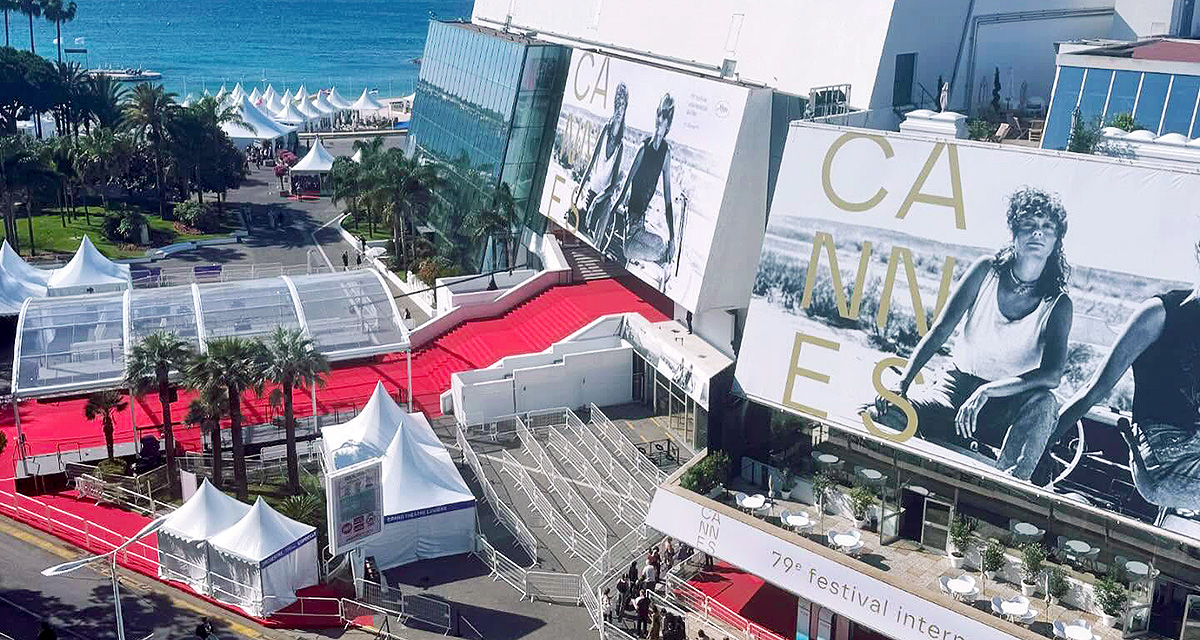
A strong competition without a consensus breakout, a Marché reshaped by private capital, and a Hollywood no-show that raised uncomfortable questions about the festival’s global reach.
The 79th Cannes Film Festival closed on May 23 the way it opened — with defiance. No major Hollywood studio tentpole on the Croisette. No megawatt star commanding the international press corps. No single film that had critics reaching for superlatives in their opening paragraphs. And yet, by the time Cristian Mungiu took the stage in the Grand Théâtre Lumière to accept his second Palme d’Or — for “Fjord,” the Norway-set family drama starring Sebastian Stan and Renate Reinsve — it was clear that the 79th edition had done what Cannes always does: it delivered the goods, eventually, if not always on schedule or in the packaging the market wanted.
That tension — between genuine artistic achievement and reduced commercial energy — defined the 2026 edition more than any single film or controversy. Cannes has weathered quieter years before. The more interesting question is what this particular quietness reveals about the state of the industry surrounding it.
The Competition: Strong Films, No Runaway Favorite
Let’s be clear about the quality on offer. “Fjord” was a worthy Palme winner — a morally precise, formally controlled portrait of a Romanian immigrant family caught in conflict with Norwegian child welfare authorities, and a film that put some of Europe’s most contested social questions on painfully intimate terms. Mungiu, now only the tenth filmmaker to win the Palme twice, gave the jury — presided over by South Korean director Park Chan-wook — a film that felt both rigorously authored and genuinely urgent. At the post-awards press conference, Park was characteristically direct about the deliberations: “Quite honestly, I really didn’t want to award the Palme d’Or to any film. Why? Because I’ve never won one myself! But anyway, we had no choice! And of course, ‘Fjord’ definitely deserved the Palme d’Or.”
The Grand Prix went to Andrey Zvyagintsev’s “Minotaur,” a Russian drama that unflinchingly dissects the moral vacuity of Putin’s elite class against the backdrop of the war in Ukraine. Zvyagintsev’s return to Cannes after a multiyear absence — and his pointed message to Putin from the stage — gave the ceremony its most galvanizing moment. Ryusuke Hamaguchi’s “All of a Sudden” claimed the Best Actress prize for its two leads, Virginie Efira and Tao Okamoto, a three-hour meditation on empathy and end-of-life care that provoked heated argument at every afterparty unfortunate enough to host a conversation about it. Pawel Pawlikowski’s “Fatherland,” a scant 82-minute black-and-white period piece set in postwar Germany, shared the Best Director prize and was, by many accounts, the most devastating single cinematic experience the festival produced.
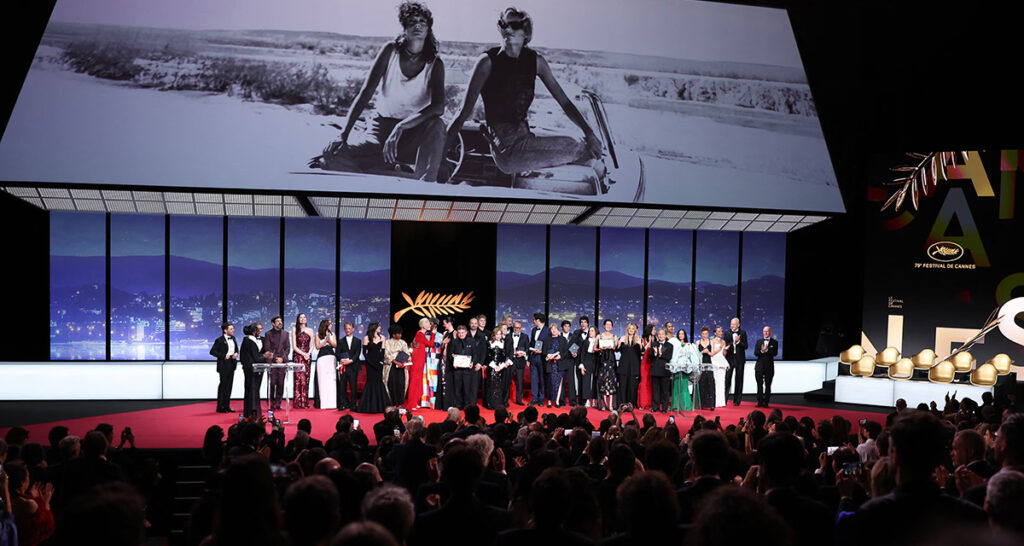
Any of those three — “Fjord,” “Minotaur,” “All of a Sudden” — could have walked away with the Palme and generated no serious argument. What’s notable is that none of them produced the kind of pre-closing-ceremony consensus that “Parasite” or “Anatomy of a Fall” generated. The jury spread prizes liberally — both acting awards were shared, Best Director was split between Pawlikowski and Spanish duo Javier Calvo and Javier Ambrossi for “La Bola Negra” — which reflected the competition’s genuine quality but also its lack of a single dominant voice. That’s not a condemnation of the lineup. It’s an honest description of a year in which the competition was strong across the board but yielded no film that simply ran away from the field.
That matters commercially, because Cannes’ ability to launch a film into a full awards-season cycle depends heavily on that consensus forming early. “Fjord,” “Minotaur” and “All of a Sudden” will all compete for year-end attention, and they are genuinely good films. But they will need to build their audiences rather than arrive with the momentum that a clearer Cannes favorite generates.
Elsewhere, the jury continued to spread the wealth. The Best Director prize was shared between Pawlikowski and Los Javis for “La Bola Negra,” while Valeska Grisebach’s “The Dreamed Adventure” took the Jury Prize and Emmanuel Marre won Best Screenplay for “A Man of His Time.” Lukas Dhont’s “Coward” produced one of the festival’s shared acting honors, with Emmanuel Macchia and Valentin Campagne splitting Best Actor. At the jury press conference, Chloé Zhao said the jury was moved by “the tenderness in the relationships depicted in these films,” adding that they fell in love not only with the performances, but with the relationships themselves.
In Un Certain Regard, Sandra Wollner’s “Everytime” took the top prize, while Marie-Clémentine Dusabejambo’s “Ben’Imana” won the Caméra d’Or, marking a historic first for Rwanda at Cannes.

The Commercial Story Was in the Sidebars
Away from the main competition, the festival’s most unapologetically commercial film found its buyer quickly and loudly. Jordan Firstman’s “Club Kid,” a sharply funny New York dramedy about a gay club promoter who discovers he has a 10-year-old son, was the festival’s clearest crowd-pleaser and its most legible genre crossover — part comedy, part coming-of-age, entirely watchable. A24 acquired the title, and the logic is self-evident: it sits at the intersection of comedy, queer identity and social-media shareability that younger specialty audiences respond to, and it doesn’t require a lengthy critical consensus to find its opening weekend. Don’t be surprised if “Club Kid” ends up with the kind of theatrical upside most of the competition titles will struggle to reach.
The broader acquisition landscape also reflected how distributors are reading the current market. Mubi acquired worldwide rights to Lukas Dhont’s “Coward” and key territories on Na Hong-jin’s divisive alien-invasion spectacle “Hope” before the festival even opened — a signal that the platform is increasingly operating as a fully-integrated specialty distributor with genuine theatrical ambitions. Meanwhile, Neon’s Palme d’Or winning streak now extends to seven consecutive years, a run that defies coincidence and points instead to an acquisition strategy that has cracked the code for converting Croisette credibility into awards-season momentum. The company now has “Fjord” to work with through the fall and winter, and its track record suggests they will know exactly what to do with it.
The Hollywood Hole: Does It Actually Matter?
For the first time since 2017, no major Hollywood studio brought a tentpole to Cannes. The reasons clustered around a familiar set of calculations: the cost of mounting a full studio contingent now exceeds $1 million; Hollywood increasingly prefers managed digital rollouts to the unpredictable press gauntlet of the Croisette; and the lingering bruises from “Joker: Folie à Deux” have made certain studio executives newly cautious about high-profile festival exposure.
Mergers and acquisitions — Netflix-Warner Bros., Paramount-Skydance — absorbed executive attention that might otherwise have gone into planning a Cannes premiere. The Cinéma de la Plage screened the original “Top Gun” and the first “Fast & Furious” as gestures of nostalgia. It was a bit like serving airline peanuts to guests accustomed to a four-course dinner.
Streamers were similarly absent from the conversation in ways they hadn’t been in recent years, with Netflix, Amazon and Apple all registering a significantly reduced presence in events and deal-making. Festival director Thierry Frémaux reframed the Hollywood absence as a return to identity — “beyond the studios and Los Angeles, cinema does exist” — and there is something to that argument. The competition genuinely reflected a global filmmaking community that does not require Hollywood permission to produce important work.
But the commercial reality is more complicated, and the industry would be doing itself a disservice to pretend otherwise. Major studio and streamer titles function, among other things, as audience-acquisition infrastructure for the more esoteric parts of the program. When international media arrives to cover a Mission: Impossible installment and ends up filing dispatches about a Romanian family drama set in Norway, that is Cannes working exactly as designed. Without the star power, the global press coverage thins, and with it the cultural oxygen that helps festival-endorsed films find audiences worldwide. Berlin faced the same dynamic this past February and reached a similar accommodation. If both flagship European festivals can run without Hollywood and still post record attendance numbers, the question of who needs whom becomes worth asking out loud. But it is a question, not yet an answer.
The Market: Private Capital, Co-Productions and Europe’s Funding Fight
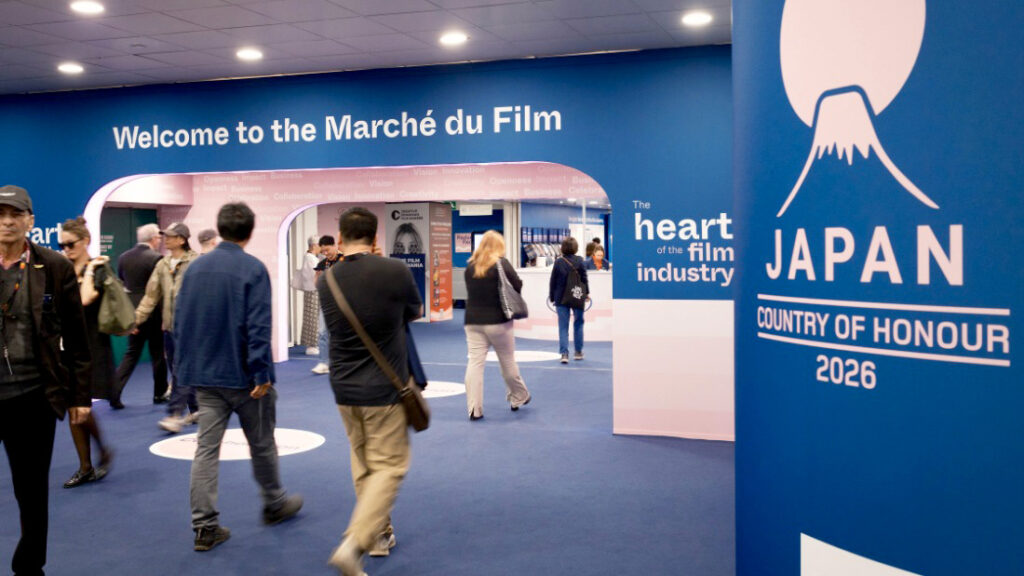
At the Marché du Film, the headline figures were record-breaking — 16,000 accredited participants from over 140 countries, 1,700 buyers and 600 exhibiting companies. But the more revealing story was structural. With pre-sales contracting and streamers buying less, independent films are increasingly turning to high-net-worth individuals, family offices and private equity to close their financing gaps. The fourth edition of the Marché’s Investors’ Circle was its most heavily attended yet, presenting eight feature projects to a closed VIP audience with budgets ranging from €1 million to over €12 million.
Mubi formalized its co-financing ambitions with a multi-year pact alongside IPR.VC, the Finland and UK-based investment fund, to back a slate of European films beginning with Pawlikowski’s “Fatherland” and Felix van Groeningen’s “Let Love In.” The European Investment Fund committed €25 million to the latest IPR.VC fund — a meaningful institutional endorsement of the model.
The wider European industry arrived at Cannes with a political agenda as well as a commercial one. An open letter titled “Cinema needs Europe, Europe needs cinema” was published on the eve of the festival with around 4,700 signatures — Francis Ford Coppola, Juliette Binoche, Yorgos Lanthimos, Sandra Hüller, Pawlikowski, Rodrigo Sorogoyen and many others — defending the EU’s Creative Europe MEDIA programme against its planned absorption into a broader funding structure called AgoraEU, where the film share would not be ring-fenced. That may sound like a Brussels procedural dispute. It isn’t. MEDIA has been the backbone financing infrastructure for prestige European cinema for 35 years, and its dilution would have direct, measurable consequences for the independent film supply chain.
Japan was the 2026 Country of Honour, arriving with a roughly 50 percent increase in delegation attendance and the launch of the Japan IP Market, co-organized with TIFFCOM across three days. Participants included Kadokawa, Shochiku, Toei and Nippon Animation, and the event served as a useful reminder that the most commercially potent theatrical IP emerging right now may not originate in Burbank. Japan’s anime industry is a $25 billion business growing at 15 percent annually, and the theatrical upside — as “Demon Slayer: Infinity Castle” demonstrated last summer — remains considerable.
Looking Ahead: The Delayed Payoff
The 79th Cannes was undeniably quieter than its 2025 predecessor, which delivered a run of films that dominated the international awards season and generated the kind of sustained critical conversation that drives specialty box office for months. The absence of Hollywood star power reduced global media coverage, and the competition’s lack of a consensus breakout made it harder to generate the early momentum that turns a Cannes premiere into a cultural event.
None of that means the films aren’t there. “Fjord,” “Minotaur,” “All of a Sudden” and “Fatherland” are works that travel well and reward the kind of engaged audiences that the specialty market exists to serve. “Club Kid” has A24’s marketing machine behind it and the instincts of a film built to play beyond the arthouse bubble. Several of 2026’s competition titles will go on to be among the year’s most discussed films — they just haven’t fully announced themselves yet. Cannes has always been better at planting seeds than harvesting them. The harvest, as usual, comes later.

- Cinema Owners Have Invested $2.7 Billion in Theatres. What Is That Money Buying? - October 1, 2026
- The Paramount-Warner Merger Is Permanent. The Guardrails for Movie Theatres Are Not - September 22, 2026
- Cinemas Aren’t Just Marketing Movies Anymore. They’re Marketing Auditoriums - September 15, 2026