



From affordable premium experiences in Australia to eventized local films in Nigeria and social listening across Cinépolis markets, exhibitors are finding growth by staying closer to their audiences.
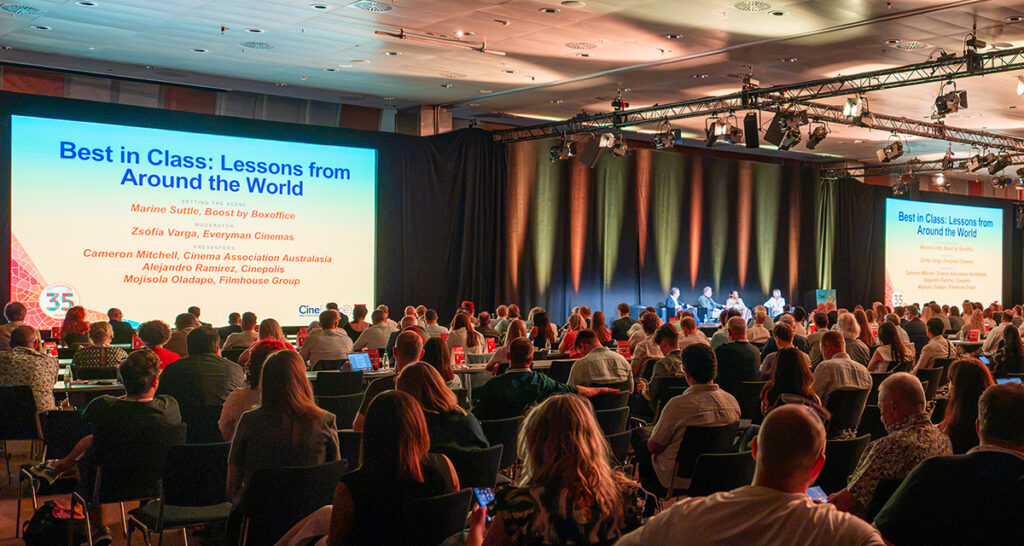
In Australia, a family could watch “Toy Story 5” in a premium-format auditorium during the day without paying the same price as an evening audience. In Nigeria, a local film premiere might arrive with music, food, fashion, influencers and enough spectacle to transform a screening into a cultural event. In Mexico, Cinépolis discovered demand for an unlikely religious film not through a traditional studio campaign, but by noticing what audiences were saying online. On the surface, those strategies have relatively little in common, which was precisely the point of “Best in Class: Lessons From Around the World,” a CineEurope panel examining how exhibitors in dramatically different markets are finding their own routes to growth.
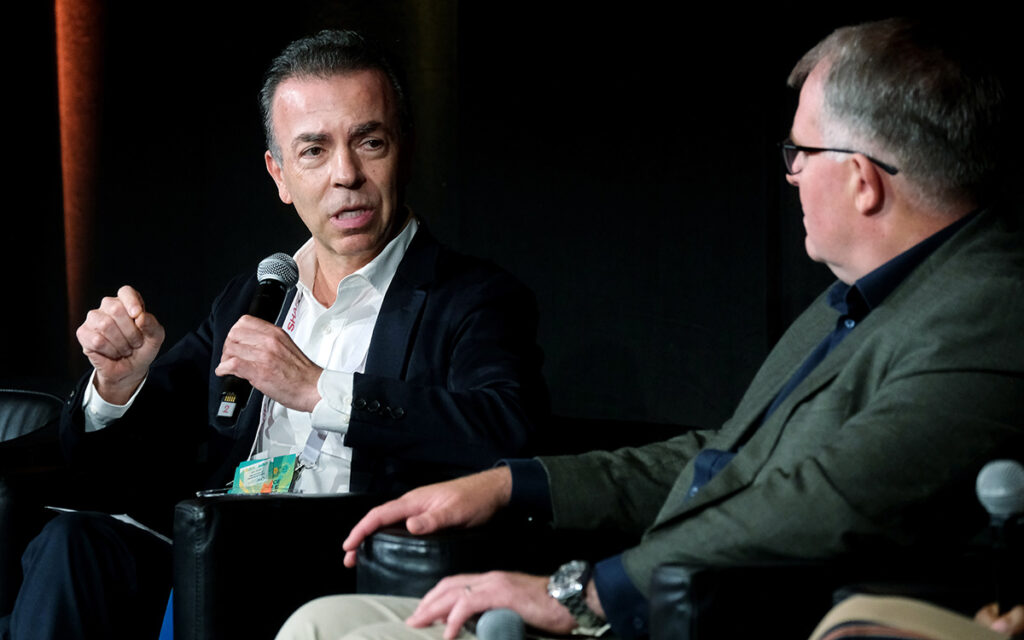
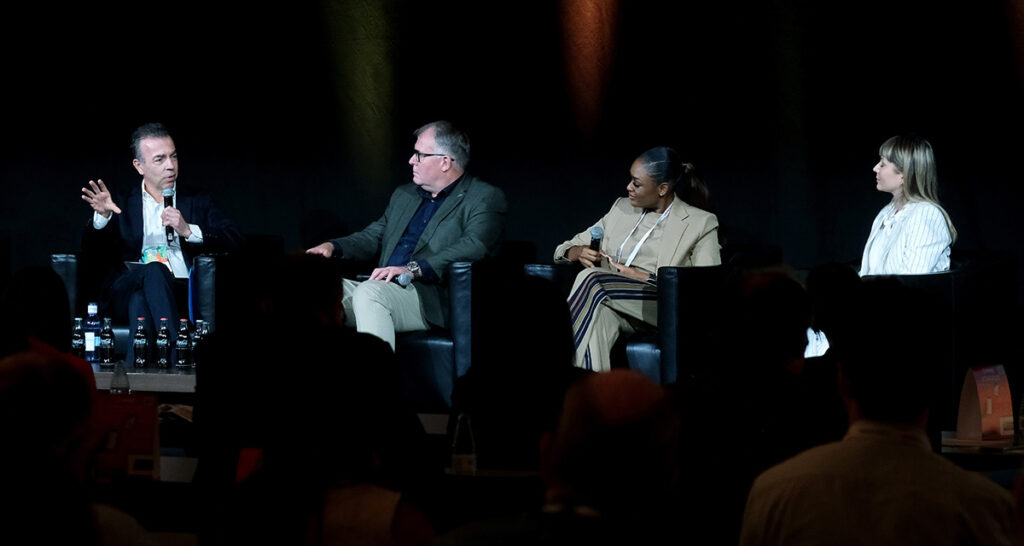
Moderated by Zsófia Varga of Everyman Cinema, the discussion brought together Cameron Mitchell, Executive Director of the Cinema Association Australasia; Mojisola Oladapo, Chief Marketing Officer of Filmhouse Group; and Cinépolis CEO Alejandro Ramírez Magaña. Between them, the panelists offered perspectives from Australia, Nigeria, Mexico, India, Indonesia and numerous other territories in which the economic conditions, audience habits and content ecosystems vary considerably. Varga opened with a deceptively simple question. Global admissions and revenues were improving, she observed, but growth was not happening evenly – or for the same reasons. What drives people to the cinema, she asked, and what keeps them coming?
The answers differed substantially from market to market. Yet beneath those differences, several principles kept resurfacing: affordability, cultural relevance, sustained investment, audience trust and a willingness to listen closely enough to understand what cinemagoers actually value. The strongest lesson from the session was not that one territory had discovered a model everyone else should copy. Rather, it was that the best-performing markets tend to remain unusually close to their audiences, even when the methods they use to achieve that proximity look completely different.
Premium Does Not Have to Mean Expensive
Australia has long been one of the world’s strongest theatrical markets by several measures. Roughly two-thirds of Australians visit a cinema at least once each year – a figure Varga cited in framing the discussion – making moviegoing the country’s most popular out-of-home cultural activity. Mitchell said the market generates approximately 60 million annual admissions and around AUD $1 billion (USD $700 million) at the box office, while the Cinema Association Australasia describes Australia as the world’s most affordable cinema market when the average ticket price is measured against the minimum wage. For Mitchell, that performance is rooted in a combination the industry too often treats as contradictory: premium experiences and affordability.
“A premium offer doesn’t always have to mean an expensive price,” he said.
Australian exhibitors have invested heavily in recliners, large-format auditoriums, upgraded food and beverage, premium service and new presentation technologies. Mitchell highlighted venues operated by Event Cinemas and HOYTS, including the latter’s APEX format, which combines a large curved LED cinema screen with premium seating and immersive sound. Yet he argued that the technology and furnishings are only part of the equation. Australian operators also use dynamic pricing, student offers, family promotions and loyalty programs to make those experiences available to different customers at different times.
During daytime screenings of “Toy Story 5,” he noted, families could access premium seating and formats at an affordable price, even if those same auditoriums commanded more during evening sessions. That flexibility allows exhibitors to maximize the value of their investments without turning the best auditoriums into spaces reserved only for customers able to pay the highest possible ticket price.
“The exhibitors have invested massively in great CRM [customer relationship management], great loyalty platforms, and they’re really targeted and really dynamic in the way they price their experiences,” Mitchell said. “They make cinema an everyday occurrence, not a special occasion.”
That distinction may help explain another unusual feature of the Australian market. While exhibitors in many territories worry that young people are abandoning cinemas, Australians between the ages of 14 and 24 remain the country’s most frequent cinemagoers. Mitchell attributed that not simply to the films being released, but to venues designed as enjoyable places to spend time. Quality picture and sound were essential, he said, but no longer sufficient by themselves.
“An incredible image and sound is not negotiable,” Mitchell said. “That’s like having a sharp knife and fork in a restaurant. You can’t not have it.”
The differentiation comes from everything surrounding the film: comfortable seating, inviting public spaces, good coffee, credible food and beverage, simple transactions and a price that does not make regular attendance feel reckless. Mitchell argued that cinemas should not measure their concessions or hospitality against the neighboring multiplex, but against the best restaurants, cafés and service businesses their customers encounter elsewhere.
Australia’s approach cannot simply be transplanted into every economy. Its specific price points, wage levels and consumer habits are local. But the broader lesson travels: premiumization does not have to mean restricting the best experience to the smallest possible number of customers. Properly structured, investment in premium venues can help broaden the audience rather than narrow it.

Local Content Is an Ecosystem
Affordability also emerged in Nigeria, where Filmhouse Group uses pricing initiatives and partnerships to expand access. Oladapo, however, placed even greater emphasis on a different form of proximity between cinemas and audiences: cultural recognition.
“Our audience feels closer and digests content more deeply when they see themselves on those screens,” she said. “We are a country that really embraces our culture, and our cultural relevance is very important to us.”
Filmhouse’s position in the Nigerian market gives the company an unusually broad view of that relationship. The group is active in exhibition, while FilmOne operates across production and distribution, including development partnerships and the theatrical release of Nigerian and international films. That involvement throughout the value chain allows information gathered from cinema audiences to influence decisions about the content that ultimately returns to those same screens.
Oladapo described customer data feeding back into conversations about scripts, casting, production quality, positioning and marketing. Filmhouse and FilmOne are not merely waiting for local films to be completed and then deciding how many showtimes to give them. They are participating in an ecosystem designed to improve the commercial appeal and audience relevance of Nigerian films before they arrive at the box office.
“Success with local content doesn’t happen overnight,” Oladapo said. “It happens with constant and consistent investment in those product pipelines.”
That investment is showing up at the box office. Nigerian cinemas sold more than 752,000 tickets during the first quarter of 2026, the market’s strongest Q1 admissions total in six years and approximately 14% more than during the same period in 2025. The previous year also produced a symbolic shift across Anglophone West Africa, where Nollywood films accounted for 49.4% of box office revenue, narrowly edging Hollywood’s 48.8% share for the first time.
The growth of Nigerian cinema has therefore been more than a matter of adding screens or waiting for a breakthrough title. It has involved improving the professionalism of distribution, building deeper relationships with filmmakers, developing more commercially responsive stories and creating confidence among audiences that local films will deliver. Oladapo said that investment over time had produced trust both within the industry and among cinemagoers, who increasingly expect Nigerian films to reflect their lives while meeting a higher standard of storytelling and production.
For Oladapo, however, cultural relevance does not end when a film is delivered to the cinema. It also shapes how the film is presented to the public.
“We have perfected the art of eventizing every single thing,” she said.
Filmhouse screenings and premieres frequently incorporate prominent influencers, music, food and fashion. The company has also cultivated relationships with specific fan groups, including anime communities that arrive prepared to dress up, participate and share the experience online. Nigeria is a market in which entertainment, music, fashion and social media readily intersect, and Filmhouse has learned to present theatrical releases as part of that wider cultural conversation.
“We love a good party,” Oladapo said, summing up the strategy with disarming directness.
The festivities are not simply decorative additions to a conventional screening. They turn a film into something audiences can join, identify with and help amplify. A successful premiere generates images, video and conversation that travel far beyond the people in the auditorium, while influencers provide access to communities that may respond more strongly to a trusted personality than to a traditional advertising campaign.
“You are more likely to believe what your influencer – someone you believe in, someone you trust – has said about a film,” Oladapo said. “Trust is something that we can all do better at as exhibitors.”
Australia and Nigeria are using very different methods, but they are working toward a similar outcome. Australian exhibitors use pricing, loyalty and venue investment to make cinema part of everyday life. Filmhouse uses local stories and eventization to make theatrical attendance feel culturally and socially important. One strategy normalizes the cinema trip. The other intensifies it. Both are designed to create habits.
Listening Before Programming
Operating across 18 markets, Cinépolis cannot assume that a programming or marketing strategy successful in Mexico will work in India, Indonesia, Spain or the United States. Ramírez Magaña nevertheless identified one practice that has become increasingly valuable throughout the circuit: monitoring how audiences organize and express enthusiasm online.
“Word of mouth has always been critical to the success of a movie,” he said. “But in the age of social media, opinions get magnified exponentially.”
Cinépolis uses social listening partly as a forecasting tool. Strong audience response can signal that a film deserves additional showtimes or a longer theatrical run. Negative reaction travels just as quickly, giving exhibitors an early indication that initial demand may not hold. More significantly, Cinépolis also uses social listening to find content that might otherwise escape the company’s attention.
“Social listening allows us to identify some relevant local content and some alternative content,” Ramírez Magaña said.
The company watches conversations surrounding concert films, anime, filmed stage productions, online entertainment properties and other programming serving audiences that may be highly organized but not visible through traditional film-marketing channels. Ramírez Magaña cited “The Amazing Digital Circus” and the filmed stage production “Hadestown: The Musical” as examples of titles whose audience interest could be detected online before a conventional release campaign had fully developed.
K-pop and anime fans in Mexico offered another example. Ramírez Magaña described Mexico as one of the largest K-pop markets in the world and said Cinépolis had sold more than 500,000 tickets for a BTS presentation within 48 hours. Their geographic distance from South Korea or Japan has done little to diminish that enthusiasm, while social platforms have made those communities easier to identify and mobilize. What can look like niche programming from the outside may represent a substantial and highly motivated theatrical audience, particularly when fans view attending together as an expression of identity rather than simply another way to consume content.
One of Ramírez Magaña’s most revealing examples involved “Bendito Corazón,” a Mexican religious drama Cinépolis initially regarded as a modest prospect. As comments and requests accumulated online, the circuit reconsidered, gave the film an opportunity and watched it grow into a significant commercial success.
“We didn’t think much of it, and then we started getting a lot of comments on social media,” Ramírez Magaña said. “We said, ‘Let’s give it a try.’”
The film went on to earn more than MXN $55 million (USD $3.17 million), according to Ramírez Magaña. The example demonstrated both the value and the limitations of data. Social listening did not mechanically predict the film’s precise result. It alerted Cinépolis to an audience the company had not fully recognized and gave the exhibitor a reason to reconsider its assumptions.
Filmhouse takes a related approach through its close relationships with influencers and fan communities. The difference is largely one of emphasis: Cinépolis listens for communities that are already forming, while Filmhouse creates occasions through which those communities can visibly express themselves. Australian exhibitors use CRM and loyalty data to understand how often customers attend, which offers they respond to and what makes them return.
In all three cases, programming and marketing are becoming less about placing a title on a schedule and waiting to see who appears. They are increasingly about understanding the audience before, during and after the booking.
Local Films Need More Than a Screen
The connection between audience listening and local content became particularly apparent as Ramírez Magaña compared the performance of domestic films across Cinépolis territories.
“Countries that have healthy local content have recovered much faster post-pandemic,” he said.
In Indonesia, local films captured approximately 64% of the national box office in 2025, while domestic productions accounted for roughly three-quarters of Japanese box office. Ramírez Magaña described an especially dramatic shift in Indonesia. Before the pandemic, Hollywood films represented approximately two-thirds of the market and domestic titles one-third. That relationship has since reversed as Indonesian production has expanded and local films have become more commercially successful.
India provides an even more complicated example. International discussions frequently use Bollywood as shorthand for Indian cinema, but the market also supports substantial Telugu, Tamil, Punjabi, Bengali, Marathi, Gujarati and Kannada-language industries. For an exhibitor such as Cinépolis, operating in India therefore means responding not to one national content market, but to numerous regional industries with distinct stars, audiences and release patterns. Ramírez Magaña said local films account for approximately 90% of the Indian market, helping make it one of the territories to have surpassed its pre-pandemic performance.
Mexico and parts of Latin America present the opposite challenge. Ramírez Magaña said Mexican films had accounted for about 10% of the country’s box office before the pandemic, an already modest share that subsequently fell to approximately 6%. Brazil has produced individual successes, including “I’m Still Here” and “The Secret Agent,” but isolated hits do not necessarily create the sustained pipeline required to support domestic films year after year.
The problem, in his view, is not a lack of filmmaking activity by itself. A healthy local-content market requires an interconnected system of financing, development, screenwriting, production, distribution, marketing and exhibition. It also requires stories that genuinely connect with the audience.
“You cannot manufacture what feels natural to you as an audience,” Oladapo said. “When the audience sees themselves, they connect a lot more.”
Filmhouse has benefited from being involved throughout the value chain, but Oladapo did not present vertical integration as a universal requirement. Her larger point was that sustained investment and collaboration create trust among producers, distributors, exhibitors and audiences.
“That investment over time creates trust, both within the industry and with your audience,” she said.
Australia complicates any argument that local-content share alone determines the health of a cinema market. The country maintains strong theatrical attendance despite relying heavily on international films, particularly Hollywood releases. Mitchell nevertheless agreed that Australian cinema needs a stronger domestic pipeline. A relatively small population makes it difficult for highly specific Australian films to recoup their costs without traveling internationally, while public funding does not always prioritize projects with broad theatrical appeal.
“If you look globally, a successful cinema has about 20% occupancy,” Mitchell said. “It’s 80% empty, so there’s massive amounts of capacity and space for more stories.”
But availability alone is not enough.
“The key is they have to be a great story,” he added.
The panelists were not arguing that audiences will support films merely because they are domestic. They were arguing that local films have structural advantages when they speak authentically to their market – and structural disadvantages when the surrounding ecosystem is too weak to develop, position or sustain them.
Giving Word of Mouth Time to Work
Even a strong local film may not arrive with the marketing budget required to deliver an enormous opening weekend. That creates a particular responsibility for exhibitors, Ramírez Magaña argued.
“We also need to support local content – to have a little bit more patience with domestic films for the word of mouth to kick off,” he said.
That patience can be difficult in a crowded marketplace. An exhibitor must balance support for a promising domestic title against the immediate performance of every other film competing for the screen. Yet the opening weekend is not always a reliable measure of long-term demand, particularly for films that depend upon community recommendations rather than expensive national advertising.
Social listening can make that judgment more informed. If audience enthusiasm is building despite modest initial grosses, an exhibitor has more reason to hold the film and allow that conversation to convert. “Bendito Corazón” offered Ramírez Magaña a case in point. Had Cinépolis relied entirely on its original assumptions, or removed the film before its community mobilized, the circuit might have missed the business altogether.
The question of time also informed Ramírez Magaña’s comments about theatrical exclusivity. Asked which feature of another market he would most like to adopt, he singled out France.
“France is the envy of every market in the world,” he said, praising an ecosystem that supports local production, international and arthouse films, cinemas and film culture more broadly.
France’s regulated media chronology does not establish one simple window for every form of post-theatrical distribution. Instead, it creates an ordered framework under which access to films on home entertainment, television and subscription streaming services depends partly upon each platform’s investment in film production. What Ramírez Magaña most admired was the clarity and stability that system creates for audiences and for the businesses financing, producing and exhibiting films.
In most Cinépolis markets outside the United States, he said, films receive at least 45 days of theatrical exclusivity. That gives audiences a reasonably clear choice: see the film in a cinema or wait at least a month and a half. By contrast, he argued that the collapse of established windows in the United States during the pandemic created uncertainty about when and where films would become available.
“Audiences don’t know when and where to expect a movie,” Ramírez Magaña said. “There’s a lot of confusion.”
He was particularly critical of the 17-day premium video-on-demand window Universal introduced for some titles in the United States, arguing that it interrupted theatrical momentum, encouraged piracy and left revenue on the table. Not every distributor or territory will agree on a single number, but the broader lesson was that predictability matters. Audiences are more likely to understand the value of theatrical exclusivity when the rules do not appear to change with every release.
Stop Waiting for 2019 to Come Back
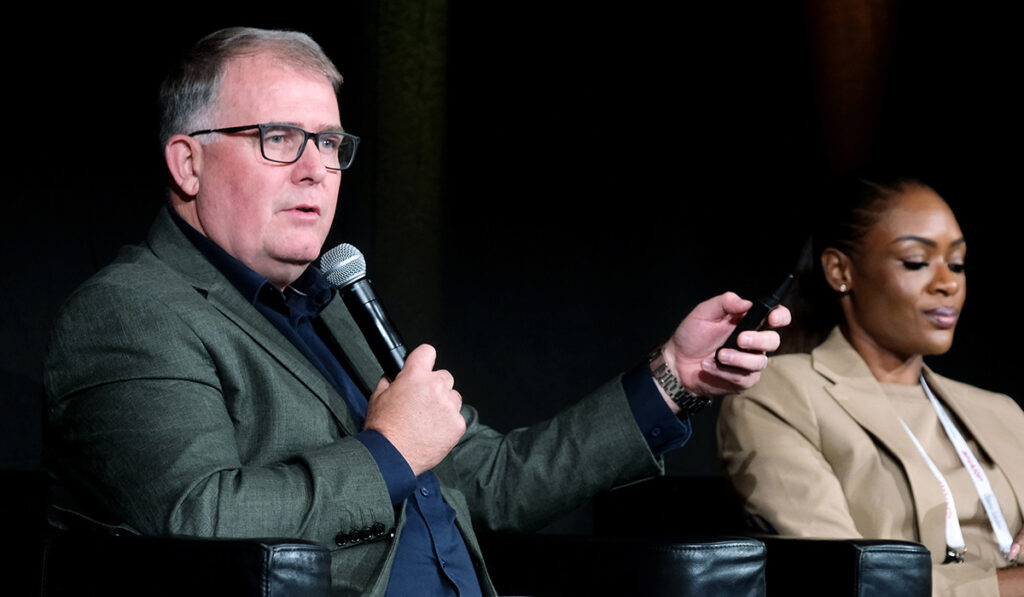
As the panel drew to a close, Mitchell expressed frustration with the industry’s continued habit of judging every market result against the final full year before the pandemic.
“I have a frustration that we always compare to pre-COVID, which is six years ago,” he said. “I hope one day we stop doing that.”
The comparison remains useful. It demonstrates how far admissions have recovered, where markets remain weaker and how audience behavior has changed. Mitchell’s objection was not to using 2019 as a data point, but to allowing it to define the industry’s entire understanding of success.
Cinema is no longer simply waiting to restore the exact business it had six years ago. New formats have expanded. Local films have taken greater market share in several territories. Alternative content has become more important. Loyalty programs and dynamic pricing have grown more sophisticated. Fan communities can organize worldwide in a matter of hours, while audience reaction can alter programming decisions before the first weekend is over.
Mitchell argued that the industry has been too willing to let others shape the story of its performance.
“We don’t share ideas about cinemas,” he said, adding that the industry has “this amazing opportunity to stop talking about 2019” and instead spotlight the growth already underway.
Oladapo agreed that the recovery itself deserves greater recognition. COVID-19 damaged far more than cinemas, she said, affecting businesses, hospitality and families across the world. The work required to rebuild attendance should not be overlooked simply because the resulting market does not look identical to the one that preceded it. That recovery has also depended on collaboration among exhibition, distribution, production, streaming platforms, creators, brands and audiences.
The markets represented onstage offered no universal blueprint. Australia’s wage levels and dynamic pricing cannot simply be transplanted into Nigeria. Filmhouse’s position across production, distribution and exhibition cannot be recreated overnight by every operator. France’s media chronology cannot be imported wholesale into the United States. Cinépolis’ global social-listening operation may exceed the resources available to a small independent circuit.
But the underlying ideas can travel. Premium experiences can be structured to remain accessible. Local films can be treated as long-term investments rather than occasional programming obligations. Influencers and fandoms can be understood as communities rather than marketing channels. Audience data can inform decisions throughout the content chain. Domestic films can be given enough time to develop word of mouth. Theatrical windows can be communicated with clarity.
The lesson from Barcelona was not to copy another market’s party, price point or release policy. It was to understand why those strategies work for their audiences – and then ask what the same principle might look like at home.
Editor’s note: This feature is part of Celluloid Junkie’s coverage of the seminars presented at CineEurope 2026 in Barcelona. See more reporting from the sessions below.
More from CineEurope 2026

- Cinema Owners Have Invested $2.7 Billion in Theatres. What Is That Money Buying? - October 1, 2026
- The Paramount-Warner Merger Is Permanent. The Guardrails for Movie Theatres Are Not - September 22, 2026
- Cinemas Aren’t Just Marketing Movies Anymore. They’re Marketing Auditoriums - September 15, 2026