


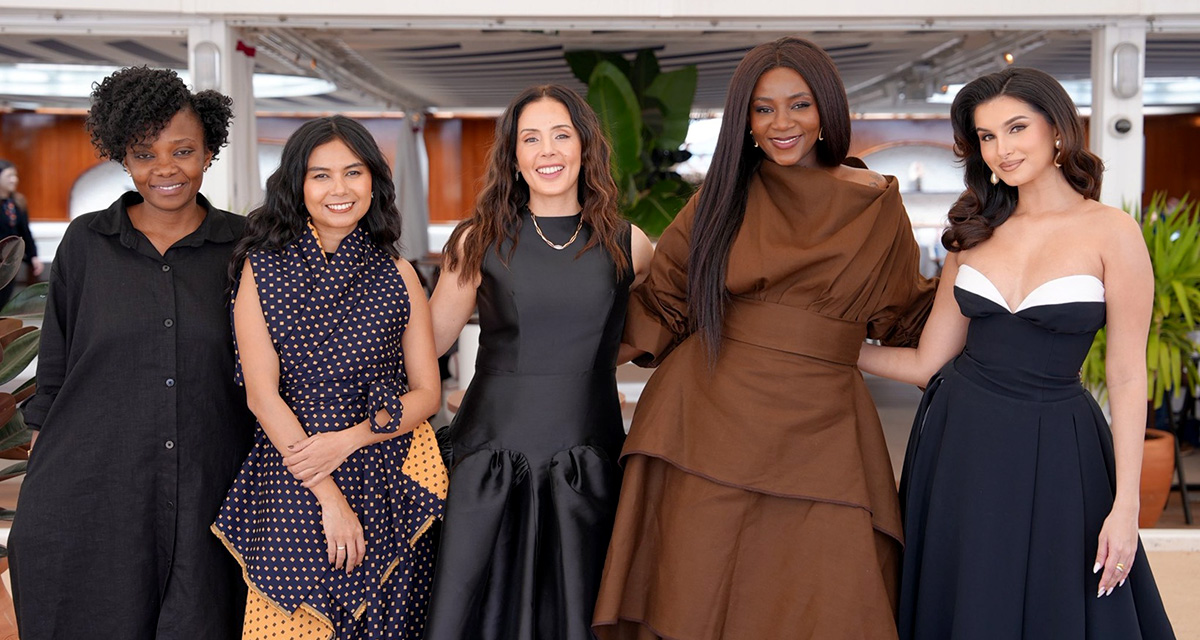
The Red Sea Film Foundation’s annual Women in Cinema spotlight brought together filmmakers and performers from Nigeria, Rwanda, India, Indonesia, Saudi Arabia and Morocco — and made clear that some of the industry’s most urgent voices are still waiting for the infrastructure to match their ambition.
There is a version of this story that writes itself: six talented women, a glamorous gala at the Hôtel du Cap-Eden-Roc in Cap d’Antibes, Demi Moore and Alicia Vikander somewhere in the frame. That version exists, and the photographs prove it.
But the more consequential story from the Red Sea Film Foundation’s 2026 Women in Cinema spotlight — the press day on May 13 and the gala on May 14, both held on the sidelines of the 79th Cannes Film Festival — is the one that doesn’t photograph as neatly. It’s about distribution infrastructure that still hasn’t caught up to the talent it’s supposed to carry. It’s about film industries developing in real time, without a playbook, under the scrutiny of a global press that doesn’t always understand what it’s looking at. And it’s about whether an event like this — a luncheon, a press day, an evening gala — can do more than produce a beautiful set of portraits.
This year’s honorees are Kamila Andini (Indonesia), Marie-Clémentine Dusabejambo (Rwanda), Aixa Kay (Saudi Arabia), Laïla Marrakchi (Morocco), Genevieve Nnaji (Nigeria), and Tara Sutaria (India). It marks the first edition in which three of the six spotlight honorees are from the African continent — a milestone the Foundation was not shy about noting.
The question worth asking is what comes after the spotlight turns off. What emerged across three interviews was not a single story of representation, but an argument for specificity: that films from Nigeria, Rwanda, India, Indonesia, Saudi Arabia, and Morocco should not have to become more generic in order to become more global.
“Nobody Knows Us — We Need to Be Seen”
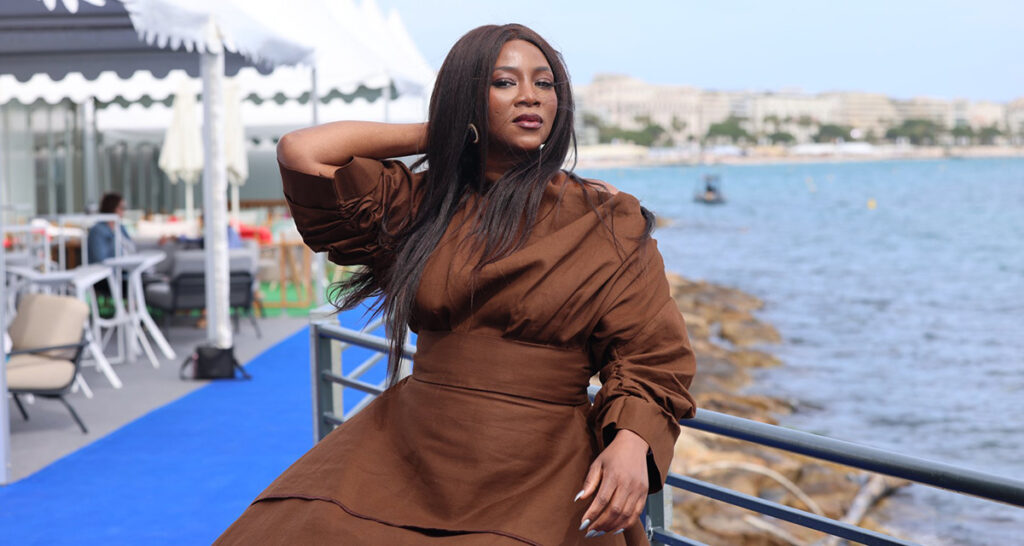
Genevieve Nnaji, whose 2018 film “Lionheart” became Netflix’s first original acquisition from Nigeria, has spent the better part of a decade navigating the gap between Nollywood’s enormous domestic audience and the industry’s persistent tendency to treat African cinema as a monolithic regional curiosity rather than a collection of distinct national cultures. At Cannes this week, she was direct about why festivals like this one still matter, even in a streaming era that theoretically flattens geographic barriers.
“Some, you have to take the film to them,” Nnaji said. “People won’t know you until you bring it to them. So festivals, for us especially, are very, very important — still important. It’s a way to also go and meet people, your peers really, who you might collaborate with, who probably never heard of your country before, but they see this film and they’re like, wait, hold up, I know that story.”
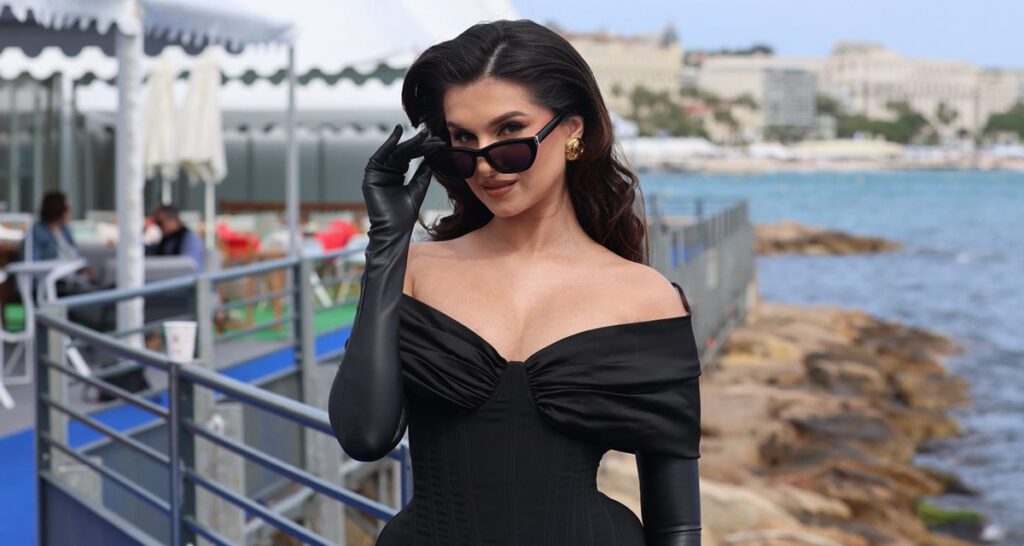
That tension — between the need for external validation and the risk of ceding the narrative to outside gatekeepers — ran through nearly every conversation at the event. Tara Sutaria, whose upcoming bilingual film “Toxic” is set for worldwide theatrical release, framed it as a creative calibration problem rather than a structural one. “We create the narrative, right?” she said. “It comes down to us being able to manage two things: one is to tell our story with our perspective and our narrative, and to shape that ourselves, while also amalgamating and mixing with people and cultures from world over, so that we get to tell the story accurately, but also start the conversation and communication of what it is to tell stories together.”
Both women were careful to distinguish between the visibility that Cannes offers and the deeper infrastructure questions that visibility alone cannot resolve. “In Nigeria, we still have the issue of distribution and everything,” Nnaji acknowledged. “There’s a lot more problems that we’re facing. But I think the synergy — people just collaborating, trying to figure out how we can work together, regardless of gender, to be honest — is what’s taken the forefront right now.”
Rwanda’s First Generation
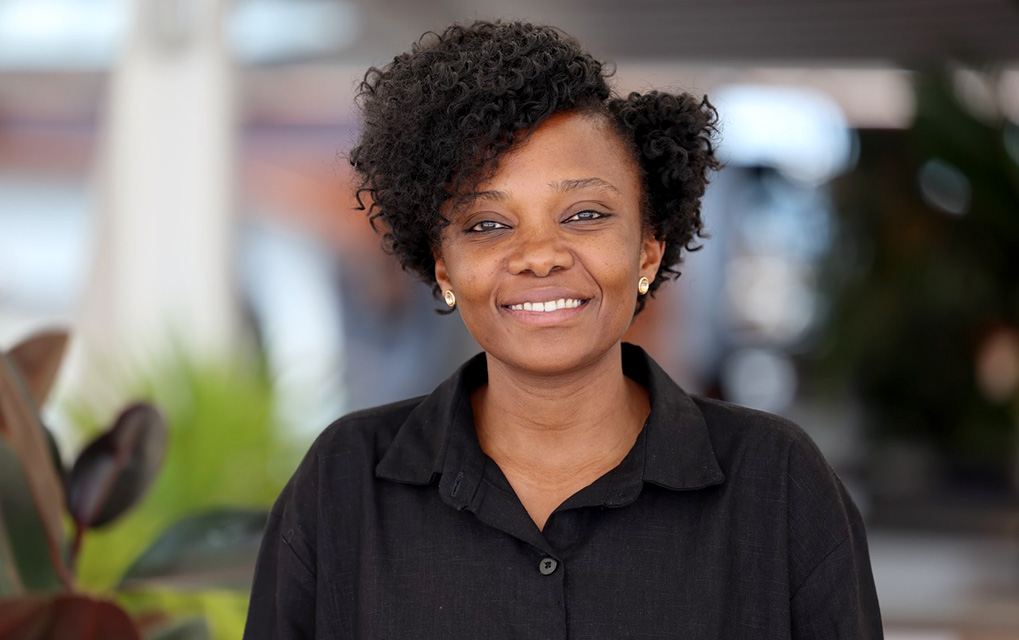
Of all the filmmakers gathered this week, the one with the most structurally unusual Cannes presence is Marie-Clémentine Dusabejambo. Her debut feature, “Ben’Imana” — a Kinyarwanda title meaning, roughly, “the people of God” or “the lucky ones” — is screening in Un Certain Regard, Cannes’ major discovery-focused sidebar and one of its most reliable pipelines for international breakthrough.
Dusabejambo did not arrive at cinema through a conventional route. She was studying mathematics and waiting to enroll in an electronics and telecommunications program when a Tribeca Film Institute call for stories — focused on resilience — drew her in. “My friends said, ‘You always read books, why don’t you write a story?'” she recalled. “And that’s how I started. So I didn’t really think, like, when I would do a film, it’s going to be this. It keeps on changing.”
What has remained consistent across her work, she said, is a preoccupation with people who find themselves trapped inside conflicts they did not create. “It’s more about people who find themselves in a conflict they didn’t start, and how they fight to get out of those conflicts — they have to live with those labels, those names, and everything, and then have to always find their place in a society.”
“Ben’Imana” carries additional weight as an artifact of representation. Dusabejambo is part of what she calls Rwanda’s first generation of feature filmmakers, and she is acutely aware that the choices she makes now will function as precedent. “We are stepping into this big platform, this industry world, and we have to come as who we are without trying to copy others,” she said. “Whether we do fiction, whether we do documentaries, this is going to be the trope for the next generation. So it’s a responsibility — to really create a door for those who will come after us, so that when they step in, they are not taken into the statistics of ‘African films,’ because Rwanda has its own culture.”
The point lands with particular force at a festival that has historically struggled to distinguish between the continent and the country. “Burundi, Congo, Egypt — Africa is different,” she continued. “But there is a box that has been there for a long time.”
Art, Politics, and the Filmmakers Who Pretend Otherwise
Kamila Andini, the Indonesian filmmaker and producer whose critically lauded art-house work includes “The Mirror Never Lies” and “The Seen and Unseen,” spent three years directing a Netflix series — a detour that raised questions she was still working through when we spoke. The platform came to her, she explained, because it wanted a director with an art-house vision for a story about women. “That’s also my question — is it real?” she said. “But then they gave a lot of room for me to create the project, and it’s such a new experience for me.”
The exchange between Andini and Dusabejambo on the subject of “message” filmmaking was one of the sharpest moments of the press day — a genuine disagreement, or at least a productive tension, between two filmmakers who approach the question differently.
Dusabejambo argued that art and politics are inseparable, and that pretending otherwise is where the real danger lies. “In conversation, most of the time, people want to dissociate art and politics,” she said. “But art is politics — because the politics, all they want is to get into people’s minds, convince people, get people’s will. And for us, to get people to sit for 90 minutes to watch our films, we want their will. What are we serving them on the table? That is very important. So dissociating the two — that’s where lies the problem. You can do things, but if the way you put words and names on things is wrong, then it’s going to be like an entertainment soft poison.”
Andini’s counterpoint was that the binary itself is the problem. “Even when you make a commercial movie, there’s always a message,” she said. “Pretty Woman also talks about social class. It’s just a matter of which one is in the front.” The real failure mode, she suggested, is the filmmaker who doesn’t realize what they’re actually saying. “What’s dangerous is if a filmmaker doesn’t realize that they’re actually talking about something — they don’t realize that they’re talking about politics, they don’t realize they’re talking about a certain issue, and they just make it as entertainment.”
It is an argument Andini came to through practice as much as theory. As a young filmmaker in Jakarta, she learned her craft from Hollywood and European cinema — and then ran into the limits of that education the moment she tried to imagine something as simple as a first date. “In your mind, a date is going to the park, talking together,” she said. “But then you realize it’s not the same around you. We don’t go to the park. We don’t even have a good park in Jakarta, with a bench where you can sit and talk. We have different ways of dating. And that’s what I want to see.”
That may be the most compact version of the specificity argument made across the entire press day. Not a manifesto. Just a filmmaker noticing that the image in her head didn’t belong to her own life — and deciding to change that.
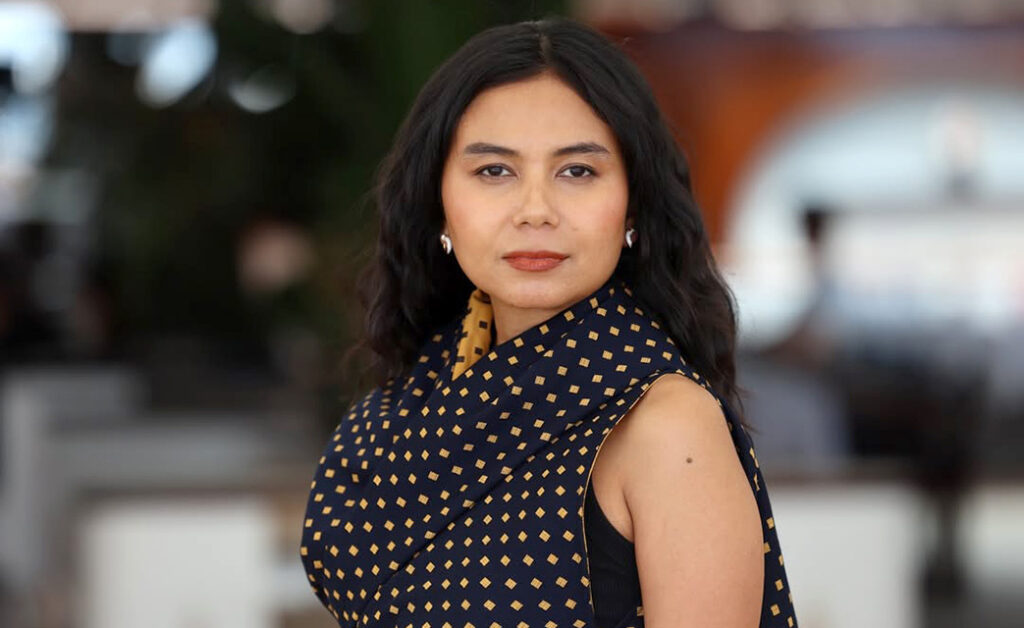
The Saudi Exception
Aixa Kay occupies a singular position in this year’s cohort. A writer and actor who has split her career between Canada and Saudi Arabia, she is, in effect, a participant in two film industries simultaneously — one mature and underinvestment-weary, one developing at a pace that observers outside the region are still scrambling to accurately characterize.
On the Canadian side, she was unsparing. Despite years of work there, she described a casting culture in which actors who looked like her were systematically confined to roles defined by their otherness — refugees, immigrants, people whose presence in a story required an explanation. “We were not given opportunities to work in roles outside the narrative of being a refugee or an immigrant,” she said. “Just a story about a person who was a participant of life — without an apology for why they are in the story.”
The Saudi industry, she argued, has a counterintuitive advantage: it gets to start later, and therefore can learn from the mistakes of established industries rather than repeat them. “Our film industry is starting where other people have finished,” she said. “Lessons learned already from the adventures and the wars that were fought before us — so that’s a good thing.”
She also pushed back, emphatically, against what she characterized as a shallow and outdated North American perception of Saudi Arabia — one that reduces it to a financial proposition. “The truth is Saudi Arabia does have a lot of money, and there’s no apology for that,” she said. “But it’s also money with good management. When they come and enter into Saudi Arabia and work with them towards making cinema and writing and collaborating, people who understand and see it — it’s beyond the money, it’s the combined vision for a better future.”
Of note for industry observers: the first film school to open in Saudi Arabia was a women’s institution — the School of Cinematic Arts at Effat University in Jeddah — a detail that runs counter to most Western assumptions about the market’s trajectory, and one that helps explain the notable female representation on Saudi productions in recent years. “The first graduates that were very well trained were from a women’s school,” Kay said. “When they needed people on the crew side, they needed people with different specializations — and so that, I think, is a good enough idea of what was the first push of women that went into the workforce.”
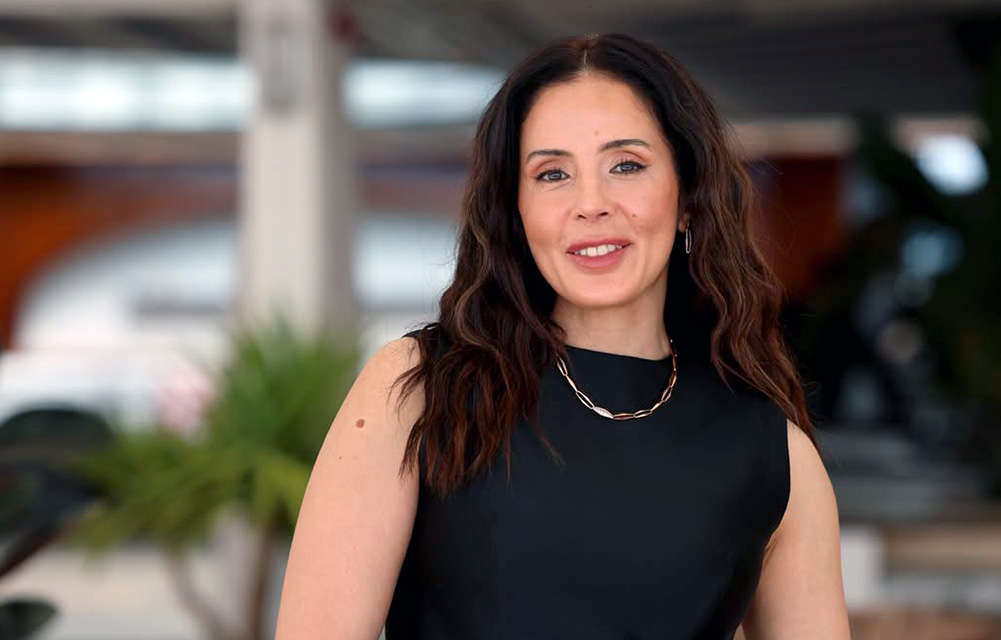
What the Foundation Is Actually Selling
The word “selling” is not meant pejoratively here. The Red Sea International Film Festival and its associated Foundation have, since launching in 2021, pursued a strategy that is less about acquiring prestige in the traditional sense and more about building a parallel infrastructure — one that operates in the margins of the major festival circuit and gradually makes those margins less marginal. That is a genuine service to global cinema, and it is also, plainly, an institutional project with interests of its own. Both things are true.
The Women in Cinema initiative is a meaningful piece of that strategy, not simply because it generates goodwill, but because it creates genuine connectivity between filmmakers who would not otherwise share a professional network. Nnaji made the point plainly when asked what the initiative had offered her: “Opportunities to meet people like her,” she said, gesturing toward Sutaria. “Having conversations that I didn’t think was possible, because I would never have met them otherwise.”
That may sound like the soft benefit of a networking luncheon, and it is. But for industries where the absence of international co-production infrastructure remains a genuine ceiling on scale, the networking luncheon is not nothing. It is, in some cases, the mechanism by which the next collaboration gets funded.
For an industry audience, that word — distribution — is not incidental. It is the central business problem that governs whether films from these markets reach paying audiences, whether international visibility can be converted into commercial opportunity, and whether the theatrical window remains a viable part of their commercial lifecycle.
Sutaria put it in terms that are hard to argue with. “I think this Women in Cinema gala is so exciting, because I can already sense from the women that I’ve met that we’re going to take these conversations further and actually lead them to fruition, and make things happen in cinema together.”
The awards ceremony is still ahead. “Ben’Imana” still awaits its Cannes fate. Several of these careers are at inflection points. Whether this particular Cannes will be remembered as a turning point for any of them remains an open question — but the conversation happening in the margins of the 79th festival suggests the industry’s center of gravity is shifting, one co-production deal, one distribution agreement, one festival slot at a time.
Genevieve Nnaji offered something close to a mission statement for all of it: “At the end of the day, we kind of direct the world to where it’s headed. We train minds to view life in a different perspective — that’s what stories do. People can only believe what they see, so we show them what’s possible.”
Celluloid Junkie spoke with Kamila Andini, Marie-Clémentine Dusabejambo, Aixa Kay, Genevieve Nnaji and Tara Sutaria, at the Red Sea Film Foundation’s Women in Cinema luncheon on May 13, 2026, at the 2026 Cannes Film Festival.

- The Paramount-Warner Merger Is Permanent. The Guardrails for Movie Theatres Are Not - September 22, 2026
- Cinemas Aren’t Just Marketing Movies Anymore. They’re Marketing Auditoriums - September 15, 2026
- The Cinema Concession Stand Is Becoming a Marketplace - September 11, 2026