


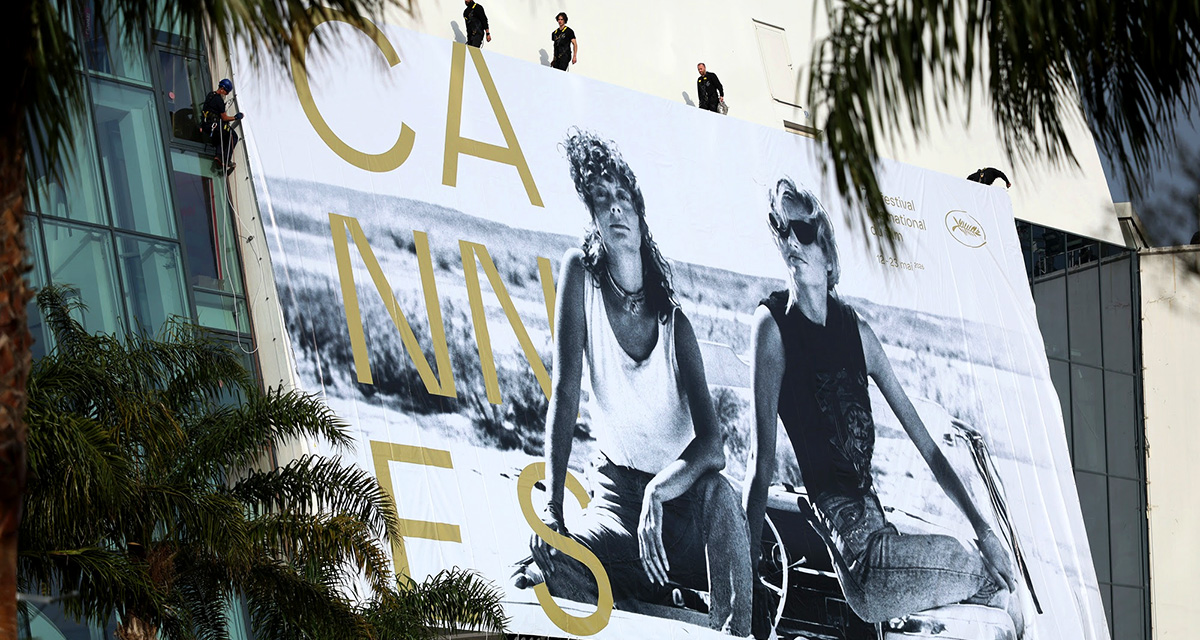
There is a quality to the light along the Croisette in May that no other film festival can replicate or claim. It falls at a particular angle across the Palais des Festivals — that concrete monolith critics have spent decades mocking and cinephiles have spent decades loving — and transforms even the most routine press-junket shuffle into something that feels, briefly, like it matters. The world’s most powerful film industry converges here every spring not because the South of France is uniquely beautiful, though it is, but because Cannes has spent 79 years constructing an argument: that cinema is serious, that it is necessary, and that it deserves to be treated as both.
In 2026, that argument has never needed making more urgently. And it has rarely been harder to make with a straight face.
The 79th edition of the Festival de Cannes opens today against the backdrop of an industry in structural convulsion. The major Hollywood studios are absent from the official selection in any meaningful sense; no summer blockbusters, no Tom Cruise, no franchise prestige play designed to ride the red carpet into the global marketplace. Artificial intelligence, which tore through Hollywood’s guild negotiations in 2023 and was provisionally contained by contract language, has re-emerged with renewed force as those same contracts approach renegotiation. The streaming platforms that spent half a decade disrupting the theatrical window are themselves retreating from volume acquisition, leaving a market that is simultaneously more open and more uncertain than it has been in a generation.
And yet: 22 films are in competition for the Palme d’Or, selected from 2,541 submissions across 141 countries. This year’s jury is led by Park Chan-wook — the first South Korean filmmaker ever to hold that role — alongside Demi Moore and Stellan Skarsgård, among others. The Marché du Film is expected to host some 15,000 industry professionals over nine days. Television cameras will be hunting Mike White and the cast of the latest season of “The White Lotus,” parts of which will be filmed here on the Croisette this spring, with fictional characters attending a fictional version of the very festival currently in progress.
Life imitates art. Cannes sells the rights.
The Absence That Defines the Room
Cannes has always been in implicit negotiation with Hollywood — the festival that takes itself most seriously has always needed the industry that takes itself most profitably. This year, those terms have broken down.
Christopher Nolan’s “The Odyssey,” Steven Spielberg’s “Disclosure Day,” Alejandro González Iñárritu’s “Digger,” David Fincher’s “Cliff Booth” — these are films that were once circling the festival and are now circling other dates on the calendar. In some cases, major studio films were not finished in time. In others, studios no longer see the point of spending millions to launch movies months before release, only to risk having them booed, dissected or dismissed by international critics before their marketing campaigns have even begun.
Since COVID, a handful of studio tentpoles have learned that Cannes prestige does not always translate into commercial momentum. “Indiana Jones and the Dial of Destiny” and Pixar’s “Elemental” both launched in 2023 to difficult festival receptions. Warner Bros.’ “Furiosa” arrived in 2024 with critical respect but without the box office lift the studio might have hoped for. The lesson has been absorbed.
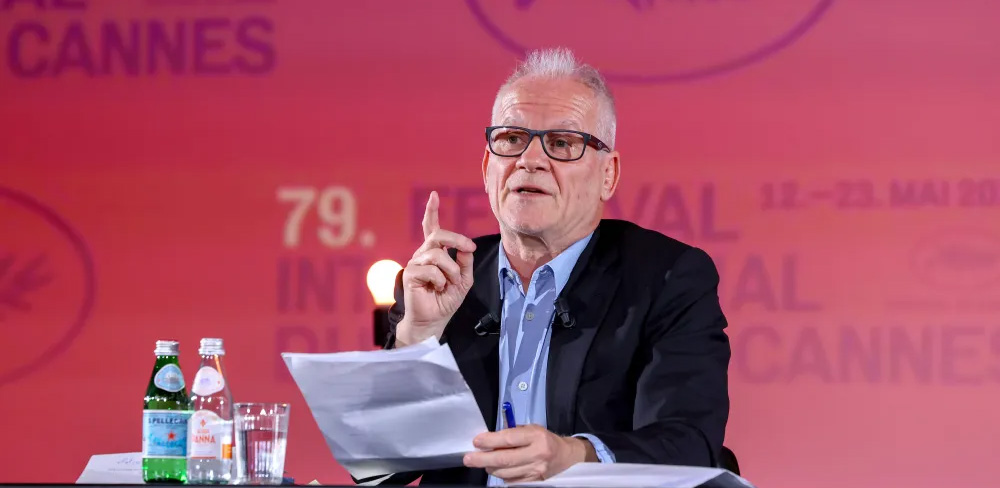
Thierry Frémaux has addressed Hollywood’s absence with a combination of diplomatic equanimity and barely suppressed nostalgia. “Of course, I feel nostalgic for that golden age when studios used to produce a lot of films, every month, auteur films,” he told Deadline after the April lineup announcement. “My generation, we grew up loving cinema and loving cinema was loving American cinema.” This morning he said simply: “I hope the studio films come back.”
His consolation is structural: the Cannes-to-Oscar pipeline has never been more productive. “Anora” won the Palme in 2024 before sweeping the Academy Awards. “Sentimental Value” won the Jury Prize in 2025 before claiming the Best International Feature Oscar. Universal Pictures’ contribution to this year’s festival, meanwhile, is a midnight anniversary screening of the 25-year-old original “Fast and the Furious.” The gap between that and a world premiere speaks for itself.
The real question some are asking is whether American movies have simply gotten worse — or, more precisely, whether the studios are making fewer of the kinds of movies Cannes was built to celebrate. The 2025 lineup featured U.S. titles starring Tom Cruise and directed by Spike Lee, Wes Anderson, Richard Linklater and Kelly Reichardt. Not a single one made it to the Academy Awards in March, while Cannes titles in French, Norwegian and Persian dominated the nominations.
Frémaux’s bottom line is difficult to argue with: “When studios have a smaller presence at Cannes, it’s because they’re simply less active in the kind of cinema that used to allow them to come here.”
A Competition That Has an Argument to Make
The 22-film competition is not a consolation prize for Hollywood’s absence. It is a deliberate ideological statement — and a strong one.
Frémaux opened his April announcement by defending “the freedom of human creativity in filmmaking” and “the in-theater experience” before naming a single title. Those two ideas — human creativity and theatrical exhibition — are the organizing principles of everything that follows.
The thematic spine of this year’s competition is not geography so much as moral reckoning across political borders. Pawel Pawlikowski’s “Fatherland” follows Thomas Mann and his daughter Erika, played by Sandra Hüller, returning to Cold War Germany. Cristian Mungiu’s “Fjord,” his first English-language film, sends a devout Romanian-Norwegian couple into a small Norwegian village where their child-rearing methods draw suspicion. Andrey Zvyagintsev’s “Minotaur,” his first feature since 2017’s “Loveless,” arrives after a near-fatal COVID illness and the director’s exile from Russia to France. These are films about displacement, conformity and the violence that states and communities visit on individuals who do not fit.
Asghar Farhadi’s “Parallel Tales” brings his fifth competition appearance and his most politically proximate subject to date: the aftermath of the November 2015 Bataclan attacks in Paris, with Isabelle Huppert, Vincent Cassel and Catherine Deneuve as survivors. Playing in the year of an Iran-U.S. war, with that cast, it arrives weighted with context that extends well beyond its runtime.
Japan’s three competition representatives — Ryusuke Hamaguchi’s “All of a Sudden,” Hirokazu Kore-eda’s “Sheep in a Box” and Koji Fukada’s “Nagi Notes” — reflect the ongoing consolidation of East Asian cinema as a dominant force in world auteur filmmaking. Hamaguchi’s film, his first shot outside Japan and his first since “Drive My Car” won the Best International Feature Oscar, has already been acquired by Neon, giving it front-runner status before anyone outside a small inner circle has seen a frame.
The most broadly anticipated competition title may be Na Hong-jin’s “Hope.” Na has not made a film since “The Wailing” in 2016, and all three of his previous features screened at Cannes without ever making it into competition. “Hope” is a genre thriller set near the North Korean border, shot by Hong Kyung-pyo of “Parasite” and scored by Michael Abels of “Get Out” and “Us,” with a cast spanning Hwang Jung-min, Jung Ho-yeon, Michael Fassbender, Alicia Vikander and Taylor Russell. At 2 hours and 40 minutes, it has the architecture of an event.
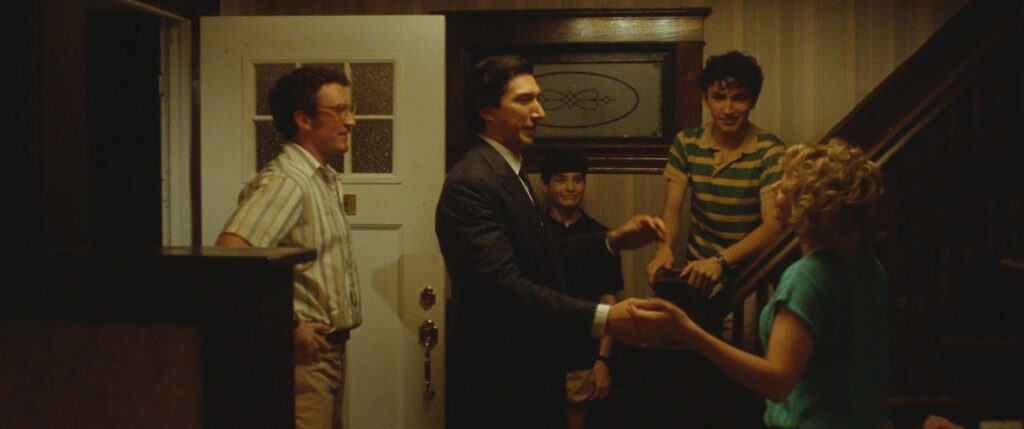
Of the two American competition entries, Ira Sachs’ “The Man I Love” carries the greater personal weight: set in late-1980s New York at the height of the AIDS crisis, starring Rami Malek as a beloved queer entertainer determined to mount one last play while dying. “If you live within the context of American independent cinema, you feel a little bit alone, to be honest,” Sachs said ahead of the festival. “As soon as you start to think of yourself within a broader community of people all over the world, it just becomes exciting.” James Gray’s “Paper Tiger,” his fifth time in the main lineup, brings Adam Driver, Scarlett Johansson and Miles Teller into a Russian mafia crime saga that revisits the territory of Gray’s early career films “Little Odessa” and “We Own the Night.”
Taken together, the lineup is not trying to replace Hollywood glamour. It is trying to make the case that Cannes does not need to.
The Oscar Rule Change, and Why It May Influence the Jury Itself
A new Academy Award rule announced this month adds a dimension to the Palme d’Or race that goes beyond the usual post-festival awards calculus.
For the first time, the Palme d’Or winner — if in a foreign language — will automatically be eligible for the Academy Award for Best International Feature Film, without needing a country of origin to submit it as its official entry. The rule closes the loophole that previously disadvantaged “Anatomy of a Fall,” which won the Palme but was not France’s official Oscar submission and therefore could not compete in the international category despite being one of the year’s most celebrated films.
The practical marketing implications are obvious. The subtler implication — the one worth watching from inside the Palais — is whether the rule changes the jury’s deliberations themselves. If a film comes from a country unlikely to submit it officially, or from a filmmaker working in exile, the jury may have an additional reason to view the Palme as the mechanism by which that film reaches the largest possible audience.
Zvyagintsev’s “Minotaur,” from an exiled Russian director working outside any national film infrastructure that would submit on his behalf, acquires particular weight under this framework. The Palme d’Or has always been the festival’s most powerful act of advocacy. This year, it is also an Oscar campaign.
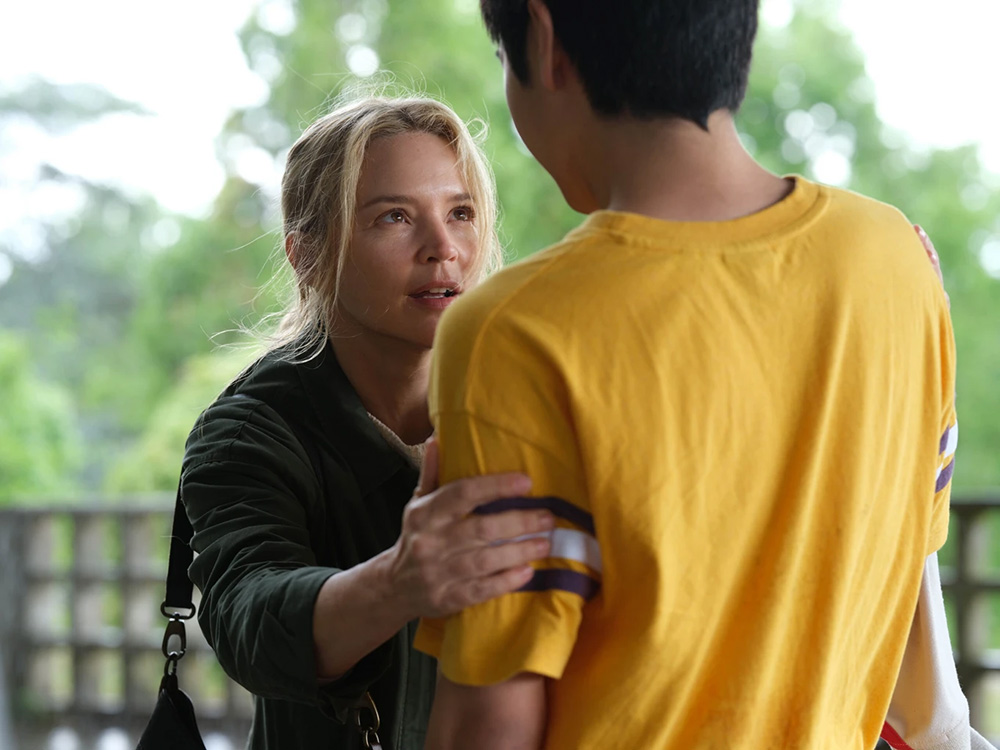
The Park Chan-wook Question
Park’s appointment as the first Korean jury president in Cannes history is not an administrative gesture. It is a statement about what kind of cinema the festival is prepared to spotlight.
His filmography is built on aesthetic convictions that are, in the context of prestige festival cinema, somewhat unconventional. Park is not a director of restraint. He is a director of precision, which is different. His films — “Oldboy,” “The Handmaiden,” “Decision to Leave” — deploy genre mechanics as delivery vehicles for ideas that straight drama would render schematic. The transgression in his work is aestheticized without being endorsed, creating the vertiginous ethical discomfort that has become his signature.
For this year’s competition, that matters. The traditional Cannes tendency to reward austere minimalism over kinetic construction may be less pronounced under a jury president who has spent his career dissolving the boundary between art cinema and genre cinema. Na Hong-jin’s “Hope” is not the obvious Palme winner on paper. Under Park, it might be.
What is equally likely to matter is formal ambition and visual intelligence. Hamaguchi’s spatial precision, Pawlikowski’s rigorously argued black-and-white, Zvyagintsev’s monumental compositional control and Farhadi’s intricate ensemble construction all speak to a craft vocabulary Park is likely to value. A film that is emotionally sincere but technically uninteresting may have a harder time surviving these jury deliberations.
The most defensible Palme scenarios at the outset are Hamaguchi’s “All of a Sudden,” for formal control and Neon’s institutional weight; Na’s “Hope,” as a historic genre statement in the year of the first Korean jury president; Mungiu’s “Fjord,” for moral complexity and formal seriousness; and Zvyagintsev’s “Minotaur,” for both biographical freight and the new Oscar eligibility framework. Pawlikowski’s “Fatherland” is the disciplined dark horse. Farhadi’s “Parallel Tales” is the sleeper that could dominate post-screening jury conversation. Almodóvar, who has never won despite numerous Cannes appearances, is likelier to receive a career acknowledgment than a competitive prize.
The Market, AI, and the Industry’s Open Questions
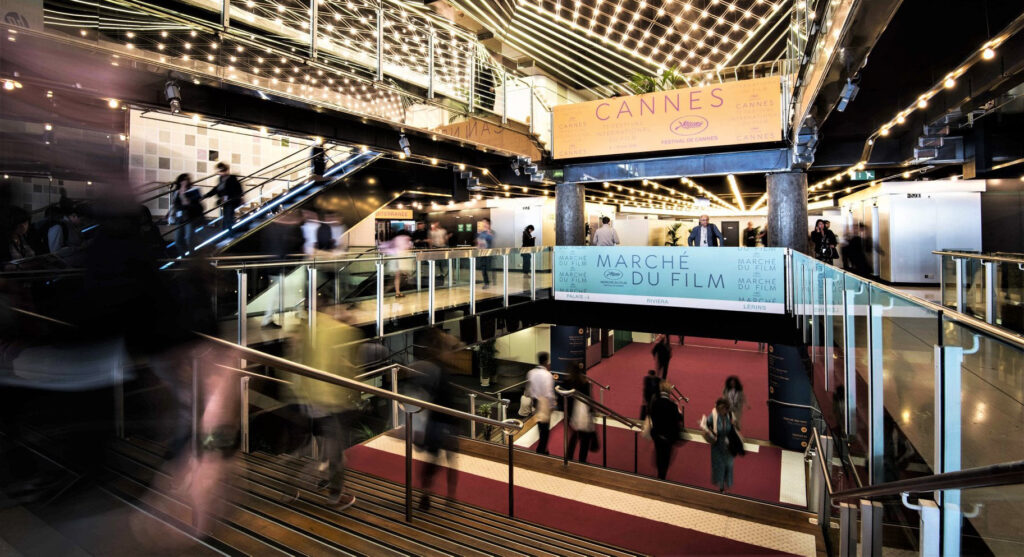
The Marché du Film, running May 12–20, remains the industry’s most reliable barometer of where the money thinks cinema is going. This year, it is measuring a business that has lost some old certainties and has not yet replaced them.
The mega-packaged movie has effectively disappeared from the Marché’s upper tier. The economics of independently financing big-budget films have become unforgiving, pushing producers and sales companies toward leaner concepts with clearer theatrical identities. The market’s flagship package is likely Park Chan-wook directing “The Brigands of Rattlecreek,” an English-language western starring Matthew McConaughey, Pedro Pascal and Austin Butler. It represents the new upper end: a revenge narrative with a clean commercial hook and a cast that provides immediate territorial recognition.
Below that level, the market is increasingly binary in a way that unnerves buyers. Audiences appear younger and more genre-oriented. “Longlegs,” “Materialists” and “Marty Supreme” are the reference points buyers are citing, not Merchant-Ivory. Elevated horror, star-driven erotic thrillers and prestige auteur plays with commercial hooks are moving fastest.
Neon’s footprint at the festival is itself a market story: nine films, including Hamaguchi, Na Hong-jin, James Gray and Arthur Harari’s “The Unknown,” starring Léa Seydoux. A single distributor holding that proportion of the competition is unusual and speaks to a consolidation of acquisition power that mirrors what is happening on the studio side.
The AI question runs through the Marché and the Palais like a rip current. The Marché is hosting the second edition of its AI for Talent Summit alongside the largest virtual production stage ever presented at a film market. The festival’s artistic leadership opened its lineup announcement with an explicit defense of human creativity. These two positions — innovation hub versus defender of human authorship — are being held simultaneously by connected institutions across the same 12 days. Whether they can coexist without friction is one of the more interesting internal tensions of this year’s edition.
The provocateur in the middle is Steven Soderbergh, whose “John Lennon: The Last Interview” uses AI imagery for roughly 10 percent of its runtime — a creative choice that, in any other year, might be discussed purely in aesthetic terms. In this year’s Cannes, with SAG-AFTRA and the WGA both in active contract renegotiations over AI guardrails ahead of their 30 June deadline, it is also a policy statement, whether Soderbergh intends it as one or not.
Frémaux acknowledged the broader context when addressing the Academy’s new AI rules: “Hollywood is undergoing a major shake-up. After COVID, the writers’ strike, which, incidentally, is linked to issues surrounding artificial intelligence, followed by restructuring, mergers, acquisitions, and so on.” Studio representatives appearing on Marché panels will be conscious of every word. Creative guild members will surely be less patient.
Beyond the Competition
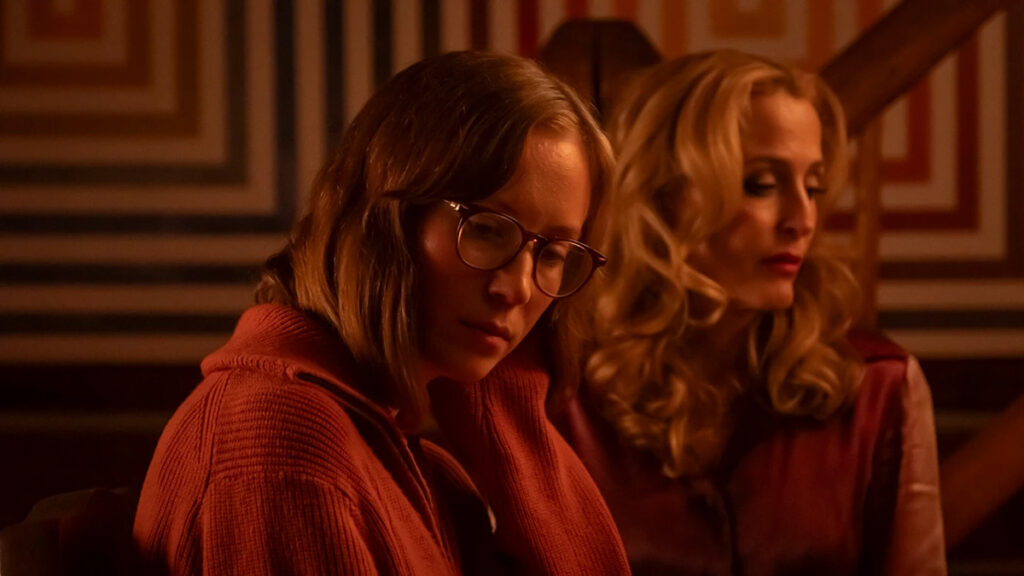
Of the many sidebar selections offered up by Cannes, Jane Schoenbrun’s “Teenage Sex and Death at Camp Miasma,” opening Un Certain Regard, may be the film most likely to generate cultural noise beyond industry circles. Schoenbrun, whose “I Saw the TV Glow” was one of 2024’s most discussed films, has made a meta-horror about a filmmaker, played by Hannah Einbinder, hired to reboot a slasher franchise who becomes obsessed with persuading the original film’s final girl, portrayed by Gillian Anderson, to return. MUBI releases it in North America in August.
Also in Un Certain Regard, the most significant discovery story may be Marie-Clémentine Dusabejambo’s debut feature — the first film by a Rwandan director ever to appear in Cannes’ Official Selection — recently acquired by mk2 Films after the team saw the completed work. The combination of debut authority, historical urgency and institutional backing is exactly the profile that produces breakout stories in this section.
Meanwhile, Directors’ Fortnight opens with Kantemir Balagov’s “Butterfly Jam,” his English-language debut, starring Barry Keoghan and Riley Keough and set in a New Jersey community of Circassian immigrants. Both of Balagov’s previous Cannes entries won major Un Certain Regard prizes. Fortnight artistic director Julien Rejl has described “Butterfly Jam” as bringing to mind the films of James Gray. The cast’s commercial profile is the most starry of any Fortnight opener in recent memory.
What the Festival Is Actually About
Cannes 2026 will be written about, in the days to come, as the festival Hollywood skipped. That framing is not wrong, but it is incomplete.
What this festival is actually about is whether cinema can still carry the weight the world asks it to carry. Whether images projected in a dark room, watched collectively, can do something that algorithms and streams and platforms cannot. Whether the belief that justified Cannes’ founding in 1939 — that bringing artists together across borders was not a luxury, but a necessity — still holds.
Pierre Salvadori, whose “Electric Kiss” starts the party tonight, put it as plainly as anyone has. The Cannes Film Festival, he told the New York Times, is “a celebration of auteur movies” that reflects “this special idea of what movies should be, of what cinema is about.”
The Palme d’Or will be awarded on 23 May. Between now and then, 22 films will make their arguments. A market will make its deals. A jury will deliberate. And somewhere on the Croisette, in the particular light that falls across the Palais in May, the industry will remind itself why it came here in the first place.
The films are always the point.

- Cinergy and Cinema United’s Todd Halstead Honored at CinéShow as Flix Brewhouse’s Allan Reagan Puts Ukraine Center Stage - August 31, 2026
- Cinema United Didn’t Back the Paramount-Warner Merger. It Put Its Terms on the Table. - August 21, 2026
- A Stronger Release Slate Eases One Problem for Cinemas, but Reveals a Harder One - August 10, 2026