


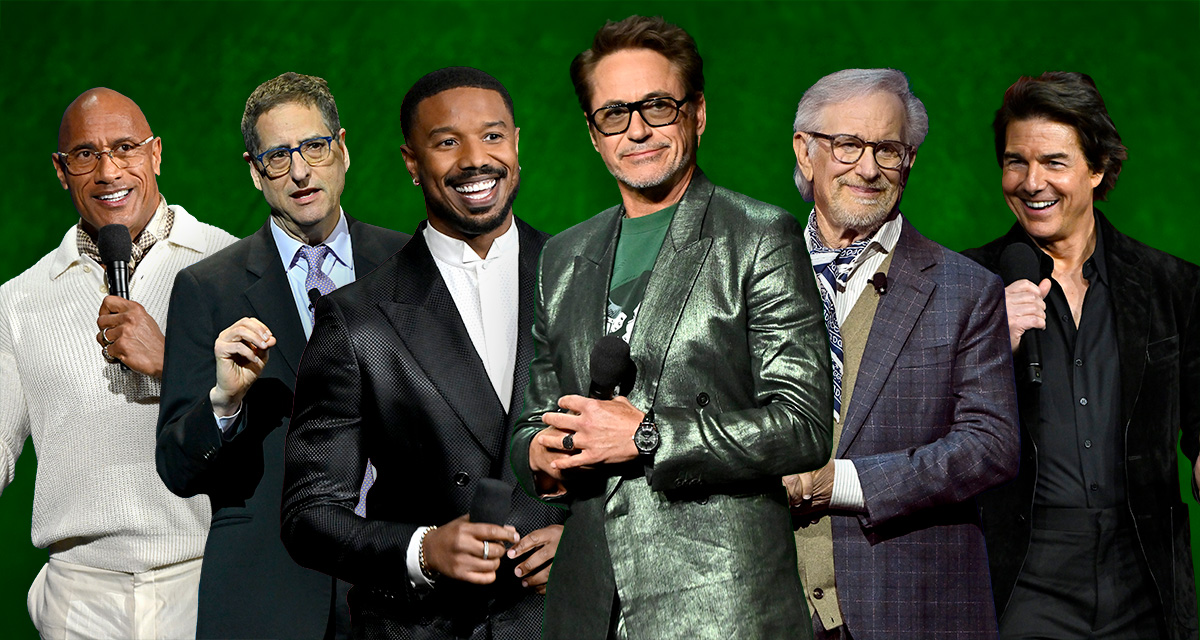
The Colosseum at Caesars Palace in Las Vegas was built for spectacle, which makes it the right room for the wrong argument. For four days in mid-April, the major studios (and several independent distributors) stood on its stage and walked theatre owners through 2026 and 2027 slates that were, on paper, the strongest the industry has fielded since the pandemic. The 2026 domestic box office entered April at its strongest post-COVID pace, up more than 20% year over year. Cinema United pegged its annual convention’s attendance up roughly 5% from last year. The mood at CinemaCon, as one veteran exhibitor put it on the floor, was the best since pre-COVID — but disciplined, not euphoric.
That mood traveled onto the stage. Anyone listening for the tone underneath the trailers and showreels heard something other than a victory lap. The 2026 studio presentations were carefully constructed arguments for why theatrical still works, pitched — with no small amount of urgency — to the people who already believe.
After several years in which the studio-exhibitor relationship was conducted in passive-aggressive press releases and shrinking windows, the ritual of reassurance was back. CinemaCon has always been part trade show, part revival meeting. In 2026, the revival was working overtime.
Franchise Gravity
The most obvious pattern across the week — and the one most likely to be dismissed as boring — was franchise gravity.
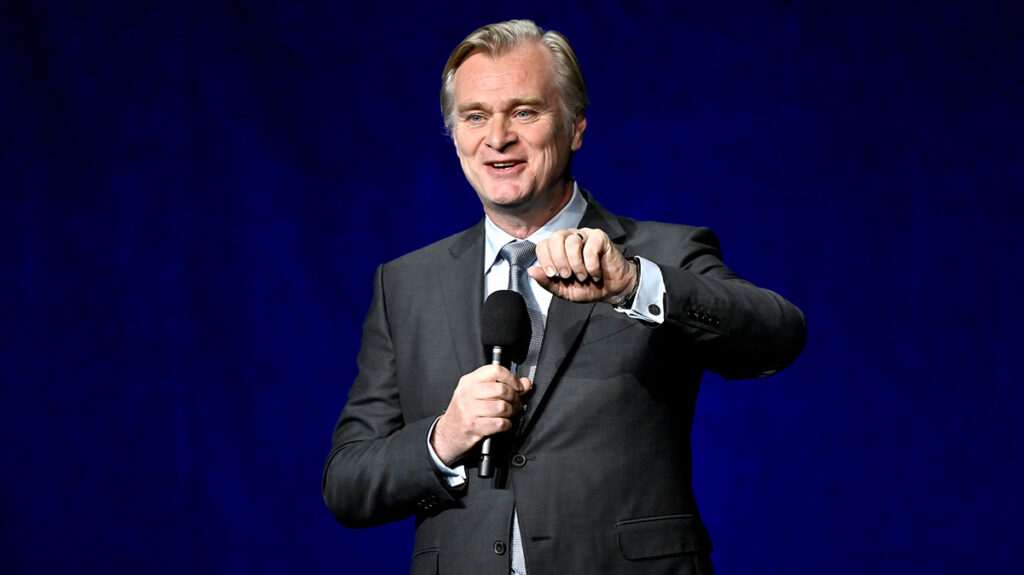
Disney closed the convention with the first full trailer for “Avengers: Doomsday,” fronted by stars Robert Downey Jr. and Chris Evans, alongside footage from “The Mandalorian and Grogu” and a pipeline of “Toy Story,” “Moana” and Marvel extensions, all wrapped in an Infinity Vision premium-format push. Warner Bros. brought along the seven-minute opener for “Dune: Part Three,” DC’s “Supergirl,” and Tom Cruise introducing his next film, “Digger” alongside its director, Alejandro G. Iñárritu. Universal leaned on Christopher Nolan’s “The Odyssey” and Steven Spielberg’s “Disclosure Day,” with Minions and Mario-era family business holding up the floor. Sony built its slate around “Spider-Man: Brand New Day,” not to mention the conclusion of the animated “Spider-Verse” trilogy, “Jumanji: Open World” and an animated adaptation of video game “Bloodborne.” Paramount pitched “Top Gun 3,” “Call of Duty,” “Scary Movie 6” and “Angry Birds 3.” Amazon MGM uncorked “Spaceballs: The New One,” “Highlander” and “The Thomas Crown Affair.”
If that reads like a list of the same studios repeating themselves, that is roughly the point. Theatrical’s reset has not produced a flowering of original storytelling; it has produced a re-investment in known IP and predictability. Don’t get us wrong, original films were not absent — filmmakers Damien Chazelle and Teyana Taylor on the Paramount slate, the Sony Pictures Classics and StudioCanal portions of the week, Warner’s announced a new specialty label named Clockwork — but they were not driving the conversation. The studios have decided that the safest way to refill auditoriums in 2026 is to reduce uncertainty about what audiences are walking into in the first place.
The more useful framing is not original-versus-franchise. It is eventized originality versus brand exploitation. Universal sold Spielberg and Nolan inside a franchise-rich showcase. Warner argued for original storytelling while flexing DC, Dune and a Cruise-Iñárritu pairing. Amazon MGM literally framed its strategy as “beloved IP and bold, original ideas.” Even Disney’s dominance was acknowledged in the room alongside a quieter anxiety that the machine has become too optimized. Bland brand exploitation is increasingly exposed; brands that can borrow auteur legitimacy, or originals that can become brands, are where the strategy has moved.
Theatrical-First, Finally Aligned
Underneath the slates, the messaging was rigorously aligned in a way it has not been in years. “Only in theatres” was repeated so often it stopped sounding like a tag and started reading as doctrine.
Cinema United CEO Michael O’Leary used his State of the Industry speech to note that the average window for the top 100 films in 2025 had risen to 37 days, and would have hit 49 days had each of those titles been given a 45-day exclusive run. By the time the studio reels were over, exhibitors had heard:
- Universal commit to at least five weekends of theatrical play for every release.
- Paramount Skydance Chairman and CEO David Ellison promise a 45-day exclusive theatrical window “starting today,” with a 90-day path to streaming and a pledge of 30 theatrical films a year from a combined Paramount-Warner entity.
- Amazon MGM extend the theatrical window on “Project Hail Mary” and tout more than $670 million from its first four 2026 releases.
- Sony’s Tom Rothman openly agitate for longer windows.
- Disney holding to its 60-day standard, treating it as table stakes rather than concession.
The remarkable thing, given the last five years, was the lack of disagreement. There is now a working consensus inside the major-studio system: a roughly 45-day theatrical-exclusive corridor, with premium video on demand (PVOD) tolerated sooner than subscription-streaming availability. That is not a return to the pre-pandemic 90-day window, and it is not the windowing theology of 2019. But it is closer to a stable settlement than the industry has had at any point since the pandemic — and the studios mostly arrived in Las Vegas wanting credit for it.
The catch is the obvious one. Messaging is an act of repetition, and you only repeat what you have not yet established. The reason the 2026 presentations were so heavy on theatrical-first rhetoric is that exhibitors have spent the last five years being told otherwise. Reassurance, almost by definition, is what you offer when the underlying question is still open, and still not fully answered.
Spectacle Is the Load-Bearing Argument
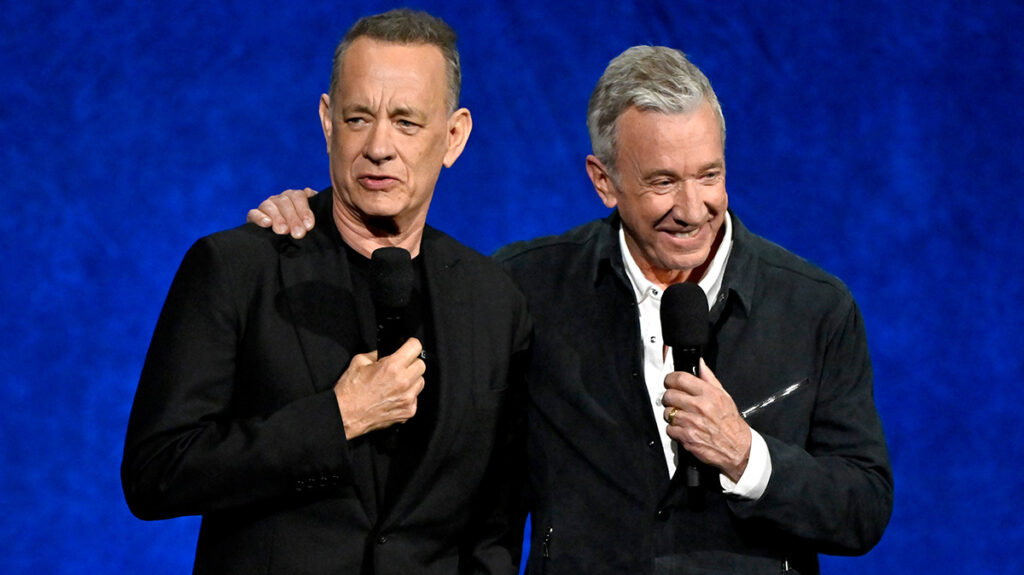
The other recurring pitch was sensory. Disney’s Infinity Vision rollout — formalizing a Disney-blessed premium large-format certification and clearer PLF consumer branding — was the most explicit version of this strategy, but it was hardly alone. Every studio at one point or another found a way to invoke Dolby, IMAX, Imersa, ScreenX, 4DX, 4D E-Motion or simply “the biggest possible screen.” Runtimes are creeping back up. Visual scale was repeatedly cited, often by talent themselves, as the reason to leave the house.
This is not a branding flourish. If the post-streaming theatrical model is going to defend itself, the argument cannot be made on price or convenience. It has to be made on experience. That makes premium large-format auditoriums and their elevated ticket prices structurally important to studio strategy in a way they simply were not five years ago. PLF is no longer a top-of-the-funnel marketing accent. It is becoming the load-bearing wall of the higher-margin theatrical economy — and most of the slates shown in Vegas were, implicitly or otherwise, built to monetize on those screens first.
The Calendar Problem Beneath the Slates
The slates also told a different story when read across the year rather than studio by studio. Even the strongest presentations revealed an industry still working with a lopsided release graph: clusters of tentpoles bunched around the traditional corridors, gaps of weeks elsewhere, and not enough mid-budget filler to keep auditoriums consistently full between events. The industry has gotten better at creating moments. It has not yet solved what happens between them. Universal’s volume and discipline were the exception that proved the rule; several other majors are still essentially organizing their release year around three or four moments and hoping the rest takes care of itself.
Exhibitors did not need the gaps pointed out to them. Cinema United and its members have been pleading for steadier mid-budget product for years. None of the 2026 studio presentations resolved that problem. In some cases, by stacking franchise cargo on the obvious release dates, they sharpened it.
Who Controlled the Room, and Who Needed It
There were tiers to the week, and the tiers were legible if you watched the room.
Universal walked in confident and walked out the studio that, in many attendee conversations, “won” CinemaCon — less because of any single trailer than because its package felt the most balanced and the least performative. It probably didn’t hurt to have both Nolan and Spielberg on stage to present an extended look at their upcoming films. Disney looked dominant, almost reflexively so; the conference treated it like a force of nature even as some attendees worried about creative conservatism creeping in around the edges of a studio that accounted for more than 27.5% of the 2025 domestic box office. Sony was unusually combative. Rothman told a roomful of theatre owners to “get off the ad crack,” shorten pre-shows and make moviegoing cheaper — language no exhibitor enjoyed hearing but few could dispute, at least publicly anyway.
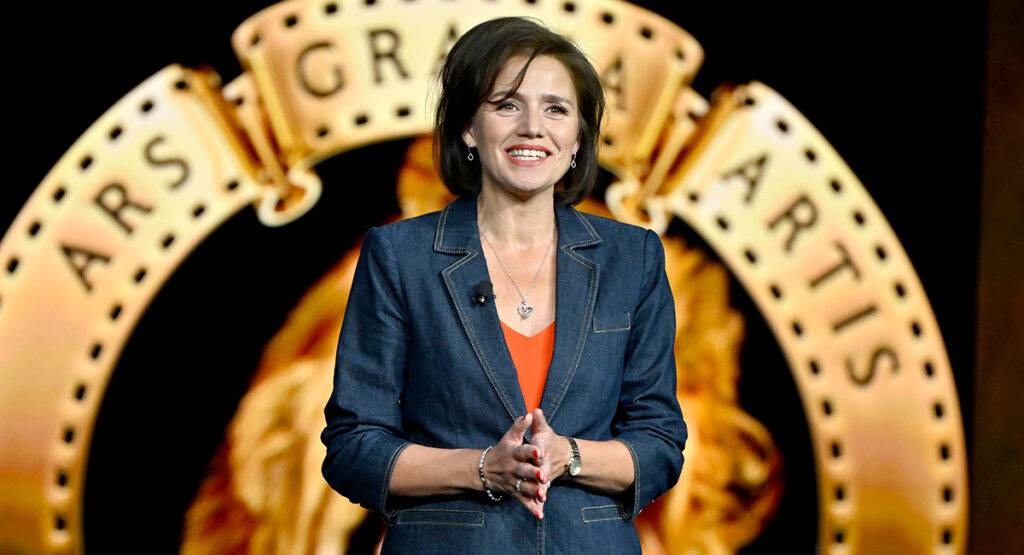
Below them sat the studios that needed the room more than the room needed them. Warner Bros. showed up starrier than almost anyone — Cruise, Iñárritu, Villeneuve — but it arrived under the cloud of the proposed Paramount Skydance / Warner Bros. Discovery merger, and its presentation read in part as a reminder that the current creative leadership is still capable of cultural force whatever shareholders eventually decide. Paramount, anchored by Ellison’s commitments, was effectively running for political office. Amazon MGM was making the case that last year’s theatrical rhetoric was not a branding exercise, helped considerably by the 2026 outperformance of “Project Hail Mary” but still hedging on its more adult, director-driven titles.
But the asymmetry of need was unmistakable. The studios with momentum used the stage to consolidate authority. The studios without it used the stage to bargain.
The Showreel Economy
If there is a single artifact that explains why CinemaCon still matters in an era of permanent trailer drops, it is the sizzle reel. Most of the footage shown to exhibitors will never be released publicly in the form the room saw it. That is part of the argument.
A four-minute, thunderously cut, music-driven montage of a studio’s upcoming year — designed for a 4,000-seat auditorium with calibrated sound and a sympathetic crowd — is one of the most efficient persuasion tools the modern entertainment business has. It is emotional manipulation in the best sense: a controlled environment that turns belief in theatrical into something that can be felt rather than argued. The room is the message.
The studios know this. So do the exhibitors. So do the trade reporters who file dispatches that, more often than not, bend toward the rooms in which they sat. (Don’t get us started on the influx of influencers that showed up at this year’s event.) In a business built on anticipation, the showreel remains one of the industry’s most effective currencies — and CinemaCon is, more than any other convention in this business, the place where that currency is minted.
Confidence as Strategy, Not Solution
None of this means the studio presentations resolved the industry’s structural problems. The release calendar is still uneven. Mid-budget originals are still under-supported. Consolidation anxiety is still palpable, with O’Leary using the same convention to publicly oppose the Paramount/Warner transaction even as Ellison was promising more theatrical movies, longer windows and faster decisions. The 45-day window is a settlement, not a solution. And the deeper question — whether theatrical can sustain itself as a culturally indispensable channel rather than a premium niche — remains unresolved.
But CinemaCon 2026’s studio presentations did make a quietly significant case. They argued, more carefully than they did even a year ago, that at its best theatrical still has no equal — and that, for now, the studios believe that argument enough to make it again, on a stage in Las Vegas, in front of the people whose business depends on it being true.
If the State of the Industry address framed a business negotiating its future, the studio presentations showed how that future is being sold.

- Cinema Owners Have Invested $2.7 Billion in Theatres. What Is That Money Buying? - October 1, 2026
- The Paramount-Warner Merger Is Permanent. The Guardrails for Movie Theatres Are Not - September 22, 2026
- Cinemas Aren’t Just Marketing Movies Anymore. They’re Marketing Auditoriums - September 15, 2026