


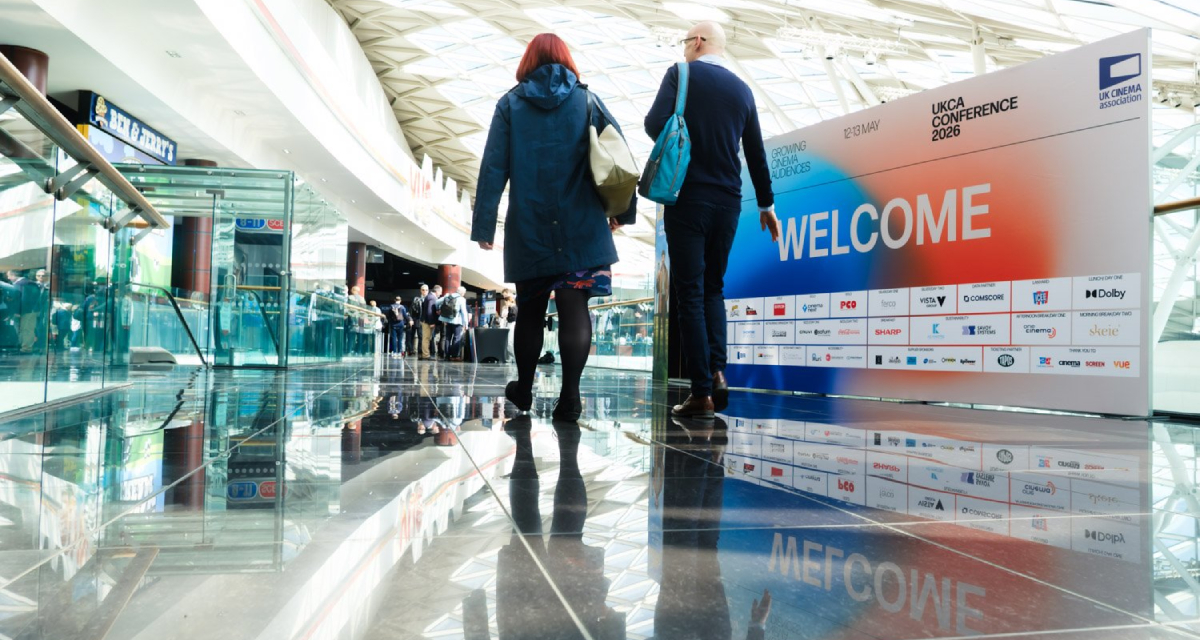
At the UK Cinema Association’s annual conference – which took place in May 2026 at the Vue London Westfield, Shepherd’s Bush – the mood was cautiously optimistic over the two days of talks, perhaps boosted by the buoyant reaction out of CinemaCon in Las Vegas a month earlier. The current box office success of “Michael” and “The Devil Wears Prada 2” certainly added to the optimism of the attendees, largely made up of industry professionals. The sentiment was reflected in a remark from UKCA chief executive Phil Clapp: “While not grounds for complacency, recent positive news at the box office should give us confidence that audiences are ready to return for the right offering, be that the film, the cinema experience or the environment.”
Titled “Retention, Reach, Revenue: Growing Cinema Audiences,” the conference’s primary focus was on how to further strengthen the post-COVID recovery of the UK theatrical sector, and while neither the speakers nor the attendees were naive to the ongoing challenges, there was pragmatic optimism in a look ahead that embraced new technology while also going back to basics on the value – in every sense of the word – of the cinematic experience.
The Numbers Game
The conference began with some reasons to be cheerful, with an opening panel from Lucy Jones of Rentrak (formerly Comscore Movies). Statistically speaking, 2025 recorded a 1% increase in annual box office revenue after a plateau the previous two years. This was helped by an increase in saturation releases, which rose to a record 224 last year. That volume presents its own challenges, particularly for exhibitors and programmers, but as Jones put it, “It’s a nice challenge to have, but if you are running a cinema, particularly with fewer screens, it is a real challenge to keep those films on screen to really fulfil their potential.”
Even though numbers haven’t returned to 2019 levels, three consecutive years with UK box office takings in excess of GBP £1 billion (USD $1.34 billion) is extremely reassuring. “We’re back in the billion club that we used to see before the pandemic,” said Jones.
More reassuring still, takings for 2026 are following a similar pattern to 2025 when tracked weekly, albeit with a slight increase in almost all weeks. But the headline news was that this year is on course to deliver GBP £1.19 billion (USD $1.6 billion) at the UK box office, which would be a leap of 10% year on year, and only 14% shy of the 2019 yardstick.
Another takeaway was the correlation charted between a film’s gross and audiences’ ‘excellent’ approval rating according to Postrak data. There’s a general trend that the films that are most highly rated go on to have the biggest takings, and in 2025 those titles included “A Minecraft Movie,” “Bridget Jones: Mad About the Boy,” “Wicked: For Good” and “Avatar: Fire and Ash.” There were outliers that potentially left money on the table (including “Sinners” and “One Battle After Another”), and the chart showing children’s approval ratings versus box office gave the dispiriting indication that there’s no correlation between a film’s quality and its performance (which may feel all too familiar for parents of young children).
In Jones’ closing remarks she suggested wringing every last drop from those crowdpleasing quality releases, and also finding ways to innovate with more tailored, targeted marketing to “connect the right film with the right person at the right time.” If this panel started the conference on an optimistic note, it also signalled some back to basics truths about cinemagoing that bear repeating. Of course, the films need to be good, but it goes beyond that.
Community Centered
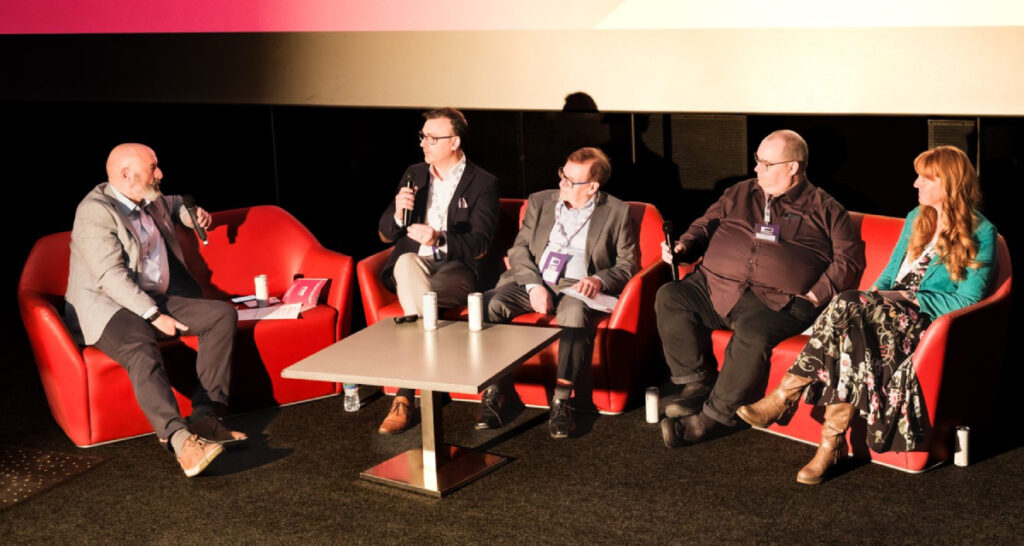
Even good movies will only carry a cinema so far, according to multiple panels at the conference that stressed cinema’s value as community hub. This was a key theme in the “Audience Development – Lessons from the Coalface” panel, which was moderated by Clapp and featured UK operators working outside the multiplex model.
Sarah Hulls from the Magic Lantern Cinema in Tywyn, Wales – a one-screen venue that recently celebrated its 125th year of showing films – spoke about the need to adapt their offering, not least because the town has a small and predominantly elderly population. “We’ve become a cultural hub rather than just a cinema,” Hulls said of the expanded offering. Among the community work Hulls described were dementia-friendly screenings and a Welsh-language season, as well as hosting the Spotlight Awards for local businesses and a high-school prom. They even open on Christmas Day to provide food and company for those who are seeking it.
Ben Hammond, of the Ashford Cinema in Kent, described a similar set-up. “That’s the kind of ethos we’re trying to build… We want to be a community and a place where the community can come and relax and hang out, regardless of what they’re here to do. They can talk, they can socialize, they can interact,” he explained. “We’ve got lots of access groups that come and just play board games because we’ve got the space to do it.” While some of the “eventizing” that Hammond spoke of was cinema-themed – including retro screenings featuring live talent Q&As – others were unrelated, such as an international magic convention. “The cinema still ran five screens from morning to night [alongside the convention],” said Hammond. “The cinema operations didn’t change, but we ran a day and a half’s worth of international magic with magicians coming from all over the world. It was completely sold out and a real premium event.”
Even more remote is Mareel, a venue on the Scottish archipelago Shetland, which is 110 miles from mainland Scotland. “Mareel itself is built as an arts center,” said Graeme Howell. “So we’ve got a 340 capacity performance space, education facilities, recording studios, cafes, retail space, cinema screens, and we tick away trying to deliver as much as we can for everyone in Shetland.” Mareel also serves a civic role, acting as a banking hub and a place where residents can top up their electricity meters. “It’s a really diverse mix of the community that makes use of the facilities.”
A separate panel highlighting one cinema in particular – The Station Cinema in Richmond, North Yorkshire – offered a case study in growing audiences by engaging communities not as an afterthought, but as a core strategy. The Station Cinema’s General Manager, Dan Westgarth explained that previous attempts to offer neurodiverse screenings in a quiet schedule gap fell flat. But after speaking to advocacy groups directly, they were able to discover what an appropriate screening actually looks like for their neurodiverse patrons. A similar approach was taken with school groups, the local Ukrainian population, and other underserved groups. Though Westgarth is keen to stress that such a community building is a “long-term relationship, not a one-off transaction,” plugging away with consistency has its rewards. Over the long term, it has built an engaged customer base that now expects and anticipates eventized screenings. And in the shorter term, that commitment to customers can go viral, as The Station Cinema experienced with their dog-friendly screenings, which gained a huge amount of attention on social media and made the national news. Taking an audience first approach and harnessing the power of social media were themes that were reiterated across the conference.
Accessibility All Areas
One of the most illuminating talks of the UKCA 2026 line-up was the panel discussion “Welcoming Deaf Audiences,” led by Paramount Pictures Paul Lofting. Taking part were deaf advocate Tianah Hodding and representatives from Vue, Odeon and Movie House Cinemas. Lofting highlighted the work Paramount has done over the past few years, since they “started to have a look at whether we could knock down some of those barriers and see what we could move or change. And we focused on three areas. They were training, the quality of captioning, and actual programming of captioned shows.” Lofting said that since October 2024, “most Paramount movies have previews one or two days ahead of their Friday opening exclusively in caption format, so we could give deaf cinema-goers the opportunity to be among the first people to experience new releases.”
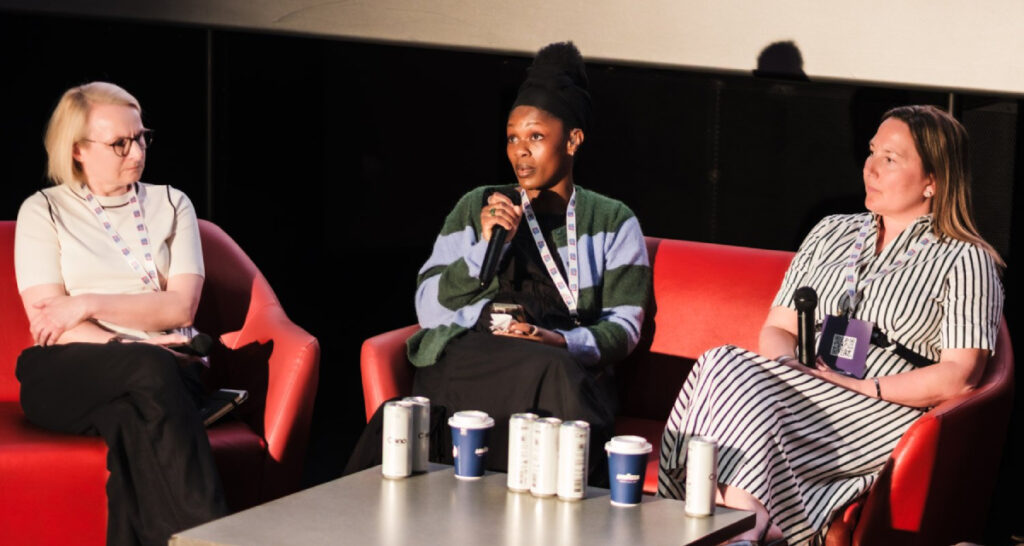
Lofting presented a pre-emptive riposte to the claim that too many captioned screenings would be off-putting to those patrons who don’t have accessibility needs. For the release of “Mission: Impossible – The Final Reckoning” in May 2025, Paramount worked with Cineworld, Vue and Showcase in the UK on a rollout that gave particular attention to captioned screenings. “We agreed with them to play a minimum daily captioned show of the movie over the first nine days of the film’s release in every single cinema that they operate – whether that was twenty screens, ten screens, four screens.” The approach also included ensuring that there were captioned shows during evenings and weekends, which led to “just under 2,000” captioned screenings of that film in its first nine days of release, Lofting said. From all of those screenings, the chains received zero complaints. “We’ve proven it, so now let’s move on,” said Lofting.
Communications consultant and actor Hodding, who is deaf, brought her own first-hand experience to the panel. “I’m very obsessed with film and filmmaking, and I go to the cinema whenever I get the chance,” she said. “I’m currently campaigning to get more friendly access for [Deaf audiences], there’s eighteen million Deaf people in the UK, and we’re constantly growing. And there’s a lot of us who need to be able to go to the cinema whenever we want on our terms, not yours. On a Tuesday at 9am doesn’t work for Deaf people who work 9-5. It’s also quite important to normalize access from the get-go.”
Hodding also explained how restricted access to captioned performances also could impact friends, family and particularly children of Deaf people who would be looking to attend the cinema with the hearing impaired family member. “Imagine you’re looking at a schedule or a program and it says, ‘Oh, you can watch a movie at 10am with sound.’ Anyone imagine that? So not only do we lose out, but also our friends and family lose out as well, just to give you a bit of an understanding.”
Also being showcased at the conference were tech solutions for accessibility from Auracast and WatchWord. Auracast is an assistive listening device that can receive real-time hearing assistance via Bluetooth, and WatchWord supplies smart glasses that can display closed captions (provided by the Digital Cinema Package (DCP)) to the wearer. WatchWord comes with a control that can personalise the placement of the text, as well as colour and size making them a flexible solution (audience members requiring captions can attend any screening and access captions from the DCP, rather than having to wait for a dedicated screening).
The overall takeaway from the session was that accessibility should be a forethought rather than an afterthought, and a lack of preparedness can impact more than just those with accessibility needs, as it can ripple out to affect their families and friends, making cinema a less enticing prospect for a much wider group than might initially be counted.
Know Your Enemy
Another theme to emerge time and again at this year’s conference was using digital tools – such as social media and AI – to enhance your reach and increase your potential footfall, rather than just treating it as the enemy, a competitor to the cinema experience.
In the “From Scroll to Screen: Winning the Fight for Attention” panel, David Cameron, the head of marketing for Vue UK and Ireland, discussed what it meant now that Gen Z audiences were typically spending up to five hours per day on social media. “It’s so important we are engaging and connecting with those audiences, and creating great value because they are spending so much time there,” he said of the chain’s social media strategy. But he also spoke of the value of the comments sections of their social media channels for providing genuine customer feedback.
Carla Boyd, director of digital marketing, international at Cineworld, said that the company sees that online space as “almost like our digital foyer… It’s where the decisions get made on: ‘What films do we want to watch? What merch do we want to buy?’” Boyd also spoke about the digital word of mouth that films such as “The Sheep Detectives” and “Project Hail Mary” have benefitted from.
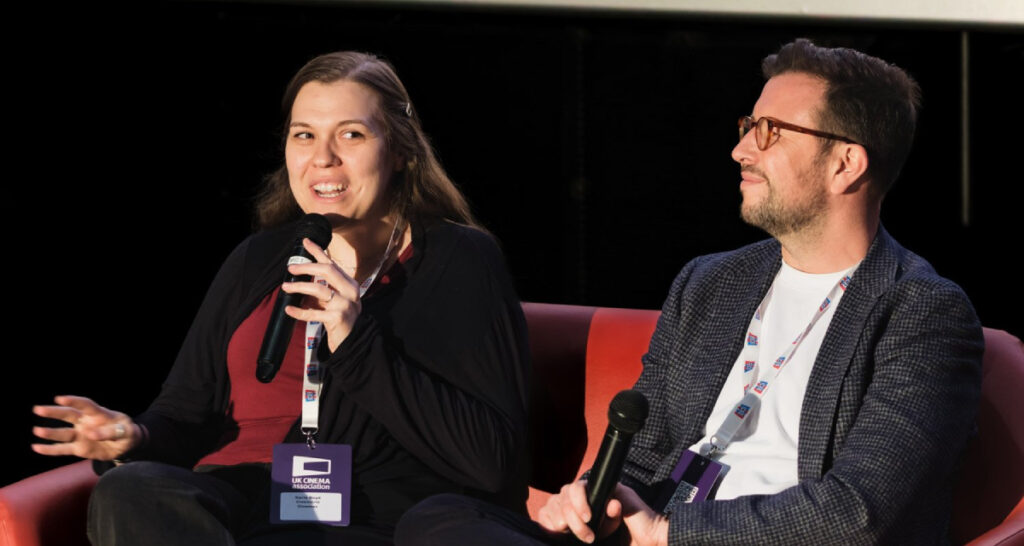
On the same panel, the British Film Institute’s (BFI) research manager Paul McEvoy highlighted some illuminating findings from the organization’s Audience Screen Engagement Tracker. “We found in the research that these habituated social media users are not abandoning other content,” McEvoy explained, addressing the perception that so-called ‘doomscrollers’ are never putting their phones down. “They’re actually heavier users of other content. Daily users of short-form [online video] are thirty percent more likely to go to the cinema. They’re nearly forty percent more likely to stream.” Perhaps the most surprising statistic to emerge from the BFI’s research is that only 14% of Gen Z participants said they wanted phone use to be allowed in cinemas. “They really see the value in cinema being a digital oasis [free from phones],” he added. “We also saw that the main reason they go to the cinema is as a social outing.”
A panel on AI (“Reaching Cinema Audiences Across AI Search and Discovery Tools”) suggested how businesses could leverage audiences’ increasing reliance on AI in much the same way search engine optimization looks for gains via browser discovery. A case study on The Living Room Cinema in Chipping Norton explained how marketing company Mojo Works researched the ideal customer profile, planned against real world scenarios and queries (such as “family activities in the Cotswolds this weekend”), and getting the cinema’s website more digestible for the AI tools that are going to be ‘reading’ it.
“How do we make sure that information is machine readable?” asked Oskars Killo, founding partner of Mojo Works. “That’s a very important thing to take away. There will be different structures and tech related items that need to happen for that.” Among the quick wins are “working with the POS provider and the website team to to set up the backend elements like schemas and JSON [JavaScript Object Notation].” Having a detailed, well-structured FAQ section is also seen as a big help.
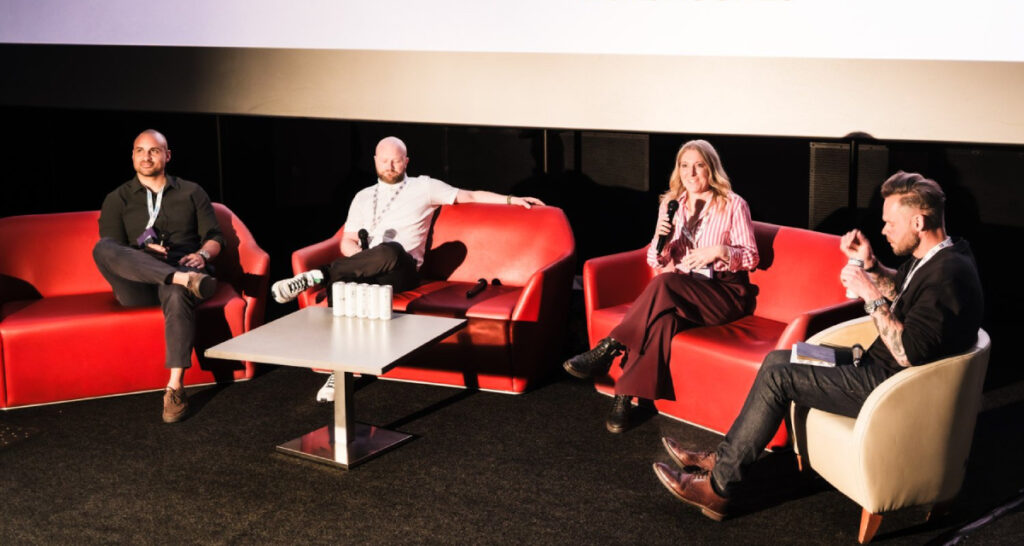
Claire Beswick, founder and CEO of The Living Room Cinema stressed the importance of the information being aligned with customers’ day-to-day experience of the brand. “You can’t be just spending all of your time putting together information for the machines to read which actually then gives you an answer which is not consistent with your brand,” she said. Ensuring that your business details are consistent across third-party platforms like search engines and maps was also described as crucial. Valentin Degen, CEO and co-founder of International Showtimes, explained the importance of “surfacing more rich data to the AI so that the user can make more informed decisions.”
If there was the whiff of a sales pitch about the presentation, a compelling case was made for businesses to shore up against these upheavals in consumer behaviour, and provided a less doomy narrative than is often spun about how AI will impact the cinema industry.
State of Play
Perhaps the most illuminating and lively discussion of the conference was the annual Executive Roundtable, featuring key voices from distribution and exhibition. Due to the free-flowing nature of the conversation, attendees were requested to report the headlines without specific attribution, but across the board there was plenty to be positive about. With a group assembled from distributors and exhibitors of various sizes, the panel consistently said they were “optimistic” about the current health of the sector.
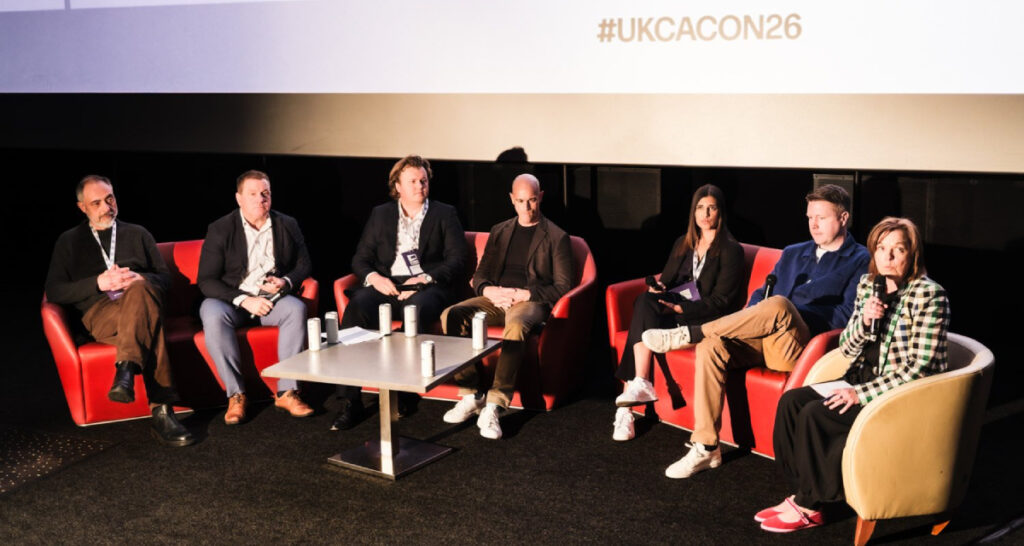
The mood was buoyed by the current relative overperformance of films that didn’t fall into the conventional blockbuster template. “It’s not being driven by one particular film,” said one studio representative. “I think we’re actually seeing a genuine shift in audience behavior.” There was a caution expressed about a lack of “spikes” with truly overperforming blockbusters of the pre-pandemic likes of Star Wars and Marvel pictures, but the overall consensus was that the industry was in a stronger place for not placing all hopes on a very select group of bankable tentpole releases, and instead having a more varied slate that was attracting more diverse crowds.
Rebuilding cinema as a habitual experience was also a key theme of the discussion. In part that’s down to the aforementioned varied slate, and the increasing emphasis that exhibitors are putting on premium experiences, from screens and projection to seating and beyond. But alongside this, more than one participant made the point of cinemas needing to reclaim the narrative that it is an expensive pastime. “What else can you go and do for a couple of hours that’s gonna cost around GBP £10?” asked one exhibition representative, while another studio exec pointed out that the price of a beer and cinema ticket have never been closer. Although discussion did turn to the fact that cinema is perceived as expensive, even if the evidence suggests that’s not the case relative to other options for a night out. “I think we have to do a little more work on positioning that in the right [way],” said one participant. “And it doesn’t mean about cheapening [ticket prices]. It’s about just creating the perception of value for money and how we do that.”
If there was a point of tension in the discussion, it was around release windows, and whether it was right for streamers like Netflix to put films into cinemas for just two weeks before they were available at home. The case was made that the audience should come first, and if they really want to see a title such as “Peaky Blinders: The Immortal Man” on the big screen, then cinemas need to meet that need. But there was pushback from participants who felt that a longer window was essential across the board, in order to set audience expectations. But if that was a pinch point, the overall tenor of the conversation was optimistic and upbeat.
In conjunction with some of the remaining panels that played out over the two-day session – including talks from organisations working to engage Gen Z audiences with cinema, suppliers looking at ways to improve and eventize the audience experience from the foyer to the auditorium, and even the social media strategies to build advanced buzz and sustain post-release engagement, the generally positive mood seemed to be about embracing the momentum of a recovering box office through best practices rather than an existential-crisis-induced reinvention. If the 2026 figures hold as expected, maybe the mood will be even more ebullient next year.
