


The film industry may be asking the wrong question about younger audiences. Rather than wondering how to persuade teenagers to care about cinema, new Nordic research suggests the more immediate challenge is turning an already positive attitude towards theatrical viewing into an actual trip to the movies.
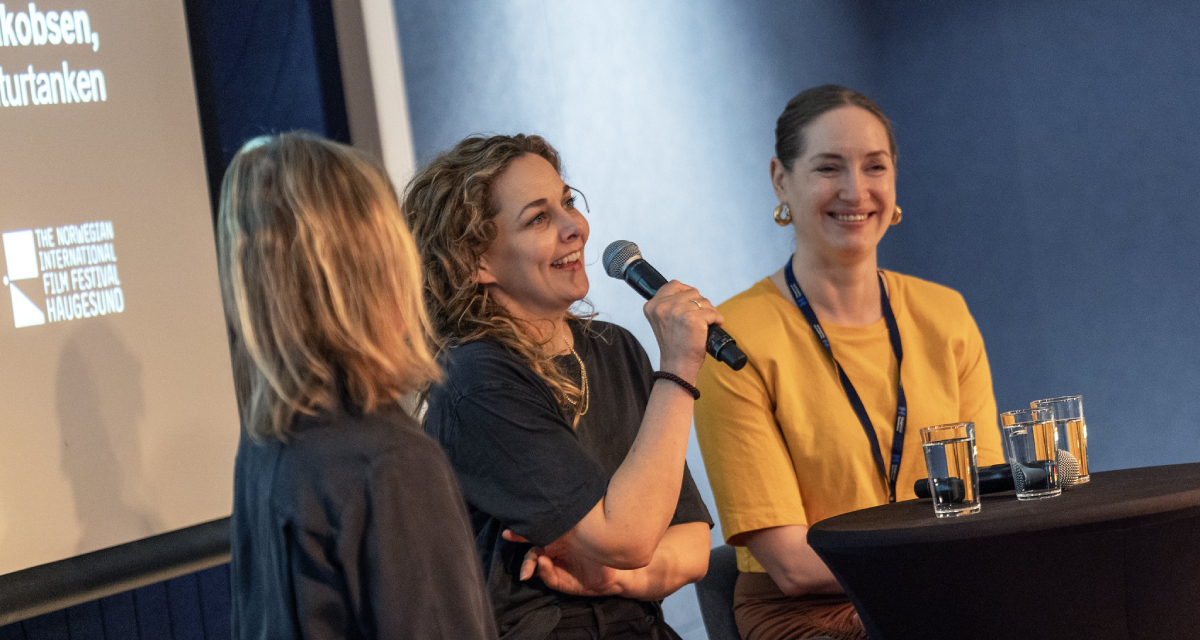
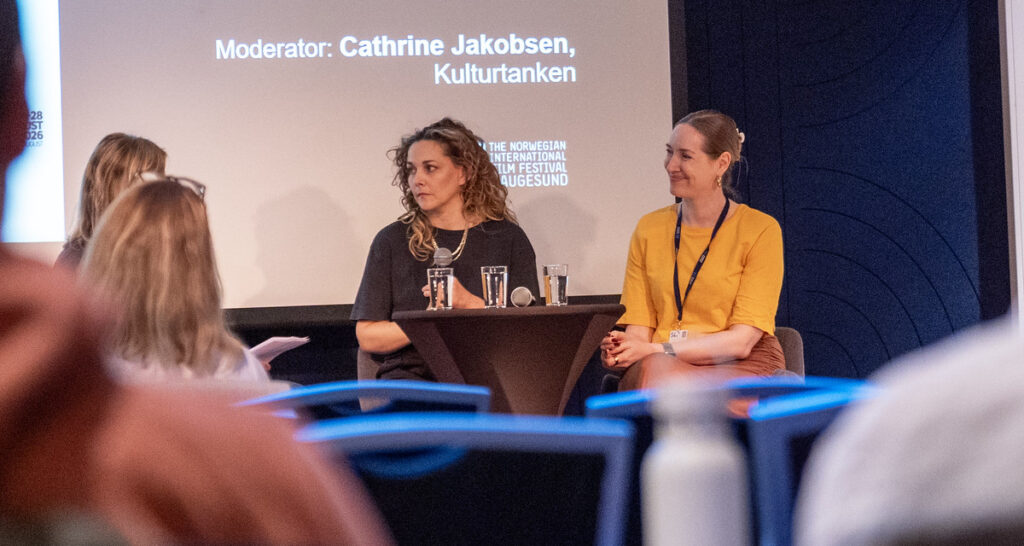
That distinction ran through the Haugesund Youth Film Seminar, “Youth, Trends and Taboos on Film,” held on 25 August during the Norwegian International Film Festival (August 22-28). Bringing together audience research, academic perspectives on digital film culture and practical case studies including the upcoming Norwegian sequel “Back to Tottori,” the session complicated the familiar narrative of Gen Z abandoning cinemas for phones and streaming. Younger audiences still value films and the theatrical experience, but they are navigating an overwhelming abundance of content, price sensitivity, social coordination and radically different forms of discovery and participation.
Vilde Vågsland, head of trends and senior adviser at Norwegian research company Opinion, presented findings from “I strømmen av innhold” (“In the Stream of Content”), a study combining qualitative fieldwork with a nationally representative survey of 2,269 Norwegians aged 15–19. Her central takeaway is deceptively simple.
“Young people are not short of content. They are short of a compelling reason to choose one particular piece of content, at one particular moment,” she said. “The competition is not only between films and series. It is also between different ways of spending their attention.”
That competition does not mean cinema itself has lost its appeal. According to the research, 87% of respondents had visited a cinema at least once during the previous year, while only 31% said they usually watched films theatrically. For Vågsland, the disparity points to what she describes as a “threshold problem rather than an attractiveness problem.”
Young people spoke positively about the big screen, immersive sound and the ability to concentrate fully on a film. The obstacles largely arise before they reach the auditorium. Sixty-seven percent said having more films they actually wanted to see would make them go more often, while 66% cited cheaper tickets. Time, finding someone to go with and simply getting a group organized were also factors.
“Make the film feel like a clear, relevant and socially shareable choice and remove as much friction as possible between discovery and attendance,” Vågsland advised exhibitors and distributors. “The communication around a film should answer a very concrete question: Why this film, for me, now – and why should I see it with someone else?”
Familiarity Breeds Content?
The research also complicates assumptions that younger viewers are simply chasing novelty. More than eight in 10 respondents watch films or series they have already seen, while 75% said they most often watch series to relax and take a break. Vågsland connects this attraction to familiar material to emotional self-regulation: when tired, stressed or overwhelmed, known stories offer comfort and require less effort to engage with.
Yet familiarity can itself become a marketing asset. In Haugesund, Norwegian distributor Linn Barholt discussed “Back to Tottori,” the sequel to Arild Østin Ommundsen and Silje Salomonsen’s 2020 children’s adventure “Sisters: The Summer We Found Our Superpowers.” Six years later, both its young performers and much of its original audience have grown older.
“For them, the original film is nostalgic,” Barholt said. “We’ve leaned into that, hoping that the kids who remember the first film will bring their friends along for the sequel.”
The film is now being positioned primarily at nine-to-12-year-olds rather than younger children. But reaching that audience presents another problem: Norwegian-language titles are competing for attention with entertainment backed by vastly larger global marketing budgets.
“It usually takes multiple touchpoints before something really registers,” Barholt said. The campaign uses TikTok, Snapchat and YouTube, but also football tournaments, sporting events and local festivals. “You need to create a sense that the film is present around them, which is harder when you don’t have the machinery of a major international campaign behind you.”
There is an intriguing contradiction here. The channels used to reach younger viewers are overwhelmingly digital, yet Barholt sees growing interest among the same audience in analogue photography, journaling, crafts and other tactile experiences. “Back to Tottori” itself barely features phones and includes an actual camera as part of its visual world.
That tension between digital discovery and the experience surrounding a film was echoed by Danish Associate Professor Helle Kannik Haastrup, from the University of Copenhagen, whose Haugesund presentation examined Reddit, Letterboxd and internet-native phenomena including “Backrooms.” Haastrup argues that online engagement should not simply be understood as an extension of promotion. Different platforms allow films and series to become cultural forums in which viewers demonstrate taste, explore identity and discuss experiences that can be difficult to articulate elsewhere.
On Reddit, she has observed users drawing on stories such as “Stranger Things” and “Heated Rivalry” to discuss bullying, mental health, sexuality and coming out, aided by the relative safety of anonymity. Letterboxd works differently, turning taste itself into a form of identity. Selecting four favourite films, she noted, has become “a kind of gamified cinephilia,” connecting ordinary users to a ritual increasingly replicated by filmmakers and actors in interviews, press junkets and on red carpets.
“Backrooms” illustrates how the exchange can also move in the opposite direction, with an internet-native aesthetic migrating into mainstream cinema. Haastrup pointed to the project’s recognisable yellow visual signature and its roots in memetic imagery, ASMR-inflected videos and a viral web series, arguing that the film enters the market with both an established visual language and a pre-existing community.
For Haastrup, however, the social layer has not replaced the film itself. “The viewing experience seems to be central,” she said, pointing to the care online communities take around spoilers. What has changed is what can happen around that viewing experience. Younger audiences are highly selective about where they invest attention, and films can resonate because of their storytelling, their memetic potential or their capacity to create spaces in which personal experiences can be shared.
Research High and Low
All of this creates an obvious temptation for an industry hungry for younger audiences: study the data, identify the behaviours and reverse-engineer films around them. Salomonsen, who co-directed “Back to Tottori” and whose daughters play its central sisters, offered a useful corrective.
“The way young people consume stories has changed. But I don’t think we should change the way we make films because of that,” she said. “Every film should come from a particular place – from a person, an urge, or a longing to tell this exact story.”
She was even more forceful about building films around target-group research. “If we try to make films based on target groups, numbers, or previous blockbusters, I think we’re doomed to fail,” Salomonsen said. “Popcorn movies are fine too. Pure entertainment has its place. But I also think we have a responsibility to encourage children to think more deeply about storytelling, to look at images, and to understand art.”
That position is less opposed to the audience research than it might initially sound. The strongest lesson from Haugesund was not that filmmakers should follow younger audiences wherever an algorithm points. It was that the industry needs to distinguish more carefully between making a film and creating the conditions in which that film can be discovered, understood and acted upon.
Younger viewers do not appear to need convincing that cinema can be valuable. The harder task is making an individual film relevant enough to overcome inertia, price, infinite choice and competing forms of attention – while still trusting its audience enough not to reduce relevance to a formula.

- Did TIFF’s First Market Deliver for Buyers? The Answer Is Yes, With Caveats - October 8, 2026
- The Global Film Sales Playbook Is Changing as Pre-Sales Carry Less of the Load - October 7, 2026
- Cinema’s Creator Problem Is No Longer Just About Marketing - September 25, 2026