



As Paramount Skydance wins conditional support from America’s largest theatre chains, Cinema United is trying to turn months of warnings about consolidation into enforceable protections, particularly for smaller theatres that lack the leverage to negotiate their own deals.
Four months ago, Michael O’Leary paced the CinemaCon stage in Las Vegas warning theatre owners that the proposed USD $110 billion combination of Paramount Skydance and Warner Bros. Discovery threatened their business.
The Cinema United president and CEO had opened his annual State of the Industry address with the optimism theatre owners had waited years to hear. Attendance was improving, Gen Z was going to the movies more frequently, exhibitors were reinvesting and, most importantly, a healthier release slate was finally giving the business something it had spent years begging Hollywood to provide: movies. Then O’Leary pivoted to the two issues he believed could derail that progress — theatrical windows and consolidation.
“History shows us that consolidation results in fewer films being produced for movie theatres,” O’Leary told the industry gathered at Caesars Palace in April. “We believe this transaction will be harmful to exhibition, consumers and the entire entertainment eco-system.”
He was unusually specific about why. Combining two of the five remaining major Hollywood studios, Cinema United believed, would give fewer distributors greater power over film terms, theatrical windows, scheduling, screen placement and access to historic film catalogs. O’Leary promised to press those concerns “at the state and federal level,” as well as internationally. Later in the speech, while discussing Cinema United’s relatively new name, he returned to another subject that would prove more difficult to manage.
“We are better when we speak with one consistent, strong and disciplined voice,” O’Leary said. That unified voice lasted roughly 48 hours.
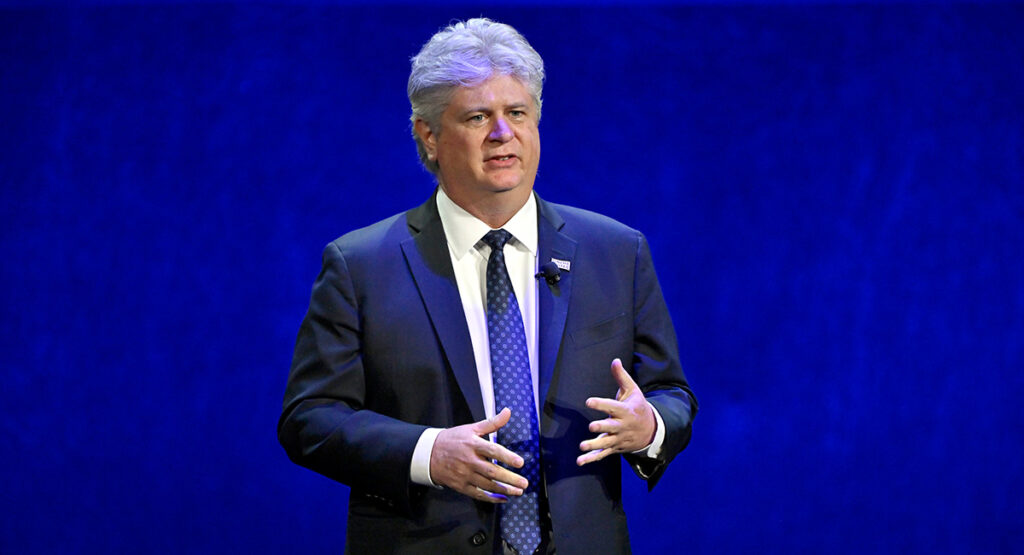
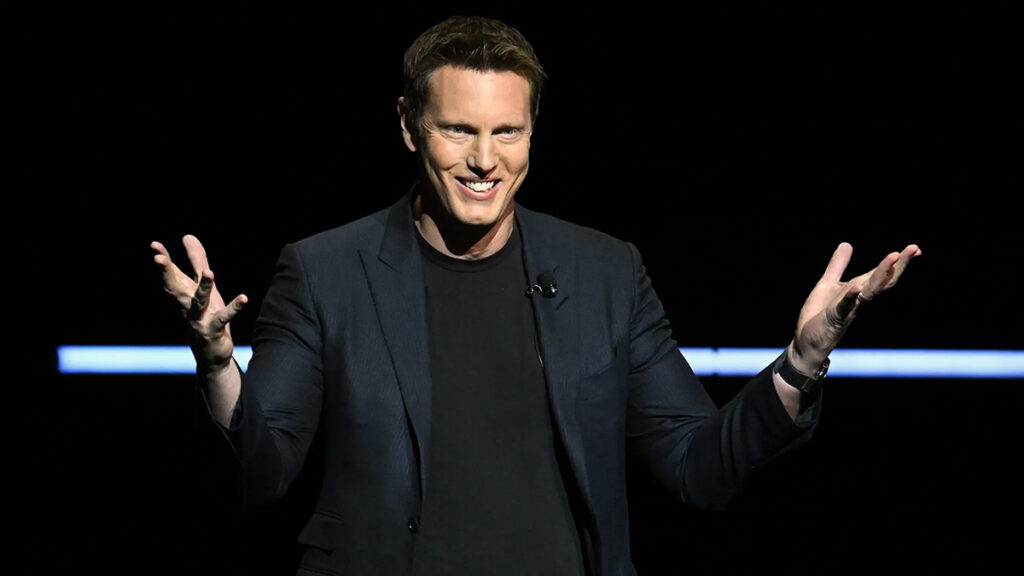
On the final day of CinemaCon, Paramount Skydance CEO David Ellison took the stage and made a series of promises about his commitment to theatrical releasing. Shortly afterward, AMC Entertainment CEO Adam Aron publicly broke ranks with Cinema United and endorsed the merger. “I am confident that David Ellison is sincere as to his intentions,” Aron said, “and truly believe that he in fact will wind up delivering on these commitments.”
The choreography was hard to miss. O’Leary had spent Tuesday warning that Paramount-Warner would harm theatres. Ellison made his case directly to exhibitors on Thursday, Aron declared himself satisfied and Cinema United convened an emergency board meeting that afternoon before responding that Paramount’s pledges were “not yet sufficient.”
Four months later, AMC has been joined by Regal and Cinemark in publicly supporting a path toward completing the transaction, though the latter two attached very large asterisks. Together, the three circuits account for roughly 60% of U.S. movie ticket sales. Their positions helped fuel stories of a “civil war” within exhibition and, on August 18, when Cinema United called on California Attorney General Rob Bonta and Ellison to negotiate a settlement, much of the coverage treated the move as a reversal.
Except Cinema United still has not endorsed the merger. To understand what actually changed, it helps to follow the conditions rather than the headlines. Cinema United has been identifying essentially the same risks since January. Regal and Cinemark’s supposedly breakaway positions embrace several of the same protections. Paramount has been winning support circuit by circuit while Bonta insists promises are not enough. And beneath the public sparring sits a much less glamorous group of theatres — regional, independent and sometimes single-screen operations — that Cinema United has told a federal court are the businesses most endangered if consolidation goes wrong. This is less a story about who is suddenly “for” or “against” Paramount-Warner than about who gets to write the rules if the transaction ultimately moves forward, how those rules are enforced and who they actually protect.
Cinema United’s Concerns Came First
Cinema United’s concerns about a Paramount-Warner combination did not begin at CinemaCon. In January, when Netflix was still positioned to acquire Warner Bros. Discovery, the organization submitted a prepared statement to Congress warning that further consolidation could be severe for theatrical exhibition. Netflix was the immediate concern because of the streamer’s historically limited use of theatrical distribution, but Cinema United went out of its way to make clear that putting Warner Bros. in the hands of another legacy studio would hardly solve the problem.
“If Paramount or another major studio ends up displacing Netflix as the buyer, our concerns are no less serious,” Cinema United told lawmakers. It warned that another major-studio merger would reduce theatrical output and increase the leverage distributors already possess over theatre owners, specifically identifying “periods of exclusivity for films, tailored scheduling to appeal to local communities, and screen placement” as areas where fewer competing studios could leave exhibitors with even less bargaining power.
Cinema United also came with receipts. Its congressional submission included a chart showing that Disney and 20th Century Fox averaged a combined 28 wide releases annually before Disney acquired most of 21st Century Fox in 2019. Excluding the pandemic-disrupted years of 2020 and 2021, their combined post-merger average fell to 14.3. “These concerns are not theoretical,” Cinema United told Congress, which was a polite way of saying exhibitors had already seen this movie and were not especially eager for a sequel.
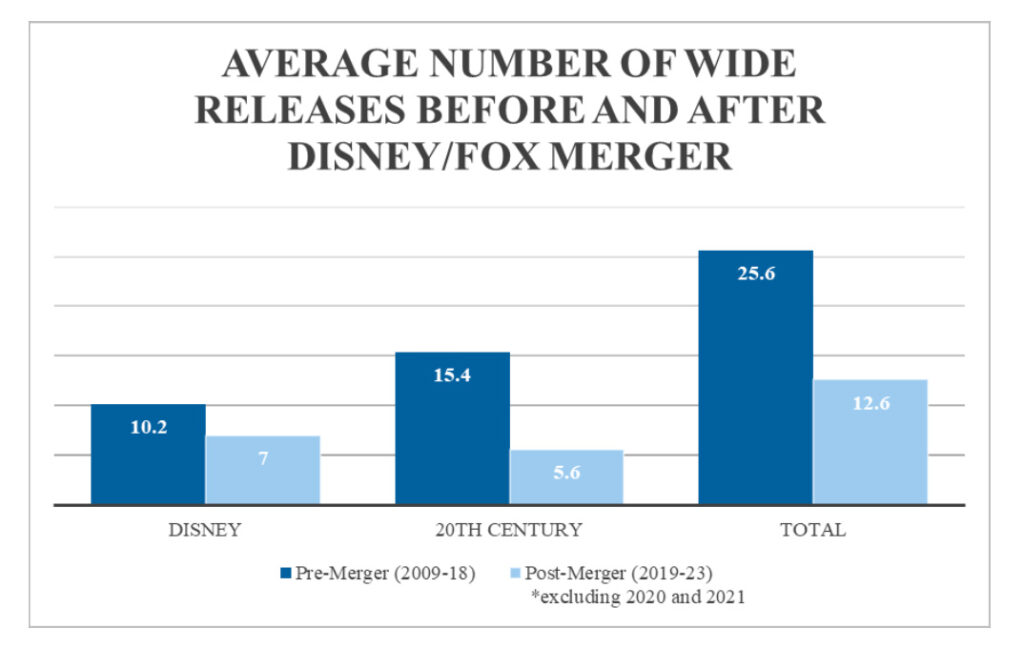
By July, O’Leary had put that same argument under oath. On July 13, California and 11 other states sued to block Paramount Skydance’s acquisition of Warner Bros. Discovery on antitrust grounds. O’Leary submitted a sworn declaration supporting their request for a temporary restraining order, following through on the promise he’d made in Las Vegas that Cinema United would take its consolidation concerns to regulators.
“If the purchase of Warner Bros. by Paramount is approved, it will combine two of the biggest rival legacy movie studios,” O’Leary declared. “That combination will be harmful to theatrical exhibition, consumers, and the movie entertainment ecosystem overall.” Again, he focused not only on the number of films but on the additional leverage a combined company could wield in negotiations with exhibitors.
Then came the sworn declaration’s starkest claim: Cinema United identified operators with fewer than 75 screens as “the most vulnerable, with the highest likelihood of going out of business” if reduced studio output led to layoffs, curtailed investment and theatre closures. Smaller operators, O’Leary said, would feel the increased negotiating leverage of a combined Paramount-Warner “most acutely.” It was unusually stark language for a trade association whose public communications more often celebrate opening weekends, theatre investments and the resilience of moviegoing; Cinema United was telling a federal court that, if its fears proved correct, the merger could be existential for a large portion of exhibition.
Which is why the August 18 letter — widely interpreted as proof that Cinema United had capitulated and was suddenly “for” the merger — reads differently beside what the organization had already said in January, April and July. Cinema United urged Bonta and Ellison to meet, but said any resolution needed four core protections:
- a long-term commitment to maintain or expand wide-release theatrical production, backed by meaningful exclusivity and full theatrical marketing;
- protection against higher film-rental terms that could force exhibitors and moviegoers to absorb the cost of the transaction;
- enforceable safeguards guaranteeing theatres of all sizes broad access to films without conditions that prevent them from making programming decisions responsive to their local markets; and
- continued reasonable access to the Paramount and Warner Bros. film catalogs.
Those are not new concerns: output and windows, film rental and booking leverage, local scheduling, access to movies and catalogs — essentially what O’Leary was raising at CinemaCon. Only after a summer of lawsuits, negotiations and undoubtedly more than a few expensive lawyers were they translated into four enforceable conditions. What changed on August 18 was not Cinema United’s diagnosis of the merger, but its willingness to see whether those concerns could be resolved at a negotiating table rather than solely in a courtroom.
“Despite our ongoing concerns about industry consolidation,” Cinema United said in a statement accompanying the letter, “we have been open to steps that will protect the exhibition industry.” That is a long way from saying the merger is fine as proposed.
The “Civil War” Is Really a Negotiation
The disagreement inside exhibition is real, but it is more complicated than a row of dominoes falling from opposition into support. AMC was the first major break at CinemaCon. Aron doubled down in late July after the states sued, writing in Variety that the government did not need to protect his company. “The AG’s lawsuit argues, in part, that this merger needs to be prevented to protect companies like mine,” he wrote. “Well thanks, but no thanks.”
Aron was certainly correct about one thing: AMC is capable of protecting AMC. As the world’s largest exhibitor, it has the scale and leverage to negotiate directly with a studio chief. But O’Leary’s sworn declaration suggests AMC was never the sort of exhibitor Cinema United was most worried about. The problem was what happened farther down the food chain, where companies with fewer than 75 screens lack anything like AMC’s leverage.
With AMC already in hand, Paramount kept working its way through exhibition. Regal came next, and CEO Eduardo Acuña was unusually candid about his conversations with Ellison. He said Paramount had committed to at least 30 theatrical films annually, 45 days before titles could move to premium transactional video-on-demand, 90 days before subscription streaming and USD $30 billion in annual media-content investment for at least three years.
“I believe David is sincere in making these commitments,” Acuña said. Sincerity, apparently, is even more reassuring when backed by a consent decree: Ellison had offered to put the promises into one with the state attorneys general. Acuña also argued that a court fight stretching into the spring or summer of 2027 would not put another film into theatres and could damage an industry finally regaining momentum. Regal’s position was not that consolidation is wonderful, but that a regulated merger with measurable commitments was preferable to months of litigation and uncertainty.
“With these measures in place,” Acuña said, “we believe that Paramount can be an effective steward of these studios.”
Cinemark arrived at essentially the same destination on August 18, albeit in the polished legalese of a corporate statement. Same 30 films. Same 45-day PVOD and 90-day SVOD structure. Same concern about prolonged uncertainty. The prose was different, but the song sheet was remarkably familiar. What looked from a distance like the major chains simply “backing the deal” looked considerably more conditional up close.
The signatures on Cinema United’s August 18 letter make the point even more clearly. Acuña signed it, as did Cinemark CEO Sean Gamble and Executive Vice President Wanda Gierhart. Cinema United board chair Mike Bowers, president and CEO of regional circuit Harkins Theatres, signed as well. If this is a civil war, the opposing armies have a curious habit of signing the same letters. Regal, Cinemark and Cinema United appear to be arguing less about whether guardrails are needed than about how many, how long they should last and whether they protect the whole exhibition market rather than only its largest circuits.
AMC, conspicuously, did not sign. Why is not publicly known, but its absence is hard to miss.
By early August, Variety had seen enough to describe a “cinema civil war,” and the phrase captured something real. But every new public agreement also threatened to turn Cinema United’s coalition into a countdown: another exhibitor satisfied, another headline suggesting the opposition was crumbling. What the framing obscured was that the fight had shifted from whether the merger should happen to what Paramount would have to concede for different parts of exhibition to stop fighting it. If nothing else, the process forced Cinema United to get its own house in order.
And almost all of it is being negotiated in public. Paramount points to federal clearance and approvals abroad while Ellison says the company is willing to settle even as it prepares to win at trial. It has asked the court to require the states to post a USD $1.884 billion bond to keep the transaction frozen, while Ellison has threatened to move significant operations out of California if the dispute is not resolved. Bonta has called that threat “blackmail” and insists the 30-film pledge is a behavioral promise, not the structural fix his case requires.
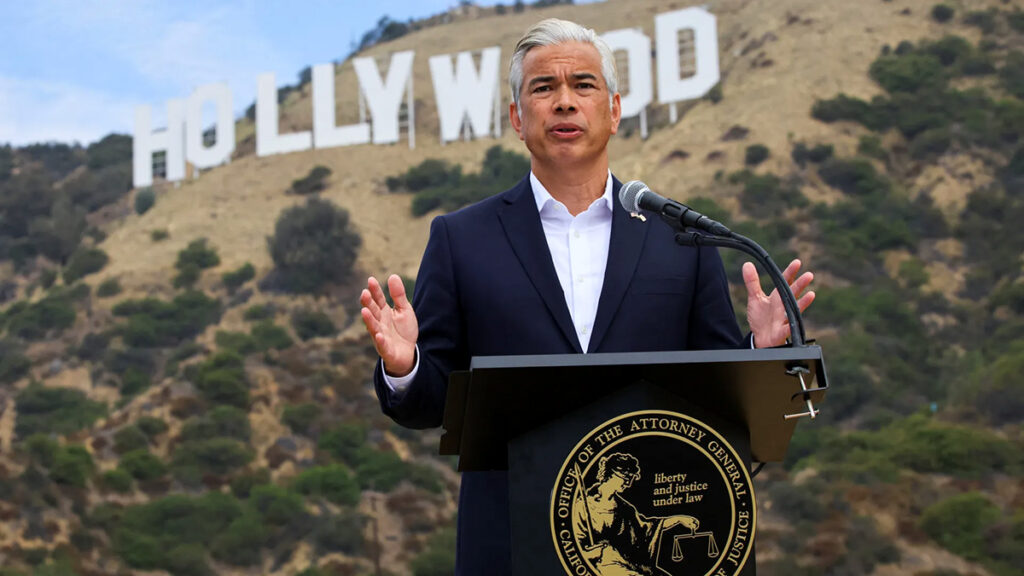
Bonta’s latest comments sharpened the distinction. In an August 19 interview with The Hollywood Reporter, he described Cinema United as “pro-settlement talks,” which he considered neutral, and said Paramount would need “real, robust, structural” remedies before the states would resolve the case. For an attorney general suing to stop the transaction, that is consequential: sitting down at the table is not the same thing as deciding the merger is legal as proposed or that Paramount’s remedies are adequate.
That leaves Cinema United with an awkward problem. Studio-exhibitor terms are negotiated company by company, so AMC, Regal and Cinemark can use their scale to secure protections a small regional circuit or three-screen independent cannot. Each major exhibitor that publicly says it can live with the transaction also gives Paramount another answer to the states’ argument that theatres need protection. If that process continued one circuit at a time, Cinema United could lose leverage even while the members it says are most vulnerable remained outside those conversations.
For exhibitors caught between a studio they may be doing business with for decades and a court case that could run into 2027, making their own calculations is hardly surprising. Seen in that light, the August 18 letter may have given Cinema United something it badly needed: shared industry guardrails that still leave individual exhibitors room to negotiate their own arrangements. A circuit can support the trade group’s call for enforceable protections and decide what else it needs from Paramount. That helps explain how one letter can carry signatures from global chains, regional operators and single-screen independents — and why it may have stopped, or at least slowed, Paramount from picking off the trade group’s leverage one exhibitor at a time.
The Theatres That Can’t Cut Their Own Deals
Cinema United’s August letter also puts numbers behind the warning O’Leary gave the federal court in July. The organization has 196 members operating in the 12 states challenging the merger; 130 operate fewer than 10 screens, 90 have fewer than five and 30 run a single screen. These are exactly the kinds of businesses O’Leary identified under oath as most vulnerable if consolidation reduces output or increases studio leverage.
Four days earlier, the Independent Cinema Alliance made much the same point from outside the trade group. “There has been considerable discussion in recent days about the proposed Paramount–Warner Bros. Discovery transaction, including expressions of support from several of the industry’s largest exhibitors,” ICA said. “Those voices matter. But they are not the only voices in exhibition.”
ICA called Paramount’s commitments on output, investment and windows encouraging, but only a “constructive starting point.” Independently owned theatres account for roughly 67% of U.S. physical theatre locations, according to ICA, whose members operate about 5,000 screens. If protecting moviegoers in smaller communities is part of the case being made by both Paramount and the attorneys general, ICA argued, independents need a seat at the table.
That is not simply a question of fairness. A 20-screen multiplex can move an underperforming movie into a smaller auditorium, cut showtimes or replace it. A one- or two-screen cinema serving a rural community has far fewer options. A single-screen theatre has nowhere else to put it.
This is where some of Cinema United’s otherwise bureaucratic-sounding demands become very practical. Studios can require films to play for minimum periods, insist on particular scheduling patterns or require what the industry calls a “clean screen,” meaning an auditorium is devoted entirely to one release rather than split among several titles. Those conditions may be perfectly reasonable when demand supports them. They are much less charming when the only screen in town is tied up with a movie the town has already seen.
Film rental adds another layer. The share of ticket revenue paid to the distributor can vary by title and agreement, and exhibitors with little bargaining power have fewer alternatives when a single supplier controls more of the films audiences most want to see. That is why Cinema United’s concern has never been merely whether a combined Paramount-Warner produces 30 movies or 25. It is what happens to the negotiating relationship when one major supplier disappears and the remaining studios gain more leverage over access to the movies that keep theatres open. O’Leary was explicit that smaller operators would bear the greatest risk.
Nor would the consequences stop at the theatre doors. Cinema United calls exhibition a “Main Street industry,” citing research that estimates every dollar spent at a local cinema generates another USD $1.50 at nearby restaurants, bars, retailers, transportation providers and other businesses. The economic trail also runs backward through equipment vendors, concession suppliers, advertisers, marketing agencies and production. A merger among companies worth tens of billions can ultimately help determine whether the only theatre in a small town stays open and what its owner gets to put on screen next Friday.
That is why agreements with the three largest U.S. circuits do not settle the exhibition question. Aron’s “thanks, but no thanks” may make perfect sense for AMC. It does not answer what happens to the theatre operator who cannot call David Ellison and negotiate a separate set of protections.
Promises, Enforcement and the Rules That Come Next
There is a reason “enforceable” keeps turning up in this debate: theatre owners have heard merger promises before, and the Disney-Fox numbers Cinema United brought to Congress are a vivid reminder of what can happen after the press conference is over.
Warner Bros. Discovery is a fresher reminder. According to the states’ antitrust complaint, WBD said it would release 16 films in 2023 and more than 20 in 2024; it ultimately released 11 and nine. Paramount currently has 16 films scheduled for 2027 and WBD 19, enough to clear the 30-film floor if every title stays put, but for 2028, the respective numbers are seven and 15 — a combined 22. Release calendars will change, especially two years out, but a 30-film commitment would still require the combined company to maintain two robust pipelines. Films that once competed from separate studios would now share one corporate calendar and one pool of marketing resources, potentially cannibalizing each other. Thirty films is not merely a production promise. It is a long-term distribution strategy.
It also raises the obvious question: what counts as one of the 30? A rerelease? A festival acquisition pushed into theatres with minimal marketing? A smaller title released just widely enough to satisfy the letter of an agreement? Cinema United’s call for a wide-release slate with meaningful exclusivity and full theatrical marketing appears designed to prevent that sort of box-checking. Bonta made much the same point to The Hollywood Reporter, warning that a behavioral quota can look good on paper while being satisfied with a lightly invested film simply to meet the number.
Ellison says nobody should accept his commitments on faith. “I don’t ask to be taken at my word; the commitments are in writing,” he wrote in an August 4 guest essay in The New York Times. Fair enough, but written where? Enforceable by whom? Who decides whether a film qualifies, and what happens if Paramount releases 27? Bloomberg has reported that offers to AMC and Regal include penalties, though the mechanics are private, other than Acuña mentioning Ellison offering to enter a consent agreement.
That distinction matters. A handshake is one thing, a private contract another and a court-enforceable consent decree something else again. Most importantly for exhibitors outside the largest chains, do the protections apply broadly or only to companies holding private agreements with Paramount? A merger promise is only as good as what happens when keeping it becomes inconvenient.
Bonta’s objection goes further. He distinguishes behavioral remedies — promises about how the combined company will act — from structural remedies that change what it owns or controls. In his Hollywood Reporter interview, he cited moving a package of cable channels to another owner as an example. The states have not publicly laid out an equivalent structural prescription for theatrical, but Bonta has made clear that a 30-film promise alone does not get him there.
There is already a version of that approach overseas. The European Commission approved Paramount-Warner but required Paramount to exit United International Pictures, its longtime theatrical distribution joint venture with Universal in parts of Europe — a structural remedy, not a promise. UNIC welcomed the concession while strongly arguing regulators should have gone further on theatrical output, windows, contractual practices and catalog access.
The U.K. also cleared the transaction on competition grounds, while the government declined to intervene on public-interest grounds after Paramount made legally binding commitments covering editorial independence, Channel 5 News, children’s programming, media plurality, archive access and continued investment in original British programming. Different market, different law, but a government can still bless a merger and make the merged company give something up.
Nor is the underlying concern entirely new. Film access, booking practices and concentrated studio leverage echo issues addressed for decades by Hollywood’s historic Paramount Consent Decrees before their 2020 termination. The legal tools are different. The problem of too much theatrical distribution power in too few hands is not.
By now, the positions are clearer than some headlines suggest. Cinema United still opposes the risks it sees in the merger. Regal and Cinemark believe enforceable commitments could make the transaction tolerable. Bonta says advocating settlement is not the same as advocating the merger. That is not harmony, exactly, but neither is it capitulation.
Back at CinemaCon, O’Leary said exhibition was stronger when it spoke with “one consistent, strong and disciplined voice.” The months since have shown how difficult that becomes when every theatre company has its own leverage and interests. Perhaps unity was never going to mean the same public position. A better test is whether exhibition can establish common guardrails around output, windows, film terms, programming freedom and access that protect both companies able to negotiate directly with Paramount and those that cannot.
Those guardrails could outlast the merger. If Paramount accepts them, some may become de facto norms in negotiations with Disney, Universal, Sony and others because one major studio has conceded they are workable. They could also become the starting point the next time Hollywood decides five major studios are one too many. Rules written to get one merger over the finish line have a funny way of being difficult to put back in the drawer.
For now, Paramount-Warner is being fought in courtrooms and negotiated in boardrooms, press releases and op-eds. Its consequences will show up somewhere less glamorous: at the box office, on a booking sheet and, for some small-town theatre owner, in deciding what plays on the only screen next Friday night.

- Cinema Collectibles Are Big Business, but Knowing What to Order Requires Strategy - October 15, 2026
- Cinema Owners Have Invested $2.7 Billion in Theatres. What Is That Money Buying? - October 1, 2026
- The Paramount-Warner Merger Is Permanent. The Guardrails for Movie Theatres Are Not - September 22, 2026