


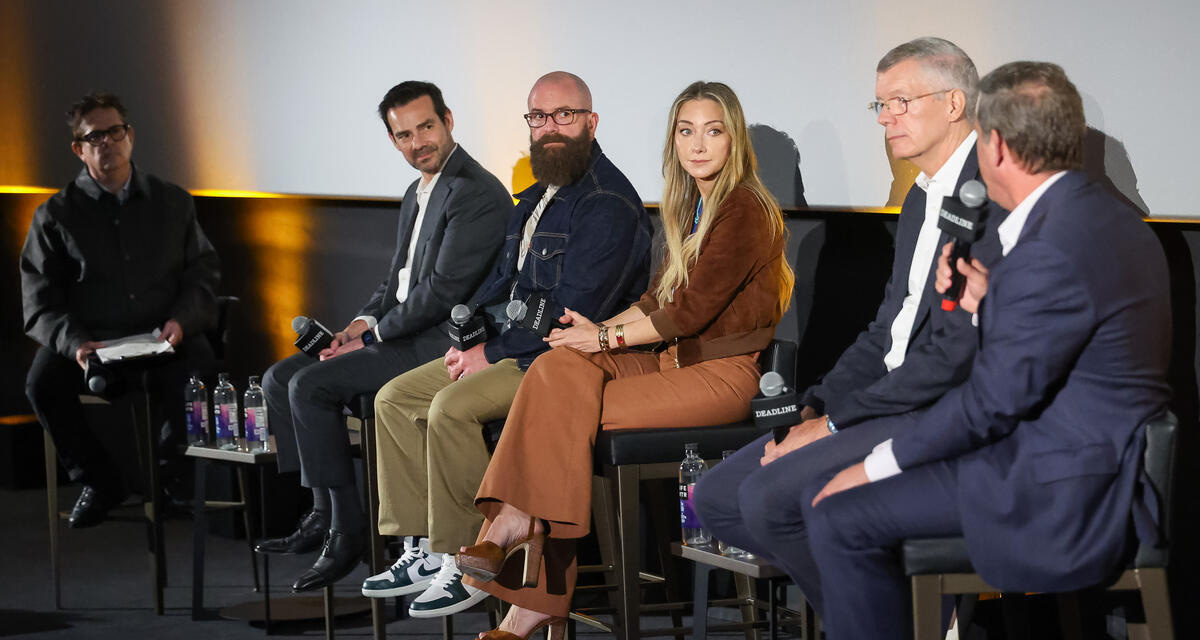
At the “Future of Storytelling for the Big Screen” panel, executives from Regal, Disney, Lionsgate and Legendary weighed in on younger audiences, theatrical windows, premium screens and the looming Paramount-Warner Bros. Discovery merger.
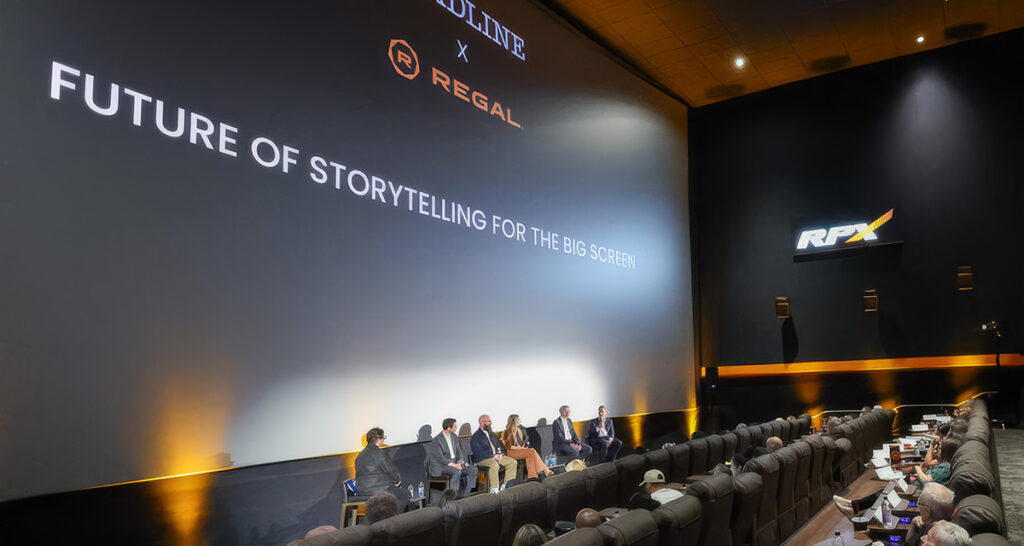
Regal’s newly renovated Sherman Oaks Galleria theatre served as the setting on June 15 for Deadline x Regal’s “Future of Storytelling for the Big Screen” panel, a wide-ranging conversation that began with box office optimism and quickly moved into the unresolved business questions still shaping theatrical exhibition: supply, windows, consolidation and the premium-format arms race.
The theatre itself was, by any measure, a statement. Sixteen screens, four of them premium-format: two PLF auditoriums, an IMAX and a 4DX. That configuration, which would have been exceptional even a few years ago, felt like the implicit argument running under the entire conversation. A domestic box office at USD $4.1 billion — the best pace since 2019 — and a summer pushing toward USD $1.6 billion provided the tailwind. The panel provided the texture.
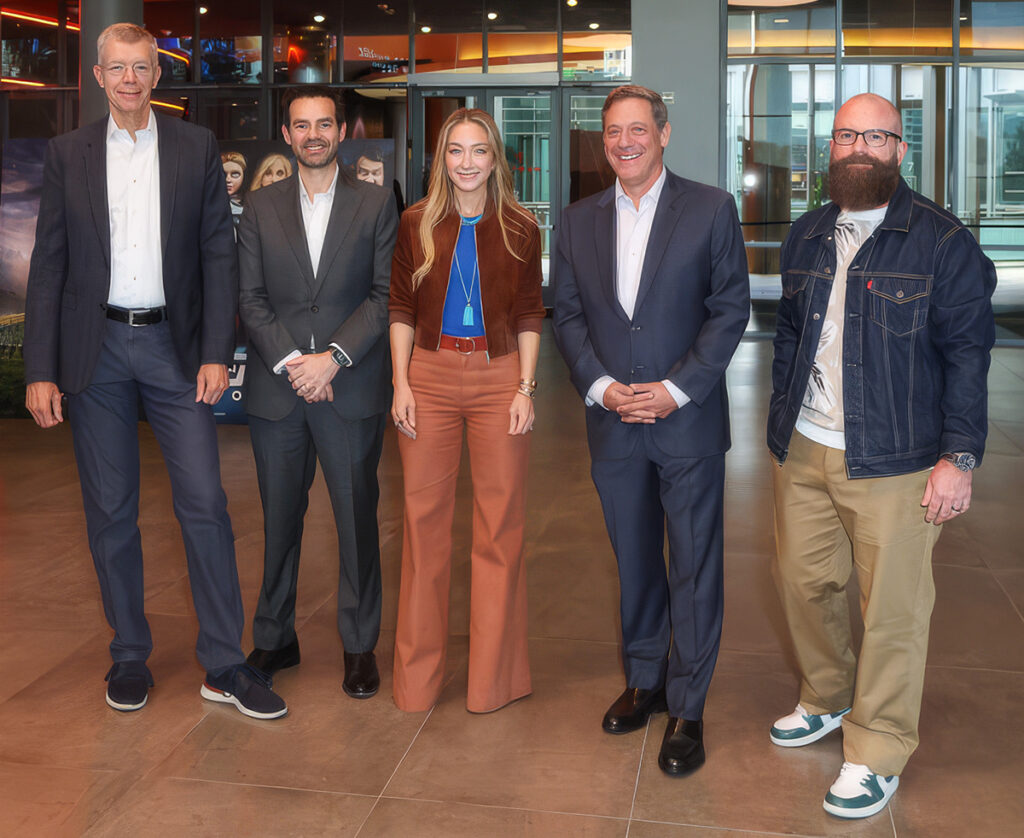
Adam Fogelson, chairman of Lionsgate Motion Picture Group; Andrew Cripps, head of theatrical distribution at Disney Studios; Blair Rich, chief marketing and commercial officer at Legendary Entertainment; and filmmaker Michael Tiddes, whose recent “Scary Movie” opened to USD $105.5 million globally for Paramount and Miramax, joined Regal Cinemas CEO Eduardo Acuna for the discussion. The panel was moderated by Anthony D’Alessandro, Editorial Director and Box Office Editor of Deadline.
Three subjects generated the most heat: the looming Paramount–Warner Bros. Discovery merger, the persistent confusion around theatrical windows, and a shared conviction that exhibition is undersupplied with premium large-format screens at exactly the moment audiences have decided they want them. But before the panel reached those issues, the executives first tried to explain why the mood in the room had changed so sharply from the industry’s recent doom-and-gloom years.
Younger Audiences Are Back, But Not on Old Terms
Acuna framed the recovery as the result of the industry doing more of what it is supposed to do, and doing it better. “What gives us confidence is that every single person here is doing their job better than they ever have,” he said. For exhibitors, that means cleaner theatres, better service, better presentation and more intentional marketing. For studios, it means films that audiences can recognize as theatrical events, whether they come from familiar IP, original ideas or communities that have not always been well understood by Hollywood.
Rich pointed to the current diversity of releases as one reason the market has regained momentum. After COVID and the strike-related supply disruption, she said, audiences are finally seeing a mix of films that gives them a reason to return. “For the first time in such a long time, truly something for every audience” is in theatres, Rich said, adding that audiences have responded to originality, thoughtful sequels and what she called “IRL connected experiences.”
Fogelson said the more optimistic mood matters because it changes the decisions studios and exhibitors are willing to make. “I’ve been concerned for the last bunch of years that everyone has been making decisions as if it was the apocalypse,” he said. “I think that leads to bad decision making across the board, from studios, from exhibitors, from everybody.”
Much of that optimism is coming from younger moviegoers, including Gen Z and Gen Alpha audiences that the industry spent years worrying it had lost. Rich said the campaign for “A Minecraft Movie” showed how much the marketing language has changed. “If you’re not prepared to learn that language and be fluent in that language and meet them where they are,” she said, “it doesn’t connect.”
Fogelson made a similar point about “Michael,” arguing that younger audiences did not need to be convinced that Michael Jackson had cultural currency so much as be given marketing materials they could share on their own terms. “If you over-share everything, if you look like you’re working hard,” he said, “you’re going to get flat out rejected.”
Tiddes said Paramount’s campaign for “Scary Movie” worked because it invited younger audiences into the joke rather than simply selling them a franchise. The film, he said, was positioned around the same irreverent, communal experience that made earlier R-rated comedies theatrical events. “A laugh alone gets a chuckle,” Tiddes said. “But that same laugh in a theatre could get a roar.”
Acuna argued that the return of young audiences also reflects a broader saturation with digital life. Regal, he said, had once tested texting-friendly screenings in response to fears that young audiences would only come back if allowed to use their phones during movies. Those auditoriums, he said, “failed massively.” The lesson was not that theatres needed to become more like phones, but that they needed to offer a real alternative to them. “When I’m here, I want you to take my phone away,” Acuna said, summarizing the audience response. “Just give me that moment with other people.”
The Paramount-WBD Merger Question Nobody Could Fully Answer
The panel’s most direct business discussion came near the end, when D’Alessandro raised the pending Paramount–Warner Bros. Discovery merger. Acuna opened with the diplomatic but unmistakable caution of someone who has watched consolidation play out in other industries. “Wait and see,” he said.
And then he explained why waiting and seeing worries him. What exhibitors need, above all, is volume. Not only the biggest tentpoles — volume. The more a merged company concentrates development around IP franchises and reduces the number of mid-tier releases, the harder it becomes for Regal and its peers to fill 16 screens across a calendar year.
“Paramount has done terrific work,” Acuna said, citing the executives the studio has brought in and recent franchise activity. “On the other hand, we’re all concerned with consolidation, just in general. In any industry in the world, consolidation usually doesn’t bring the best to the industry.”
Fogelson offered the most analytically useful framing of the group. His argument was essentially a conditional: if the combined entity operates Paramount and Warner Bros. as two genuinely independent labels, maintaining both slates, not much changes for exhibition. If instead the merged company cherry-picks the highest-value IP from each and consolidates around tentpoles, then every successful original Warner Bros. title of the past two years — and Fogelson was specific that studios including Lionsgate had been bidding on those same projects — gets redistributed to the companies still willing to make them.
“I think someone’s going to step in,” Fogelson said. His read was that the ecosystem adapts, particularly now that the box office has demonstrably proven the commercial case for theatrical.
That optimism is grounded but not unconditional. What Fogelson was really arguing is that the current market recovery has created competitive incentives that did not exist two or three years ago. When the box office was struggling, the pressure was to move product to streaming. Now that it is not, the calculus has shifted — and a merged Paramount-WBD that pulls back on theatrical supply creates an opening, not just a void.
Rich, who works with both studios through Legendary’s co-financing structure — the “Dune” franchise with Warner Bros. and “Street Fighter” with Paramount — kept it direct. “The commitment needs to be to make sure that the product level stays high,” she said. Cripps, for his part, landed the close: the panel had started by noting that moviegoing is in a good place. “Hopefully nothing from the merger jeopardizes that.”
Windows: The Debate Has Shifted From Length to Confusion
The panel’s most revealing exchange on theatrical windows was not about whether they should be longer or shorter. It was about the fact that they have not meaningfully changed — and the box office has recovered anyway.
Fogelson flagged the obvious data point, because someone had to: all of the success happening right now is occurring within the existing window framework that studios and exhibitors have spent years arguing over. He was careful not to turn that observation into a fixed Lionsgate position, but he wanted the room to notice that the apocalypse scenario used to justify shrinking windows during the COVID era has not materialized.
“All the success is happening, and the window changes that everyone’s been talking about haven’t been implemented,” Fogelson said. “That does not mean I’m not in favor of them at all. It simply is noteworthy that nothing has yet changed with respect to windows, and people are flocking to movie theatres.”
He did, however, identify a genuine exception at the smaller end of the market. “Obsession,” one of this summer’s indie breakout hits, was raised as an example of the kind of smaller film whose early PVOD timing had been part of the industry conversation. Fogelson’s larger point was that a rigid window may solve one problem while creating another for films that rely on quicker downstream revenue.
“There’s a really good argument for why a 45-day window makes sense,” Fogelson said. “However…for smaller movies, are fewer smaller movies going to have a shot if they don’t work and they have to wait 45 days, because the economics for those movies become more challenging? I don’t know the answer.”
That nuance — that a 45-day window is increasingly treated as the industry norm at the studio level but may remain a financial constraint for smaller distributors — is exactly the kind of tension that tends to get flattened in broad policy debates, and Fogelson was careful not to flatten it.
Acuna came at the problem from a different angle, and for exhibitors, his data point was the more alarming one. A recent NRG study, he said, found that approximately 32% of moviegoers still believe new theatrical releases are available at home for free in under two weeks. That’s not a windows problem so much as an information problem — and a stubborn one. Even if studios and exhibitors agreed tomorrow on the perfect window structure, a third of the audience would still be acting on the wrong assumption.
“The big problem with windows has been just the confusion around what the window is,” Acuna said. “There are customers who still don’t know.”
He also called out a specific practice that muddles the picture further: some studios allow pre-purchases of films on Amazon Prime or iTunes while those films are still in their theatrical window. To a consumer, a pre-purchase availability signal can look a lot like an imminent release date.
“You may think that that movie is going to be available at home in a week,” Acuna said. “Some studios do that, some studios don’t do that.”
It’s an inconsistency no 45-day minimum guarantee can fix on its own — which is why Acuna keeps returning to volume rather than precision as the real fix. The goal, in his framing, isn’t to impose one rigid number across every film. It’s to protect the value of theatrical while ensuring studios still make enough money to keep producing films at all. “The only thing that’s more important than windows is the number of titles we have to show,” he said.
Premium Screens: Undersupplied, and Everyone Knows It
On premium large-format screens, the panel was nearly unanimous: there are not enough of them. The marketplace is currently making that shortage loudly visible.
The case study doing most of the work in this conversation was the year-end collision between “Avengers: Doomsday” and “Dune: Part Three.” Two mega-tentpoles, releasing within weeks of each other, neither with an exclusive IMAX run — a fact Cripps confirmed directly, and without apology.
“If we didn’t have confidence that both were going to work, one of us wouldn’t be there,” Cripps said. “It’s probably the best time for moviegoers of the calendar year. There are two and a half to three weeks of holidays, literally around the world. If people want to go see both of these movies, they have plenty of time to do so.”
On the IMAX question specifically, Cripps argued that the format’s absence from “Avengers: Doomsday” is a constraint Disney went in with eyes open, not a fatal liability. He pointed to “Barbie,” “Lilo and Stitch” and the last “Jurassic” film as major successes that did not rely on IMAX to prove their theatrical credentials.
“We love IMAX as a format. More importantly, we love IMAX as a brand,” Cripps said. “But there are plenty of examples of movies that have not had IMAX that have done really, really well.”
Acuna made the operational case from the exhibition side. The renovated Sherman Oaks Galleria now houses four premium-format auditoriums across 16 screens. “When we remodel this one, we put in four, which is not normal,” he said. “Customers are more discerning than ever. Customers want more quality than ever.”
Cripps made the same case from the distribution side, and the two arguments are really one argument seen from opposite ends of the supply chain: exhibitors are building premium capacity because the audience demands it, and studios want that capacity to exist because the marketing payoff of a first weekend seen in the best possible format compounds. “When you open a movie that we’ve spent hundreds of millions of dollars making, and then marketing, I think you want those first consumers to see it in the best way possible,” he said. “We’ve got to offer consumers something different from that experience they get at home.”
Rich added the access dimension. She described a “Dune: Part Two” superfan near Buffalo who drove toward the Canadian border to see the film in IMAX — not once, but 14 times. He was, she noted, an extreme case. But the behavior he represents — audiences actively seeking out premium presentation and going to significant logistical lengths to find it — is a market signal the industry has not yet fully met.
“You don’t want your fans to feel left out of an experience,” Rich said.
Acuna offered the corrective that often gets lost in the premium-format conversation: a standard auditorium still beats a living room by a significant margin. The risk is that the industry’s increasingly format-centric marketing inadvertently trains audiences to believe the standard presentation is not worth the trip.
“Something I worry about the narrative that happens is if you don’t go see a movie in the biggest format, it’s not worth it,” Acuna said. “As important as these big screens are, being there with other people, experiencing things in a huge screen that doesn’t necessarily have to be an RPX or an IMAX — it’s actually pretty special too.”
That tension — between premium as aspiration and theatrical as baseline value proposition — is one the industry has not fully resolved. The Regal Sherman Oaks renovation, with its four premium auditoriums and 12 screens that are not PLF or IMAX but are still very much not the sofa, is one exhibitor’s attempt at threading that needle.
Whether the industry builds more of them, and whether the content pipeline emerging from a post-merger landscape gives those screens enough to show, is the conversation that will outlast any single panel.

- Cinema Collectibles Are Big Business, but Knowing What to Order Requires Strategy - October 15, 2026
- Cinema Owners Have Invested $2.7 Billion in Theatres. What Is That Money Buying? - October 1, 2026
- The Paramount-Warner Merger Is Permanent. The Guardrails for Movie Theatres Are Not - September 22, 2026