


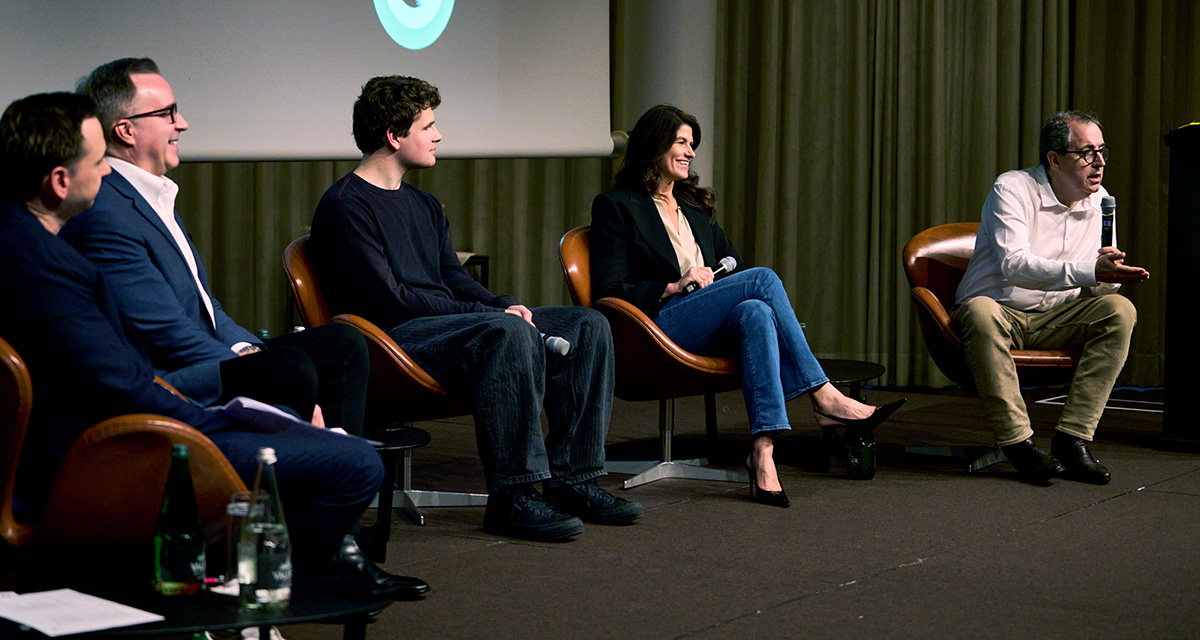
At the 2026 Zurich Summit, a strong theatrical summer prompted a closer look at who was returning to cinemas and what was bringing them there. The success of “Backrooms” and “Obsession,” younger moviegoers discovering repertory cinema, and the continuing appeal of shared experiences all pointed toward a theatrical audience whose tastes and loyalties are being shaped across screens. Online fandom and cinema attendance, the panel suggested, are increasingly connected.
The discussion at The Dolder Grand, billed as “The Theatrical Box Office Resurgence!” within the Summit’s “Movies, Box Office and Awards” program, brought together “Backrooms” director Kane Parsons, Mattel Studios President and Chief Content Officer Robbie Brenner, Sony Pictures Classics Co-President Michael Barker, and Academy of Motion Picture Arts and Sciences CEO Bill Kramer. Kramer delivered a keynote immediately before joining the panel, moderated by Andreas Wiseman, Deadline’s executive editor for film and international.
From Online Fandom to Cinema
For Kramer, “Backrooms” and “Obsession” offered an encouraging view of where the industry is heading.
“Young people want to go back to movie theatres,” he stated. “Fandoms shifted: Theatrical can inform a fandom; YouTube can inform a theatrical fandom. It is all connected in a way that I don’t think we thought was possible. For me, that was the big takeaway of the summer. It gives me great hope for the film industry.”
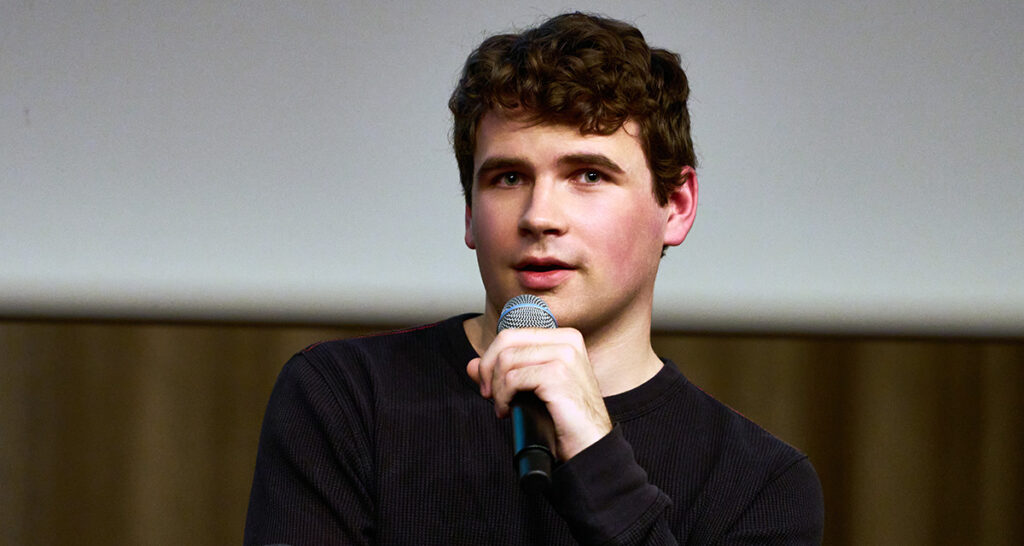
The architect and builder of “Backrooms,” Parsons was the panel’s theatrical newcomer and summer box-office wunderkind. While his name had been omnipresent throughout the Summit, he readily deferred to his fellow panelists on what the summer’s success meant for the industry as a whole. “Whatever insight I can give is going to be within the pool of what I do,” he said. Flooded with the day-to-day work of getting the film out into the world, he had had little time to consider its broader theatrical implications. “Backrooms” benefited from an existing online following, albeit a decentralized one, but Parsons also saw an appetite for something unfamiliar.
“I think people are just looking for that newness, for a detachment from more cyclical cultural icons that keep eating themselves,” he explained.
Brenner, who had counted on an established fan base for “Masters of the Universe,” was struck by the scale of the response to “Backrooms” and “Obsession.” “The way in which they took over was unbelievable to watch.” Their success also reinforced her belief in the social appeal of cinema: audiences want an experience they can share.
“We want to hear other people breathe and laugh with us, and we want to emote, and be together,” she said.
Looking at Mattel’s biggest brand and biggest smash so far, Brenner recalled that “Barbie” “was truly the last movie that I thought we were going to make first.” Audiences already had such a strong relationship with the character that finding a successful approach was daunting. Greta Gerwig brought a distinctive point of view and something to say about the world. Brenner drew a direct line from “Barbie” to “Backrooms” in that respect.
“It’s about finding these fresh, authentic voices that feel unexpected.”
Barker Sees an Inflection Point
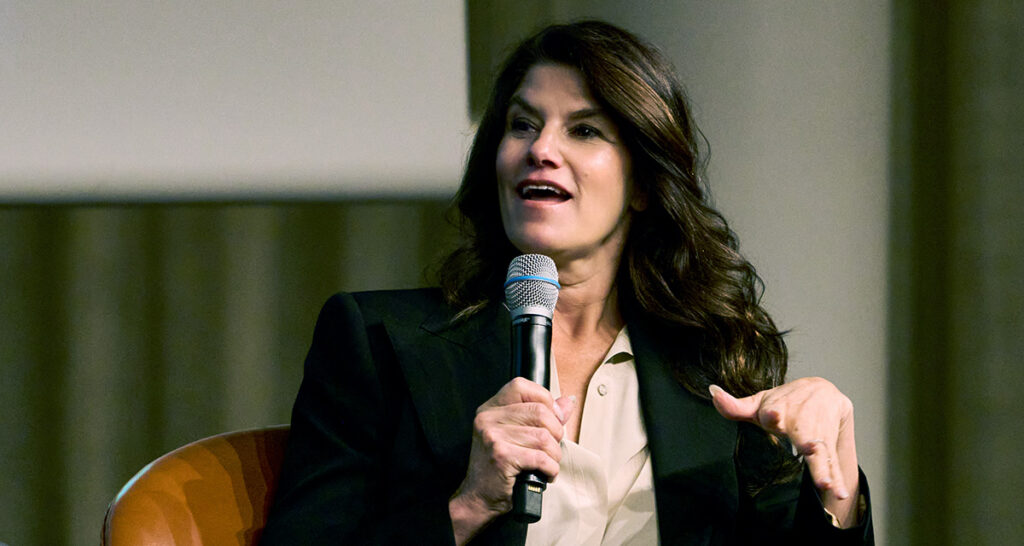
Sony Pictures Classics’ Barker connected the present with the industry’s past, finding echoes of earlier generational shifts. “If you look at the history of the motion picture business, there are these major inflection moments of transition,” he said. He recalled seeing “Easy Rider” as a teenager in 1969, in the middle of the Vietnam War.
“The film spoke volumes to young people in that moment, and they responded in huge numbers, affecting the movies that were going to be made afterwards.”
With “Backrooms” and “Obsession,” Barker felt the industry might be experiencing another such moment. He also pointed to the Barbenheimer summer of 2023 as a turning point for studio films.
“Not many of us in the business had ever imagined ‘Barbie’ was going to have such depth, and that a film like ‘Oppenheimer’ would be a box office smash,” he said. “That’s mad, that’s magic in its own way.”
Established properties remained part of the summer’s theatrical lineup. Barker cited “Toy Story 5,” “Spider-Man” and “Masters of the Universe” as examples of films built around familiar names. Alongside them, however, he saw younger viewers developing broader and more sophisticated tastes.
Back in Sony Pictures Classics’ wheelhouse, Barker found an unexpected ally in the pandemic. Watching new and different offerings at home helped turn viewers in their teens, 20s and 30s into cinephiles with increasingly sophisticated tastes, he argued. A decade or more ago, intelligent art house films had been drawing predominantly older audiences.
Kramer agreed that home viewing had broadened the range of films people were willing to explore. “So many started watching movies at home in ways that they had not done before,” he said. “Blurring lines between documentaries, animated feature films, shorts, non-English language films, classic cinema, people watched films in a much more holistic way.”
That curiosity was also bringing audiences into the Academy Museum’s theatres. Kramer said the museum’s screenings were selling out and half of the ticket buyers for repertory films were under 40. “People love seeing movies in movie theatres, we just needed to attract new fans.”
The Academy Follows Its Audience
That same search for film lovers is taking the Academy onto YouTube. Beginning with the 101st Oscars in 2029, the ceremony will be available live and free on the platform worldwide. Kramer’s keynote placed the move within the Academy’s international expansion; the subsequent panel turned to what the partnership would mean for audiences.
“We are an organization that celebrates theatrical movie making. At the same time, The Oscars, as a television show demands that we reach a very large audience,” he said. More people already watch the ceremony outside the US than within it, Kramer noted. YouTube offers a way to reach more of them, while giving the Academy greater control over its engagement with film lovers and fans.
Already in discussions with YouTube CEO Neal Mohan and his team, Kramer expects a different-looking Oscars, with viewers able to engage with the show in more interactive ways. The agreement also extends beyond the ceremony to the Academy’s educational initiatives, filmmaker conversations and other year-round programming.
For Kramer, the move follows where audiences are going. Asked whether the decision felt like a risk, he replied: “It almost feels risky to not do it, because we’re looking at the future…”
Knowing the Audience
However, an online following does not automatically become a theatrical audience. Parsons said that before the release of “Backrooms,” there had been no clear sense of how its existing familiarity would translate into attendance. The first trailer gave people a reason to investigate, whether to ask “Okay, how did Hollywood mess this up,” or to see if the film had done justice to the core idea.
Parsons involved himself in the marketing as much as he could, right down to mixing the sound for the trailers. The aim was to corral the campaign into something that would make sense to the people who were actually going to be his audience.
Parsons said “marketing is just as much part of the piece as anything else.”
Barker asked how often Parsons had considered the audience while making the film. Some successful filmmakers Barker works with “do not really think about the audience” during that process, he noted, while others consider them at every turn.
Parsons said he thought about his audience quite a bit. “But not in an obsessive, paranoid way, like constructing a group of people, who are going to shout at me for every micro decision that I make in my own mind.” Adapting his web series came with expectations about continuity, but he also understood himself as part of that audience.
“I care a lot about all the things that I was trying to achieve,” he confessed. “Ideally, my core audience is a collection of people who have similar tastes and interests. So, it’s mostly just kind of catering to myself.”

Protecting the Theatrical Experience
The summer’s renewed momentum did not remove the industry’s responsibilities. Barker identified two urgent concerns: the opportunities and risks of AI, and the need to protect theatrical cinema.
“One is AI and the responsibility of that. As you know, there are great things about AI, and there are things we must protect ourselves against.”
His second concern went beyond immediate ticket sales to the lasting place of films in the culture.
“We have to protect … the theatrical world,” he implored. “If the theatrical goes away, film culture is gone, to be honest with you. Even those theatrical films that don’t do huge box office, they tend to become evergreens. Theatrical is what gives them the distinction to become evergreens, even if the box office isn’t there. And I think that’s the moment we’re in.”
A moment of truth for the theatrical experience.
