


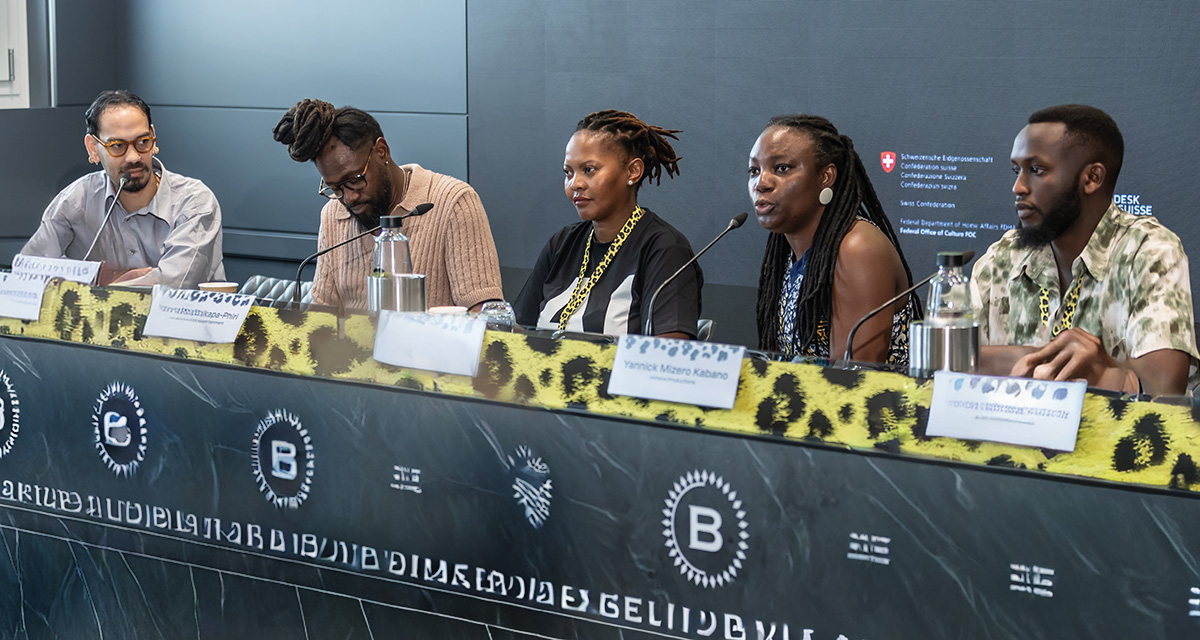
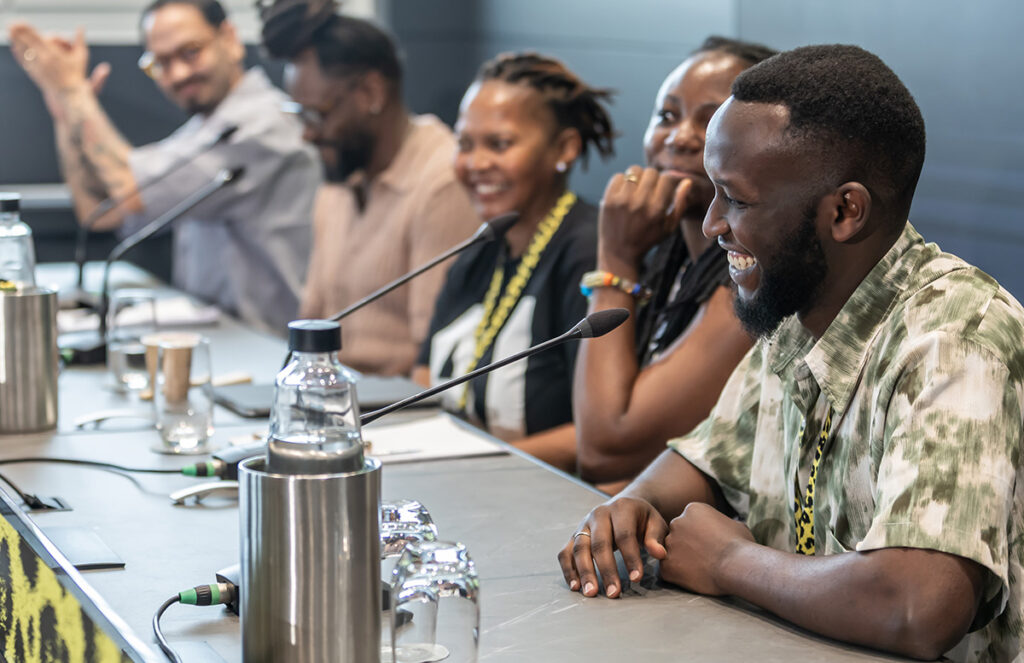
On 9 August, Hotel Belvedere’s Sala Granda hosted the Locarno Pro panel “Building Sustainable Film Ecosystems in Africa: Financing the Future” during this year’s Locarno Film Festival. The event brought together filmmakers and industry strategists from across the continent and beyond to explore innovative funding models, co-production strategies, and market development initiatives reshaping African cinema.
Moderated by Mitchell Harper, a member of the Locarno Film Festival’s artistic team, the discussion challenged the notion of Africa as merely an “emerging market.” Instead, it positioned the continent as a dynamic, economically viable industry capable of sustained global engagement and growth – one where differences in infrastructure, culture, and working methods are viewed not as obstacles, but as opportunities for innovation.
Building an Industry From the Inside Out
Opening the conversation, Harper emphasised that while challenges remain, innovative home-grown strategies are already shaping the future of African cinema. Tshepiso Chikapa-Phiri, founder and CEO of Johannesburg-based Known Associates Entertainment, described how she shifted from a “one project at a time” model to building a vertically integrated studio. Stepping away from film in 2012 to work in marketing, she later launched a separate business as a “cash cow” to reinvest in creative ventures. “I knew I couldn’t keep waiting for other doors to open,” she said. “The wait is over.”
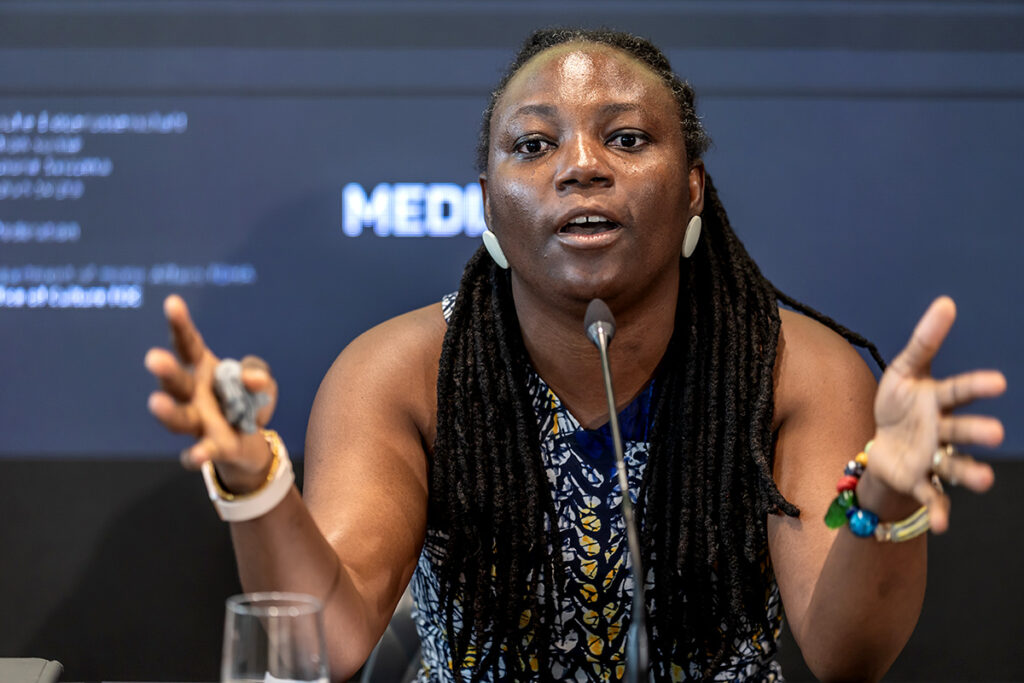
Echoing that sentiment, Nigerian director and creative lead Ema Edosio-Deelen of Lagos-based Citygates Film Production highlighted Nollywood’s self-reliance and speed. Producing around 1,500 films annually, she said, “We need to use what we have to create an industry that speaks globally. Nigerians don’t wait for money to come.” She pointed to private equity financing, a vast local and diaspora audience, and mobile-based, streaming distribution as critical assets—especially as Nigeria’s spending power is projected to reach USD $2.5 trillion by 2030.
Growing From Local Screens to Global Reach
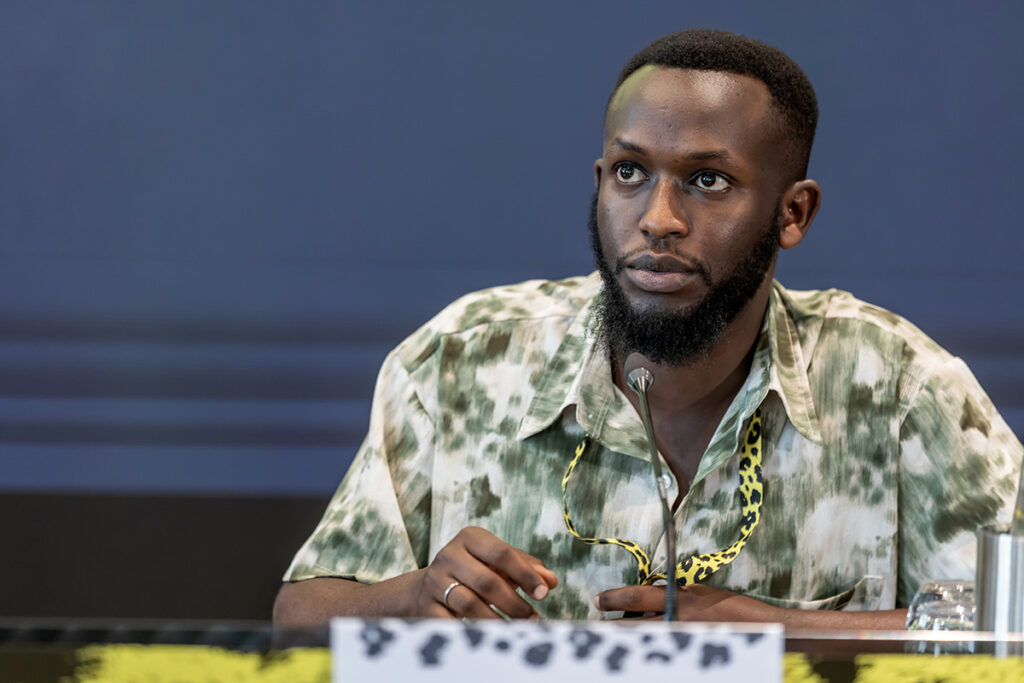
For many filmmakers, the challenge is not only making films, but ensuring they reach African audiences. In Rwanda, said Yannick Mizero Kabano, producer at Imitana Productions and curator of Kigali’s oldest independent cinema, Cinema Mayaka, independent films have only just begun appearing on national television. Until now, he noted, African titles were often celebrated at European festivals but unknown at home. With only two cinemas in the capital – Olympia, part of the CanalOlympia network operating 18 cinemas across 12 African countries, and Cinema Mayaka – cultivating a cinema-going culture is central to his mission: “We’re introducing people to African independent films, not just typical blockbusters.”
Producer and author Neigeme Glasgow-Maeda, who has French-Trinidadian and Caribbean roots, brought an investor’s perspective: “In the next 20–30 years, one out of four people will be African, mostly young, and most economic growth will be driven by Africa. It makes sense to invest there now.” With production, distribution, and payment systems already in place, he argued, “If I sell my film in Africa, I don’t need Europe to make my money back.”
Taking Control of the Filmmaking Value Chain
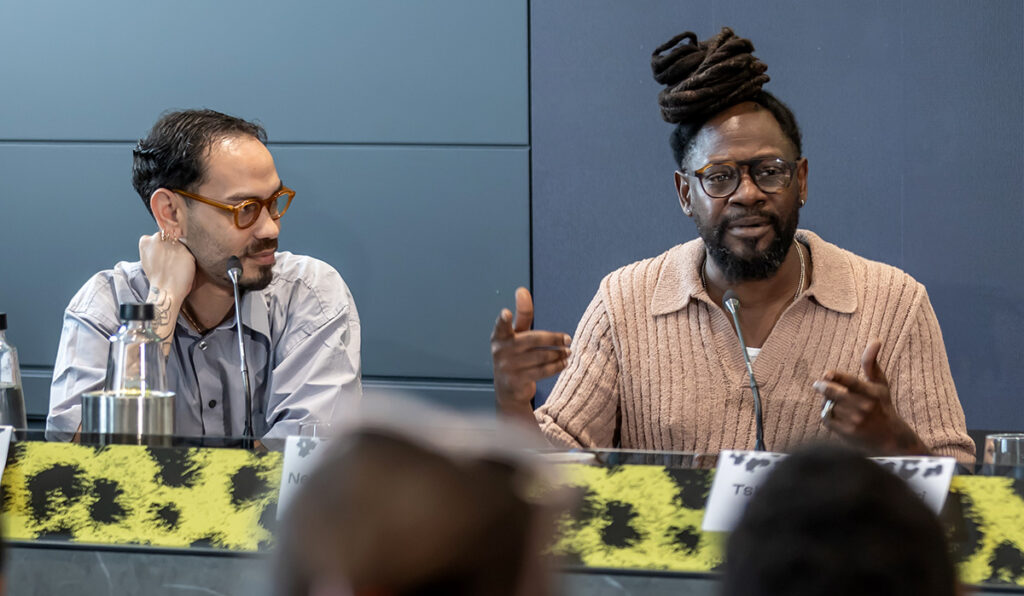
Several speakers stressed that sustainability hinges on control of the value chain. Chikapa-Phiri urged African filmmakers to own their intellectual property, distribute their own work, and take calculated risks. Glasgow-Maeda echoed this, calling African films “inherently global” and urging investors to spread financial risk across co-producers.
Distribution, however, remains a hurdle when it comes to reaching large audiences. Mizero Kabano recalled screening an arthouse Nigerian film to just 126 viewers. Modest as that number is, he sees it as a start: “I hope those 126 people will turn over the years into 126,000.” Commercial titles, he added, are often more attractive to private equity financiers than independents, particularly in the absence of a national film fund.
Lessons for the Global North
When asked what the rest of the world could learn from Africa, Edosio-Deelen didn’t hesitate: “What Europe can learn from Africa is the go-get spirit. You can learn how to move things fast. I hear producers in Europe working on a film for 20 years—sorry to put it bluntly, but what you can learn is innovation.”
Mizero Kabano challenged the “majority/minority” mindset, while Glasgow-Maeda was more direct: “The Global North could just get out of the way. Let us fall, let us find our way. We don’t need to be crowded or shown a way forward. Africa is Africa, the North is the North. Just step out of the way.”
The brief Q&A that closed the session underscored the panel’s shared belief: Africa’s film industry is not waiting for permission – it is defining its own future, with eyes set firmly on both local and global markets.

- Imperfect Is Beautiful: Shekhar Kapur and Tricia Tuttle on AI’s Role in Cinema’s Next Act - December 9, 2025
- Industry Panel at Tallinn Debates the Consequences of Europe’s Shrinking Theatrical Windows - December 2, 2025
- Moviegoers Return But Italian Cinema is Running Out of Stories, Say MIA Panellists - October 22, 2025