


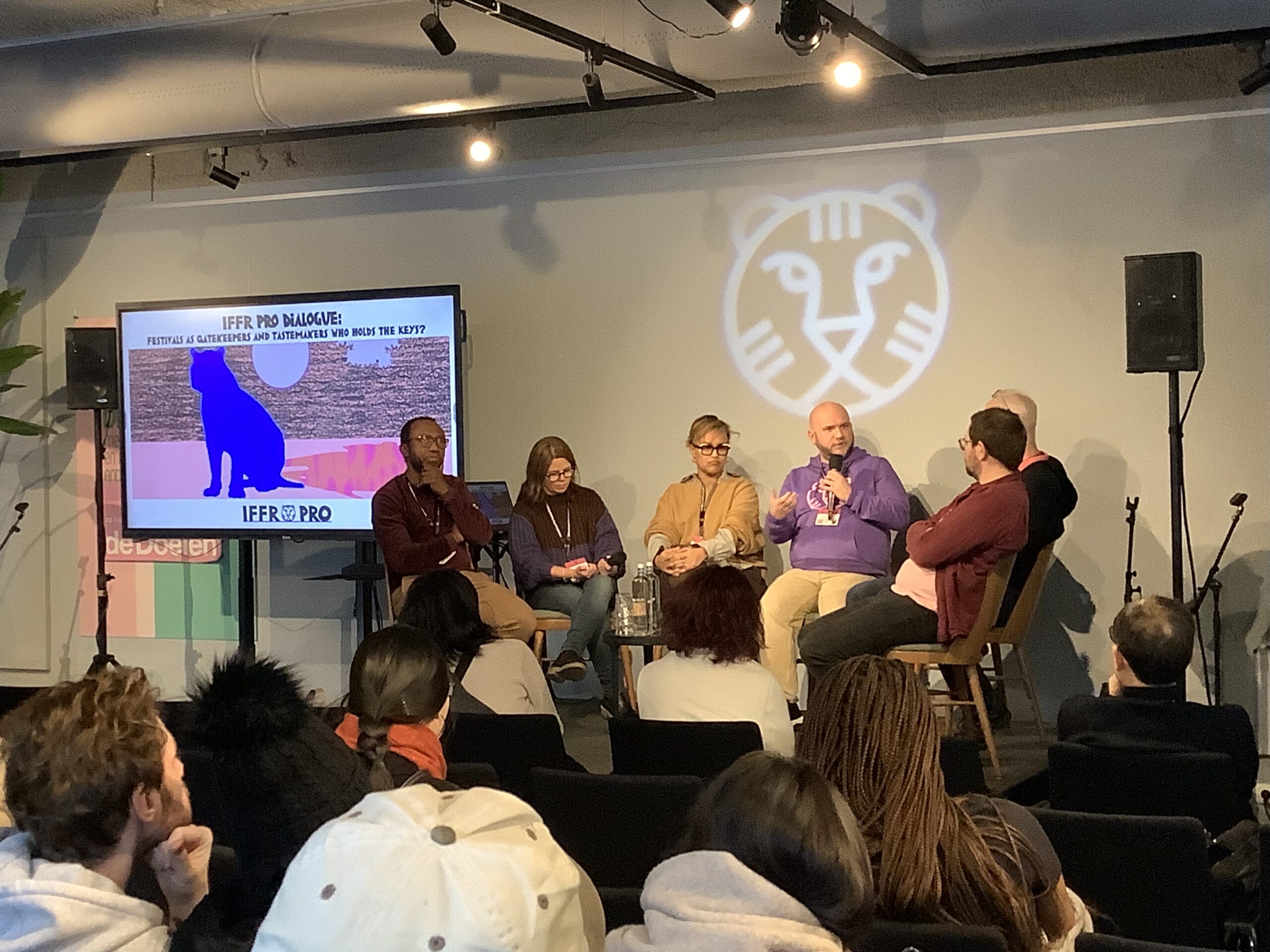
As the landscape of distribution and exhibition evolves, the role of festivals as ‘gatekeepers and tastemakers’ is being questioned more than ever before. Once seen as the primary arbiters of cinematic prestige, festivals now face stiff competition from distributors and streamers that increasingly shape a movie’s trajectory.
These critical questions took center stage during an IFFR Pro Dialogue titled “Festivals as Gatekeepers and Tastemakers – Who Holds the Keys?” In a wide-ranging discussion, the panel explored the evolving role of festivals, their effectiveness as launchpads for new talent, and the representation of films from the Global South at major European and North American festivals. Moderated by Variety journalist Patrick Frater, the panel saw the participation of Maori Karmael Holmes (BlackStar Film Festival), Tatiana Leite (producer and programmer), Enoka Ayemba (curator), Stefan Ivančić (Locarno programmer), Paolo Bertolin (Venice programmer), and Mehret Mandefro (creative producer).
Representing the Global South
One of the first concerns raised was the tendency to stereotype films from the Global South. Leite, reflecting on her experience as a programmer, highlighted how Latin American films often fall into predictable, narrow narratives: “It’s pretty much what people expect: an eroticized portrait of me. I remember watching three Latin American films at a major festival — each aesthetically different, but narratively similar. They all showed young boys in violent struggles. A stereotype, a European gaze that focuses on suffering and misery, repeats itself.”
Leite went on to say that these representations fail to capture the diversity of Latin American countries: “Many films deny the complexity of our countries. There are so many different people and realities, yet festival selections often fail to reflect that.” The panel echoed similar concerns, noting that these repetitive portrayals reduce the richness of these regions to a singular, often tragic narrative.
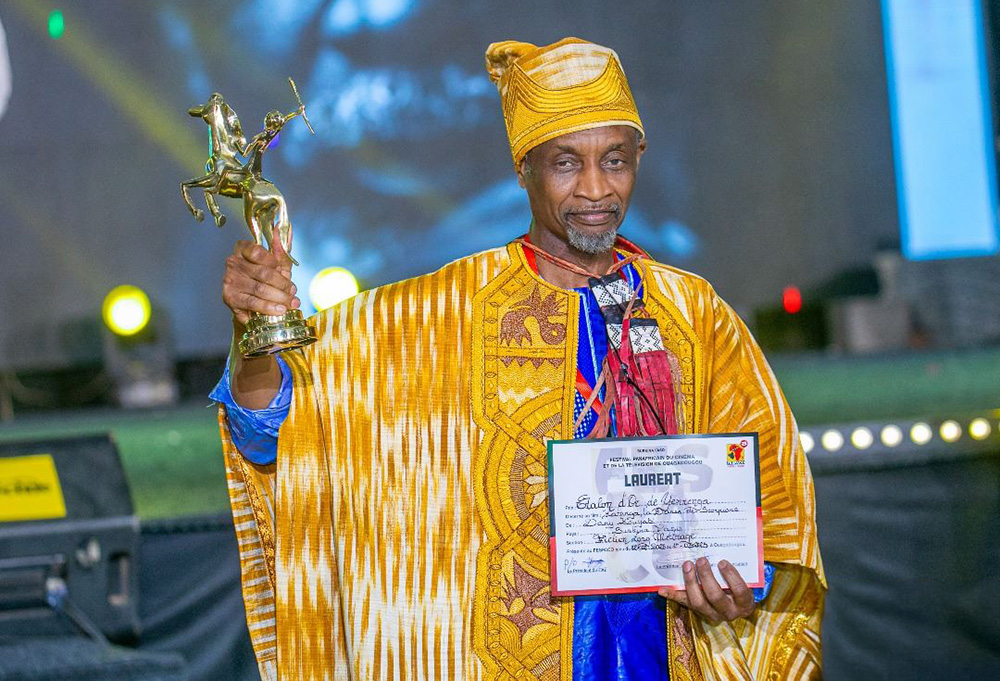
Ayemba shared his observations from his time curating African cinema at the Berlinale, where he noticed that African films were often limited to one or two selections per year, “It’s improving, but the selection pattern reveals how the Global South is often marginalized — festivals expect a particular kind of film from the South.” He also raised the issue of filmmakers in the Global South still dreaming of premiering at high-profile European festivals like Cannes or Sundance, often at the expense of regional festivals such as FESPACO (The Pan-African Film and Television Festival of Ouagadougou). “Even at FESPACO, Africa’s biggest festival, if a film was already selected at a big European or North American fest, you can’t turn it down. We should reverse this attitude: strengthen regional festivals, so they’re not seen as second-tier.”
This pattern of seeking validation from major European and North American festivals, Ayemba argued, results in a skewed power dynamic that undermines the visibility of regional gatherings and, in turn, the diversity of films coming from these less prominent areas.
Bias, Stereotyping and Authenticity
The theme of stereotyping extended beyond just the Global South. Mandefro highlighted how such biases manifest in the way films from these regions are perceived globally. “There’s a bias in the global understanding of countries in the south. At Cannes, I asked: what do you picture when I say ‘Africa’? People said ‘Masai’, not ‘educated diaspora,’ not ‘fastest-growing economies.’ We live in parallel worlds.” Mandefro pointed out the challenge faced by filmmakers from the Global South in overcoming these stereotypes, especially when it comes to depicting “authentic” narratives. At festivals, she observed, films with a human rights focus often gained traction over more personal, nuanced stories, such as a touching mother-daughter tale from the Philippines. “What is considered ‘authentic’ is skewed by outsiders’ expectations.”
In his remarks, Ivančić questioned the usefulness of the term ‘Global South’. “As someone from Serbia/Yugoslavia, I question the term ‘Global South.’ It’s a binary, Western-imposed framework. I prefer ‘third world’ or ‘non-aligned movement,’ which were / are political standpoints, not passive definitions.” This comment highlighted the tension between the terms used to categorize countries and the power structures inherent in those labels, calling for a more nuanced understanding of regions outside the Western sphere.
The Eurocentric Lens and Programming Challenges
Several speakers discussed how Eurocentrism pervades programming decisions at major film festivals. Ayemba noted the disconnect he felt when travelling to festivals and realizing how limited the understanding of global cinema was. “Europe sees itself as the center of the world, but doesn’t understand what’s happening elsewhere — not in cinema, not in politics, not in art. We travel and discover this disconnect ourselves.” This Eurocentric perspective often results in the marginalization of films that do not fit the dominant narratives set by Western programming, leaving filmmakers from the Global South fighting for visibility.
The panel also discussed the structural limitations that festivals face, with Bertolin pointing out that despite these challenges, access has improved in recent years. “Twenty years ago, you needed 35mm prints or VHS to apply. Now, you can just send a link. Festivals receive record-breaking submissions, showing broader access.”
Co-producing and the Role of Industry Labs
The topic of co-productions emerged as a key factor in shaping a film’s visibility at European festivals. Without European partners, many titles—regardless of their artistic quality—struggle to gain traction, as programming decisions are often influenced by funding ties and market appeal rather than creative merit.
Another theme that emerged from the dialogue was the role of industry labs and the structural interdependence of funding bodies. The increasing reliance on labs as a patchwork solution for financing rather than creative development raised concerns among several speakers. As one participant noted, “Of course the labs are important. Why are they important? Because the [funding] structure is changing,” Bertolin insisted. However, many felt that the proliferation of labs was symptomatic of a wider financial imbalance in the industry, with too many filmmakers entering labs out of financial desperation, which in turn diluted the creative potential of their projects.
Bertolin highlighted the interconnected nature of funding in the industry, saying, “If they see that you were in Rotterdam, they give you money, for example, and if Rotterdam sees that Berlin gave you money, maybe they give money too, so they’re linked.” This domino effect can be exclusionary, with projects often needing prior validation from major festivals before being able to access further backing opportunities.
Shifting the Power Dynamic via Regional Strength
Clear emphasis was put on the need for festivals to shift their focus towards a more decentralized model of discovery. Ayemba proposed that if programmers expanded their horizons and sought world premieres at regional festivals, it could challenge the existing power structures that favor established festivals in Europe and North America. “Imagine if programmers came to Busan or Ouagadougou to discover world premieres — not just follow Cannes or Berlin. It would reframe the power dynamic, decentralizing discovery.”
While the notion of decentralization is fundamental to redistributing the power dynamic in question, making this process concrete and sustainable would require the involvement of key industry players operating at a broader level — such as Brussels-based audiovisual producers’ organisation FIAPF, the European Film Academy, or the Academy of Motion Picture Arts and Sciences (aka the Oscars). If regional festivals still lack international prominence, it is often because the West does not allow them the space to grow in that direction. At the same time, internal efforts are needed within festivals themselves, particularly in training programmers not only to seek diversity in origin but also a wider variety of content. How often are comedies or genre films underrepresented in major festival line-ups, despite evident audience demand? Drama is still perceived as the superior, highbrow form — a bias that fails to reflect the full spectrum of cinematic expression.
It’s crucial to address misrepresentation and stereotyping — as Bertolin rightly pointed out, these issues affect not only marginalized communities and the Global South, but nearly every global community to some extent. Still, it must be acknowledged that the historical roots of misrepresentation are often more painful and deeply ingrained for certain groups, frequently tied to racism, discrimination, or centuries-long colonial and socio-political injustices. The stakes are vastly different between the casual cliché of a Frenchman with a baguette or an Italian eating spaghetti and singing ‘O Sole Mio’, and the long history of reductive or negative depictions of entire regions in the Global South.
Moreover, the growing criticism of lengthy, hyper-controlled development processes — especially those involving multiple co-producing countries and countless labs — is a healthy and necessary shift. The obsession with development initiatives and endless rounds of supervision often leads to films that feel like they are made by everyone and no one at once, being aimed at an undefined or extremely niche audience that is hard to identify and even harder to intercept.

- Imperfect Is Beautiful: Shekhar Kapur and Tricia Tuttle on AI’s Role in Cinema’s Next Act - December 9, 2025
- Industry Panel at Tallinn Debates the Consequences of Europe’s Shrinking Theatrical Windows - December 2, 2025
- Moviegoers Return But Italian Cinema is Running Out of Stories, Say MIA Panellists - October 22, 2025