Tag Archives: Dan Glickman

The MPAA’s Motive In Upsetting Exhibitors Over Release Windows

mpaa-fcc.png

Last Thursday when the Motion Picture Association of America made public an ex parte communication they sent to the FCC in defense of a waiver request it caused a flurry of headlines about studios going to war with exhibitors over release windows. To be sure, the letter sent by the MPAA’s lawyers, as well as the press release they sent out the same day directly refer to release windows. The headline of the press release boldly reads “MPAA Seeks FCC Okay For Transmission of First Run Movies Directly To Consumers”. However the MPAA may simply be hiding behind the concept of protecting content during shortened release windows as camouflage for their true motive; securing high definition digital content as it is distributed into the electronic ether of the home by controlling which devices can playback and display the content.

The MPAA’s letter was sent as a rebuttal to a communication sent to the FCC in October by Public Knowledge arguing the waiver not be granted. PK (as they are often referred to) is based in Washington D.C. and considers and is a public interest group that focuses its efforts on digital technology. The second paragraph of the MPAA’s letter and third paragraph of the press release reads in part:

As MPAA has detailed throughout this proceeding, grant of the waiver would for the first time allow millions of consumers to view high-value, high-definition theatrical films during an early release window that is not available today. MPAA has explained that release of this high-value content as part of an earlier window, especially with respect to movies released for home viewing close to or even during their initial theatrical run, necessarily requires the highest level of protection possible through use of SOC.

Ignoring the reference to SOC for the time being (I’ll get to it in a bit), one can see how the phrase “close to or even during their initial theatrical run” might make motion picture exhibitors angry enough to storm MPAA headquarters. It didn’t help that outgoing MPAA Chairman and CEO Dan Glickman is quoted in the press release saying:

Read More »

Popularity: 11% [?]

MPAA Urges ISPs To Help Fight Piracy


The Motion Picture Association of America has been hinting for some time now that internet service providers should prevent copyrighted material such as movies and televisions shows from being distributed illegally through their high speed broadband networks. Back in July of this year, the MPAA filed comments with the Federal Communications Commission over the “net neutrality” issue, warning the agency that any laws put into place should allow providers to monitor their network traffic to detect the transmission of pirated intellectual property.

On Tuesday MPAA chairman and CEO Dan Glickman pulled no punches in speaking about the issue at a seminar titled Legal Risk Management in the Web 2.0 World . (Try saying that seminar title five times really quickly). CNet.com quoted Glickman as saying:

“Their [ISPs] revenue bases depend on legitimate operations of their networks and more and more they’re finding their networks crowded with infringed material, bandwidth space being crowded out. Many of them are actually getting into the content business directly or indirectly. This is not an us-versus-them issue.”

The reality is, in the United States ISPs are relatively immune from the liability of their networks being used to distribute pirated material. The Digital Millennium Copyright Act established in 1998, an ISP is not held responsible for the illegal activity of their subscribers as long as they “they don’t condone copyright infringement, that they remove infringing material when notified and that they aren’t deriving financial benefit from it.” So, don’t look for your internet provider to boast that they have the fastest bit torrent downloads any time soon.

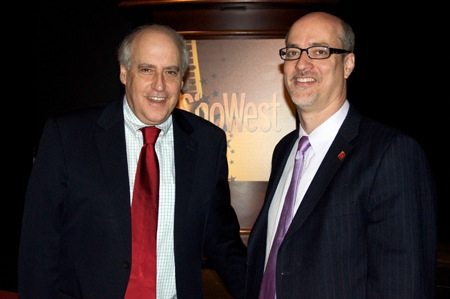
Dan GlickmanWhat it seems Glickman is suggesting is that ISPs either prevent pirated material from being transmitted over their networks or that they throttle the bandwidth speed way back when illegal content distribution is suspected. Such throttling, known as traffic shaping, has been a real hot button topic among hard core techies of late given that Comcast (in the U.S.) and other ISPs around the globe have been caught limiting the bandwidth of heavy internet users.

Ironically Glickman may get his wish in having ISPs join the MPAA in fighting movie piracy, though not due to the efforts of his organization. More so because internet providers find it is in their best interest to optimize their network by curtailing bandwidth speeds to non-commercial users generating the most traffic. In techie language. . . that means those using file sharing programs to distribute pirated copies of the latest blockbusters.

Popularity: 21% [?]