


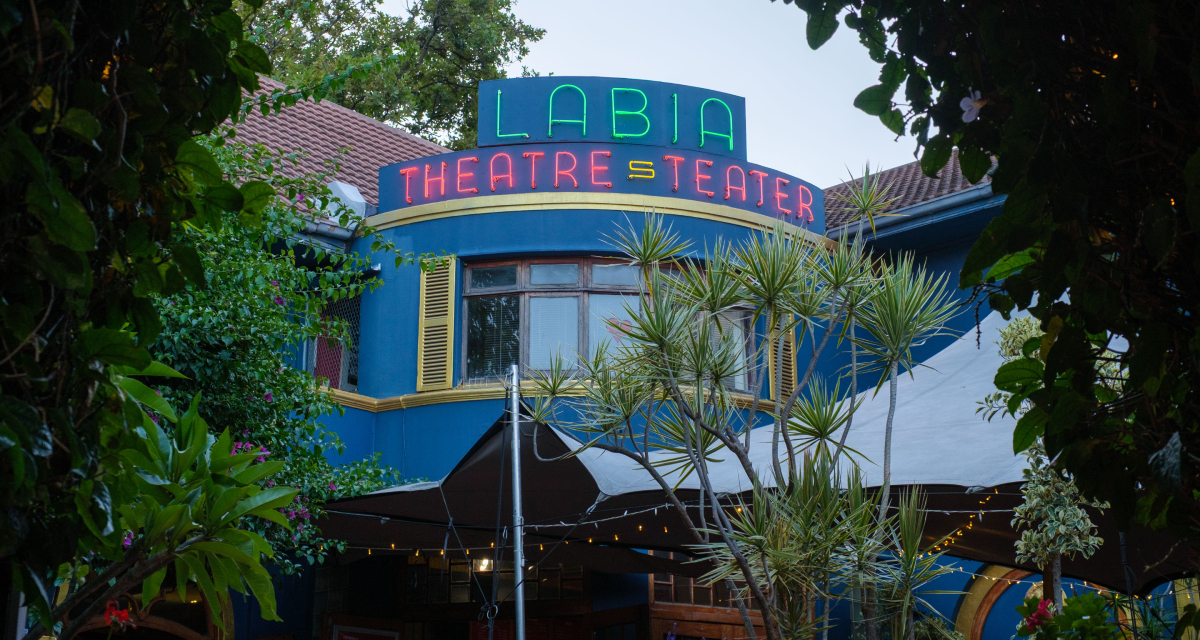
There is something nostalgic about being able to slip into Cape Town’s premiere independent cinema, the Labia Theatre, on an ordinary Tuesday afternoon, while the rest of the city is working and bustling away. Sinking into its comfortable velvet seats in Screen 1 while sipping on a glass bottle of Coca-Cola and eating popcorn from an honest-to-God brown paper bag, patrons can be transported into the world of old-school movie glamour, and all for the very reasonable cost of R90 (approximately $5.50), or R60 ($3.66) for concessions. It’s worlds away from the IMAX cineplexes just a few kilometres away, and I wouldn’t have it any other way.
A Geography of Character
To understand the Labia, one must understand its geography. Tucked away at 68 Orange Street in the leafy, historic suburb of Gardens, the Labia sits at the edge of Cape Town’s City Bowl, shadowed by the towering presence of Table Mountain. It doesn’t scream for attention with neon marquees or digital billboards; instead, it greets you with an understated Art Deco elegance and a wrought-iron gate that feels like an invitation to a private club.
Recently ranked by Time Out as the 14th most beautiful cinema in the world, the Labia holds its own against the opulent picture palaces of Paris and New York, not through gold leaf and marble, but through a lived-in, authentic “faded grandeur” that money simply cannot buy. For those who live in the shadow of the mountain, it is a landmark; for those visiting our shores, it is a discovery that lingers long after the credits roll.
A Ballroom with a Secret Past
The building’s history is as dramatic as any screenplay. It began life not as a cinema but as a ballroom for the neighboring Italian Embassy. On May 16, 1949, Princess Labia (Countess Ida Labia) officially opened the space as a hub for the performing arts. Local legend even whispers of the hallmark of Romulus and Remus on the building – a nod to its Italian roots and its complex links to the Mussolini era.
For decades, the Labia was a stage for live theatre, hosting renowned South African playwrights like Robert Kirby. The flicker of the projector only took centre stage in the 1970s. It was Polish emigrant Wolf Miknowski who began the transition, but the modern soul of the Labia was forged by the current owner, Ludi Kraus, who took the reins in 1989. Under Kraus’s stewardship, the venue evolved from a struggling live space into the country’s premier independent art-repertory cinema.
Kraus, a man whose passion for film is matched only by his commitment to his audience, has seen the theatre through the dark years of Apartheid – where it often quietly defied segregation laws – and later weathered the storm of mall culture and streaming.
Modern Comforts, Vintage Soul
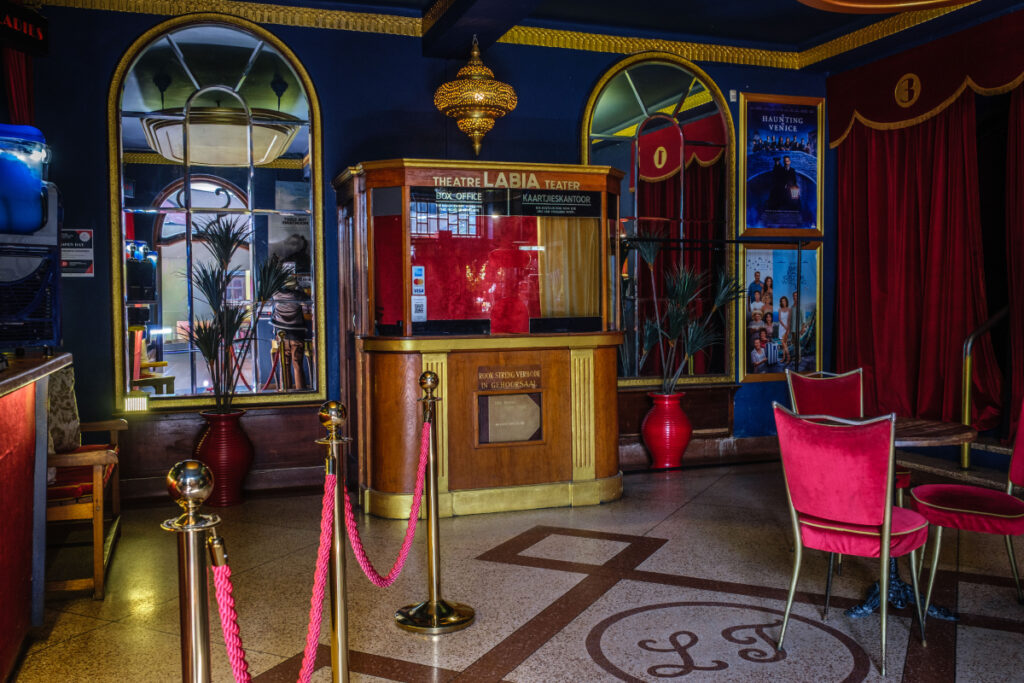
In recent years, the “Grand Dame” has undergone a thoughtful refurbishment to ensure she remains the belle of the ball. The foyer has been reimagined to improve flow while retaining its quaint, historic feel. Cinephiles will be pleased to note that the restoration extended to the seating; the plush, signature red chairs have been meticulously refurbished, offering a level of comfort that belies their vintage aesthetic. Even the restrooms received a much-needed paint job, though in a win for nostalgia, they have retained their unique, old-fashioned “pull the lever” flushing mechanisms.
While the atmosphere remains vintage, the technology is cutting-edge. After the community-funded Digital Gold campaign raised over R550,000, the theatre installed high-end Christie digital projectors and state-of-the-art sound systems. As Ludi Kraus remarked in a recent interview, the goal is about “marrying modern tech with old-world charm”.
The theatre currently operates four distinct screens:
Screen 1: The original ballroom and the largest auditorium with 176 seats. This is the place for the full “grand” experience, featuring high ceilings and the original velvet curtains that still sweep across the screen.
Screen 2: A 100-seater designed for the intimate indie gems that are the Labia’s bread and butter.
Screens 3 & 4: Smaller, cozy theatres (seating between 50 and 67) that offer a personal, almost private-viewing feel.
The décor remains a love letter to the 1940s. The ornate, original wooden ticketing booth still stands in the lobby – though, in a nod to the 21st century, you can now also book via Webtickets, one of a few major online ticket-sellers in South Africa. The walls are adorned with vintage movie posters and memorabilia, and the heavy velvet curtains still sweep across the screen before the magic begins.
A Culinary Institution
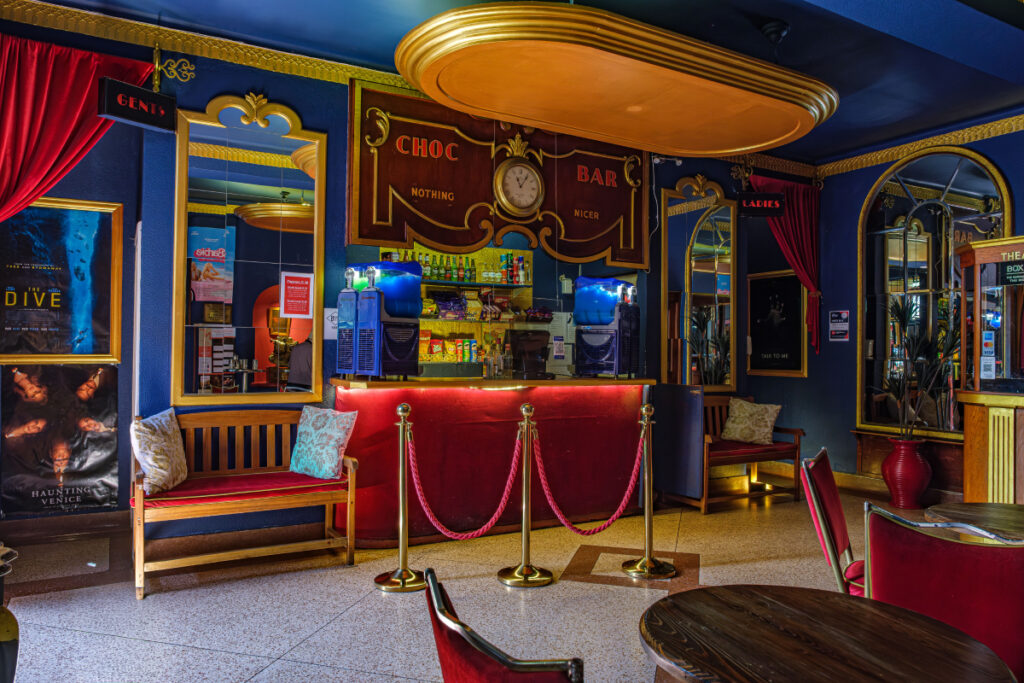
The Labia experience is famous for its relaxed approach to concessions. Unlike the rigid rules of modern multiplexes, moviegoers here are encouraged to take their food and drinks, including glasses of wine, into the cinema with them.
The food choices cater to a wide variety of palates:
The Chocolate Bar: Beyond the scent of buttered popcorn, you’ll find toasted sandwiches, homemade pies, and ice cream bars.
The Garden Terrace: This is the only cinema in Cape Town where you can sip a cocktail under the trees before a show. In winter, the queue for their legendary glühwein (mulled wine) stretches out the door, while summer calls for their famous vodka slush puppies.
Sweet Treats: The counter is always stocked with muffins and homemade delicacies that feel like they’ve come straight from a grandmother’s kitchen.
For a full night out, the “Movie and Meal” specials remain the best value in the city. Partnering with local favorites like Kloof Street House or Chingadas, the Labia offers a ticket-and-dinner deal for two that keeps the seats filled with students and silver-haired regulars alike.
The Beating Heart of SA Film
What truly sets the Labia apart is its programming. It is a beloved fixture for locals because it strikes a perfect balance between international arthouse fare and proudly South African cinema.
The current schedule is a cinephile’s dream. Following a South African Horror Fest in November, audiences can choose from films as varied as “Wicker,” “You Can See Everything,” and “The Lovebox Experiment” (the latter selected as part of the inaugural AfrikaBurn Film Festival 2026).
Crucially, the Labia serves as a vital platform for the local industry. South African film production companies frequently choose the Labia for their premieres. It has hosted screenings for highly debated works like “Krotoa” (2017), often followed by a live Q&A session with the cast and directors.
Long Live the Labia
In a world of streaming algorithms and 4D vibrating seats, the Labia offers intentionality. It is a place where watching a film is still an event. Whether you’re escaping “load-shedding” (South Africa’s power cuts) thanks to the theatre’s trusty backup generators or simply looking for a home for your love of celluloid, the Labia provides sanctuary.
That tickets remain remarkably accessibly priced is a testament to Kraus’s desire to keep cinema open to all. Discounts of up to R30 are available to members of South African bookstore franchise Exclusive Books. The Labia Theatre is quirky, historic, and – despite occasionally being mistaken for a different kind of movie theatre by the uninitiated because of its name – it remains the most soulful screen in the country.
After 75 years, the marriage of history and high-tech is still going strong. Long live the Labia.

- Cinema of the Month: Labia Theatre – Cape Town, South Africa - November 18, 2026
- Passion Over Profit: The Formula That Kept South African Horrorfest Alive - December 3, 2025