


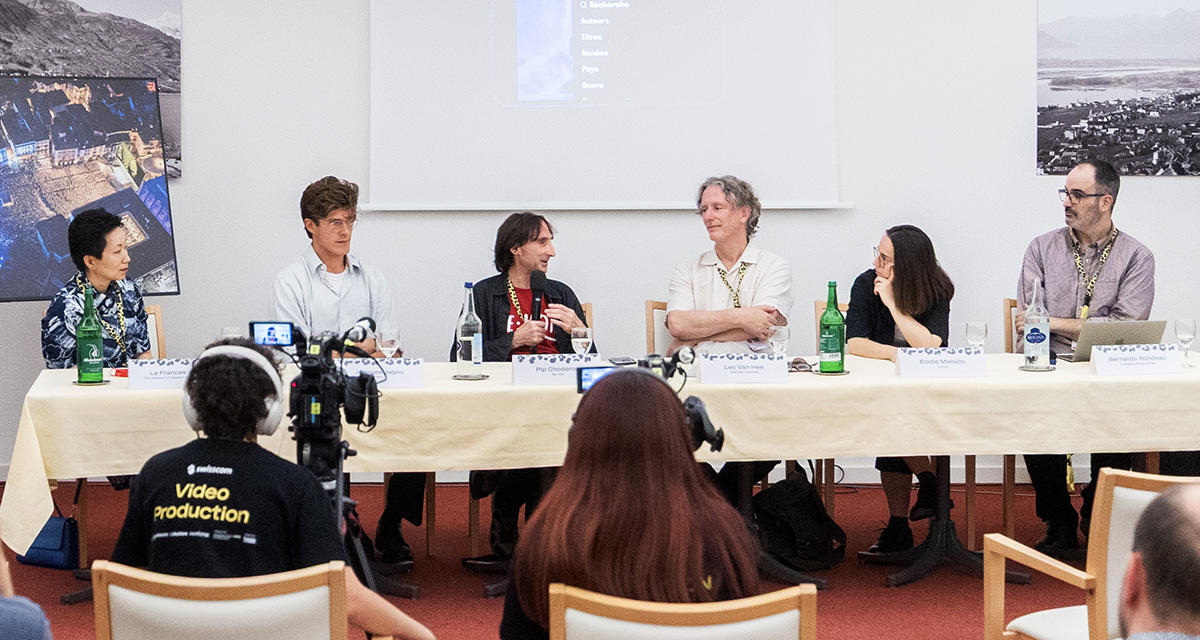
On August 11, at the Locarno Film Festival’s Heritage Monday roundtable, industry leaders debated how to market classic films to a new generation raised on TikTok and Letterboxd.
The session, titled “Promotional Strategies for Classic Films Today,” was moderated by freelance programmer Bernardo Rondeau and brought together voices from across exhibition and distribution: Jacques Jagou (MK2), Pip Chodorov (from indie distributor Re:Voir), Leo Van Hee (Eye Filmmuseum), La Frances Hui (MoMA), and Elodie Mellado (from Filmin, a Spanish subscription video on demand streaming service).
Their discussion examined how to reach audiences for classic cinema in an era defined by streaming, social media, and the cinephile influence of websites like Letterboxd. Panelists shared strategies from their institutions, weighing how to balance theatrical presentation with digital access and how to engage younger viewers discovering classics online.
Mellado began with Filmin, now in its 18th year in Spain and Portugal, where more than 3,000 classic titles — many restorations — sit alongside contemporary releases. Campaigns such as ‘They are not old, they are classics’ reframed heritage films from distributors like MGM as vibrant cultural assets. New partnerships with Universal, Warner Bros., Sony, and 20th Century broadened their catalogue.
She emphasized social media’s role: Instagram engages viewers in their 30s–40s, while TikTok reaches younger cinephiles. Filmin leverages aesthetic posts, side-by-side comparisons of contemporary and classic films, playful memes, and curated collections (e.g., Agnès Varda and David Lynch). Trend-driven opportunities — such as linking Jeanne Dielman to the Sight & Sound poll — and themed recommendations like “10 classics you need to watch this noir month” are tailored for TikTok audiences. Mellado also described cross-promotion strategies, influencer collaborations, exclusive merchandise, and redesigned posters to make classics more visually appealing. Special retrospectives, like Seijun Suzuki with Nikkatsu, and partnerships with European archives broaden reach. “This is a panorama of the things we do and the way we work,” she concluded.

Building on this focus on engagement, Van Hee outlined Eye Film Institute’s expansion into a new waterfront location in Amsterdam, with four screens (including 70mm), two exhibition spaces, and a new animation gallery. The organization’s archive holds 60,000 titles and distributes six to ten classic films annually to 160 theatres in 85 cities throughout the Netherlands.
Programming spans retrospectives, thematic series (e.g., punk, erotica), and exhibition tie-ins like Werner Herzog. Analog screenings remain popular — “35mm is like the vinyl of cinema,” Van Hee noted. For Eye, nostalgia is a feature, not a bug — a way to sell tactile experiences to audiences raised on streaming. Dutch heritage cinema and unreleased discoveries are championed, often aligning releases with anniversaries or exhibitions. Subtitling non-English titles in English addresses a growing expat and student audience, reflecting broader trends and the influence of CineVille’s EUR €19 per month unlimited pass. “Sixty percent of our classic film audience has a CineVille membership,” he emphasized.
Eye’s promotion blends ticket-driven social media with context-rich content, showcasing exhibitions, guest talks, themed screenings, and playful posts — from viral holiday quotes to carousel infographics. Weekly newsletters reach 60,000 subscribers. Highlights include “dance-along” screenings of Stop Making Sense, celebrity appearances like DoP Hoyte van Hoytema discussing Oppenheimer, and poster giveaways for retrospectives such as Kieslowski with Irène Jacob.

Continuing the conversation on preservation and niche audiences, Chodorov traced Re:Voir’s 30-year journey from VHS to its current streaming app. Initially a volunteer at the Paris Filmmakers’ Co-op in the mid-1990s, he sought to protect 16mm prints by offering VHS previews to festival programmers. He founded Re:Voir in 1994 with works by Maya Deren, Hans Richter, and Patrick Bokanowski, building a catalogue of experimental films from both sides of the Atlantic.
Resisting DVDs at first due to poor compression, Chodorov transitioned around 2005, followed by Blu-ray in the mid-2010s. The Revoir Online SVOD app now offers films searchable by title, author, year, category, or country, with multilingual support and a mix of rental and free access. Physical sales remain strong in Japan, Canada, and France, while streaming dominates in regions lacking DVD players. For Chodorov, distribution is “not to make money… it’s to make sure these films get seen,” likening experimental cinema to poetry and highlighting both restored works by Jonas Mekas, Robert Kramer, and Philippe Garrel, and under-seen artists like Jacques Perconte.
Jagou then described MK2’s dual focus on new productions and classics. Founded over 50 years ago as a Paris exhibitor, MK2 now acquires and represents 18–20 new films annually, working closely with filmmakers such as Jafar Panahi and Joachim Trier. On the classics side, the company handles 15–20 acquisitions per year from a 1,000-title library, ensuring “renowned directors are getting the proper representation all around the world” while championing rediscoveries. Current projects include restoring 1970s Iranian films and 1990s Japanese cinema.
Hui highlighted MoMA’s nearly century-long commitment to film as an equal art form. Today, the department presents 900–1,000 screenings annually, including retrospectives, national cinema series, and festivals like To Save and Project, silent film week, Doc Fortnight, New Directors/New Films, and The Contenders. Audiences are roughly 50/50 between classics and contemporary films. Marketing is minimal, so MoMA relies on a loyal local audience. Streaming was briefly experimented with during the pandemic but theatrical presentation remains central; the circulating library continues to lend titles to schools and small organizations.
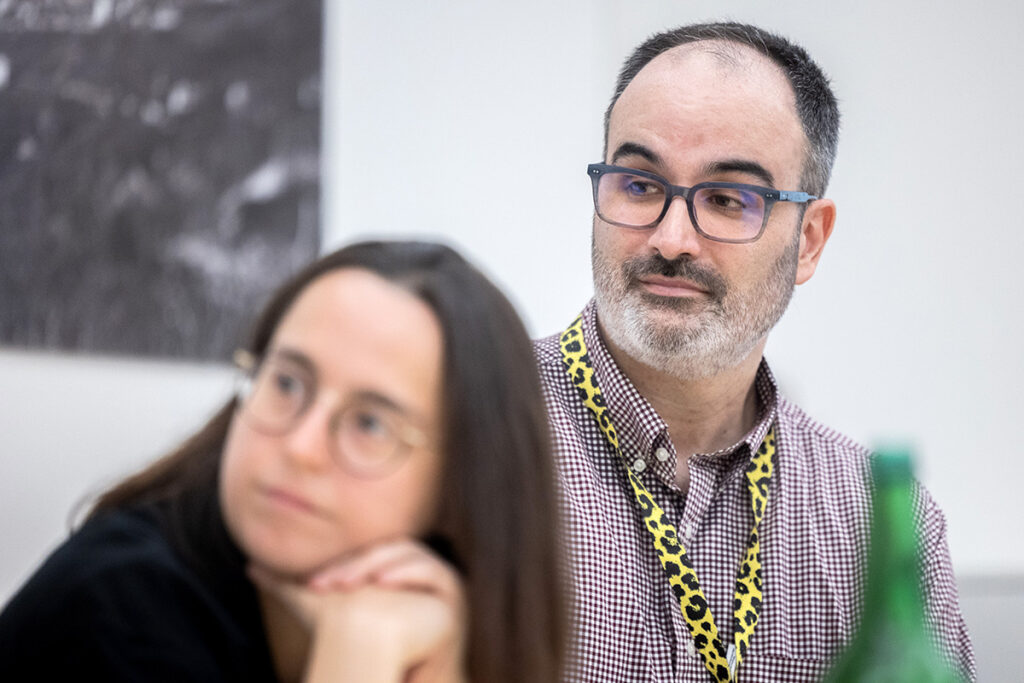
Mellado observed that post-pandemic, young cinephiles are rediscovering classics through curated playlists, restorations, and especially platforms like Letterboxd, alongside a loyal senior audience. Van Hee echoed the dual-audience challenge, offering Dutch-subtitled screenings during the day and English-language versions in the evenings.
At the same time, Van Hee explained that societal shifts — from #MeToo to Black Lives Matter — are reshaping curatorial decisions and restoration priorities, including Charles Burnett’s “Killer of Sheep.” Eye is also pushing beyond Letterboxd’s familiar “top 10” canon to highlight lesser-known cinematic traditions from Africa, Latin America, and other regions.
Chodorov said COVID didn’t alter Re:Voir’s home-video model but inspired a free-code Vimeo Pro channel (“stayhome”), giving global access to rare experimental films. In-person Super 8 teaching in Korea offered rare hands-on contact. Supply chain issues raised production costs while consumers expected lower prices, balancing students’ budgets with collector demand.
Jagou pointed to MK2 Curiosity, a curated SVOD platform launched in France during COVID, alongside a Netflix deal featuring Varda and Francois Truffaut. Although theatrical markets remain below 2019 levels, classics increasingly fill screens worldwide. Younger audiences — often discovering films first on Letterboxd — are reshaping assumptions that classics only appeal to older viewers.
Hui avoids labeling films “classics,” stressing that for young audiences, titles like In the Mood for Love feel brand-new. She also noted economic challenges — high inflation, rising shipping costs, and visa barriers — complicate programming for smaller exhibitors.
On Letterboxd, Mellado leverages a company account with 6,000 followers to repurpose curated collections, sometimes linking them to pop culture figures like Charli XCX. Chodorov admitted unfamiliarity with the platform, relying on student interns in markets like China. Jagou highlighted MK2’s formal partnership with Letterboxd to grow its European presence.
Together, the panelists underscored that canon-building is no longer a static process handed down by critics and institutions, but a fluid one shaped in real time by digital communities, streaming platforms, and shifting cultural debates. For classic cinema, survival increasingly means reinvention — and finding new ways to matter to an audience raised in the Letterboxd era.
- Young Audiences Already Like Cinema. The Hard Part Is Giving Them a Reason to Go - August 31, 2026
- At Locarno, Restored Films Face Their Next Challenge: Finding an Audience - August 20, 2026
- Indie Film Marketing Can’t Wait Until the Film Is Finished - July 27, 2026