


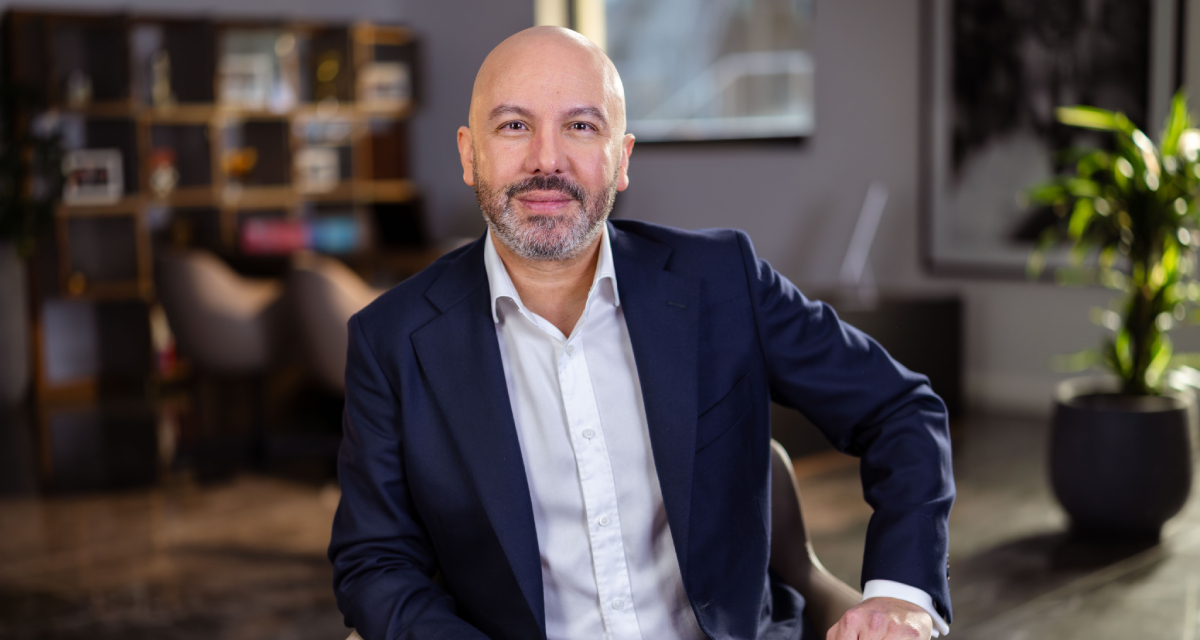
Speaking to Celluloid Junkie during the festival, Malta Film Commissioner Johann Grech lays out his ambitious strategy for the film festival, and how he hopes it will act as a springboard for further investment in the island country as a filming location.
This year, the Mediterrane Film Festival returned to Malta for its fourth edition. While it requires a village to make a successful festival, the MFF is very much the vision of the dynamic Johann Grech, Malta Film Commissioner since 2018. This year, as before, the festival finished with the Golden Bee Awards, held at Malta Film Studios on 28 June 2026. Hosted for the first time by British comedian Jack Whitehall, the spectacular show played out on Malta’s famed water tanks, featuring a 100-meter-long stage with a stunning 60-meter-wide projection screen made of water.
Several days earlier, Celluloid Junkie sat down with Grech, who was bursting with excitement about the festival and the upcoming show. “It is a message to the world… that our country, [despite] being so small, it never stops us of dreaming big. And the show with the water tank is going to be a bold statement.” ‘Bold’, it certainly was. As Leona Lewis, Maltese tenor Joseph Calleja and Eurovision favourite Destiny entertained the VIP guests, winners included John Cleese, who was presented with the Icon award, and Andy Harries, producer of “The Crown,” who received a lifetime achievement award. Steven Soderbergh’s “The Christophers” won Best Feature Film and Best Screenwriting, for Ed Solomon.
“The festival [has] kept on growing,” says Grech. “We kept on investing, and it kept on growing, and it’s leading us to results.” Each year, he notes, there has been an expansion, with the festival throwing its doors ever wider. “The third year, last year, we opened it for the whole of Europe and the Mediterranean, and this year we opened it for all global nations. So America, Australia, Canada, Europe, the Mediterranean. Malta was always strategic in our history. We were always strategic. And we want this festival to be as strategic as Malta itself to get business here to participate on the global stage, to build up this brand and keep on competing.”
Certainly the inclusion of films like the Australian-made survival tale “Beast of War” in the festival line-up has given the selection a more international sheen. But the MFF has a distinct purpose beyond simply serving up great cinema for the public. “I think it’s the best marketing tool, as the Film Commission, we ever created for the film industry,” says Grech. “Not just for debate or networking… but also for potential co-production. It’s a business tool, a strategic tool to get more business to Malta, putting Malta on the global map. We are inviting producers, directors, studio executives, filmmakers, press to feel it in a tangible way, our product.”
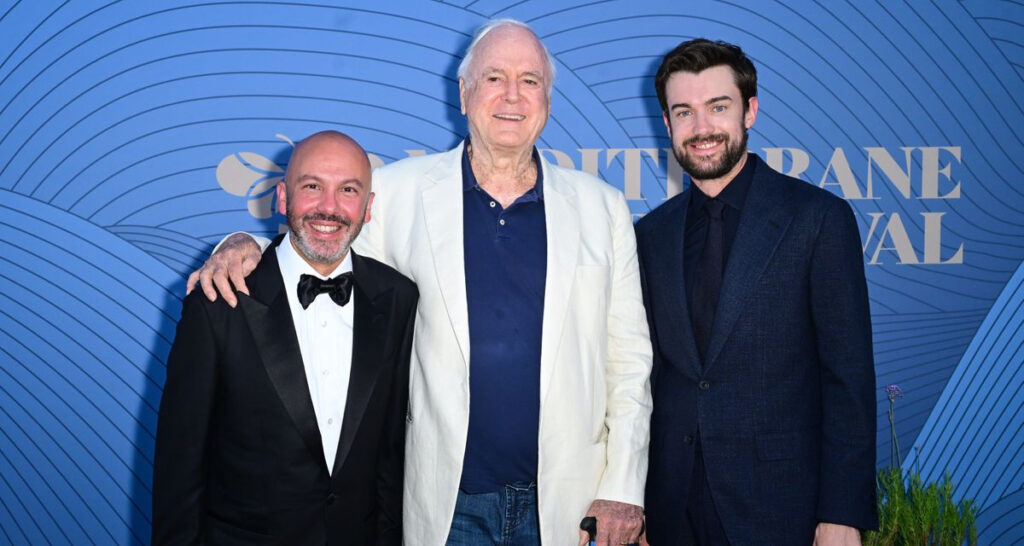
The hugely ambitious Grech has been scheming to make Malta an attractive destination for filmmakers for the best part of a decade now. “We have been always successful in getting [filmmakers here to shoot their] stories, but the industry was seasonal. When I became commissioner, I wasn’t happy about the status quo. Are you happy with 200 people working only for a very short period of time? No. And today we have over 1800 people working in film, mostly the majority working all year round, from one production to another.”
Since the launch of a 40% cash rebate scheme in 2018, one of the most competitive in Europe, the industry has generated EUR €1.5 billion (USD $1.71 billion) in gross value added for the Maltese economy. An independent study, written by the chief officer for economics at the Central Bank of Malta, revealed that since the rebate was initiated, the tax revenues generated by film activity have far exceeded the cost of the rebates. Among other things, the study discovered that the net fiscal benefit to the Malta government amounted to EUR €94 million (USD $107.1 million) between 2018 and 2025. After the period between 2005 to 2017, it marks a four-fold increase, from around EUR €3 million (USD $3.42) to EUR $12 million (USD $1.367) annually.
“For every one euro that we invest with, the industry generates four back,” Grech explained. “We support the financing of our country, and so we are not a burden on the taxpayer. Actually, in 2023, the film industry was one-sixth of the economic growth in Malta.” Grech pays tribute to the Maltese government, who has backed his vision. “I wouldn’t have done it without the support of government. I lobbied the government to increase rebate, the government did. And when we created this festival, I had the support of government.”
Location, Location, :ocation
Since Grech took over, Malta has welcomed such huge Hollywood productions as “Jurassic World: Dominion” and “Jurassic World: Rebirth”, and Ridley Scott’s “Napoleon” and “Gladiator II,” which returned Scott to the same locations where he shot 2000’s “Gladiator.” More recently, Jason Statham has shot the forthcoming features “Mutiny” and “Viva La Madness” on the island and is currently in Malta for his third project in swift succession, filming the meta-comedy “Jason Statham Stole My Bike.” “We are having repetition of business,” said Grech, who has been smart in cultivating relations with directors and A-listers.
Last year, as the MFF celebrated a hundred years of filmmaking in Malta, the Golden Bee Awards honored “Gladiator” star Russell Crowe with the Icon award. The actor spoke warmly of his experiences in Malta, and it’s not hard to imagine him returning one day for another shoot. “He’s an ambassador of Malta. He’s a great ambassador and we want to work on more projects with Russell Crowe… We want to keep on strengthening our relationship with him, and with all others who want to keep on putting Malta on the map.”
Quite how Hollywood views the MFF remains to be seen. Just as the 2025 festival unfolded, the Netflix production “Enola Holmes 3,” a Maltese-set story starring Millie Bobby Brown, was shooting there. Given “Enola Holmes 3” bowed on Netflix on 1 July, just three days after the festival closed, it was a surprise it did not play at the MFF. “They’re very specific on dates, and we were not able to shift the dates, and they were not able to shift the dates,” offered Grech, who is all too aware of the difficulties of luring major studio and streaming premieres to Malta.
While the festival has some innovations, like the Mare Nostrum strand which highlights features and documentaries that explore sustainability and the environment, the curated line-up is chiefly playing films that have already premiered elsewhere. “We are still an infant as a project and we will not compete with other festivals,” said Grech. “We created something of our own, something global that everyone can share and be part of. We are not here to compete with other festivals, but we are here to consolidate our position, Malta’s position, on the global map.”
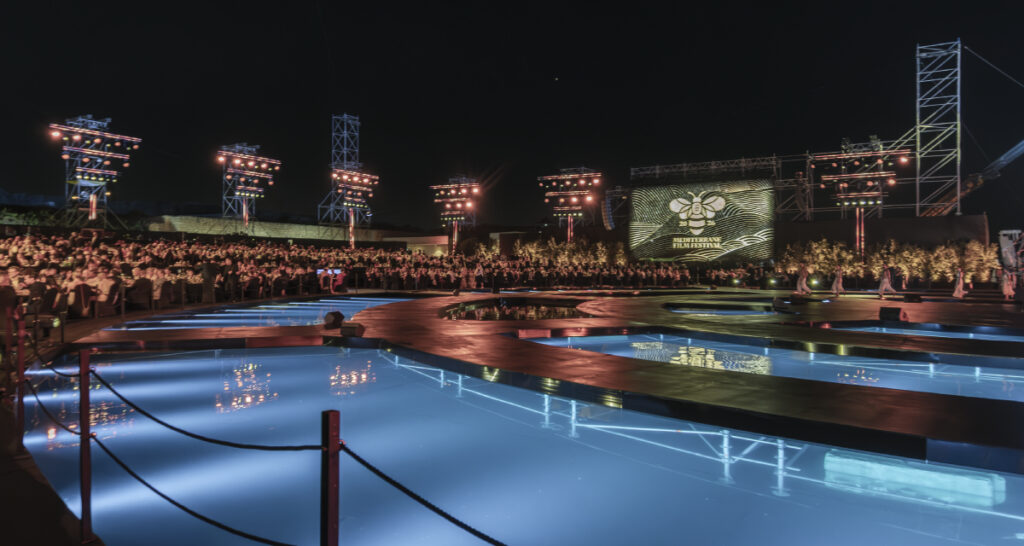
Where it scores is its film-friendly setting. Alongside this year’s film screenings, panels, and masterclasses (including with director Renny Harlin and actress Famke Janssen), the MFF offered tours around Malta Film Studios and the island itself, allowing directors, producers, location managers and others to scout potential projects and realise what Malta has to offer. “We are giving tours, specific tours, on land and sea, to see the art and the possibilities of Malta,” said Grech.
Among this year’s guests, British filmmaker Stephen Poliakoff – who participated in the panel “The Character Is Plot,” alongside “John Wick” creator Derek Kolstad – was using his time in Malta to location scout for his forthcoming eight-part political thriller “The Order,” an adaptation of Maltese author Peter Portelli’s novel. All set in the months leading up to the famed Great Siege of Malta in 1565, the series is being produced by Helen Flint, who has already brought the 2026 TV series “Pompei: Out of Time With Tom Hiddleston” to Malta.
Grech also hopes that Mel Gibson, who visited Malta a couple of years back, realises his long-gestating historical epic, another Great Siege-set story. “It will be huge!” he promised of a project that has morphed from feature film to limited TV series over the years. And, understandably, he’s desperate to see more Maltese stories brought to screen, including World War II-set tales. “Malta, being a British colony, was the most bombed country globally during the Second World War,” Grech stated. “We never surrendered. It’s a huge story, too.”
The day before we met, Grech also announced a EUR €2 million (USD $2.28) fund to train and up-skill crew members, thereby putting further financing into training local crew. “I have more ideas,” he added. “Change is a process, not an ending. And we will take even bolder measures to ensure that we are consolidating and making sure that this model of creating a world class film industry is well created and well sustained.”
How does Grech see the MFF evolving? Will it always be a glitzy showcase for what Malta has to offer? Or can it become a major date in the already overcrowded festival calendar? “We want to grow further. We want to be among other festivals, globally. We want to have a legacy, not just for us, but for the next generations,” he explained. Grech’s desire to use the MFF as a flagship for all that Malta has to offer only looks like it’s going to get more fervent. “It’s never enough!” he said. “‘Enough’ is not in our dictionary.”
Part of his master plan comes with overseeing a purpose-built super-soundstage at Malta Film Studios, designed to provide film productions with both land and sea environments. “It’s going to be a first, globally,” Grech proclaimed. With the permits in place and government approvals granted, it’s another step forward in the evolution of Malta as a major destination for movie productions. “This is about building, creating a sustainable world-class film industry,” he added. “We have the vision, we have the drive, we have the commitment, and we’re going to make it happen.”
- Venice 2026: Defiant Documentaries, Female Filmmakers and a Scaled-Back Studio Offering - September 17, 2026
- How the Mediterrane Film Festival in Malta Is Putting the Island on the Map for Filmmakers - July 10, 2026
- Can Direct-to-Audience Distribution Give Indie Films a New Path to Theatres? - June 18, 2026