
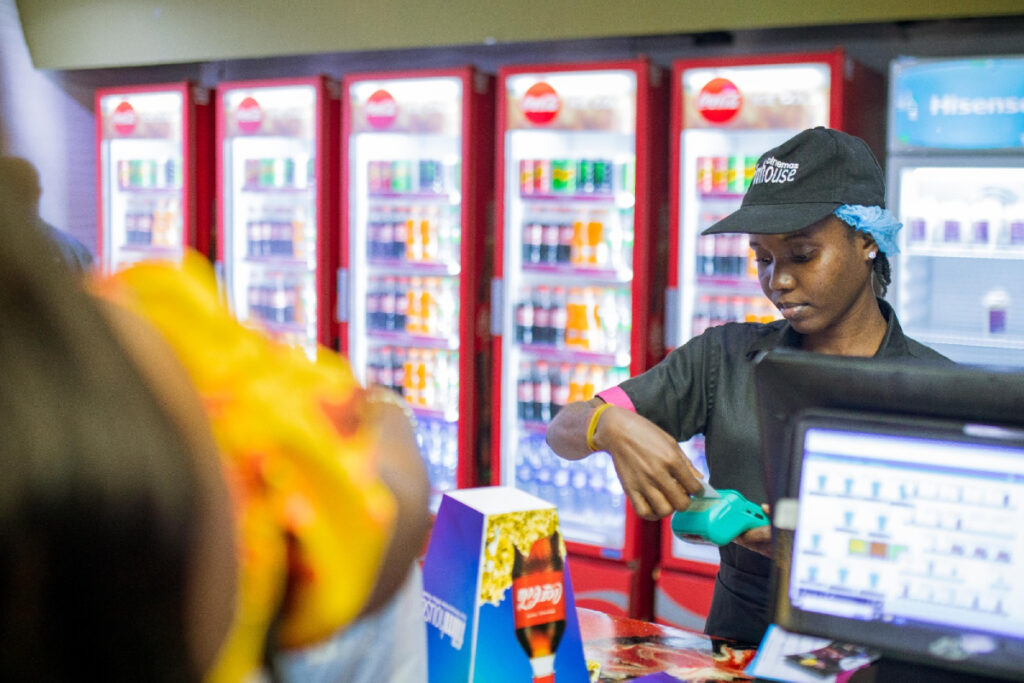
On a typical weekend release night in Lagos, the line outside a Filmhouse cinema tells a story Nollywood has been trying to spread for decades, but never quite had the infrastructure to prove. The crowd is younger than you might expect. The tickets aren’t cheap. The screens are world-class. And the films once dismissed as “local” now carry the weight of something bigger: ambition.
For years, Nollywood has been one of the most productive film industries in the world, but productivity has never translated neatly into power. The industry has lived in a strange in-between; globally visible, culturally influential, but structurally underbuilt. Filmhouse Group is betting that the problem was never the story but the system. Chief Marketing Officer Mojisola Oladapo told Celluloid Junkie, “We are shaping how audiences perceive and engage with African stories. I say this because there used to be a time when Nollywood was perceived as substandard because of the quality of their film. You can tell it’s no longer the same.”
At a time when global audiences are increasingly hungry for diverse stories, Nigeria’s film industry — Nollywood — stands at a critical inflection point. Prolific yet often structurally constrained, the industry is now being transformed by companies that recognise storytelling alone is not enough. Among the most strategic of these is Filmhouse Group. They’re not just quietly making eligible films; they’re building a functional system that inspires growth and relevance in practical terms. “For us it goes beyond the stories,” said Oladapo. “We are the bridge.”
Strategic Thinking
What distinguishes Filmhouse is not simply its scale, but its philosophy: Nollywood’s global relevance cannot be achieved through content alone, but through infrastructure, partnerships, and systems that mirror and eventually rival those of Hollywood. Filmhouse is not just striving to build a film company but a strong ecosystem with compelling global relevance.
Filmhouse Group operates through a vertically integrated model that spans cinema exhibition (Filmhouse Cinemas), distribution (FilmOne Entertainment), and production (FilmOne Studios). This structure allows the company to control the entire value chain from how films are made, to how they are marketed, to where and how they are shown. This is significant because one of Nollywood’s historical weaknesses has been fragmentation. Films were often produced independently, distributed informally, and exhibited inconsistently. Filmhouse’s model has replaced that fragmentation with a coordinated structure that is currently reshaping Nollywood’s presence.
“The balance is deliberate as a business,” Filmhouse CEO Kene Okwuosa said. “Hollywood titles remain important for driving consistent footfall and sustaining cinema-going habits, while Nollywood continues to perform strongly across our cinema locations through premieres, talent, and storytelling.”
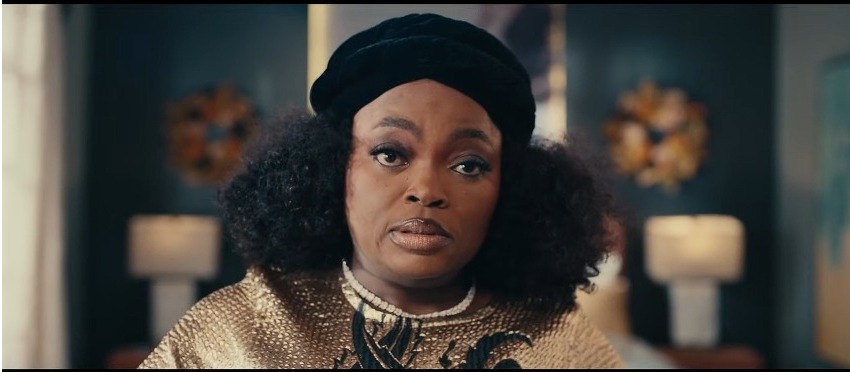
Under the leadership of Okwuosa, the company has grown into a dominant force, accounting for a substantial share of cinema ticket sales in Nigeria and distributing many of the country’s highest-grossing films: “A Tribe Called Judah” was the first Nollywood film to gross more than NGN ₦1 billion (USD $743,235), eventually reaching NGN ₦1.408 billion (USD $1.04 million), and “Behind the Scenes” took NGN ₦2.76 billion (USD $2.04 million). But scale alone is not the goal, standardisation is. Filmhouse’s leadership has been explicit about a key idea: global success requires global-standard infrastructure. This is why the company has invested heavily in cinema technology and boosting the moviegoing experience, introducing IMAX and other advanced formats into Nigeria, and expanding modern multiplexes beyond traditional elite urban zones.
Adding Value
In a shifting economy with uncertainties (inflation hitting operating costs, piracy, competition from streamers), Filmhouse is maximising data, partnerships and collaborations to drive efficiency and expansion, with an eye on increasing Nollywood’s relevance and standing. These moves are not just about local market growth; they are about perception. The reception of a film by audiences, investors, and international partners is immediately elevated when it is presented in a world-class environment.
As Okwuosa puts it, the global appetite for African stories already exists. The challenge is building the systems to sustain and scale that demand: from licensing frameworks to exhibition standards to distribution pipelines.
In other words, Filmhouse is reframing Nollywood from a volume industry to a value industry through a strategic ecosystem that maximises collaborations and partnerships. Through FilmOne Entertainment, the company holds theatrical distribution relationships with major Hollywood studios such as Disney, Warner Bros., Sony, Angel, Empire, MGM, and Sun Africa Group. This is doing two things simultaneously. Firstly, it positions Filmhouse as a gateway for international content into West Africa. In turn, it creates reciprocal pathways for Nollywood films to access global distribution networks. This dual positioning is critical. Rather than isolating Nollywood as a regional industry, Filmhouse aims to embed it within the global film economy where collaboration, co-production, and cross-market distribution are the norm.
In addition, their presence at major international events like the Cannes Film Festival and the recently concluded CinemaCon further reinforces this ambition. By participating in global industry conversations, showcasing projects, and forming partnerships, Filmhouse is actively inserting Nollywood into the circuits where cinema is defined.
CEO Okwuosa, explained what Filmhouse’s international strategy looks like in practical terms. “As a business across exhibition, distribution, and production, Filmhouse Group’s international strategy is focused on scale and long-term positioning,” he said. “This includes strengthening studio relationships, maintaining a presence in key international markets, and building exhibition, distribution, and production infrastructure that aligns with global standards, while positioning African content for wider reach.”
Historically, Nollywood’s strength has been its cultural specificity, with stories deeply rooted in Nigerian and African realities. Filmhouse understands this dynamic, and is refining it and positioning it for global relevance. Filmhouse’s CMO Oladapo detailed how the company is balancing local content with Hollywood titles, calling it “a beautiful time to be alive and in the business. A decade ago, this wouldn’t be a conversation, Nollywood versus Hollywood in the same conversation. The power of storytelling excellence is what Nollywood is investing in. Stepping up, and proper execution is the reason we can have this conversation.”
Oladapo stated that Filmhouse’s core focus on distribution has been around portfolio optimisation. “Sometimes, particularly in the peak period like December, the past December was exceptional [for varied, complementary releases],” she said. “We had both ‘Avatar,’ with a wide audience, and ‘Behind the Scenes,’ a Nollywood new release, and both performed excellently. Hollywood tends to perform in specific periods like holidays, summer, etc. For Nollywood, we take advantage of specific windows and events. We achieve balance through dynamic scheduling for Hollywood, and for Nollywood, we eventify everything from targeted release timing to meet and greet events that pull audiences.”
Oladapo points to tech advantages that Filmhouse uses to retain an edge in the market. “We are diverse,” she said. “We have technologies that our competitors don’t have at the moment, so we tend to leverage that. The beauty of being the market leader is that your thoughts and ideas happen in real time. ‘Behind the Scenes’ did not just screen in Nigeria, it was distributed across audiences in the United Kingdom, United States and Canada. We window Nollywood titles beyond Nigeria leveraging on the diaspora demand. Sometimes, you don’t want to go with a strategy you are not sure will work in that market. You want to go where the talent has a presence. In the meantime, we are less focussed on building cinemas abroad immediately but more focused on exporting the demand first”.
Filmhouse Projects A Bigger Picture
In particular, Filmhouse’s approach suggests a deliberate counterbalance. By strengthening theatrical distribution, building local infrastructure, and forming international partnerships on its own terms, the company ensures that Nollywood is not merely exported but controlled. When asked about the insights gained from distributing global films locally and how that informs Nollywood internationally, CEO Okwuosa said, “At FilmOne Entertainment, distributing global films locally has reinforced the importance of strong release strategy, audience understanding, marketing execution, and technical presentation. These are the core drivers of box office performance. We apply the same principles to Nollywood to ensure films are properly positioned and structured to perform across different theatrical markets, including beyond Nigeria.”
One key theme stands out in conversations with Filmhouse leadership: attention to detail. They have taken time to understand their audience and position themselves properly in the market. After grasping their audience, they have continued to build an ecosystem with global relevance, pushing Nollywood forward in the right direction.
Okwuosa went on to describe Filmhouse’s role in connecting African cinema to wider theatrical audiences as an ecosystem builder and connector. “Locally, it provides the infrastructure and platforms that allow African stories to thrive in cinemas,” he said. “Internationally, it engages global partners and industry platforms to position African films as commercially viable theatrical content for broader audiences.”
Filmhouse’s strategy is not just about solving structural challenges; it is about extending global expansion. What distinguishes Filmhouse Group particularly is that it is not just participating in Nollywood’s evolution; it is actively designing it. Its strategy can be summarised in three layers:
- Dominate locally through exhibition and distribution
- Standardise production and infrastructure to meet global expectations
- Integrate globally through partnerships, festivals, and cross-border distribution
Speaking to CJ ahead of a visit to CinemaCon 2026, Okwuosa gave a glimpse of what he expected from the industry’s biggest convention of the year. “I have been going to CinemaCon for over 10 years, and it really reflects the scale of the industry,” he stated. “In 2026, it will be an important indicator of where things are heading, particularly around studio commitment to theatrical exclusivity, how release windows are evolving, focus on emerging markets, improvements in cinema technology and premium formats, and how exhibitors and distributors are working more closely together. It will also give a clearer sense of the major Hollywood titles to look out for across the year, and the overall strength of the studio slates.”
Stepping back to view the ambitious bigger picture, Filmhouse is not just a focus-driven, innovative company, but could also become a bridge between Nollywood and the world. While there has been visible progress, a question remains: can this group successfully build a premium film culture in a country where piracy remains a significant threat to revenue? Filmhouse is strongly betting that, over time, the answer will be yes. And if they’re proven right, it could be not only Nigeria but the world that reaps the benefits.