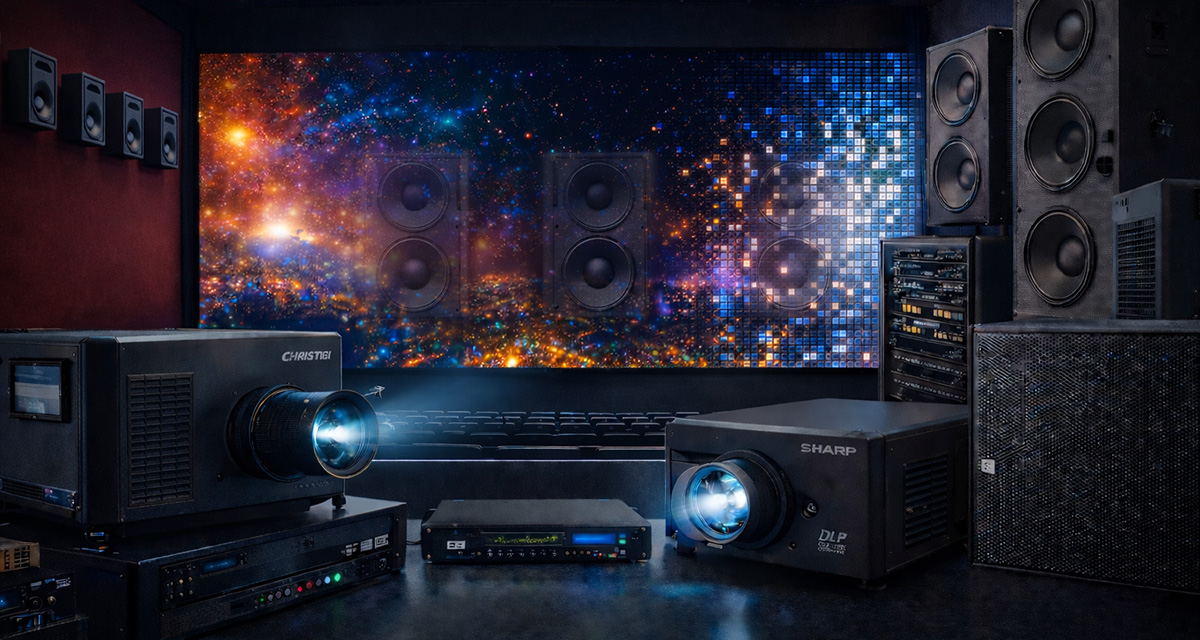
While much of the focus at CinemaCon is on the business of cinema, the core theatrical experience still depends on how a film looks and sounds on screen.
At CinemaCon 2026, cinema equipment manufacturers and providers are highlighting advances across projection, LED cinema displays, immersive audio, and presentation monitoring — technologies designed to improve image quality, enhance sound performance, and ensure consistent playback across auditoriums. Alongside premium large format systems, there is also a growing emphasis on tools that help operators maintain presentation standards through automation, diagnostics, and remote monitoring.
Together, these solutions reflect an ongoing shift toward more precise, data-informed control of the theatrical experience, where consistency and quality are as important as innovation.
Sponsored by Vista Group
This post is part of Celluloid Junkie’s 2026 CinemaCon Product Preview series, sponsored by Vista Group.
Adaptive Technologies Group
Location: Julius Ballroom — Booth 138J
Pro-Lift Scissor Lifts & Digital Controllers
What’s New:
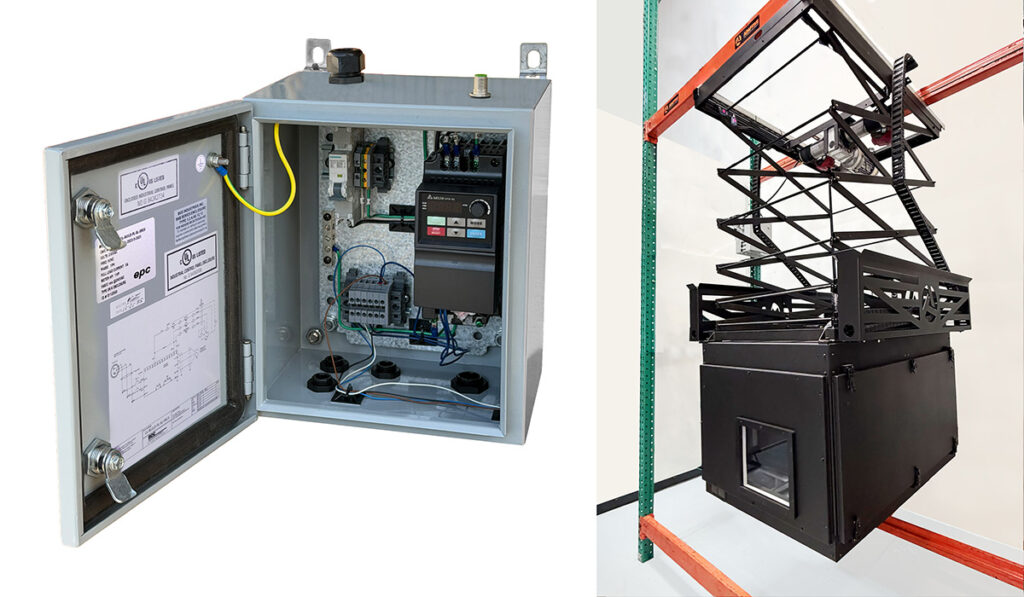
Adaptive Technologies Group has expanded its Pro-Lift scissor lift range to support larger format projection setups, introducing additional lifting heights and controller options to accommodate evolving cinema and immersive auditorium designs.
What It Is:
The Pro-Lift system is a ceiling-mounted projector lift designed to safely position and service digital cinema projectors. Now available in field-adjustable lifting heights of 8, 16, and 24 feet, the system supports payloads up to 600 pounds and can be paired with Adaptive’s P-Box 15 hush box for enclosed installations.
Why It Matters:
As cinemas move toward larger screens, booth-less designs, and premium formats such as 4DX, projector installation and maintenance are becoming more complex. Lift systems like Pro-Lift are designed to simplify access while maintaining safety and minimizing disruption during servicing.
With options for multiple preset positions — including show, maintenance, and stow — as well as network-compatible controllers, the system allows operators and technicians to manage projection equipment more efficiently in increasingly technical environments.
CES+
Location: Meetings by appointment
Audio IQ
What’s New:
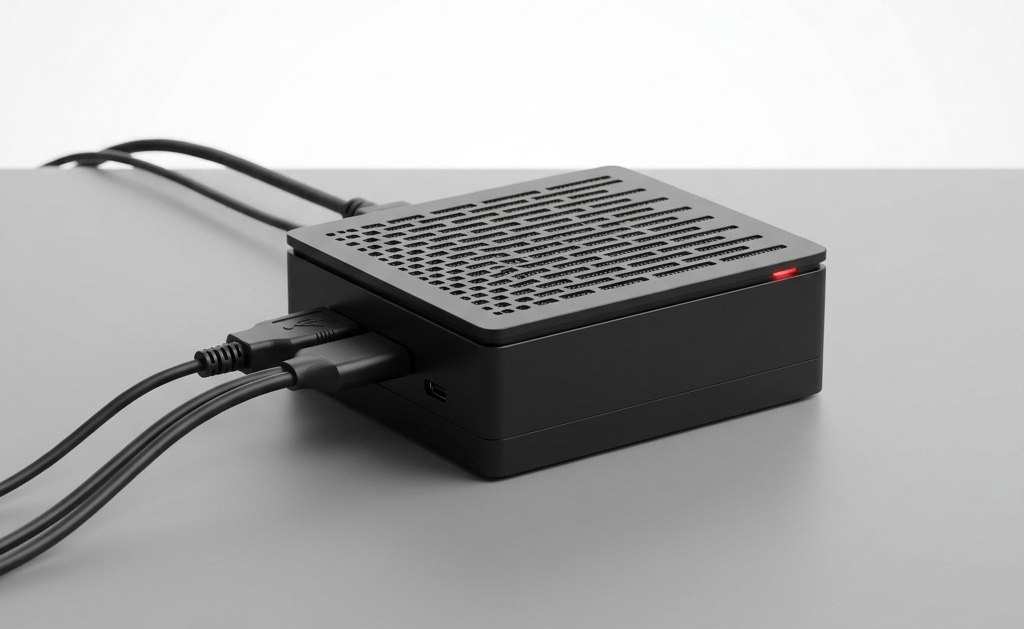
CES+ Cinema is introducing Audio IQ at CinemaCon, an automated audio monitoring system designed to detect and diagnose sound issues in real time.
What It Is:
Audio IQ is an AI-enabled system that continuously monitors in-auditorium audio performance, analyzing sound output across the full surround configuration without requiring manual checks. The platform identifies issues such as failing speakers, dead channels, or level inconsistencies and delivers alerts through a cloud-based dashboard.
Designed to integrate with existing cinema sound systems, Audio IQ provides remote diagnostics and ongoing performance monitoring, allowing technical teams to identify and address issues before they impact the audience experience.
Why It Matters:
Audio issues are often difficult to detect in real time and may only surface after impacting multiple screenings. Systems that provide continuous monitoring and early fault detection can help operators maintain consistent presentation quality while reducing reliance on manual testing and reactive troubleshooting.
As cinemas continue to invest in premium sound formats, maintaining audio performance across all auditoriums — not just flagship screens — is becoming an increasingly important part of the overall guest experience.
Christie
Location: Milano 1 & Milano 5 (Offsite demonstrations available)
CP4410m-RGBH (CineLife+ Phazer Series)
What’s New:
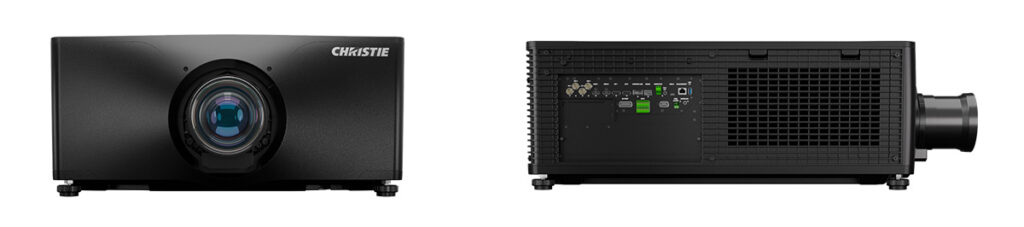
Christie is introducing the CP4410m-RGBH at CinemaCon, expanding its CineLife+ Phazer lineup with a lower-lumen projector that incorporates RGB laser-phosphor hybrid illumination.
What It Is:
The CP4410m-RGBH is a 10,000-lumen projector designed for smaller screens, boutique cinemas, and boothless environments. It uses a hybrid RGB laser-phosphor light source intended to reduce speckle and color variation on high-gain screens while maintaining image clarity and color performance.
Why It Matters:
Exhibitors are transitioning from Xenon to laser projection, however cost and screen size have remained barriers for smaller auditoriums. Lower-lumen solutions can help make that transition more accessible without requiring the scale of premium large-format installations.
By introducing a hybrid illumination approach and positioning the unit for compact and boothless setups, Christie is targeting a segment of the market where flexibility, footprint, and upgrade pathways are increasingly important.
VDR (Variable Dynamic Range)
What’s New:
Christie is officially launching VDR (Variable Dynamic Range) at CinemaCon, a software-based upgrade designed to improve contrast and energy efficiency in existing RealLaser projection systems.
What It Is:
VDR uses interframe analysis to dynamically adjust laser output based on the requirements of each scene, enhancing contrast while optimizing power usage. The feature is delivered as a software license and can be enabled on compatible CineLife+ RealLaser projectors without requiring new hardware.
Why It Matters:
For exhibitors, improving image quality has traditionally required significant capital investment in new projection systems. Software-based upgrades offer an alternative path, allowing operators to enhance performance while extending the life of existing equipment.
In addition to increasing perceived contrast, tools like VDR also aim to reduce energy consumption and operational costs — two factors that are becoming increasingly important as cinemas manage long-term infrastructure investments.
CinemaNext
Location: Julius Ballroom — 311J
PAA40+ Automation Adapter
What’s New:
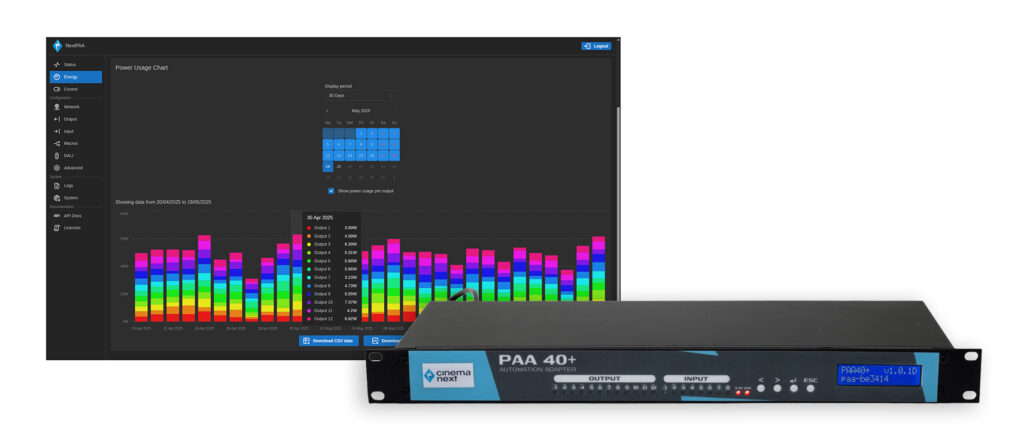
CinemaNext is highlighting its PAA40+ Automation Adapter at CinemaCon, designed to expand automation and energy management capabilities within cinema projection booths.
What It Is:
The PAA40+ acts as a control layer that translates commands from cinema servers or TMS systems into automated actions for booth equipment, including projection, HVAC, and audio systems. It enables operators to schedule and manage when systems are powered on or off, while also monitoring energy usage across multiple circuits (including support for multiple relay outputs, programmable macros, and real-time reporting).
The system can also be deployed as a retrofit for existing installations, allowing cinemas to upgrade booth automation without replacing core infrastructure.
Why It Matters:
As energy costs rise and operational efficiency becomes more critical, managing when and how equipment is used inside the projection booth is gaining importance. Automation tools can help reduce unnecessary power consumption by aligning system usage more closely with actual show schedules.
Solutions like the PAA40+ are positioned to deliver a relatively short return on investment by reducing energy waste and minimizing manual intervention, while also giving operators greater visibility into booth performance — an area where small inefficiencies can add up over time.
Digital Light Sources (DLS)
Location: Julius Ballroom — Booth 433J
Cine LEDMAX Acoustically Transparent Cinema LED Screens
What’s New:
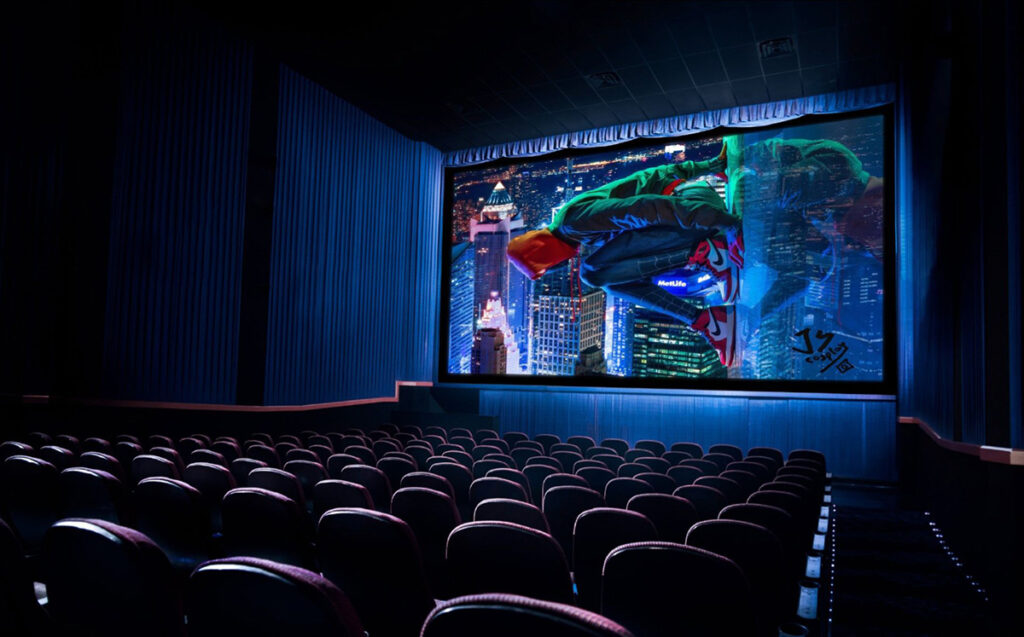
Digital Light Sources is continuing to demonstrate its Cine LEDMAX acoustically transparent LED screens at CinemaCon, with a focus on sound transmission technology designed to address one of the key challenges of LED cinema installations.
What It Is:
The Cine LEDMAX lineup consists of DCI-compliant direct-view LED screens available in a range of sizes, designed for both retrofit and new-build auditoriums. Developed in partnership with LED manufacturer LOPU Tech, the system incorporates a patented approach to sound transparency, allowing audio to pass through the screen without the need for traditional speaker placement compromises.
Why It Matters:
While LED cinema screens have gained attention for their brightness, contrast, and long service life, audio integration has remained a limiting factor in wider adoption. Solutions that address sound transmission more effectively can help make LED a more viable option across a broader range of auditoriums.
By combining high dynamic range visuals with an acoustically transparent design, systems like Cine LEDMAX are aimed at reducing the trade-offs traditionally associated with LED installations, giving exhibitors another pathway to evaluate as the market continues to evolve beyond projection.
Dolby Laboratories
Location: Meetings by appointment
Dolby Vision + Dolby Atmos (Combined Premium Offering)
What’s New:
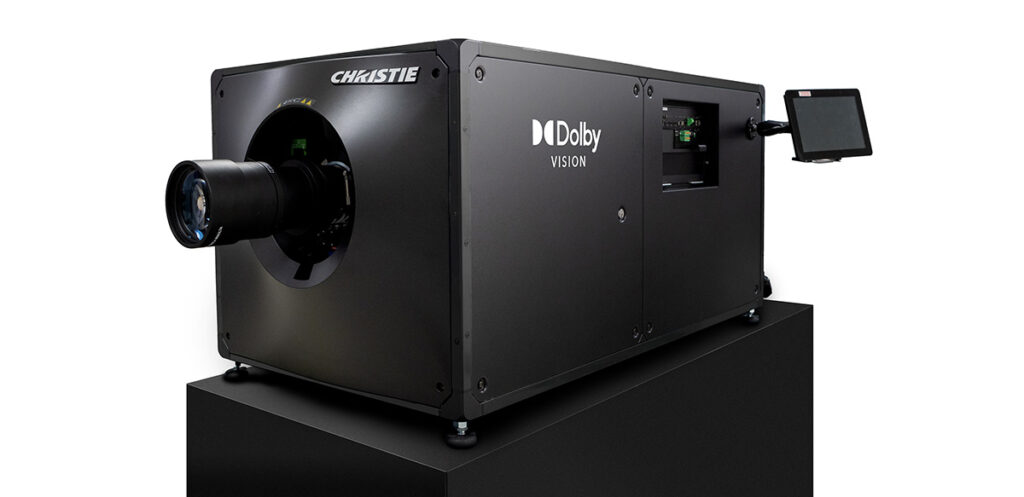
Dolby is expanding access to its combined Dolby Vision + Dolby Atmos offering at CinemaCon, positioning the technologies as a more broadly available premium solution beyond traditional Dolby Cinema installations.
What It Is:
Dolby Vision is a high dynamic range projection system designed to deliver enhanced contrast, brightness, and color performance, while Dolby Atmos is an object-based audio format that places sound throughout the auditorium, including from the ceiling. Together, they form a premium presentation package that integrates image and sound technologies developed and refined through Dolby Cinema deployments.
Why It Matters:
Premium large-format experiences have become a key differentiator for exhibitors, but not all cinemas can accommodate fully branded, turnkey concepts. Offering Dolby Vision and Atmos as a more flexible combination gives operators another way to deliver a high-end presentation without adopting the full Dolby Cinema model.
By making this pairing more accessible, Dolby is effectively extending its premium ecosystem to a wider range of auditoriums, allowing exhibitors to align with filmmaker-preferred formats while tailoring implementation to their own spaces and business models.
GDC Technology
Location: Milano 2
Tricorne LED Screen & HDR LED Media Server
What’s New:
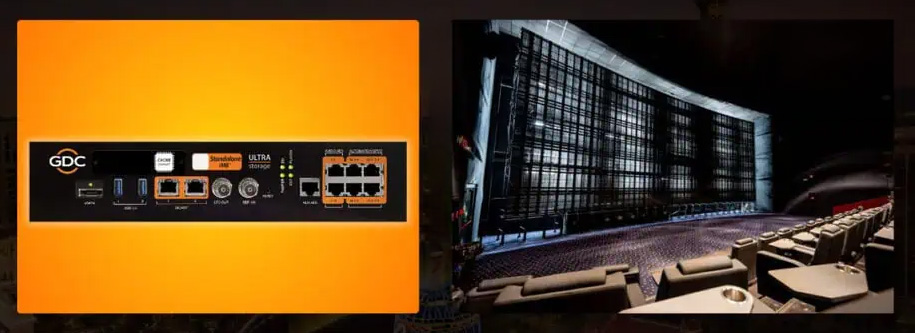
GDC Technology is showcasing its Tricorne LED cinema screen alongside its HDR LED Media Server at CinemaCon, highlighting a fully acoustically transparent LED solution designed to improve both image and sound integration.
What It Is:
The Tricorne LED is a direct-view cinema screen featuring a perforated design that allows speakers to be positioned behind the display, addressing one of the key challenges associated with LED installations. It is paired with GDC’s HDR LED Media Server, a DCI-compliant system designed to support HDR and high frame rate playback for LED cinema environments.
Why It Matters:
As LED cinema screens continue to develop as an alternative to projection, integrating audio without compromising sound placement has remained a core limitation. Acoustically transparent designs aim to resolve this by restoring traditional speaker positioning while maintaining the visual benefits of LED.
By combining display technology with a dedicated media server, GDC is positioning its solution as a more complete LED ecosystem, giving exhibitors a way to evaluate both image and playback infrastructure as part of a single deployment strategy.
AIB-4000 DTS:X for IAB Cinema Processor
What’s New:
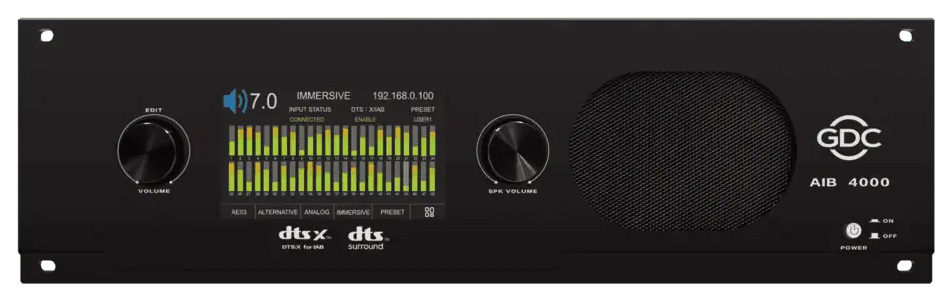
GDC is introducing the AIB-4000, a new immersive audio processor designed to support the SMPTE IAB standard at CinemaCon.
What It Is:
The AIB-4000 is a 64-channel audio processor that supports DTS:X for IAB and integrates with DCI media servers. It is compatible with networked audio protocols such as Dante and AES67, enabling flexible audio system configurations within modern cinema environments.
Why It Matters:
With immersive audio formats continuing to evolve, standardization around IAB is becoming increasingly important for interoperability across cinema playback systems. Processors that support these standards can help simplify installation and integration while maintaining flexibility for future upgrades.
For exhibitors investing in next-generation audio, solutions like the AIB-4000 reflect a shift toward more scalable, network-based architectures that align with broader industry direction.
Harkness Screens
Location: Salerno Room
HSG Labs QA Monitoring System

What’s New:
Harkness Screens is introducing its HSG Labs quality assurance monitoring devices at CinemaCon, designed to provide continuous remote oversight of image and audio performance across auditoriums.
What It Is:
The HSG Labs range includes monitoring tools that track presentation parameters such as brightness, focus, image alignment, and sound. The system can deliver alerts via email, text, or integration with theatre management systems, allowing operators to identify and address issues without requiring manual inspection.
Why It Matters:
Maintaining consistent presentation quality across multiple screens can be challenging, particularly for circuits operating at scale. Issues such as brightness drift or sound imbalance can go unnoticed until they impact the audience experience.
Monitoring systems that provide real-time feedback and alerts offer a more proactive approach, helping operators identify problems earlier and reduce the need for reactive maintenance. As expectations around presentation quality remain high, tools like these reflect a broader shift toward continuous performance monitoring rather than periodic checks.
MAG Cinema
Location: Augustus Ballroom — Booth 2304A
ERA SUB 321 Cardioid Subwoofer
What’s New:
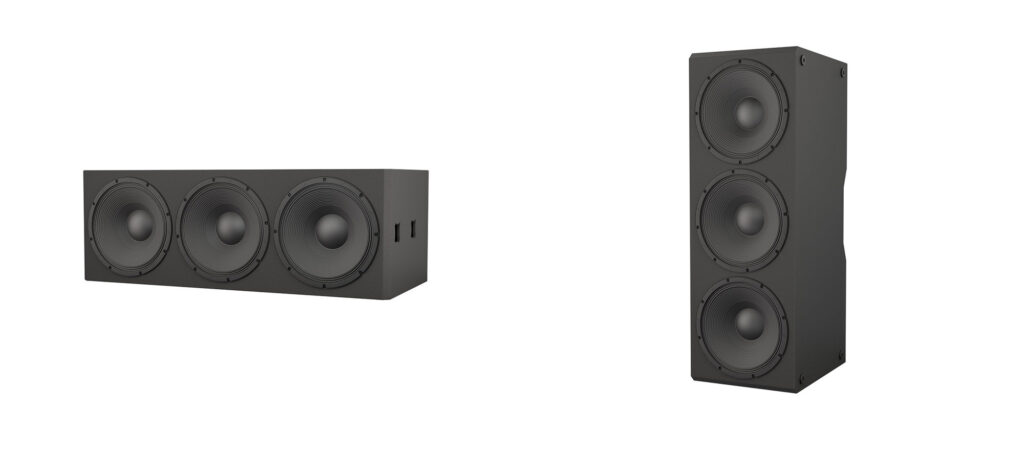
MAG Cinema is introducing the ERA SUB 321, a cardioid subwoofer designed to improve low-frequency control within cinema auditoriums.
What It Is:
The ERA SUB 321 features a three-driver (21-inch) configuration built around passive cardioid technology, allowing the system to direct bass energy toward the audience while reducing rearward output. The design is intended as a drop-in replacement for conventional subwoofers, requiring no additional processing or amplifier channels to achieve directional performance .
Why It Matters:
Low-frequency sound bleed between adjacent auditoriums has long been a challenge in cinema design, particularly in multiplex environments. Controlling bass energy, rather than simply increasing output, is becoming an increasingly important consideration as sound systems evolve.
Solutions that improve directionality and reduce unwanted spill can help maintain audio clarity within each auditorium while minimizing interference between screens. For exhibitors and integrators, this shifts the focus from raw power to precision, supporting more consistent sound experiences across the circuit.
Meyer Sound
Location: Augustus Ballroom — Booth 2104A
USW-121P Self-Powered Cinema Subwoofer
What’s New:
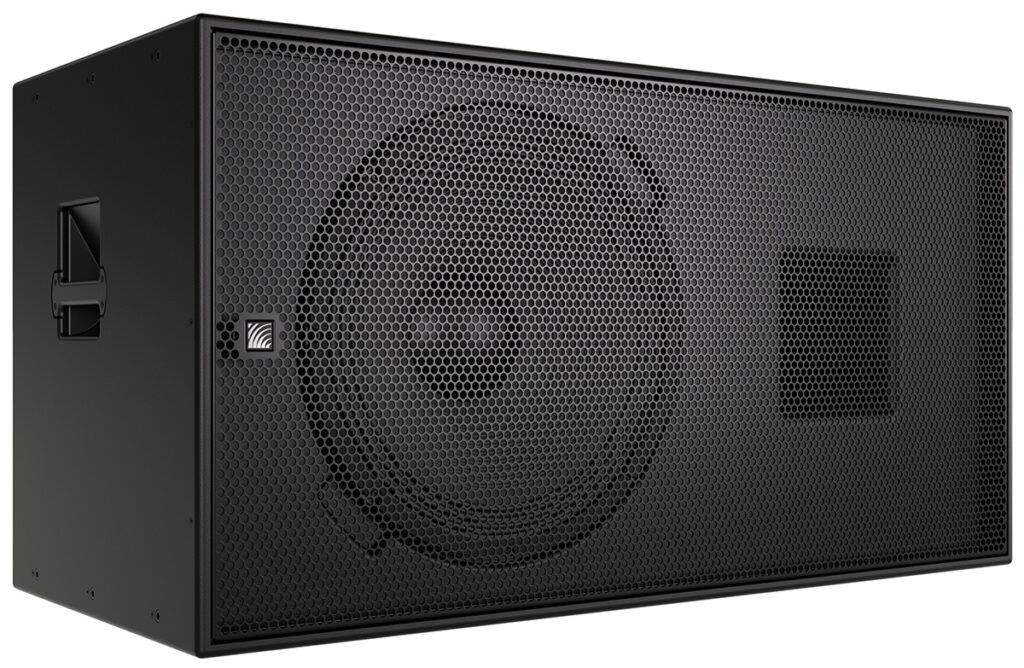
Meyer Sound is introducing the USW-121P, a self-powered subwoofer that brings networked audio and onboard processing into a single cinema sound component.
What It Is:
The USW-121P is a compact, high-power subwoofer built around a 21-inch driver, designed to deliver extended low-frequency performance while minimizing system complexity. It integrates amplification, digital signal processor (DSP), and networked audio (including AES67 connectivity) directly within the enclosure, reducing the need for external processors and additional hardware.
Its cabinet design supports flexible installation in space-constrained environments — including behind screens and along walls — while maintaining airflow and acoustic performance.
Why It Matters:
With cinema sound systems now more advanced than ever, system design and integration are becoming increasingly complex. Solutions that consolidate amplification, processing, and networking into fewer components can simplify installation, reduce rack space, and streamline ongoing maintenance.
For exhibitors and integrators, this reflects a broader shift toward fully networked, self-powered audio systems, where more of the signal chain is handled within the speaker itself — potentially improving efficiency while maintaining consistent performance across auditoriums.
Moving iMage Technologies
Location: Augustus Ballroom — Booth 427J
DCS Digital Cinema Series Loudspeakers
What’s New:
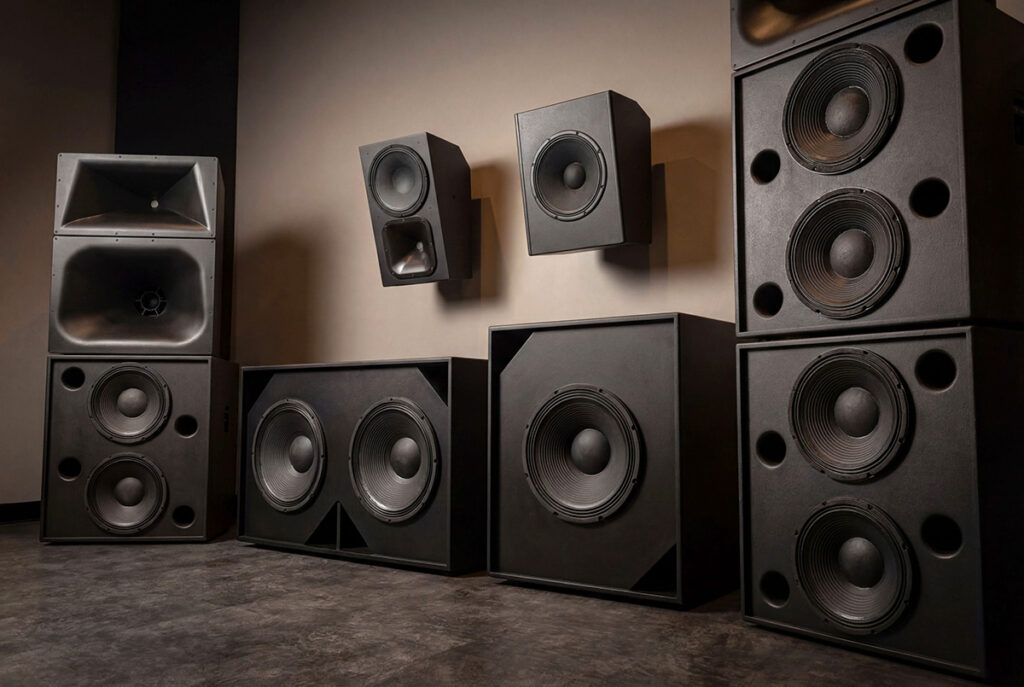
Moving iMage Technologies (MiT) is showcasing the DCS (Digital Cinema Series) loudspeaker platform at CinemaCon following its recent acquisition of the long-established cinema audio brand from QSC.
What It Is:
The DCS platform is a full-range cinema audio solution, including screen channels, surrounds, subwoofers, and monitoring systems, designed to support configurations from traditional 5.1 and 7.1 setups through to immersive audio environments. Originally developed over more than two decades and deployed in thousands of auditoriums worldwide, the system is positioned as a scalable, cinema-focused solution.
With the acquisition, MiT has taken over manufacturing relationships, inventory, and global distribution, while positioning DCS as an open platform available through integrators and partners across multiple markets.
Why It Matters:
As exhibitors continue to invest in premium presentation formats, control over key technology components — such as the DCS loudspeaker platform — is becoming increasingly strategic. For integrators, expanding into owned or managed product lines can help ensure supply continuity and provide greater flexibility in system design.
MiT’s move into cinema audio reflects a broader trend toward vertical integration within the exhibition technology ecosystem, where companies are looking to offer more complete solutions across projection, sound, and installation.
Samsung Electronics
Location: Roman Ballrooms 1–2
Spatial Signage (Glasses-Free 3D Display)
What’s New:
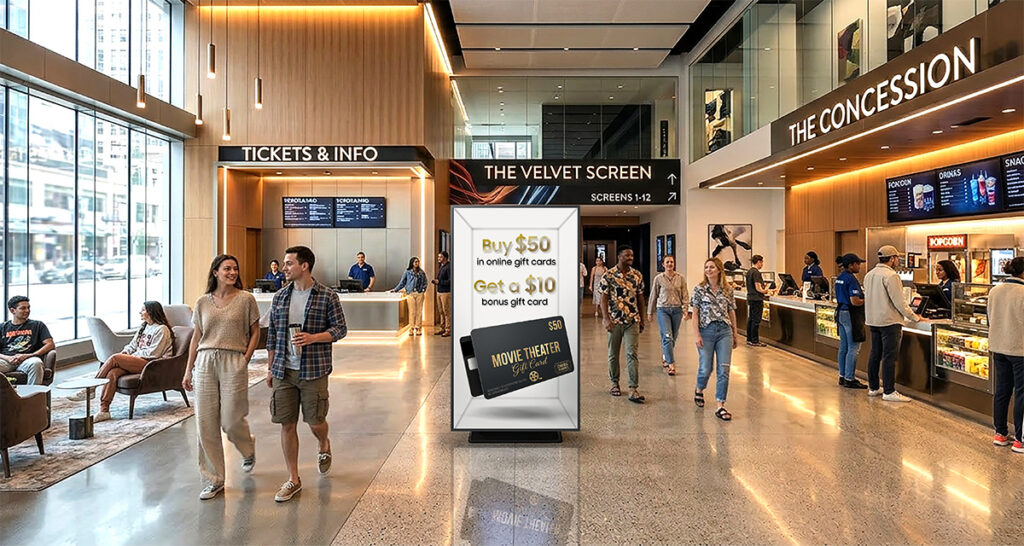
Beyond the latest generation of Onyx Cinema LED screens, Samsung is introducing its Spatial Signage at CinemaCon, a glasses-free 3D display designed for use in cinema lobbies and other high-traffic areas.
What It Is:
Spatial Signage uses a patented optical layer to create the perception of depth directly within the display, allowing content to appear three-dimensional without requiring special glasses. The system is designed for commercial environments and can be used to present film marketing, showtimes, and promotional content in a more visually dynamic format.
The 85-inch display features 4K resolution in a portrait configuration, making it suited for poster-style content and digital signage applications within cinema spaces.
Why It Matters:
As exhibitors and studios look to extend engagement beyond the auditorium, attention-grabbing displays in lobbies and concession areas are becoming increasingly important. Technologies that add depth and motion to traditional signage can help differentiate promotional content in busy environments.
Glasses-free 3D displays like Spatial Signage represent one approach to enhancing pre-show engagement, offering a way to bring elements of cinematic storytelling into the broader venue without requiring changes to projection systems.
Severtson Screens
Location: Augustus Ballroom — Booth 2310A
SēVision 3D GX Giant Electric Motorized Screen
What’s New:
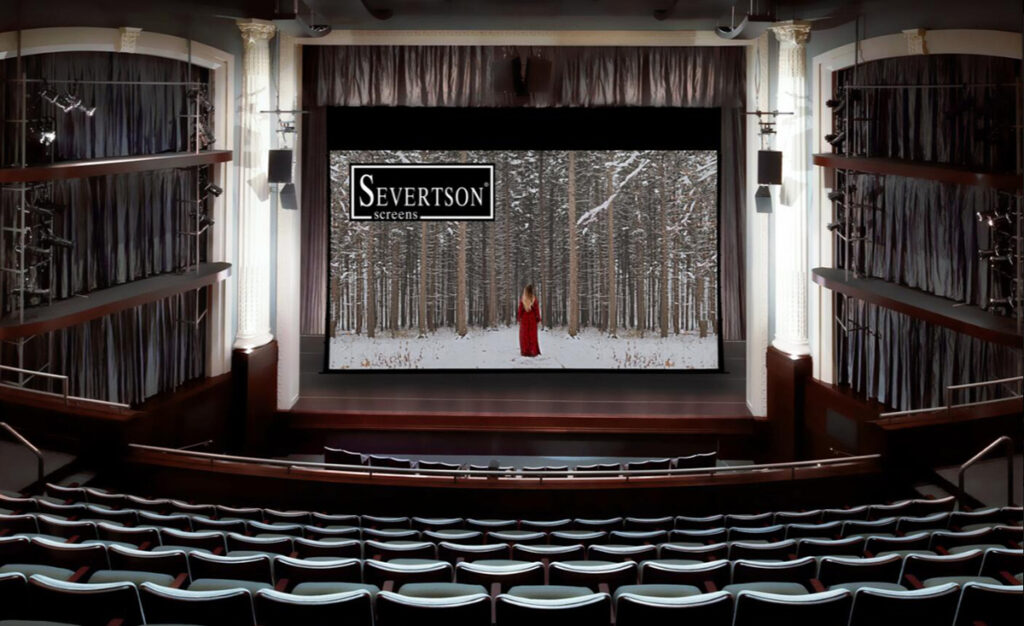
Severtson is introducing its SēVision 3D GX Giant Electric motorized projection screen at CinemaCon, designed for large-format venues that require retractable screen solutions.
What It Is:
The system is a large-scale motorized cinema screen that can be raised and lowered, making it suitable for multi-purpose auditoriums where the screen cannot remain permanently deployed. It is available in a range of materials, including acoustically perforated options that allow for speaker placement behind the screen.
Severtson’s folded screen technology and coating system are designed to withstand repeated rolling without damaging the projection surface, enabling use in applications where large-format screens need to be deployed frequently .
Why It Matters:
While most cinema screens are fixed installations, some venues — including multi-use auditoriums, event spaces, and certain premium formats — require greater flexibility. Motorized large-format screens address this need by allowing spaces to transition between different uses without permanent structural changes.
As cinemas and adjacent venues explore more flexible programming and shared-use environments, solutions that support adaptable screen configurations may become more relevant, particularly outside traditional multiplex settings.
Sharp
Location: Neapolitan 1
Projector Lineup Refresh
What’s New:
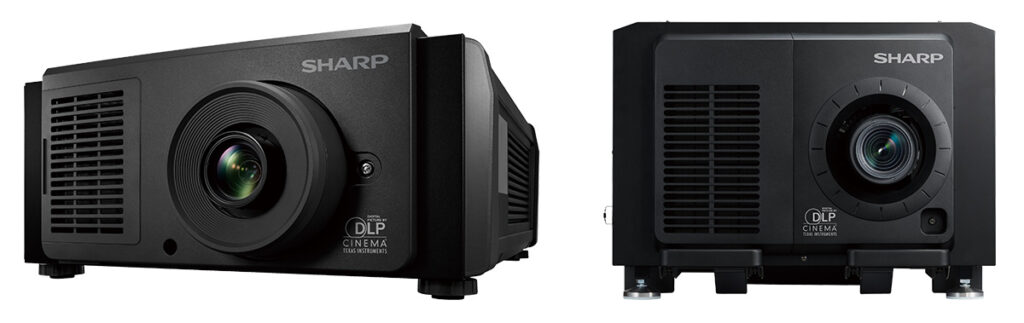
Sharp is marking the final phase of its transition from the NEC brand during this year’s CinemaCon, with plans to begin selling its first Sharp-branded digital cinema projectors later this year.
What It Is:
At CinemaCon, the company is previewing updates to its cinema projection lineup, including a refreshed 4K range and a new 2K projector featuring enhanced dynamic range (EDR) and a 12,000-lumen brightness option. Sharp also indicated that a smaller, low-noise projector is in development, aimed at environments where footprint and acoustics are key considerations.
Alongside its cinema projection roadmap, Sharp will showcase a broader portfolio of display technologies, including large-format displays, ePaper solutions, and dvLED screens, reflecting its wider positioning across commercial display applications.
Why It Matters:
The transition from NEC to Sharp represents a notable shift in one of the industry’s long-standing projection technology providers. For cinema operators, continuity in product development and support is critical, particularly as the market continues to evolve toward laser projection and alternative display technologies.
The introduction of Sharp-branded projectors signals an effort to maintain that continuity while positioning the company for the next phase of cinema technology development.
Timewaying (HeyLED)
Location: Augustus Ballroom — Booth 2226A
Front-Access DCI HDR LED Cinema Screen
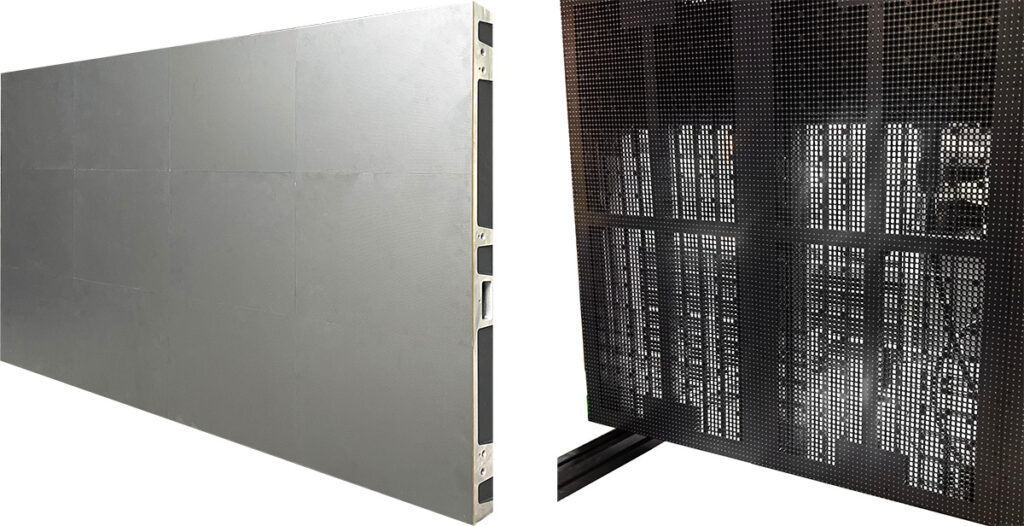
What’s New:
Timewaying (HeyLED) is introducing a front-access LED cinema screen at CinemaCon, designed for wall-mounted installation in space-constrained environments.
What It Is:
The screen features a structural design that enables both installation and maintenance from the front, eliminating the need for rear access. Available in sizes ranging from 4 to 10 meters, it is positioned for smaller auditoriums, private cinemas, and specialty installations. The system supports DCI-compliant HDR presentation and uses advanced panel packaging to improve surface uniformity and durability .
Why It Matters:
One of the practical challenges with LED cinema installations is the space required for access and servicing. Designs that allow front-only installation can make LED a more viable option in locations where depth is limited or retrofitting is required.
By focusing on compact formats and simplified installation, solutions like this open up LED deployment to a broader range of venues, including premium small-screen environments where space efficiency is critical.
Explore more in the 2026 CinemaCon Product Preview series on Celluloid Junkie.