


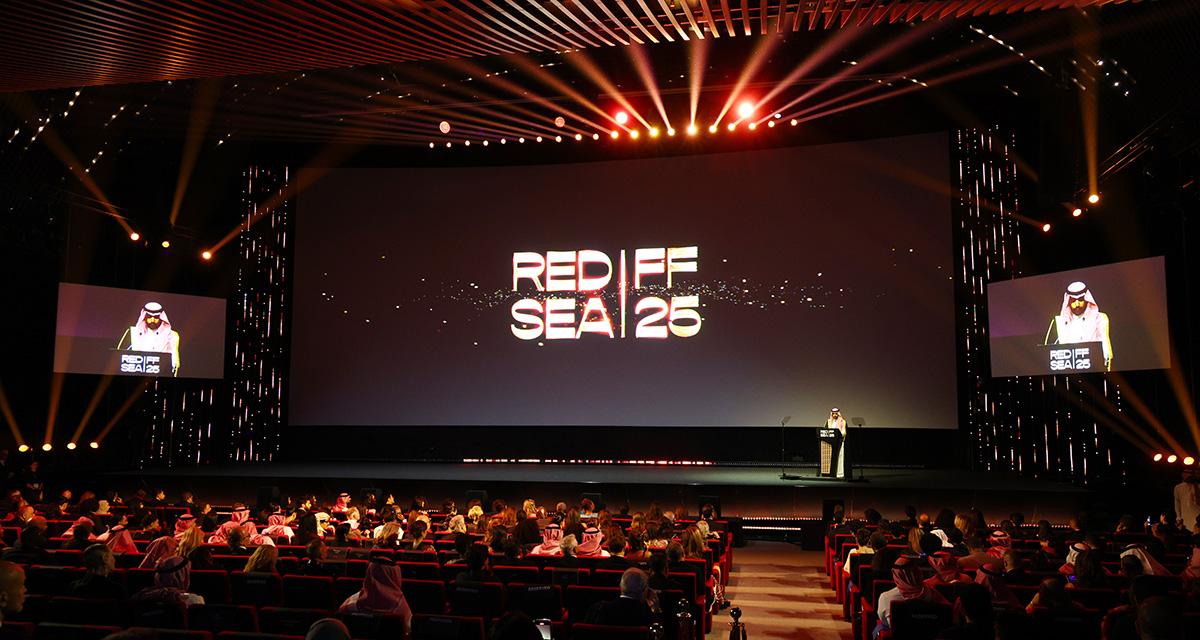
Under the desert night sky and amid the floodlit architecture of historic Al Balad, the fifth Red Sea International Film Festival opened with a ceremony that reflected a country rapidly building a film culture from scratch and eager to share that transformation with the world.
For Saudi Arabia, which didn’t have public cinemas until 2018, tonight’s star-studded launch — attended by the likes of Juliette Binoche, Adrien Brody, Kirsten Dunst, Dakota Johnson, Queen Latifah, Uma Thurman and Vin Diesel, along with dozens of industry delegates flown in from around the world — was a reminder of how aggressively the Kingdom has moved to position itself as a cultural hub.
What emerged on the opening night of this year’s RSIFF was a mix of earnest state-building, genuine cinephile enthusiasm, and one perfectly chaotic speech from a 92-year-old Michael Caine, who—knowingly or not—stole the show.
Presenting a Vision for Saudi Cinema
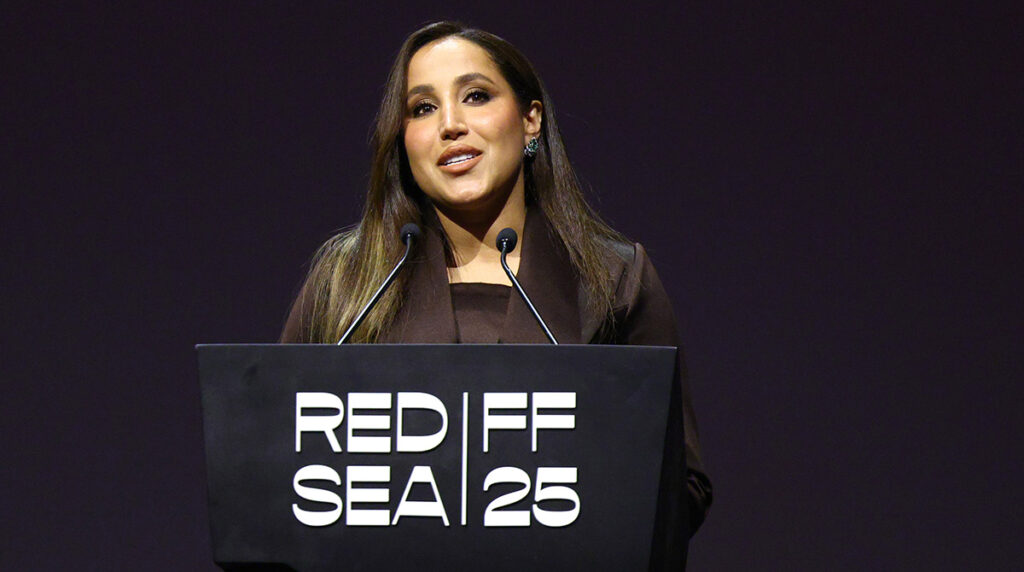
Jomana R. Alrashid, Chairwoman of the Red Sea Film Foundation, opened the ceremony with a speech that was equal parts welcome, manifesto, and victory lap for the festival’s rapid development and success.
Standing before the crowd, she described the Foundation’s original vision as “a home where storytellers from every culture and every language could find connection, support and a sense of purpose.”
- She underscored how much the organization has built in just five years:
- 330 films funded
- 81 films and 23 series developed through its labs
- 128 projects accelerated through its industry “souk”
- Thousands of creators supported
- And notably, seven Foundation-backed films chosen by their home countries as submissions to the Academy Awards.
Alrashid positioned the festival as an ecosystem as well as an event, stressing that while the global film industry faces streaming disruption and shifting audience habits, she urged attendees to “seize this as an opportunity to change perspectives… where stories rooted in our cultures, our histories and our imagination can reach audiences we could never reach before.”
Saudi’s moment is one of expansion, not contraction, she noted: “Talent can come from anywhere… stories can travel everywhere.”
Building on that foundation, Prince Badr bin Abdullah bin Farhan Al Saud, Saudi Arabia’s Minister of Culture, offered a wider cultural perspective, positioning RSIFF within the momentum of the Kingdom’s ongoing creative expansion. He framed the festival as part of a state-backed cultural renaissance that has unfolded since 2018, emphasizing culture as a “pillar in the kingdom’s future.”
He cited the Ministry’s efforts across heritage, music, culinary arts, visual arts and film to “reflect our identity and aspirations.” Culture, he said, is “one of the most powerful forces of influence globally, and cinema stands out as one of its most important pillars… a bridge that transcends language and geography, fostering understanding between peoples and bringing them closer.”
The Kingdom, wisely, is not afraid to acknowledge that events such as RSIFF also serve an important cultural-diplomacy role, even as they foster a rapidly expanding Saudi film industry.
Warmth and Wit: Binoche and Caine Light Up Opening Night
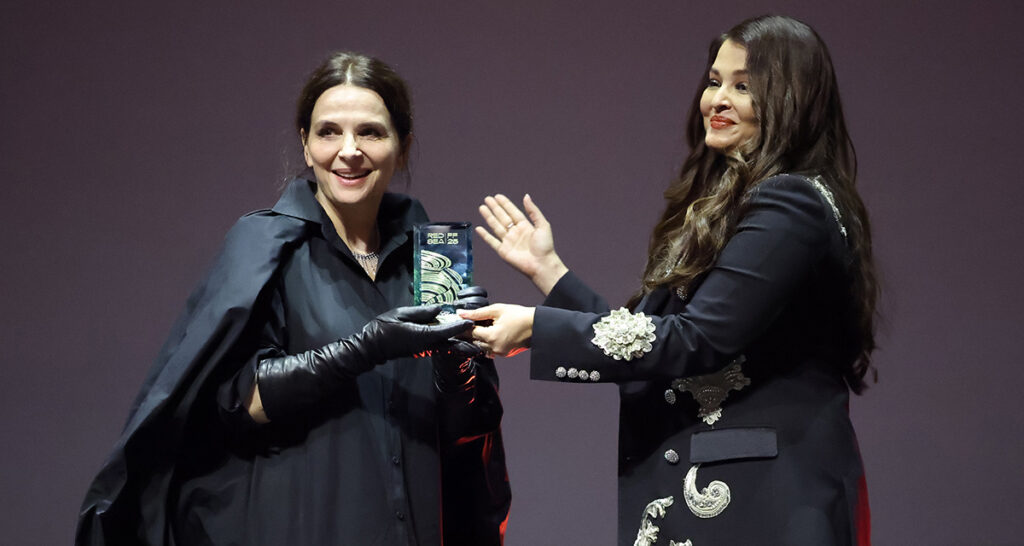
The evening’s theme — cinema as connection and aspiration — was echoed by French actress Juliette Binoche, one of the festival’s honorees. In a moment that brought the ceremony a shot of warmth and reflection, she spoke about her decades-long commitment to international, cross-cultural filmmaking:
“When you’re inspired as an actor, you can inspire a lot of people. And we need stories that elevate us in the world.”
Binoche noted that she had dreamed, as a young actress, of working with filmmakers from around the globe, and festivals like this one “open your heart even more… they give so much horizon to your mind.”
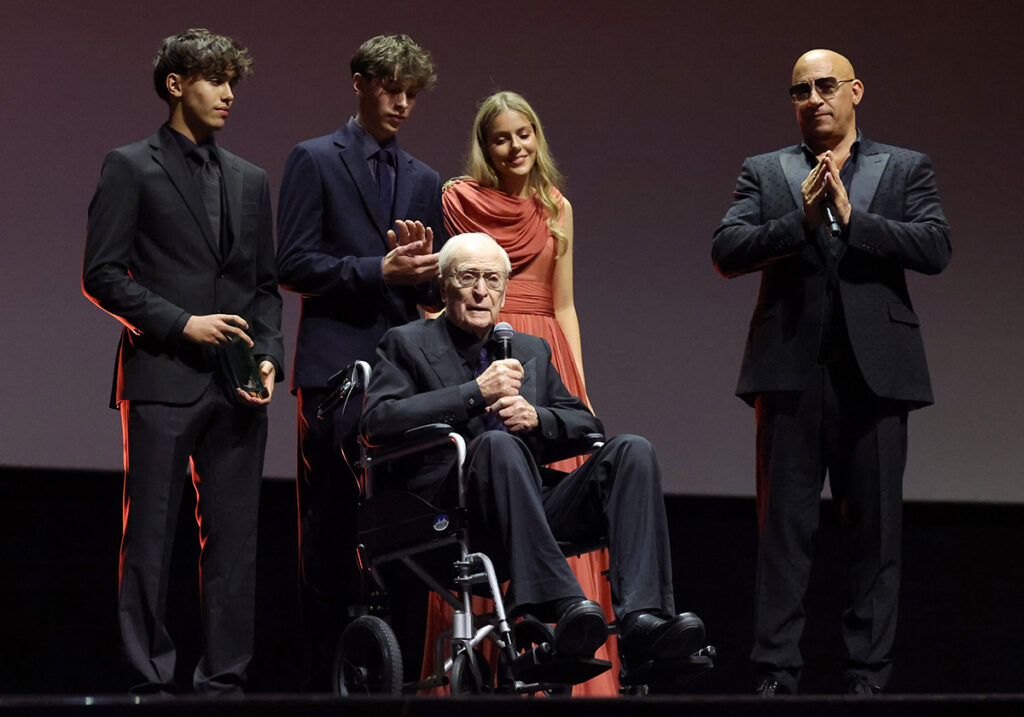
If Binoche provided the night’s emotional warmth, Michael Caine delivered its most unforgettable burst of humor. The 92-year-old screen legend took the stage with the sort of charmingly unfiltered, gently rambling speech only he could pull off.
“Good evening… My name is Michael Caine. Not my real name, but it’s the one that made all the money,” he began, instantly winning the room.
He traced his well-known origin story — growing up “a very poor, working-class cockney,” his five-decade marriage, and his love for his daughters and grandchildren. Then, with perfect timing, he added:
“I’m not multiple rich, but I got enough money for an evening out… or even an evening in.”
At one point he reassured the audience, “I’m not really worried about [the award]. I’ve won two Oscars — one in a Cockney accent and one with an American accent.”
Putting the jokes aside, Caine concluded on a surprisingly earnest note, saying he never imagined he would win anything in Saudi Arabia and thanking the festival for inviting him for the first time and for “one of the biggest lucky things” of his long career.
The audience adored him. It was the ceremony’s emotional center — authentic and deeply human.
Sean Baker on a Film Industry in Transition
After the laughter subsided, the tone shifted once more as jury president Sean Baker addressed the audience with a filmmaker’s view of an industry in flux — one that now spans Hollywood and the Middle East. Fresh off winning four Academy Awards for “Anora” earlier this year, Baker has been outspoken about the crisis facing U.S. theatrical exhibition and seemed genuinely struck by the contrast in Saudi Arabia.
“We are fighting to save screens in the US… and we are losing them rapidly,” he said. “In five years, hundreds of cinemas have opened here with 650 new screens. That makes Saudi the fastest-growing box office in the world.”
As someone whose personal life and artistic practice revolve around moviegoing, Baker framed Saudi’s rapid build-out as “exciting, inspirational and heartwarming.”
He also confessed to a fan moment, telling Binoche he had a giant “Lovers on the Bridge” poster on his living room wall, one he now hoped she would sign. Binoche suggested she could do so when they work together on a film — connections already being made before RSIFF even officially began.
Baker then introduced his competition jury, which includes Riz Ahmed, Naomie Harris, Olga Kurylenko, and actress-filmmaker Nadine Labaki, the latter credited with awarding “Anora” the Palme d’Or last year at Cannes.
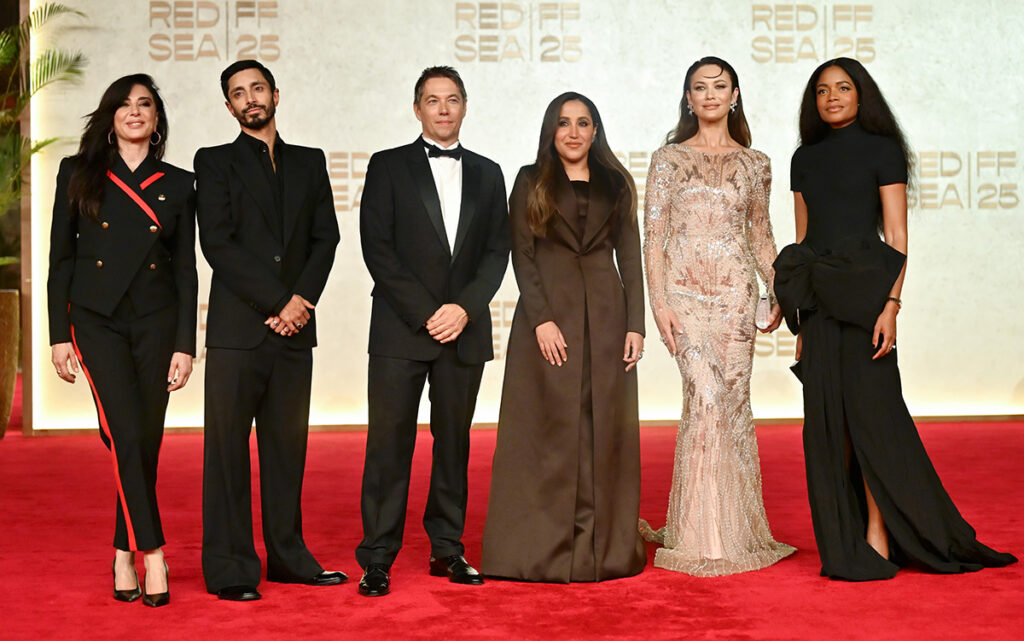
A Dual-Purpose Film Festival
Baker’s remarks highlighted a theme that echoed throughout the evening: Saudi Arabia is building a film culture at remarkable speed — one that serves both local creators and international collaborators.
Indeed, what makes RSIFF unlike most major global film events is how openly it embodies a double mission:
- Develop a local film industry from the ground up
- Introduce international guests to aspects of Saudi culture that are often unfamiliar abroad
It appears to be succeeding at both. The festival’s funding structure — supported heavily by the government — and the presence of global stars are part of this effort. Yet the energy on the ground, especially among young Saudis, feels genuinely hungry for culture. With an average citizen age of 25 and more than 61% of nationals under 35, Saudi Arabia is racing to give its youth something to rally around.
Film, with its unique blend of glamour and accessible storytelling, has become a central piece of that puzzle.
The question for observers — and for the global industry partners the festival is actively courting — is how sustainable this rapid growth will be, and how authentically a film ecosystem can develop when built at such speed. But if opening night is any indication, the appetite, resources, and political will are aligned in a way that is rare in today’s film economy.
A Festival Growing Into Its Identity
The fifth edition of the festival features 111 films from more than 70 countries, including 38 directed by women — a statistic organizers highlighted as central to their curatorial mission.
The ceremony itself was polished but also personal, with a tone that swung from statecraft to cinephilia to Caine’s endearing stand-up routine. It was followed by the opening-night screening and Middle East premiere of “Giant,” a biopic from director Roan Athale about British-Yemeni featherweight boxing champion “Prince” Naseem Hamed, starring Egyptian-British actor Amir El-Masry and Pierce Brosnan.
Afterwards, as guests filtered out into Jeddah’s warm night, one could sense the festival’s ongoing transition into a cultural institution carving out its place in the global circuit.
For now, RSIFF remains both: a showcase of Saudi ambition and a gathering point for filmmakers seeking new opportunities at a moment when many established markets feel uncertain.
But on opening night, at least, the message was clear: Saudi Arabia wants to be taken seriously as a cinematic player — and it’s willing to invest, host, and celebrate at a scale that the global film community can no longer ignore.
- A Quiet Player Makes a Big Move: Qube Cinema Acquires Arts Alliance Media - February 23, 2026
- As Sundance Says Goodbye to Park City, Its Films Look Forward - January 21, 2026
- Opening Night at the 2025 Red Sea Film Festival Showcases Saudi Arabia’s Growing Cinematic Ambition - December 5, 2025