



At the international premiere of his long-gestating labor of love “Frankenstein,” Guillermo del Toro couldn’t stop gushing about the capital of Ontario. “This movie is the culmination of a long, long, not dating, not a casual fling, but a complete marriage to Toronto,” he said from the stage of the Princess of Wales Theater. And the local crowd naturally cheered their adopted son, who first started shooting movies on their turf back in 1996 and moved there permanently in 2011. Obviously, bringing “Frankenstein” to the Toronto International Film Festival (TIFF) was a non-negotiable.
But despite del Toro’s deep affection for his hometown, “Frankenstein” made its bow at the venerable Venice Film Festival — a telling choice that underscores TIFF’s shifting place in the festival hierarchy. Once proudly branded the “Festival of Festivals” for its carefully curated slate drawn from first-tier legacy platforms like Cannes and Berlin, TIFF has grown into a world-class showcase over its 50 years; a greatest-hits cornucopia of cinephilia. Yet even in celebrating its Golden Anniversary this past weekend, TIFF remains largely defined by films arriving with laurels from all the other berths.
After this year’s anniversary edition, TIFF is at risk of slipping from the heavyweight status it carefully cultivated over the past few decades — dating all the way back to 1999’s breakout hit “American Beauty,” which debuted at the festival en route to Oscar glory, to platforming unlikely eventual Best Picture winner “Green Book” in 2018. Fewer significant movies make their world premieres here anymore, and TIFF feels like it’s being relegated back to its original status as an event that principally spotlights other film festival treasures. Which isn’t necessarily a bad thing, since they do still have their viewer-empowered People’s Choice Award.
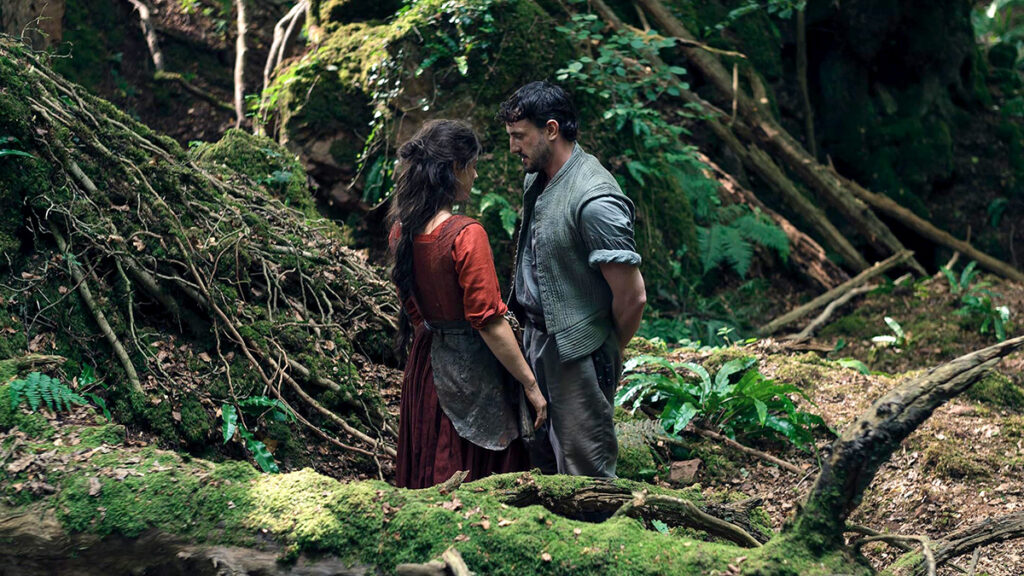
Just look at Chloé Zhao’s “Hamnet,” this year’s People’s Choice winner. TIFF’s audience-voted prize has been a litmus test for mainstream popularity as well as a bellwether for the Academy Awards, and now “Hamnet”’s win puts the Oscar-winning filmmaker in the pole position according to the prize-winner prognosticators. (Zhao’s eventual Best Picture winner “Nomadland” also won the same award at TIFF in 2020, which makes her the only director to have won the prize twice.)
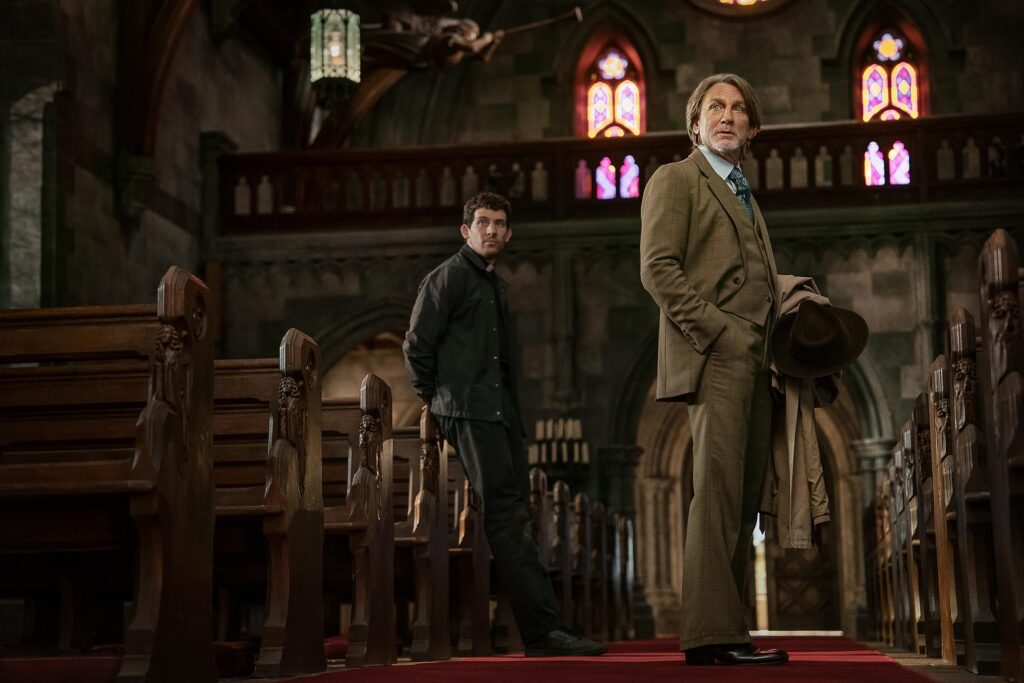
But TIFF’s prize-winning bench is deep, too, since the People’s Choice Awards gave first runner-up to del Toro’s “Frankenstein” (visually dazzling, dramatically overwrought) and second runner-up to Rian Johnson’s ever-clever murder mystery “Wake Up Dead Man.” Both are Netflix productions, which will make the streamer breathe easier about spending hundreds of millions to make both (USD $120 million on the former, $210 million the latter).
Two of these three films first popped up at other festivals only a few days before their TIFF screenings. “Hamnet” premiered for the rarefied cinerati at close-knit Telluride Film Festival, and see the above reference for “Frankenstein”’s Venice debut. Prestige movies have been pulling double or even triple-duty at these festivals for decades, but there was a time in the late 2000s and early 2010s when TIFF had enough buzz and clout to seriously challenge Telluride and Venice for those world premieres. That mojo is long gone, as distributors and studios seem to prefer the European eyeballs in Venice and the Hollywood industry insiders at Telluride. (Case in point: Jim Jarmusch’s “Father Mother Sister Brother,” which won the Golden Lion at Venice and skipped TIFF entirely.)
Producers, filmmakers, and their principal cast aren’t necessarily unhappy with this evolution, either—doing publicity in Venice and Toronto (and sometimes Telluride as well) all in the same week is a jet-lagged marathon. That might explain why the New York Film Festival, which starts September 26, scooped TIFF for starry auteurist Venice titles like Kathryn Bigelow’s “A House of Dynamite,” with its ensemble cast, and Noah Baumbach’s “Jay Kelly,” with George Clooney and Adam Sandler. So too with Telluride’s musical biopic “Springsteen: Deliver Me from Nowhere,” which in past years would have fit comfortably into TIFF’s lineup but instead is popping up at NYFF.
TIFF’s durable appeal is built on its public audiences, stalwart barometers for the possible mainstream appeal of otherwise arthouse fare. That aspect is the one major differentiator from the other fall festivals: TIFF taps into genuine movie lovers, and those civilian cinephiles are not only a major stress-test for a film’s commercial viability but also serve as their real-world launching pads.
From People’s Festival to Pricey Perk
Yet even those happy throngs have been under threat at TIFF in recent years—specifically the post-Covid editions, which introduced Ticketmaster apps, dynamic barcodes on smartphones, online booking, and vastly inflated prices for public screenings (not to mention the even more rapacious aftermarket sales for hot titles). Goodbye affordable pricing, hello $100 fees for the privilege of seeing a movie sometimes only a few weeks before it opens in multiplexes or streams straight to your living room.
A major part of that overall strain is the dearth of deep-pocketed sponsors to supplement the costs of mounting the government-subsidized festival. In 2023, TIFF lost Bell as its longtime anchor sponsor, and while Rogers has stepped in to fill some of that void, the festival does feel reduced in size, if not stature. Fewer venues, and generally only one press & industry (P&I) screening for each film, means that screenings are harder and harder to get into.
TIFF makes noise about its same-day online ticketing options—industry badge-holders are allowed any available tickets that might have been returned or released—and in past years, the service was a welcome way to grab last-minute opportunities for a sought-after film. However the festival website has only grown to be more and more frustrating, and this year I found it to be basically useless. On the first day of the festival, it essentially crashed for the first hour or so, an experience confirmed to me by one of the ticket operators on site at the festival center in the Hyatt Regency. “But don’t worry,” he reassured me. “Everything was sold out anyway, so you didn’t miss anything.” Really?
Over the course of this year’s edition, I tried at least a dozen times to nab some last minute tickets, and only once was able to get an additional public ticket to add to the allotted 10 tickets I scrambled to claim before TIFF started. And yet, every time I went to a public screening—even ones with rush lines—there were always inexplicably empty seats dotting the venue like little cavities. Who is organizing these tickets again? Oh, right, Ticketmaster.
Fewer venues, fewer screenings, higher prices, more hostile online experiences for ticket buyers, more frustrating in-person experiences for industry badge holders. Plus, a distinct lack of major world premieres. This is TIFF on its fiftieth anniversary: a place whose main purpose is for attendees to catch up—if you can—on better movies that have played elsewhere.
50 Years On, the Lineup Still Delivers
Still, many of the movies that played were pretty damn good. All the major buzzed-about titles from Cannes were here, including prize winners like Jafar Panahi’s “It Was Only An Accident,” “Sentimental Value” from director Joachim Trier, and filmmaker Oliver Laxe’s “Sirât.” Venice favourites popped up, like the dour, minor-key “The Smashing Machine,” with its powerhouse performance from Dwayne Johnson portraying MMA fighter Mark Kerr; “The Wizard of Kremlin,” Olivier Assayas’ methodical and absorbing chronicle of Vladimir Putin (Jude Law, ruthless) and his rise to power, told through the eyes of his savvy media advisor (Paul Dano, shrewd but toothless); and the aforementioned “Frankenstein,” a passion project for del Toro full of eye-wateringly sumptuous imagery and just a bit too much emo-inflected pathos. Plus, Monica Fastvold’s rapturous “The Testament of Ann Lee,” her quasi-musical biopic of the founder of the religious sect the Shakers, with a full-throated, fully committed Amanda Seyfried electrifying in the title role.
Among those titles that were also Telluride standouts, were the aforementioned “Hamnet,” a magnificent tear-jerker of a historical drama that imagines the repercussions when William Shakepeare (Paul Mescal) and his wife Agnes (Jesse Buckley) experience a family tragedy so unexpected and devastating that it inspires him to write his melancholy masterpiece Hamlet. Plus Daniel Roher’s playfully absorbing thriller “Tuner,” in which a piano tuner with hyper-sensitive ears (Leo Woodall) stumbles not only into a romance with a classically trained pianist (Havana Rose Liu), but also a side gig as a criminal safecracker.
TIFF’s most delightful world premiere was Johnson’s latest Benoit Blanc whodunnit “Wake Up Dead Man”; its most stylish was Nia DaCosta’s ravishingly luxurious “Hedda,” featuring Tessa Thompson in an overheated and modernized Ibsen update with a queer twist. Romain Gavras’ flashy misfire, “Sacrifice,” starred Chris Evans as an egomaniacal movie star riddled with doubt and taken hostage by a fanatical eco-terrorist (Anya Taylor-Joy), convinced that their only way to reverse the destruction of earth is to jump into a volcano. And Claire Denis used TIFF to quietly premiere her latest, “The Fence,” a disappointing English-language muddle with feverish atmospherics starring Matt Dillon, Isaach de Bankolé, and Mia McKenna-Bruce on a remote Senegalese construction site.
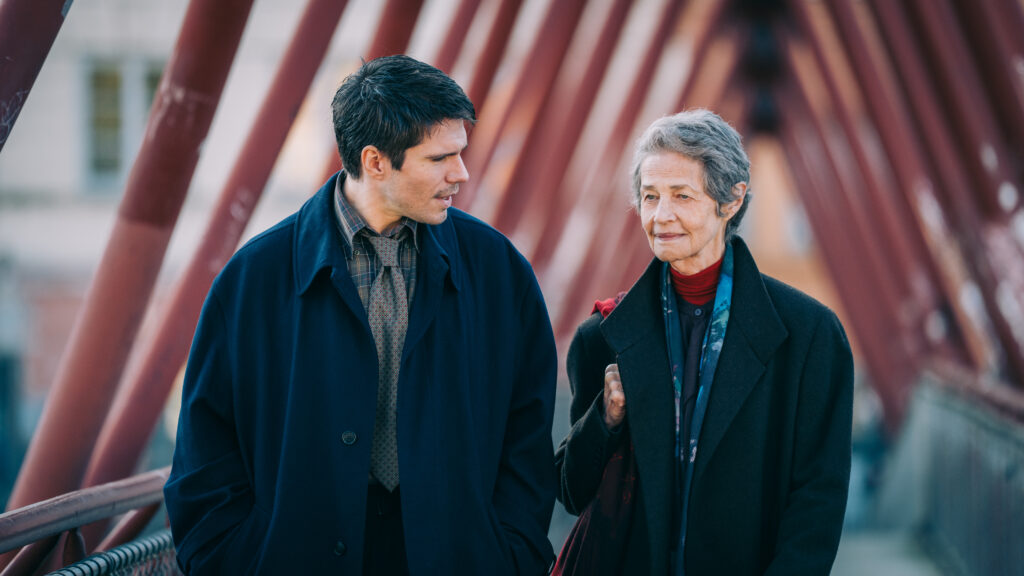
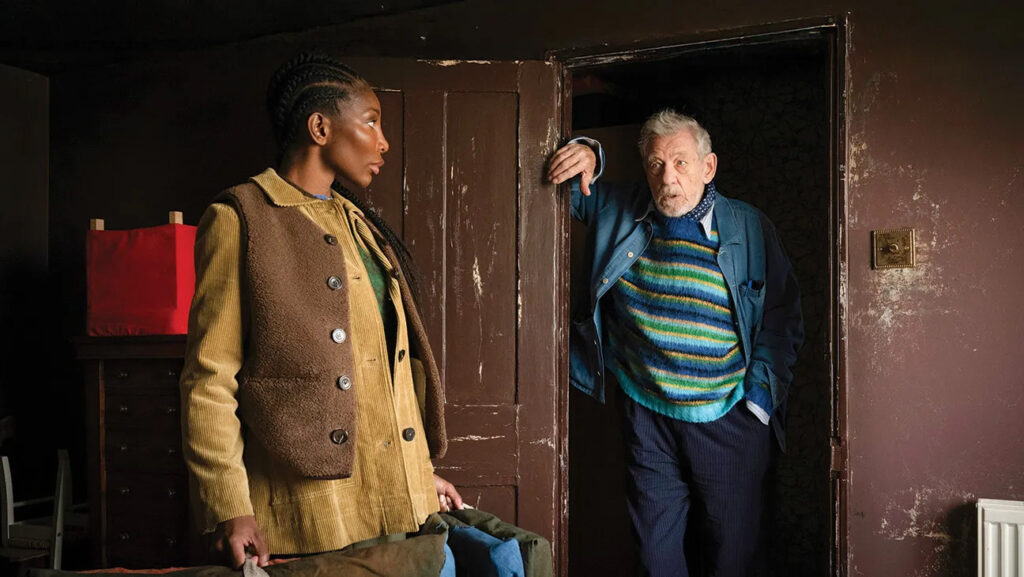
The two strongest world premieres were Arnaud Desplechin’s “Two Pianos” and Steven Soderbergh’s “The Christophers.” Both are about the messy private lives of prodigious talents; both are first-rate films by master filmmakers. In “Two Pianos,” a self-destructive pianist (François Civil) revisits his old mentor (Charlotte Rampling) and accidentally confronts a devastating secret from his past; it’s the sort of swoony melodrama at which the French auteur excels. And in “The Christophers,” two hapless children (James Corden and Jessica Gunning) try to get back at their legendarily prickly painter father (Ian McKellan) by hiring a forger (Michaela Coel) to complete a few of his most famously unfinished works. The result is a smart, compelling two-hander that becomes a wise reflection on legacy, inspiration, and authenticity.
Not a bad way for TIFF to mark its 50th year — even if the festival no longer commands the clout it once did. TIFF may not lead the season anymore, but it still knows how to host a party worth attending.

- Toronto at 50: TIFF Still Delivers, Even as Its Clout Wanes - September 19, 2025
- Top Five Least Marketable Movies In Cannes (Yet To Be Marketed) - May 27, 2019
- Top Five Most Marketable Movies In Cannes (Yet To Be Marketed) - May 26, 2019