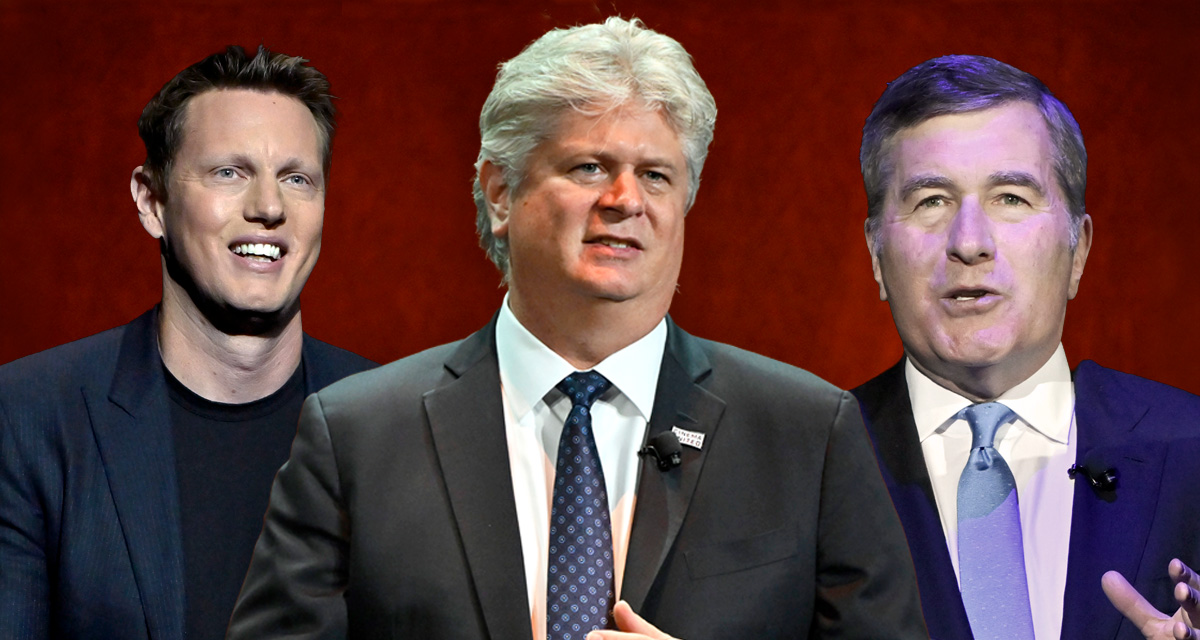
CinemaCon has always been a place where the industry gathers to reassure itself. That was true again this year inside the Colosseum at Caesars Palace, where the annual State of the Industry presentations delivered a familiar message: theatrical is resilient, culturally vital, and firmly back on track.
But this year, any talk of industry unity came with an asterisk.
The proposed Paramount/Warner Bros. Discovery merger has divided the industry that gathered in Las Vegas in ways that make any messaging of solidarity look fragile. The Warner Bros. Discovery shareholders voted to approve the merger 23 April. Whatever happens next, CinemaCon made clear that unity, while still invoked, is no longer assumed.
The Official Narrative
On the Colosseum stage, the message was one of continuity and confidence.
Motion Picture Association (MPA) Chairman and CEO Charles Rivkin centered his remarks on a theme of trust; with a 91% public approval rating for the MPA’s ratings system as his evidence that the industry has built something durable. The framing was partly self-congratulatory but served a pointed purpose: differentiating the theatrical experience from the social media platforms under sustained regulatory scrutiny over children’s safety. When Instagram attempted to appropriate the MPA’s PG-13 designation for teen accounts, the MPA pushed back and won. “Let there be no doubt,” Rivkin said. “On my watch, no one will confuse movies shown in your theaters with user-generated content people watch on their phones.”
It was less a defense of theatrical than a line being drawn around what the industry still considers itself to be.
On copyright and artificial intelligence, Rivkin staked out the MPA’s consistent position: copyright protection and technological innovation are “twin pillars,” not competing priorities. The core copyright industries contribute more than USD $2 trillion to the gross domestic product of the United States and supports 11.6 million workers, he noted, and AI should be “a tool that can enhance human creativity, not replace it.” The MPA’s successful pushback against ByteDance’s Seedance 2.0 — a text-to-video platform that launched using copyrighted studio characters — was cited as a recent proof of concept: swift action produced guardrails.
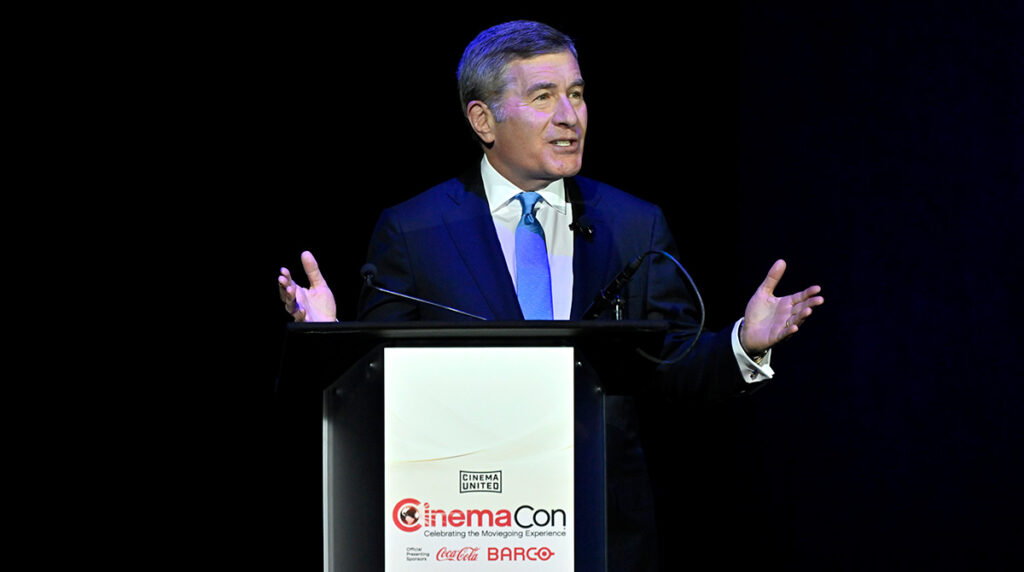
His primary legislative objective remains a federal film tax incentive, a campaign he flagged at CinemaCon 2025 and reported progress on this year. If enacted, it would represent a structural shift in how the U.S. competes with Canada, the United Kingdom, and other jurisdictions that have long used production incentives to attract Hollywood shoots.
What Rivkin did not address was the defining corporate story hanging over the week. As head of an organization representing both Paramount and Warner Bros. Discovery, Rivkin avoided the merger entirely.
At CinemaCon, silence can be strategic.
Optimism, Genuine and Qualified
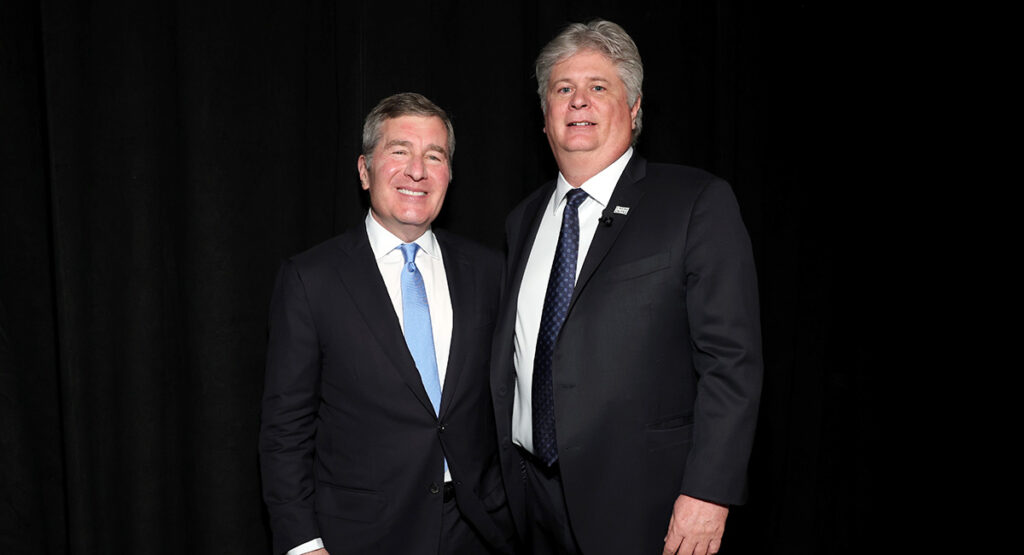
Cinema United President and CEO Michael O’Leary struck a similar tone of cautious optimism, but with a more grounded focus on the realities facing exhibition.
He opened with a personal anecdote — —recalling celebrating America’s bicentennial at age eight and his grandfather’s prediction that he might live to see the country’s 250th anniversary. “Good news,” O’Leary said, “I made it, and so did America.”
The point was not nostalgia, but resilience. The theatrical business, like the country it has accompanied for more than half its existence, endures through reinvention rather than inertia.
The numbers were genuinely encouraging. Gen Z is now the industry’s fastest-growing habitual moviegoing segment: frequency among 12-to-28-year-olds increased 25% in a single year, and a recent study identified moviegoing as the top leisure activity among young people. Five of the top ten domestic box office performers in 2025 were rated PG. Original films performed strongly. The first quarter of 2026 has sustained the momentum, with Amazon MGM’s “Project Hail Mary,” Disney’s “Hoppers,” and Universal’s “The Super Mario Galaxy Movie” all delivering for movie theatres.
What this suggests is not just recovery, but the return of habit — something the industry has spent the last five years trying to rebuild.
The newly formed Cinema United Filmmaker Leadership Council — led by Jerry Bruckheimer and Emma Thomas, with Brad Bird, Ryan Coogler, Jason Reitman, and Celine Song rounding out the charter membership — was a highlight of O’Leary’s pitch for a broader coalition. Reitman, who owns the Westwood Village Theatre in Los Angeles, appeared at the Independent Theatre Owners Coalition (ITOC) meeting in Las Vegas over the weekend.
But the optimism was qualified.
O’Leary quickly pivoted to the two issues that continue to define exhibition’s outlook: consolidation and windows.
The Window Debate Continues
Release windows remain unfinished business.
The average theatrical window for wide releases in 2025 was 37 days; a three-day increase over 2024, which qualifies as progress only relative to how far the baseline has fallen. Cinema United’s modeling suggests that a universal 45-day floor would have pushed that average to 49 days, a full two weeks longer.
Disney’s 62-day average window in 2025 — and its position as the only studio to generate a billion-dollar film that year, leading the domestic box office for the 12th time in 15 years — makes the correlation increasingly difficult to ignore. Universal’s announcement of a 45-day minimum across all its wide releases effective January 1st drew genuine praise from O’Leary.
And with at least two studios publicly backing a 45-day window, the pressure on holdouts is building. Sony Pictures CEO Tom Rothman has become an increasingly vocal advocate for restoring meaningful windows, having argued on the Colosseum stage during his studio’s Monday evening presentation (and in the New York Times) for a longer exclusive theatrical window.
What remains unresolved is the post-theatrical window. O’Leary said at Cinema United’s press breakfast that the organization would prefer 90 to 120 days before a film reaches a subscription service. Current practice falls well short.
A Consolidation Causes A Fracture
Meanwhile, the debate over the Paramount-Warner Bros. merger brought industry tensions into sharper focus. Even within Cinema United itself.
On one side: O’Leary, who used his State of the Industry address to warn that “further concentrating marketplace power in the hands of a smaller group of distributors that dictate the terms, windows, scheduling, screen-placement of movies, and access to historic film catalogs will have a real and lasting impact on Main Street and millions of movie fans around the world.”
On the other: AMC Theatres Chairman and CEO Adam Aron, who publicly backed the deal later in the week.
That two of the industry’s most prominent voices arrived at diametrically opposite conclusions about the same transaction captures the difficulty of the moment.
Cinema United’s name suggests a consolidated front. The reality, at least on this issue, is more complicated.
The Merger: Hollywood Takes Sides
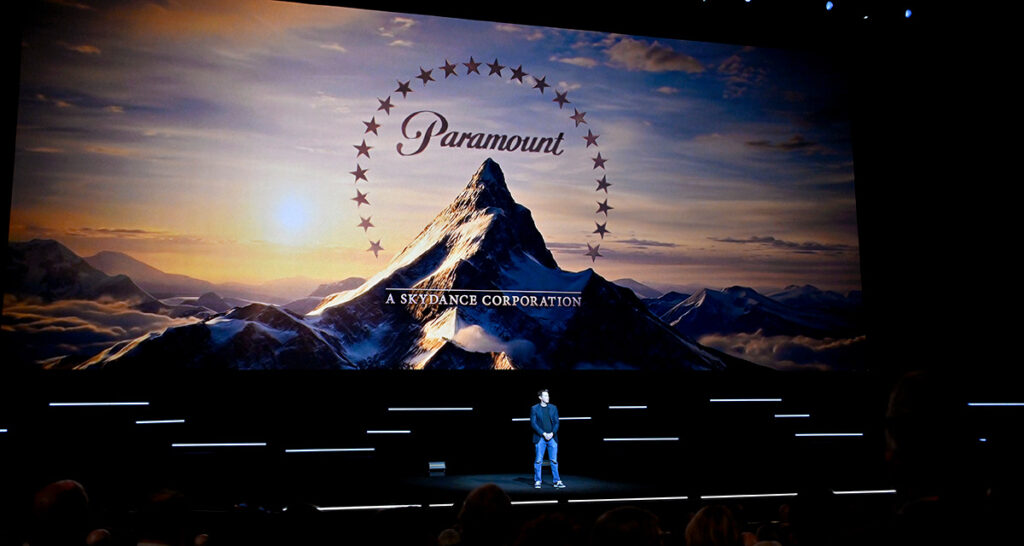
If the proposed takeover of its parent company went completely unmentioned during Warner Bros. Pictures’ studio slot on Tuesday evening, the tension in the Colosseum came to a head during Paramount’s presentation on Thursday.
Paramount Skydance Chairman and CEO David Ellison stepped on stage to make his appeal directly.
“I wanted to look every single one of you in the eye and give you my word,” he told the assembled theater operators. He committed to a minimum of 30 films per year from the combined entity, a 45-day exclusive theatrical window, and a 90-day period before films move to any streaming service. “People can speculate all they want, but I am standing here today telling you personally that you can count on our complete commitment.”
On paper, it is the kind of framework exhibitors have been asking for. In practice, it is a promise attached to a transaction they do not control.
The commitments drew applause. They are also, on their face, more than exhibition has extracted from either studio independently. Paramount released eight films in 2025 and is planning 15 this year; the pledge of 30 per year is a significant escalation, especially with what many believe will be a leaner studio after potential layoffs.
Aron’s endorsement leaned into exactly that logic. “I am confident that David Ellison is sincere as to his intentions, and truly believe that he in fact will wind up delivering on these commitments,” he said in a statement issued Thursday.
Cinema United was not convinced. In a formal statement issued hours after Ellison’s speech, the organization said: “While recent pledges attempt to address the threats of consolidation to our industry, they are not yet sufficient in addressing our concerns. We remain open to tangible commitments that will ensure a vibrant global theatrical exhibition industry for years to come.”
One way to read that is: put it in writing, Mr. Ellison. Preferably in a contract.
History Is Rhyming, If Not Repeating
The structural argument against the deal draws on history.
The Walt Disney Company’s acquisition of Twentieth Century Fox’s entertainment assets in 2019 and Discovery’s takeover of WarnerMedia both resulted in widespread layoffs and production cutbacks. The latter saddled Warner Bros. Discovery with USD $43 billion in debt on day one, prompting deep cost cuts throughout the organization. The proposed Paramount merger would produce a combined debt load of USD $79 billion; a figure cited prominently by critics of the deal.
That concern has extended well beyond exhibition. An open letter opposing the transaction — organized with support from Jane Fonda’s Committee for the First Amendment and signed by nearly 1,000 artists at publication, with the number growing past 4,000 — included Denis Villeneuve, Joaquin Phoenix, Emma Thompson, Glenn Close, JJ Abrams, Ben Stiller, and Bryan Cranston among its signatories. “This transaction would further consolidate an already concentrated media landscape, reducing competition at a moment when our industries — and the audiences we serve — can least afford it,” the letter read.
At Cinema United’s press breakfast, O’Leary offered a blunt assessment of what consolidation could mean in practice: it would take eight high-performing independent films to replace the revenue of a single average Warner Bros. release.
“I don’t want to create the impression that we’re just going to fill the gap,” he said.
On the question of inevitability, O’Leary was more direct. “Things are inevitable until they’re not,” he said. For now, he added the strategy is simple: “We’re going to play until the whistle or until my board tells me to stop.”
Netflix, Still in the Room — Though Not in Theatres
That informal breakfast conversation was perhaps the most candid of the week.
On Sunday, before CinemaCon officially began, Netflix Co-CEO Ted Sarandos had been seen exiting Caesars Palace, after meeting with exhibition leaders on Cinema United’s board. Asked about it, O’Leary explained that the meeting had originally been arranged while Netflix was still in the running to acquire Warner Bros. Discovery. When Netflix withdrew from that bidding war, O’Leary expected it to be called off. It wasn’t.
“And so we came, had a candid conversation. In fairness, all of my conversations with them have been candid,” said O’Leary of Netflix. No commitments were made on either side during the discussion.
“I don’t want the message when we walk out of here [to be] that Netflix is coming to theaters,” he said. “I just think it was a good chance to get everybody in the same room together, develop and understand each other, and say, ‘Look, if there’s a path forward in the future, we should explore it.'”
When pressed on whether Netflix could one day present at CinemaCon, O’Leary did not close the door. “That door’s open to anybody who wants to be in theatrical in a meaningful way,” he said. “So if you’re asking me in two years if they were doing a Netflix presentation because there’s half a dozen movies going into theaters, with fully supported marketing and windows, yeah, absolutely, we’ll find time.”
That is not a negotiated position. It is, however, a signal: the conversation is now happening at the highest level.
The Terms of Coexistence
What CinemaCon 2026 made plain is that theatrical exhibition is no longer fighting for survival. It is now negotiating its terms of coexistence — with streaming platforms, with consolidating studios, with the economics of a supply chain that remains unsettled.
The question of who controls the content, and on what terms, is the one the industry came to Las Vegas unable to answer — and left still unresolved.