


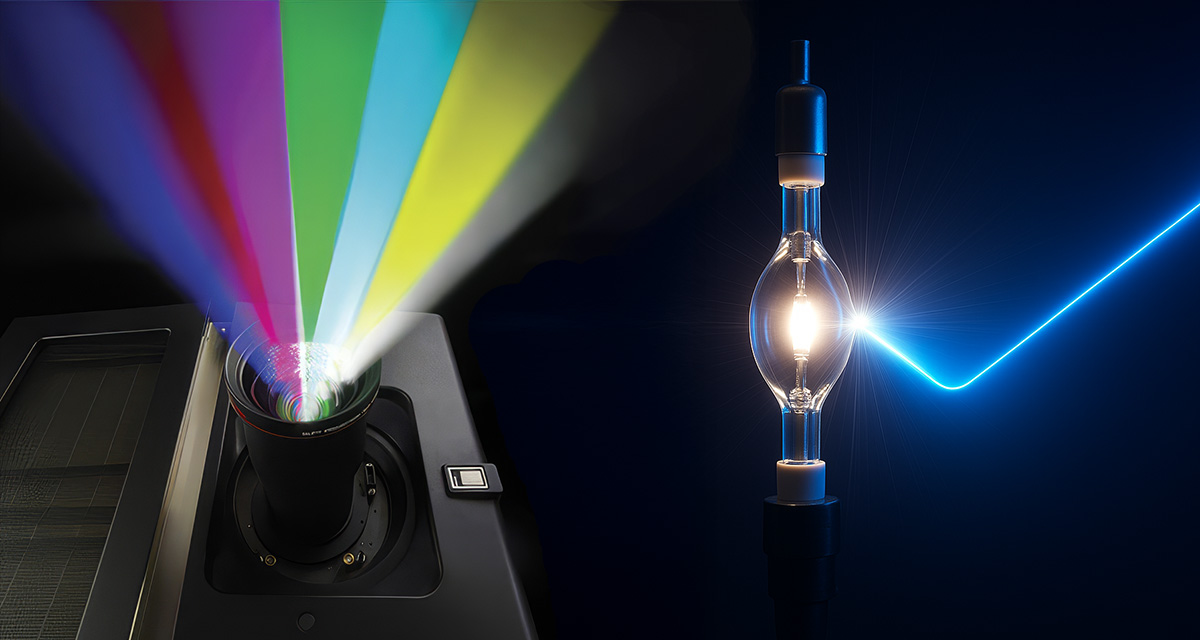
Walk into any cinema projection booth and you’ll quickly realise one thing: the machine at the centre of it all isn’t just a box of optics and fans. It’s the nerve centre of the auditorium, dictating everything from visual clarity to your monthly maintenance bill. And in a world of tightening budgets, sustainability targets, and evolving content demands, choosing the right projection system is more important than ever.
And that’s what this CJ Tech series seeks to address, to help operators, engineers, and audio visual managers make informed choices around one of the biggest hardware decisions in cinema: your digital cinema infrastructure. Whether you’re retrofitting a single screen, planning a new multiplex, or weighing up long-term savings, we’ll be breaking down the key tech decisions, starting with the biggest question of them all: which projection system is right for your cinema; xenon or laser?
But before we compare performance, let’s take a look at how each type of technology actually works.
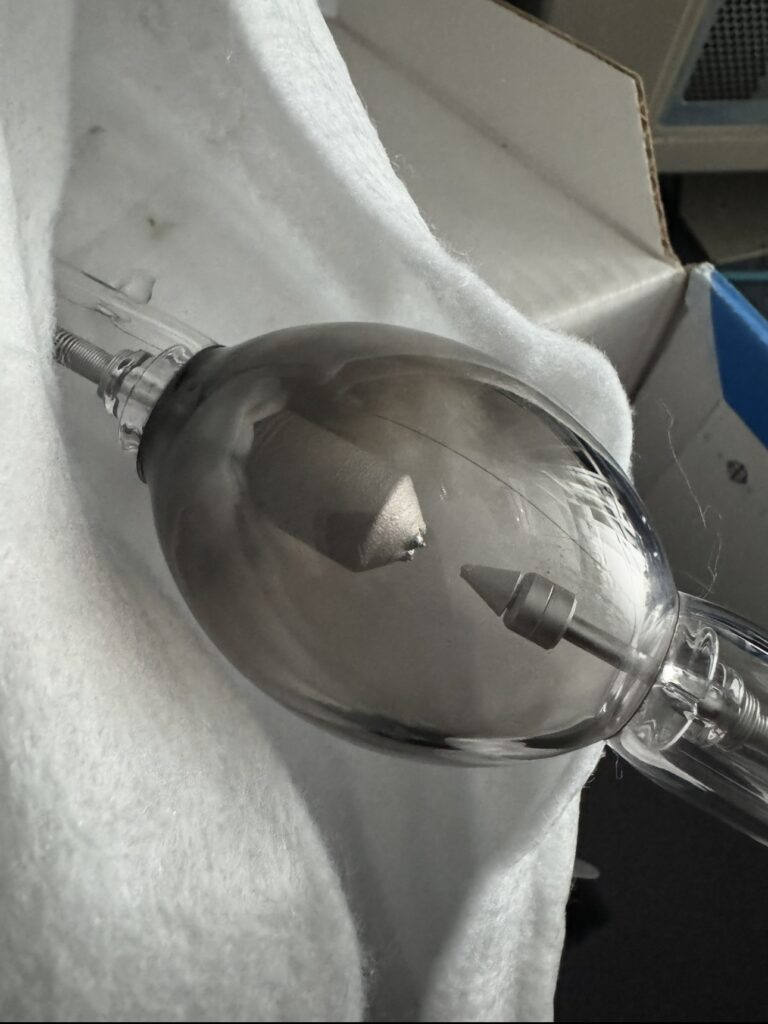
Xenon Projection: Arc Lamp Workhorse
Xenon projectors use high-intensity lamps filled with, surprise, xenon gas. When a high voltage is connected, an arc forms between two electrodes inside the bulb, creating a brilliant white light that mimics daylight. This light is then directed through an optical engine (most manufacturers use Digital Light Processing, or DLP, light engines) to project the image onto the screen.
Xenon lamps have been the backbone of digital and 35mm projection for decades. Their spectral qualities offer strong white point performance, and their long-standing presence means replacement parts and technical knowledge are widespread, at least for the time being.
Why some cinemas still prefer xenon projectors comes down to a combination of practical and financial considerations. Xenon projectors are often more affordable to purchase outright, making them appealing for budget-conscious operators or sites with limited capital expenditure. Most booth engineers are already trained in lamp alignment, reflector adjustments and airflow management, so there’s no steep learning curve when maintaining these systems. Xenon light tends to produce smoother fields with fewer artifacts like speckling, which is especially noticeable on 2D flat backgrounds or preshow material. With the right care, xenon systems can run for years, offering proven reliability where lamp replacements are predictable, and downtime is usually minimal when on-site spares are available.
Despite these advantages, xenon projectors are increasingly becoming a dying breed in the cinema industry. Lamps degrade over time and often need replacing every 500 to 2,000 hours, depending on usage and brightness settings, leading to frequent maintenance cycles. Xenon systems run hot and draw significantly more power from the mains, which translates to higher HVAC demand and a bigger carbon footprint compared to modern alternatives. Many original equipment manufacturers are phasing out xenon lines, meaning longer lead times on replacement parts and limited firmware updates for aging systems. Even well-maintained xenon projectors tend to hit a performance wall over time, with issues like colour drift, brightness loss, and diminishing returns that ultimately limit their operational lifespan.
Laser Projection: Solid-State Revolution
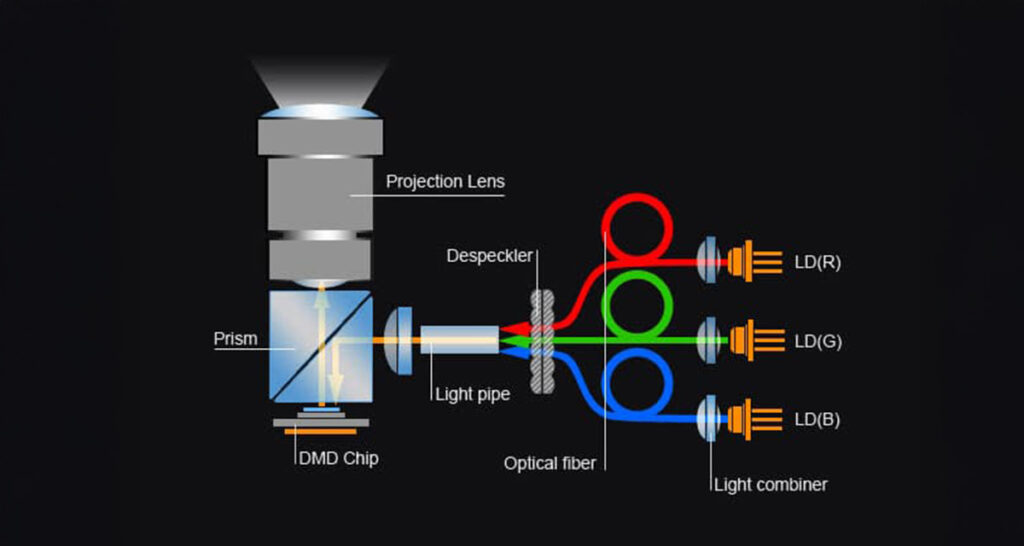
Laser projection replaces the xenon lamp with laser diodes — solid-state light sources that emit a tightly controlled, highly efficient beam. There are two main types used in cinemas: phosphor laser (blue laser with a yellow phosphor wheel for colour mixing) and RGB laser (dedicated red, green, and blue laser diodes).
Instead of producing light through heat and plasma arcs, lasers emit photons directly via electron transitions inside a semiconductor. This results in cooler operation, precise wavelength control, and dramatically extended lifespans — all without the need to swap bulbs.
Laser projectors are winning the future of cinema for several compelling reasons. Most laser projectors run for tens of thousands of hours — often exceeding 20,000 — without significant degradation in brightness or colour, which means far less downtime compared to traditional lamp-based systems. With reduced power consumption, no consumables to replace, and less strain on HVAC systems, laser projectors deliver lower running costs that pay back their initial investment over time. They also offer enhanced colour and brightness capabilities, producing brighter whites, deeper blacks, and a wider colour gamut that’s especially important for HDR content and large format screens.
Unlike xenon lamps, which dim and shift over time, lasers provide stable light output that ensures a more consistent experience for audiences while reducing the frequency of recalibration work for technicians. Additionally, laser engines are often more compact, allowing greater flexibility in booth layouts, ceiling installations, or even projector placement inside auditoriums themselves.
However, laser projection isn’t without its drawbacks. Even with falling prices, laser projectors can still cost significantly more upfront than xenon counterparts — especially in the RGB category — making the upfront investment a substantial barrier for many operators. Laser speckle, a shimmering artifact that can be noticeable on silver screens or with certain content, remains an issue, although manufacturers have developed various solutions to reduce it. And unlike xenon systems, laser projectors aren’t as DIY-friendly when it comes to repairs; when the light engine fails, it often requires a factory repair or full module replacement rather than a simple in-house fix.
Which One Makes Sense for Your Site?
For some sites, particularly smaller venues, laser technology may simply be overkill — on a small screen with low attendance and limited content variation, the advantages may not justify the investment. Xenon still makes sense for sites running fewer daily shows, screens under 10 meters wide, and operators with limited upfront budgets. Conversely, laser is ideal for multiplexes or flagship auditoriums, venues with high show volumes and premium content like 3D and HDR, and operators who are able to prioritize long-term savings and sustainability over immediate costs.
And overall, this isn’t a “winner takes all” scenario. Some of the savviest operators are opting for hybrid models using laser projection in high-traffic or premium auditoriums, while retaining xenon in smaller screens. The key is context: how your site operates, who your audience is, and what your budget allows.
But one thing’s clear: while xenon is far from obsolete, the industry’s trajectory is unmistakably moving toward laser projection. For operators planning the next decade of their cinema strategy, the wisest approach is to plan as if that future has already arrived.

- CJ Tech: RGB Laser vs Phosphor Laser – Understanding the Difference - March 25, 2026
- CJ Tech: Choosing the Right Projection System: Xenon vs Laser Projection - January 20, 2026
- CJ Tech: What a Modern Cinema Projection Toolkit Looks Like - September 3, 2025