


Twenty-one years. In the volatile world of film exhibition, particularly for independent, niche-focused festivals, this level of longevity is not just an achievement: it’s an operational anomaly.
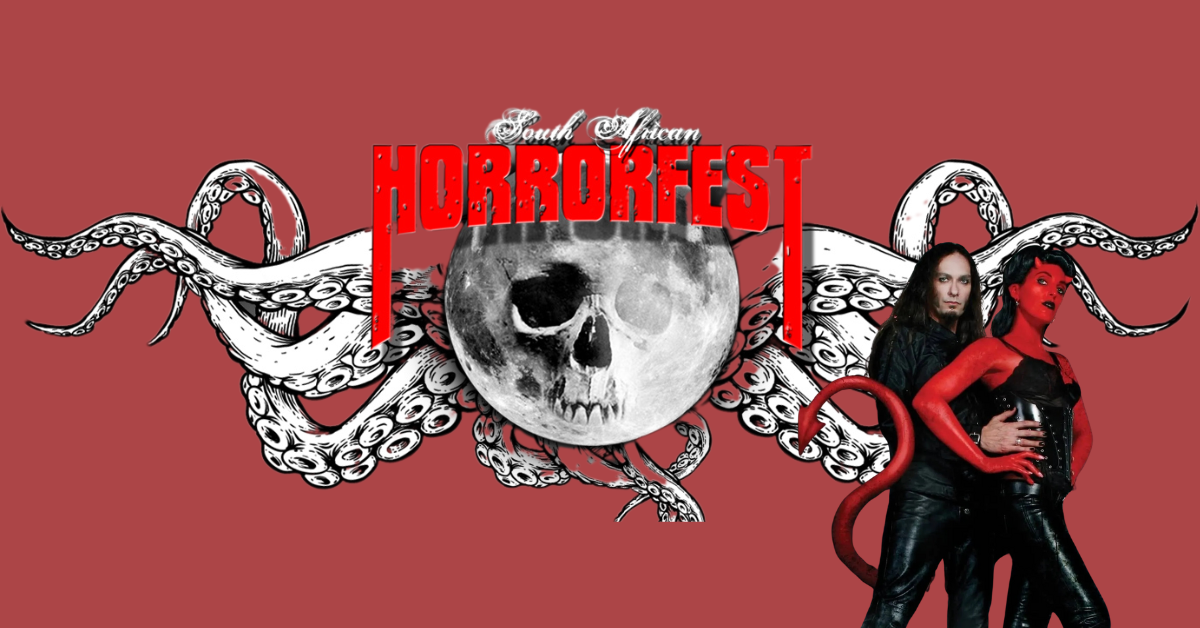
The South African Horrorfest, hosted annually in Cape Town, South Africa and co-founded by Paul Blom and Sonja Ruppersberg [pictured in the featured image] in 2005, stands as a testament to the enduring power of a clear vision coupled with a pragmatic, DIY business ethos. As the longest-running genre-specific film festival on the African continent, and globally recognized by outlets like MovieMaker Magazine, its history offers a critical case study in maintaining commercial viability within a rapidly evolving exhibition landscape.
As the festival wound down after its 21st anniversary in November 2025, Blom reflected on the operational grit, the financial structures, and the strategic decisions that have sustained a business which, until recently, managed a challenging hybrid exhibition model, balancing physical screenings with a geo-blocked virtual component.
Blom’s insights, forged by decades in alternative entertainment, provide an invaluable roadmap for niche cinema stakeholders worldwide.
To sustain an independent festival for two decades requires a foundational strategic anchor. Blom identified the single most important decision or recurring challenge that defined the festival’s endurance and growth, be it licensing, logistics, or human resources.
Blom immediately credited a non-commercial, almost ideological commitment: “I think first and foremost it is our stubborn drive to keep our alternative creation alive. It is not as commercial and is a sector bypassed by many who wouldn’t want to take the risk. But that’s what makes us tick. When we commit to something, we go all out, regardless if it’s commercially viable or not.”
This counter-intuitive approach – prioritizing passion over immediate commercial returns – was and continues to be the long-term strategy.
The festival functions as an essential, annual gathering for a neglected community, securing its irreplaceable value proposition and ensuring continued audience loyalty. This strategic purpose transcends simple transactional ticketing.
Licensing, Geo-Blocking, and The Hybrid Pivot
A move to a hybrid model during the pandemic era — combining in-cinema screenings with an online virtual platform — necessitated complex operational changes, particularly around content rights and geo-blocking. I asked Blom how they navigated securing films for physical screenings versus managing the territorial restrictions for their virtual component.
However, he confirmed that the hybrid model, while strategically insightful, was not financially sustainable long-term, leading to a return to cinema-only screenings in 2024. “It is difficult enough getting people into the theatre, and with so many streaming options, the viewers didn’t take to it enough to make it viable,” he noted. “The cost to set up streaming was not cheap either.”
On the licensing side, the submission process simplified territorial rights. “When filmmakers submit their movies their agreement includes all permissions, so licensing is not much of an issue,” he said. Rare exceptions occurred when distributors acquired rights with a pre-festival territorial plan. Yet, even with the pause on streaming, the operational framework remained intact. Blom explained, “In the submission categories we had the choice of geo-blocking for our territory only or global access.”
For an independent festival, the pricing model is critical for maintaining commercial viability. I was keen to understand how the Horrorfest balanced festival passes against individual ticket sales, and the distinct revenue potential of the physical experience versus the virtual platform.
Blom’s model was intentionally simple and audience-focused: individual ticket sales dominated. “Horrorfest viewers seem to prefer booking individual tickets,” Blom admitted. “We’ve kept it simple from the very start, keeping the ticket prices below the regular cost of our indie cinema partner the Labia Theatre (which is already below that of the commercial cinema chains).”
Attempts at complex pass structures were ultimately abandoned. “With the niche nature of the Horrorfest’s genre focus, we tried festival passes like a full pass for all shows, but it wasn’t really conducive.” This simplicity in ticketing ensures maximum accessibility and minimizes administrative overhead, allowing the festival to thrive on high-volume, low-margin transactions.
Partnerships, Sponsorship, and The Value Proposition
Securing sustained financial and operational support is arguably the greatest challenge for a niche independent festival.”It is extremely difficult to secure sponsors for a festival like this,” Blom confirmed. His longstanding relationships, built through decades of writing film and music content, provided the foundation, but: “Getting financial commitment is not easy, most of our affiliates come on board with value additions like prizes and give-aways for our audience, which, while appreciated, doesn’t help with the operational cost.”
The reality is that the substantial, year-round operational endeavour, including extensive viewing of submissions, is often self-funded. The value proposition for commercial partners is simple alignment with a unique, engaged demographic. For instance, connecting the Bloody Parchment literature chapter – a program that incorporates local authors through a short story competition and live reading events, effectively expanding the content pipeline beyond the screen – directly with book publishers provided a targeted marketing outlet for the publisher’s authors. Blom emphasized that the shrinking marketing budgets across the board are a constant, challenging variable.
Maintaining Relevance in Cape Town’s Competitive Landscape
Cape Town is a major tourist destination, and the festival’s October/November timing coincides with a surge of competing live events and attractions. The festival has aimed to deliver an event that “encapsulates as wide a range of the genre as possible,” incorporating cultural events beyond screenings.
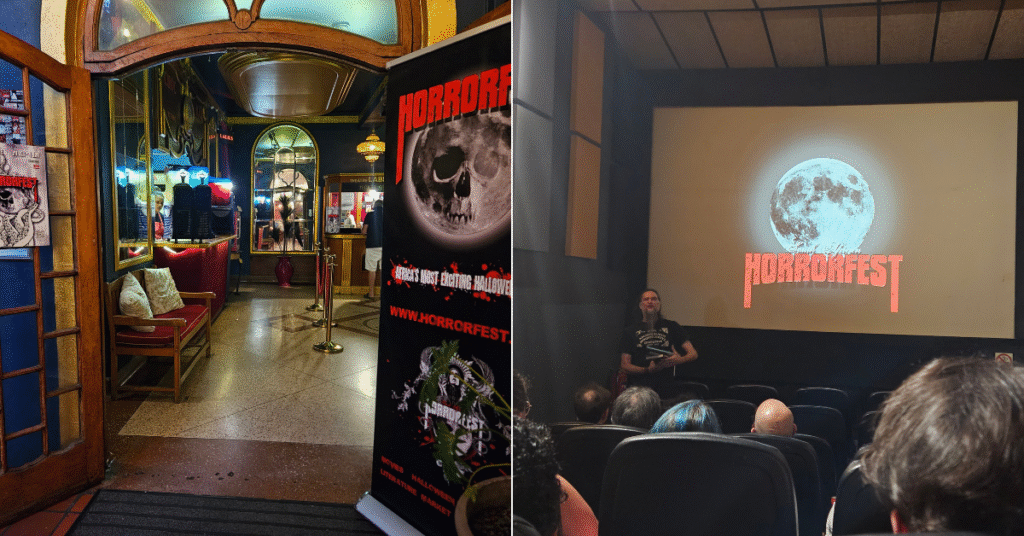
(photos: Fazielah Williams)
Key strategies for local relevance include:
- Unique Content: Screening rare, underground, and classic titles alongside more commercial releases.
- Live Event Programming: Incorporating the non-replicable experience of The Makabra Ensemble’s live silent film soundtrack performance and 16mm film screenings.
- Season Domination: Expanding the festival beyond a single weekend to run the full Halloween period.
By broadening the offering beyond movies, the festival successfully positioned itself as a central cultural event for the autumn season rather than just another screening series.
The return to a physical-only model underscored the irreplaceable value of the in-cinema experience. What specific, non-replicable value does the physical event offer to the Cape Town community, and how does this drive overall brand loyalty? “It’s definitely a community experience,” Blom said, emphasizing that the festival pulled people away from isolation and into a shared cultural space.
“It’s definitely a community experience, pulling people out into the world, urging them not to remain cooped up alone at home with their TV,” Blom stated. For the Horrorfest, the physical space is a crucible for social connection and tradition. Audience bonds formed over two decades have strengthened this identity. “We’ve had people meet at the Horrorfest and become close friends as a result,” he said.
Growing up with traditional cinema experiences shaped the founders’ motivation. Blom views the physical event as a necessary counter-force to modern digital isolation. “The internet was supposed to expand the world but it has resulted in too many people retracting into a bubble – we want to burst that and bring people out into the real world to enjoy movies and Halloween activities,” said Blom. He believes this physical commitment is the ultimate engine of brand loyalty and engagement.
But while horror’s appeal is universal, South Africa’s conservative backdrop presents unique friction. Blom noted that while the impact is universal, the audience is distinct, he has received complaints that the festival is promoting an “evil celebration.” This made the event a subtle counter-cultural space and a release valve for audiences seeking genre content.
Assessing the South African Genre Filmmaking Ecosystem
The Horrorfest was initially created to fill a void: an avenue for screening local genre films. This commitment has remained intact. Homegrown films are screened annually, but the ecosystem faces significant challenges:
- International co-productions demanded the same work at half the budget of a decade ago.
- Rebates not being honored.
- Operational difficulties related to the South African Government’s BEE (Black Economic Empowerment) policies.
As a result, much horror filmmaking is often relegated to the ultra-independent creators working, “on their own steam with very little budget, if any.” Yet Blom emphasized that creativity has often flourished under these constraints.”That is where the innovative filmmakers shine in creating something great from nothing,” he said.
The Blueprint for Niche Endurance
The South African Horrorfest’s 21-year survival offers a clear blueprint for independent exhibition:
- Lead with Purpose: Serve a neglected community
- Maintain Operational Flexibility: Pivot away from unsustainable models like hybrid events
- Simplify Transactions: Keep pricing clear and accessible to minimize complexity for a niche audience
- Emphasize Physical Value: Shared experience drives loyalty so treat the physical screening as a crucial social event
- Cultivate Content: Actively promote and support the local talent pipeline
Blom and the Horrorfest team have not only survived daunting market shifts, they have become an indispensable cultural institution by refusing to compromise on their vision.

- Passion Over Profit: The Formula That Kept South African Horrorfest Alive - December 3, 2025