


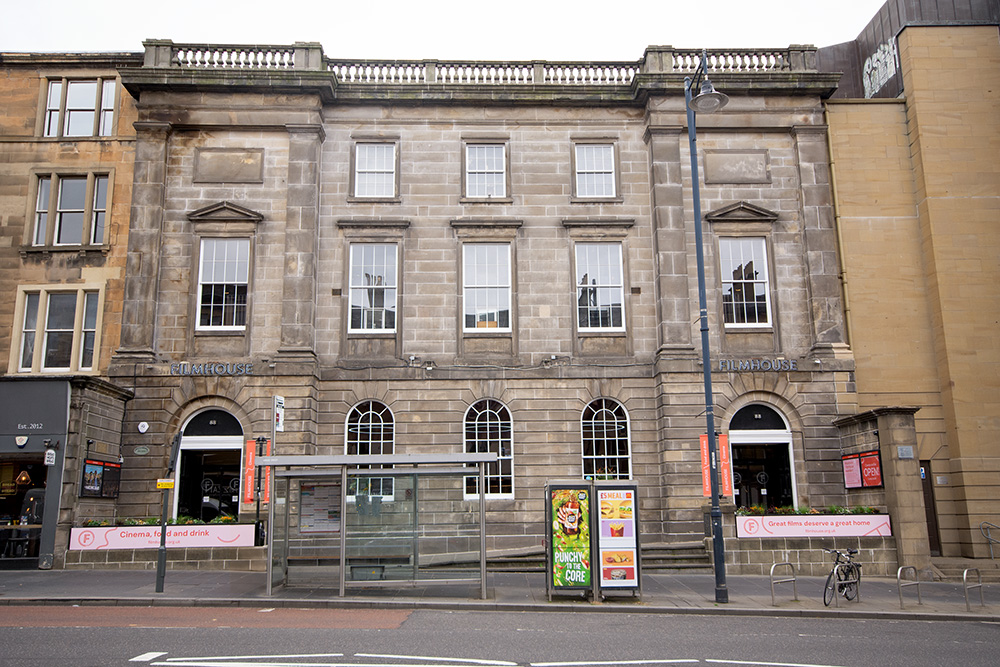
This June, film fans in Edinburgh, Scotland, were treated to several sold-out screenings of Giuseppe Tornatore’s 1988 love letter to cinema, “Cinema Paradiso.” Nothing unusual there, you might think. Except that the venue was Filmhouse, the Scottish city’s beloved independent cinema, which had lain dormant for almost three years. In what remains trying times for independent movie theatres, the arthouse cinema that sits proudly at 88 Lothian Road threw its doors open once more.
Originally built as a church in 1831, Filmhouse opened as a one-screen cinema in 1979, later expanding to become a three-screen venue. With its 100-seater bar proving popular for film fans to gather and discuss whatever movie they’d just seen over a drink or two, it was without doubt a major cultural hub in Edinburgh. It was also a focal point for the long-running Edinburgh International Film Festival (EIFF), traditionally held in August and, between 2008 and 2020, in June.
It would be fair to say that when the Filmhouse abruptly closed in October 2022 there was a great deal of soul-searching amongst both industry professionals and members of the public alike. This was not a closure due to the COVID-19 pandemic, a blight that affected so many cinemas across the globe as the virus shuttered public venues for months. Rather, it was due to the collapse of the Filmhouse’s parent company, CMI (Centre For The Moving Image).
“It’s very straightforward, really,” remarked Rod White, programmer at both the Edinburgh Filmhouse and Aberdeen’s Belmont Filmhouse, which also came under the remit of the CMI and was similarly forced to close. “I never know quite how much to talk about bad management. But ultimately, that’s what the issue was. A financial situation that seemed to be staring everybody in the face and that absolutely nobody did anything about. I mean, in a nutshell, that’s what happened.”
Another “victim”, as White dubbed it, was the EIFF. The world’s oldest continually running film festival was another entity held under the floundering CMI. As the CMI went into administration, it issued a statement, claiming it was “facing the perfect storm of sharply rising costs, in particular energy costs, alongside reduced trade due to the ongoing impacts of the pandemic and the cost of living crisis.” Due to these unprecedented challenges, “There was no option but to take immediate action.”
White denies it was COVID-19 that caused the demise of the Filmhouse. “It was years and years of just ignoring the issues really. The audiences were depressed… but we were given plenty of money from [public arts body] Creative Scotland that should have amply seen us through the problems caused by COVID. We weren’t helped by the fact that we were in a very shabby building. And I think maybe the last place people want to go, if they think there’s illness lurking, is a dirty, shabby building. But I don’t think Filmhouse was hit with it any worse than anybody else was.”
A Team Effort
Rather than simply give up, White teamed up with three colleagues, David Boyd, Ginnie Atkinson and James Rice, in the hope of resurrecting the Filmhouse. “The thing that drove us in the first place… was the absolutely ridiculous idea of there not being something like Filmhouse in a city like Edinburgh,” he said. An outpouring of public support followed. “It gave us all the encouragement we needed, that we had been right about what the place means to the city and what it means to the people in it.”
Initially, a Crowdfunder campaign was launched with White and colleagues hoping to raise enough money to buy the building outright. That proved a dream too big, and the venue was eventually sold in April 2023 to city developer Kevin Doyle and his company, Caledonian Heritable, for GBP £2.65 million. There was initial concern that a commercial bidder may steer the site away from its artistic intentions. Filmmakers Mark Cousins and Kevin Macdonald, and actress Tilda Swinton, all publicly called for the building to remain a cinema.
White and the others did not give up, however, noting that after extensive discussions, they were able to come to an arrangement with the new owners “where we would get a set amount of time to find enough money to do the place up”. However complex that was, it was worth a shot. “The business case was always strong enough,” he added. “Filmhouse did not disappear because the cinema went out of business by any stretch of the imagination.”
After trying various “dead ends,” White and his team applied for a government fund and was awarded GBP £1.4 million, allowing them to sign a 25-year lease with Caledonian Heritable. Further money came from individual trusts and GBP £300,000 raised via the Crowdfunder campaign. In a heartwarming moment of generosity, the Edinburgh Filmhouse’s new landlord also gifted the cinema all the specialist projection equipment that was left behind when it closed in 2022.
The campaigners, working under the name Filmhouse Edinburgh Ltd, were now armed with around GBP £2 million, money that was ploughed into much-needed refurbishments. For years, the Filmhouse had been left to dwindle, with the furnishings and fittings in desperate need of repair. “I think it’s safe to say, it had been neglected for quite some time,” said White. “The CMI had better things to spend money on, apparently. So the Filmhouse was in the worst state I’ve ever seen it in.”
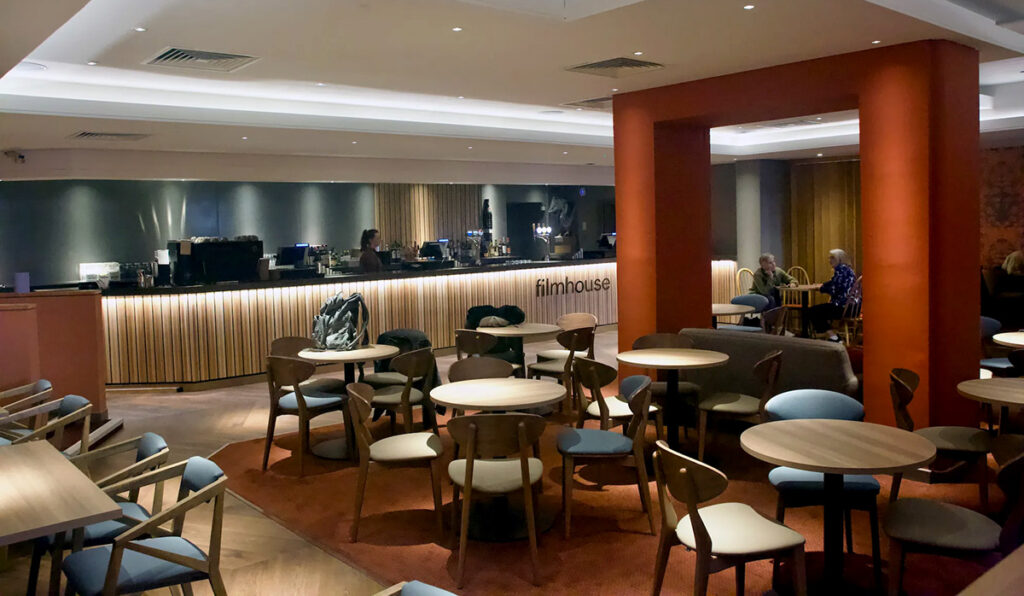
Now that’s all changed, with the cinema’s main three screens all refreshed. Seat rows were removed and re-stepped to offer more leg room, with the seating completely replaced. Although this slightly drops capacity, it still leaves the refurbished Filmhouse in good shape. Screen 1 boasts 186 seats, Screen 2 has 70 and Screen 3 has 59. Better yet, a fourth 24-seater auditorium has now been built and was ready for audiences this summer. The bar and foyer have also been overhauled.
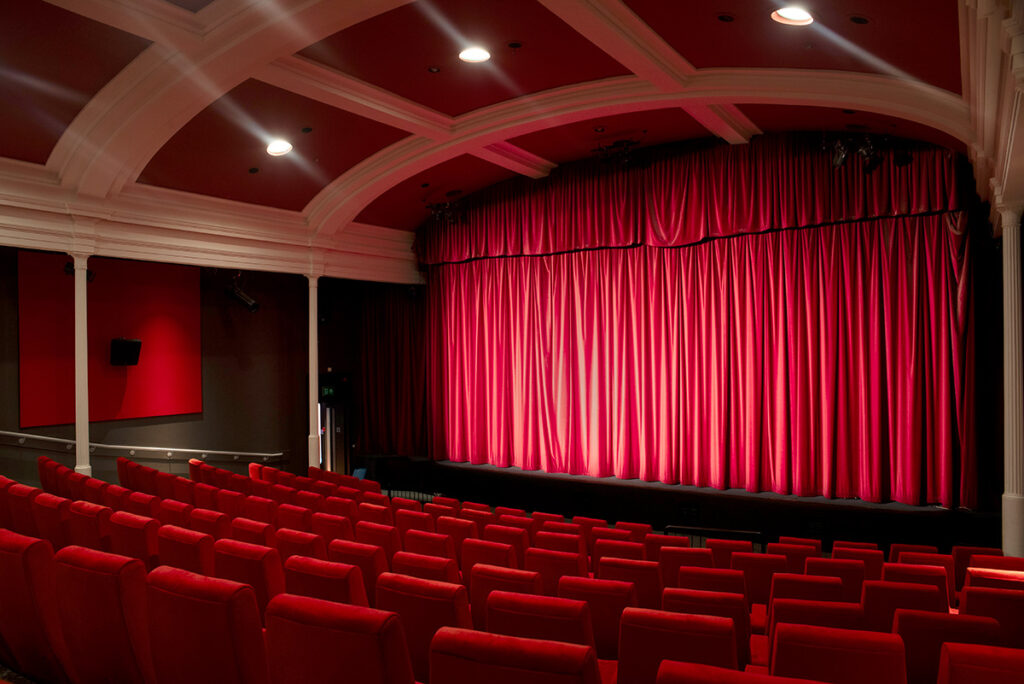
“It’s all been completely refurbished and given a new and brighter and more modern and comfortable look,” said Andrew Simpson, the former head of film at the Tyneside Cinema in Newcastle, who joined Filmhouse as executive director before its relaunch. While White is the Filmhouse’s Programme Director, taking the lead on the cinema’s “curatorial ambitions”, as Simpson put it, Simpson’s job is to oversee the operations. “We’re here to collectively steer it towards a brighter future,” he said. “And we’re doing that in tandem.”
Reuniting with EIFF
That brighter future also includes a continuing relationship with the Edinburgh International Film Festival, which marked its 78th edition between August 14th and 20th. While the Filmhouse and the EIFF are no longer tied to one parent company, “we’re one of the primary venues for the festival,” said Simpson. “The two organisations are running in parallel, but I think very conscious of the organisation’s shared history, and looking forward to working together in partnership in a new way as separate organisations.”
As for day-to-day programming, it’s very much business as usual. August 2025’s slate includes re-releases of Jim Jarmusch’s “Ghost Dog – The Way of the Samurai” and Milos Foreman’s “Amadeus,” retrospective screenings of Celine Song’s “Past Lives” and Jean-Pierre Melville’s “Le Samouraï” and new movies including Song’s “Materialists” and Mike Flanagan’s “The Life of Chuck.” The Filmhouse is also set to continue to work with “third-party programming entities,” explained White, including local festivals.
With a fourth screen now in place, the Filmhouse can now offer more to audiences. “Even though the extra screen only has 24 seats in it, the flexibility a fourth screen gives belies its size,” he said. “It just allows you to do more. So I would say we’ll probably go a little bit further commercially, and also a little bit further un-commercially too.” What you won’t find here are blockbusters that play in every multiplex. “When you get as commercial as that, no one’s looking at Filmhouse to play it,” White added. “It’s just not where one comes to watch that stuff.”
Certainly, the early days of Filmhouse 2.0 have been encouraging. “It’s been an amazing start,” said Simpson. “We’ve been incredibly busy. We’ve had nearly 15,000 people watch a film at Filmhouse since we opened already, and that’s in about six weeks. That’s terrific for an independent cinema in the summer. Everything was basically sold out, and the bar-cafe was completely packed. You couldn’t get a seat in the place for about a week when we opened. People have just come in and felt at home, which is exactly what we wanted to deliver.”
The positivity from the Edinburgh film community has been overwhelming, Simpson admitted. “The energy” that brought the venue back “is something to celebrate and actually a really positive story to tell in 2025. Nine times out of ten… once you lose these places, they are gone generally. So for Filmhouse to be an example of one that’s actually been successfully resurrected and re-born in this very new and beautiful way – that we think retains the magic of the old Filmhouse, while elevating a lot of what it was able to present before – is something really hopeful.”
Joining the organisation as patrons this year are two rising stars of Scottish film, “Slow Horses” actor Jack Lowden and “Aftersun” director Charlotte Wells, while audience support also looks set to continue. The Filmhouse’s membership scheme, which offers a variety of incentives for adults, students and youngsters, has been thriving. “We’ve already beaten our membership target for the year a few weeks in,” Simpson noted. “We’re not where we want to be yet in terms of everything we’re doing. But the welcome back from the city for the cinema has been really amazing. We think it all bodes really well for the future.”
- Venice 2026: Defiant Documentaries, Female Filmmakers and a Scaled-Back Studio Offering - September 17, 2026
- How the Mediterrane Film Festival in Malta Is Putting the Island on the Map for Filmmakers - July 10, 2026
- Can Direct-to-Audience Distribution Give Indie Films a New Path to Theatres? - June 18, 2026