



For over a decade, conversations about cinema revolved around Hollywood imports: tentpoles, superheroes, franchise spectacles, and the billion-naira weekends they reliably drove.
The last five years have indeed redrawn the theatrical map. Local content, once considered supplementary, has become the stabilizing backbone of the Nigerian cinema business. In some quarters, it is more than just a cinema business; it’s the differentiator, the engine, and arguably the only segment still showing structural resilience in a market battered by piracy, inflation, insecurity, and shifting consumer habits.
In recent times, the rise of local cinema is no longer a hopeful narrative pushed by filmmakers; it is a measurable phenomenon with direct impact on exhibitors’ balance sheets. And if recent box office data is any indication, Nigeria is in a new era where domestic titles are increasingly shaping performance cycles, investor confidence, and long-term viability.
A Decade of Change in the Numbers and Authenticity
As of 2014, Nollywood films accounted for just under 10% of total annual domestic box office revenue in Nigeria, according to industry tallies from the Cinema Exhibitors Association of Nigeria (CEAN). By 2019, that share rose to 28%, helped by breakout titles like “The Wedding Party” (2016), “Sugar Rush” (2019), and “King of Boys” (2018).
Then came 2020, the pandemic year that ironically created the conditions for Nollywood’s accelerated rise. With global release schedules disrupted and Hollywood theatrical release slates shrinking by over 70%, local filmmakers were forced to step up. They did, and audiences responded. Since 2021, Nigerian titles have consistently represented 35-45% of annual box office revenues, depending on quarter and region.
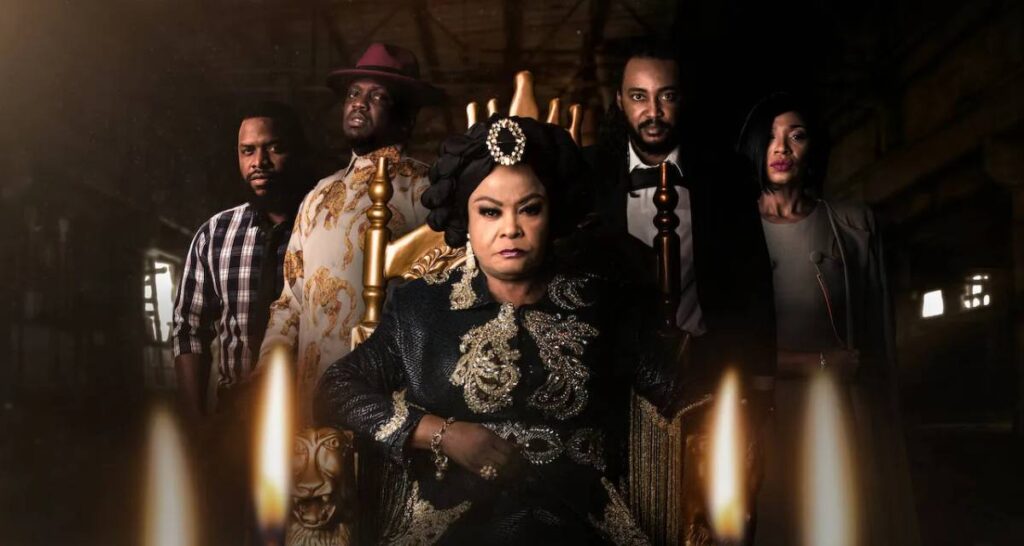
The most telling shifts would be between mid 2022 and late 2024, where, for the first time in recorded CEAN data, local films outperformed Hollywood releases across multiple high-traffic months, not due to a lack of foreign releases but because indigenous titles had become strong enough to take up release dates and hold attention on their own. Hollywood remains important, but the era when Nigeria cinemas relied entirely on U.S. blockbusters to survive is gone. Local titles now anchor annual performance. Yes, anchoring is the right word. Because in weeks where imported content underperforms, Nollywood now graciously fills the revenue gap almost predictably.
According to CEAN’s national chairman, Opeyemi Ajayi, NGN ₦11.5 billion was realised in the year 2024 from ticket sales across cinemas in Nigeria, as against NGN ₦7.2 billion made in 2023. In 2024, cinemas accommodated 2.66 million persons and 2.54 million persons in 2023.
“We have recorded 60% growth in revenue in 2024 and about 4.5% growth in admissions despite the harsh economic climate. This is a remarkable achievement and it is a testament to the industry’s resilience, creativity and determination. It is also the first time we are seeing a growth in admissions since 2020, signaling a significant upturn in the cinema subsector”, he said.

In an interview with the News Agency of Nigeria (NAN) in July 2024, Ajayi acknowledged with excitement that revenue generated from Nollywood and Hollywood films in cinemas were beginning to be on a par, and he described the development as the way to go. According to him, Nollywood films raked in NGN ₦2,325,930,952 while Hollywood films generated NGN ₦2,321,273,174 in revenue during the first half of 2024. “We also recorded 559,122 total admissions for Hollywood films and 640,539 for Nollywood films”, he added.
By the end of August 2025, Nigeria’s box office had attained yet another milestone, generating more than NGN ₦10 billion in ticket sales. This figure reflects a 58% increase from the NGN ₦6.4 billion recorded during the same period last year. Admissions also surged to 1.84 million, an almost 16% increase from 1.59 million in 2024. This revalidates the growing strength of Nollywood and cinema culture in Nigeria. Should this trend continue, total box office revenues would likely exceed NGN ₦16 billion by the end of December. This would mark yet another historic milestone for the industry.
What Changed?
Post-pandemic was a trying time for businesses across the globe. While some thrived, many struggled and some failed to recover. Nollywood was indeed favoured. When exchange-rate volatility pushed imported film licensing fees upward, local titles became a safer, more predictable bet. By 2024, Nollywood films delivered higher net margins for exhibitors than Hollywood releases, even when overall attendance was similar. Exhibitors maximized every advantage and made the best out of them. From a programming flexibility perspective, Nigerian films often run longer than foreign releases because they grow through word-of-mouth rather than opening-day hype. What this means is that exhibitors nowadays tend to program for longevity, not volatility. They exploit social media, collaborating with local influencers to drive engagement that authentically connects with the audience. This engineers audience loyalty. Anecdotal audience response suggests local content is pulling in groups like families, female-heavy audiences, and culturally specific demographics who otherwise might never prioritise cinema outings.
A mid-2024 CEAN analytic summary noted that local content is now a key stabiliser for cinemas outside Lagos and the capital Abuja, where Hollywood attendance fluctuates more dramatically. This is crucial; Nollywood isn’t just rising in urban hubs, it’s anchoring performance in mid-tier cities too.
Ken Okwuosa, Co-Founder & Chief Executive Officer of Filmhouse Group, revealed that Nigeria has a powerful local market and the cinemagoers are spending heavily on watching local content in cinemas while speaking with the founder of the Nigerian International Film & TV Summit, Ijeoma Onah, in 2024. Speaking on the rise of the Nigerian film industry and content, Okwuosa said, “In 2024 H1, Nollywood took 48% of the total market share in cinemas while Hollywood claimed 52%.”
He also said that Filmhouse has an enviable 82% market share in film distribution and up to 35% market share in cinema screening.
The Creative Side: Story Trends Driving the Boom
Nollywood did not arrive by accident: structures and intentionality took effect. A pattern has emerged among the biggest local hits that led to the current shift, creating a phenomenon. Stories rooted in authentic, everyday Nigerian realities – films about family conflict,, cultural identity, traditional power dynamics, and Lagos hustle tropes – consistently outperform others. Nollywood connected with their own people, their culture, their personalities, their realities and, eventually, their pockets with ease. While comedy and dramedy remain dominant, humour translates more consistently across regions and drives repeat viewing. In exploring genre experiments, titles in action (“Brotherhood”), period epics (“Aníkúlápó”), social thrillers (“Orah,” “Breath of Life”), and crime dramas (Shanty Town universe) signal a growing versatility.
There is a popular Nigerian slang saying, “No gree for anybody”, meaning: do not let anyone intimidate you – hustle and never give up. Nigerian women in Nollywood seem to take that slang a little more seriously. Funke Akindele has redefined commercial viability. “A Tribe Called Judah” alone grossed over NGN ₦1.4 billion, becoming Nigeria’s first billion-naira film.
Cultural relevance is clearly outperforming spectacle. Nigeria’s median age is 18. Entertainment spending among young audiences is increasingly tied to relatability, not scale. Hollywood can bring budget and spectacle, but Nollywood brings familiarity, with characters grounded in Nigerian authenticity: glam, humour, conflict, aspiration, and social dynamics.
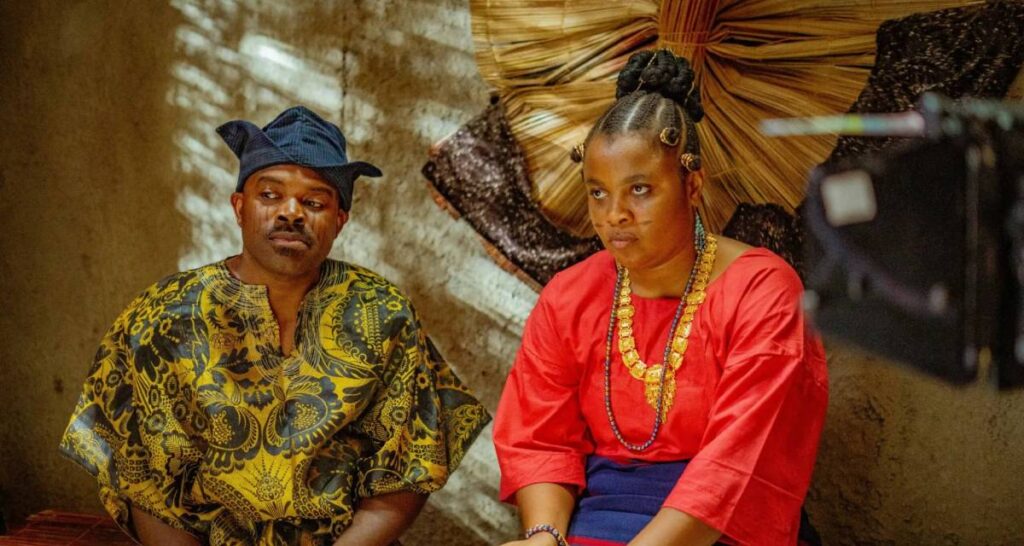
A data review from FilmOne’s box-office insight unit shows that repeat viewership for top Nollywood titles is 2.2x higher than for most mid-tier Hollywood releases. That is not an accident. Films like “A Tribe Called Judah,” “Battle on Buka Street,” “Brotherhood,” and “Aníkúlápó: Rise of the Spectre” blend heightened drama with cultural specificity, appealing to audiences who want to “see themselves”.
Global studio outputs are reducing, and it’s widening the opportunity gap. The U.S. theatrical recovery is still sluggish. Production delays from both the pandemic and the 2023 strikes created a multi-year content shortage. In 2024, global studios released roughly 25% fewer films compared to 2018. Fewer titles mean fewer high-performing weekends for exhibitors globally, but Nigeria has bucked the trend as cinemagoers favour “event” films. In the past, exhibitors filled weak U.S. months with Bollywood or European titles. That strategy has become increasingly ineffective. Non-local, non-Hollywood titles contribute barely 3-5% of the annual Nigerian box office.
Nigerian distributors now program strategically around Hollywood calendars, not behind them. This shift has birthed a competitive advantage that no other market on the continent enjoys at this scale. Local filmmakers are responding by boosting production value, and audience perceptions are changing. Budgets for top Nigerian theatrical titles used to be NGN ₦50 – ₦80 million in the early 2010s. Now, they range from NGN ₦200 to NGN ₦500 million. Cinemas are adjusting to accommodate and optimize in line with the new reality. Nigerian films are no longer supporting acts, they are headline content. The transformation is not just cultural but phenomenal.
The Challenges
Of course, the rise is not without headwinds. Nollywood’s theatrical growth may be promising, but the terrain remains uneven. Inflation is suppressing discretionary spending. Ticket prices have increased by 40 – 60%, which has contributed to the box office increase, but admissions continue to rise (4.5% in 2024). Distribution bottlenecks are still major challenging factors. While exhibition has arguably improved over time, capacity is still under 90 screens nationwide. This is far too low for an emerging market with a population over 200 million. Marketing budgets remain modest. The average Nollywood theatrical marketing budget is NGN ₦10 – ₦20 naira, limiting the required nationwide hype to drive more awareness and revenue. Piracy, amongst others, is undercutting long-term revenue. For every successful cinema run, there is an illegal digital leak within weeks. However, despite these pressures, Nollywood holds a massive opportunity with indigenous stories waiting to be told, while local films continue to outperform expectations.

Ladun Awobokun, the Chief Content Officer, FilmOne Group, stated in an interview with Pulse Nigeria that there are many existing untold stories yet to get to the screen. She affirmed that, “If you position any film as a film to watch that should be watched, the Nigerian audience will watch it. They’re coming out for different types of films. They are coming out to watch these films in their numbers. There are so many, folks are coming out for biopic, romance, and epic and they’re doing great numbers. If you do the work, people will come out to see it. People are now asking questions. Because of that, you have to pay more attention to what you’re doing. How is it shot, what does it look like, and how was it produced.”
Nollywood is a market maturing into its own identity. The story of Nigerian cinema is no longer about catching up to global industries. It’s about defining its own commercial logic, one where local content drives growth, audience loyalty, and creative innovation. One with revenue opportunities where exhibitors are realizing how much they need Nollywood, just as filmmakers need the box office. Audiences are continuing to show up for stories they recognise. And for the first time in a long while, the incentives are aligning. Local content is not just rising; it is becoming the spine of the industry. And if this trajectory continues, the Nigerian film market will stand as one of the few in the world where the local beats the global at the gate.

- The Rise of Local Cinema: How Nigerian Cinemas are Rebuilt on Indigenous Films - February 17, 2026