


The cinema business has had so many “crisis moments” lately that even seasoned industry insiders are starting to develop emotional shin splints. But late October was something special — a kind of doom-loop crescendo that left exhibitors, distributors, and analysts staring into the theatrical abyss.
Variety declared the month one of the worst on record. The Hollywood Reporter called it a 27-year box office low. For two solid weeks, anyone with a stake in the theatrical business filled their browser tabs with an endless scroll of stories diagnosing the end times for movie theatres (again).
Then mid-November arrived — and the New York Times dropped a widely circulated piece explaining why more than two dozen fall releases failed to find an audience. Before anyone could begin debating the merits of the Times’ argument, one of the strangest, most unexpectedly inspiring 48-hour stretches the cinema industry has seen in years unspooled. Because just when Hollywood’s reporting class had settled into its customary “dire straits” posture, two very different spiritual leaders stepped up to the podium: Pope Leo XIV and Tom Cruise.
Part I: The Vatican Orders Popcorn and Perspective
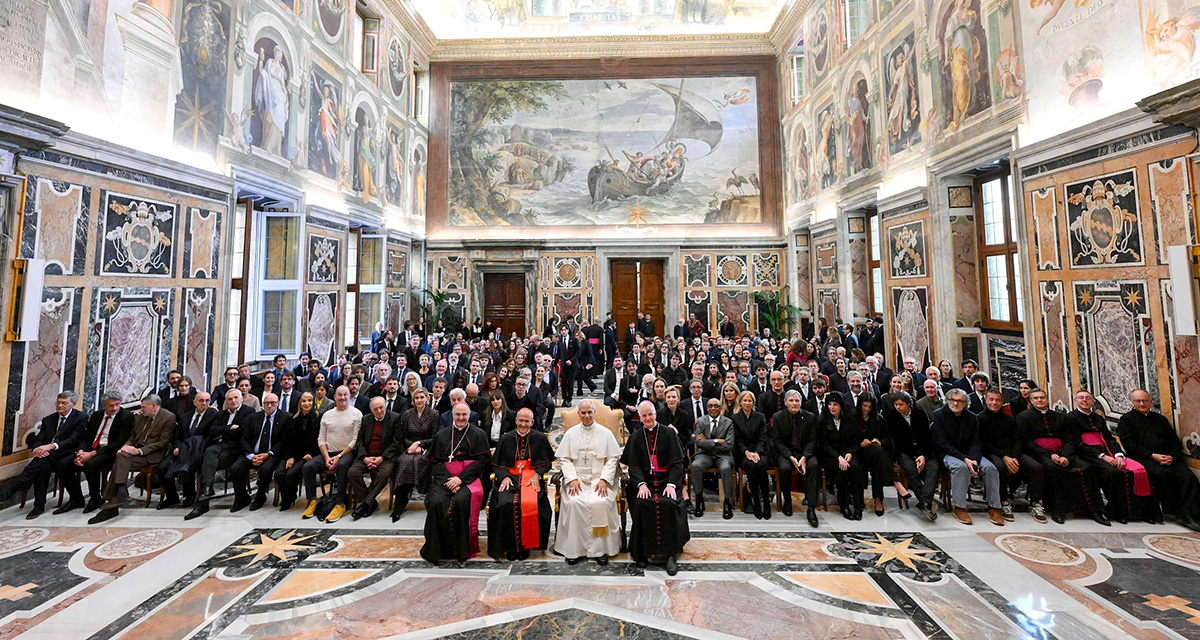
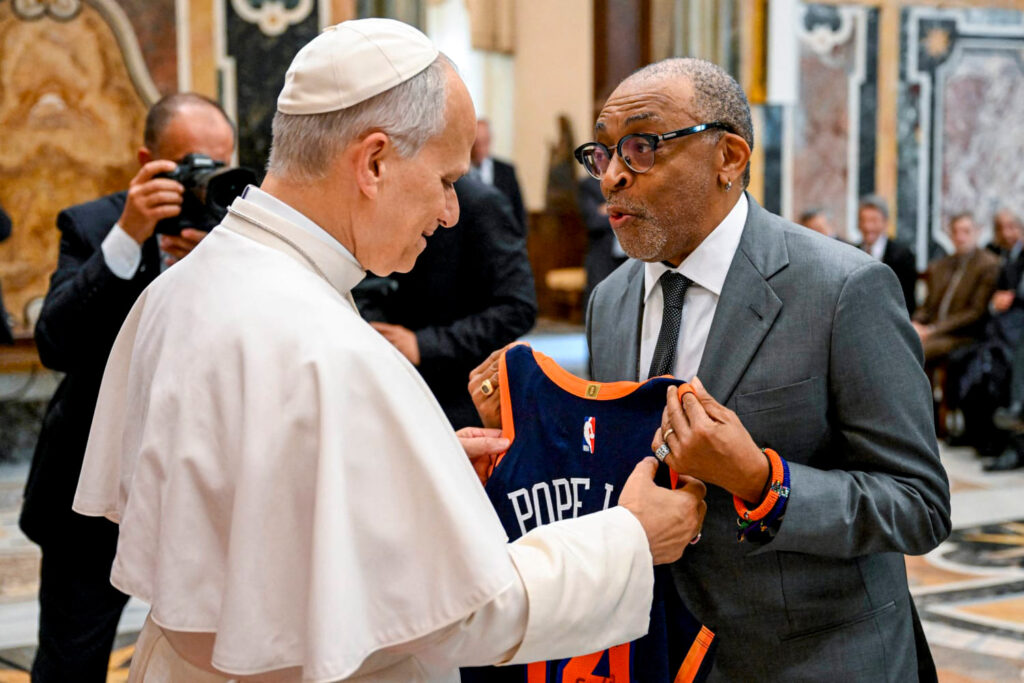
Nobody in the industry had “papal intervention” on their Q4 bingo card. Yet on 15 November, Pope Leo XIV welcomed filmmakers and studio elites into the Vatican’s Apostolic Palace and delivered what may be the clearest, most eloquent defense of theatrical cinema the art form has received in years.
He began by calling cinema “a young, dreamlike and somewhat restless art form” and “a popular art in the noblest sense, intended for and accessible to all.” In the span of a few sentences, he articulated a more inspiring rationale for moviegoing than half the global marketing departments combined. Then he offered a description of the theatrical experience so vivid it could have been lifted from a CinemaCon sizzle reel:
Entering a cinema, he said, “is like crossing a threshold. In the darkness and silence, vision becomes sharper, the heart opens up and the mind becomes receptive to things not yet imagined.”
Exhibitors know this truth well, even if they usually express it in the language of KPIs rather than metaphysics. But the Pope wasn’t speaking in abstractions. He addressed the global crisis head-on, noting that cinemas are “experiencing a troubling decline, with many being removed from cities and neighborhoods,” and warning that “more than a few people are saying that the art of cinema and the cinematic experience are in danger.”
This was not a gentle concern. It was a sober acknowledgment of the harsh reality facing exhibitors from São Paulo to Sheffield: entire communities have lost their last screens. Theatrical ecosystems have flatlined. The shared rituals of moviegoing are disappearing from public life.
And in response, the Pope urged civic leaders and institutions “not to give up,” insisting that cinemas and theatres are “the beating hearts of our communities… If a city is alive, it is thanks in part to its cultural spaces.”
In one stroke, he reframed movie theatres as not merely commercial venues but essential civic infrastructure. And if that wasn’t enough, he took a subtle swipe at the algorithmic churn dominating the modern entertainment landscape, warning that while “the logic of algorithms tends to repeat what ‘works,’ art opens up what is possible.”
Somewhere in Hollywood, a streaming executive felt a disturbance in the force.
And then came the line destined to appear in exhibitor presentations worldwide: cinema “is not just moving pictures; it sets hope in motion.”
It was the kind of high-minded cultural blessing the industry often heaps upon itself, but which no one ever expected to receive from the Vatican. The only thing more surprising would be if he’d invited Disney and Universal Pictures to settle windowing debates in the Sistine Chapel.
On Saturday, Hollywood received a benediction no one asked for but everyone needed. Twenty-four hours later, it received a sermon from a man who jumps out of airplanes for fun.
Part II: Tom Cruise and the Gospel of the Beam of Light
If Pope Leo XIV provided theological gravitas, Tom Cruise provided, well… Tom Cruise.
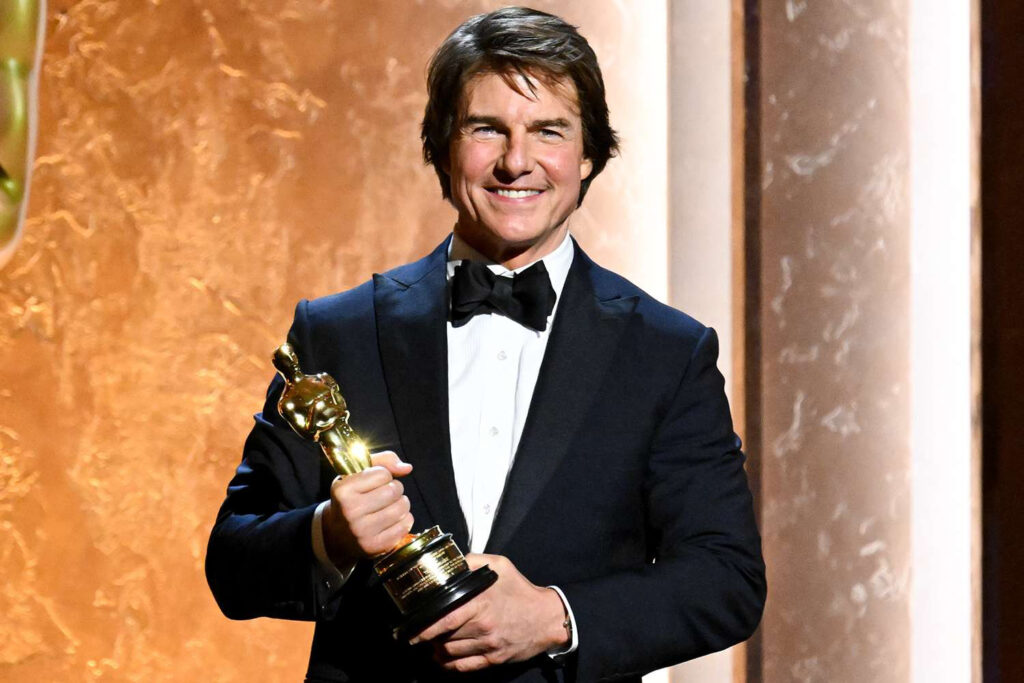
At the Governors Awards in Hollywood on 16 November, while accepting an honorary Oscar, Cruise delivered what felt like the cinematic sequel to the Pope’s address; the earthly sermon to the Vatican’s spiritual homily. And it was, in every conceivable way, the most Tom Cruise acceptance speech ever written: earnest, hyper-committed, slightly breathless, and delivered at a pace suggesting he’d already completed a HALO jump, a motorcycle chase, and a sprint across the Dolby Ballroom before reaching the podium.
But it was also moving.
Cruise described being “this little kid in a darkened theater” when a “beam of light… cut across the room” and “the world was so much larger than the one I knew.” Theatrical exhibition couldn’t buy advertising like this. Then he confessed something that made every exhibitor chuckle: when he couldn’t afford a ticket, he “figured out some other damn way to get in that theater.”
Some kids build forts; Tom Cruise built character arcs. He went on to describe the essence of communal moviegoing in a way that landed like an echo of the Pope’s reflection. Inside a cinema, he said, “we laugh together, we feel together, we hope together, we dream together.”
He also reminded the room — including the studio heads in attendance — that cinema is built collaboratively, not vertically: it is “not built by one person… it is built by communities,” from writers and cinematographers to “the theater owners and exhibitors” who allow audiences to gather in the dark.
And in his closing vow, he pledged “to help this art form,” to “protect what makes cinema powerful,” and to inspire the next kid who might be “working their ass off to buy that admission… or figure out some other damn way to get in that theater.”
If the Pope gave the philosophy, Cruise delivered the praxis.
Final Reel: The Convergence and the Moment
All of this unfolded against a backdrop of very real industry distress. Hundreds of cinemas worldwide have closed since 2020. Mid-budget films have nearly vanished. Release schedules have thinned. Financing pipelines have grown brittle. Some cities have lost every theatre they once had. So yes — the late-October doom-loop headlines were grounded in truth.
But the mid-November convergence of Pope Leo XIV’s reflection and Tom Cruise’s reverence offered something the industry desperately needed: clarity about what cinema actually is, and why it remains worth fighting for. The Pope framed cinemas as civic anchors, essential to the cultural life of a city. Cruise framed them as emotional anchors, the places where “we laugh together, we feel together, we hope together, we dream together.”
Two figures from utterly different spheres, arriving at the same conclusion within 24 hours: cinema matters because cinemas matter.
And then, because the universe has a sense of timing, the same week delivered encouraging early signs that “Wicked: For Good” may become the kind of tentpole capable of jolting the narrative back toward optimism, with record-setting pre-sales and concession pre-orders.
- Late October declared cinema in crisis.
- Mid-November declared cinema essential.
- Late November hinted, “Let’s see how you feel once the crowds show up singing.”
So, as long as that beam of light Cruise referenced still cuts across a darkened room — illuminating faces, igniting imagination, drawing us together — cinema will remain not only relevant, but indispensable.

- As Hollywood Pulls Back, Cannes Doubles Down - May 12, 2026
- CinemaCon 2026: The Studios Make Their Case for Theatrical - April 30, 2026
- CinemaCon 2026: A Merger Splits the House - April 24, 2026