


How the pandemic pushed Lumma to rethink premium formats and engineer a more accessible immersive experience.
When movie theatres around the globe shut their doors in 2020, among the countless companies working in the cinema technology space facing an uncertain future was one named Lumma. The Argentina-based company had just come off a decade of progress with its 4D E-Motion system — a full-motion seating technology that pairs movement with wind, water, lights, vibration and scents. With installations stretching from Latin America to Europe and the Middle East, Lumma had become one of the rare Latin American firms to operate on the same stage as far larger international providers. Then, on the eve of closing one of its biggest deals with a major exhibitor, the pandemic arrived.
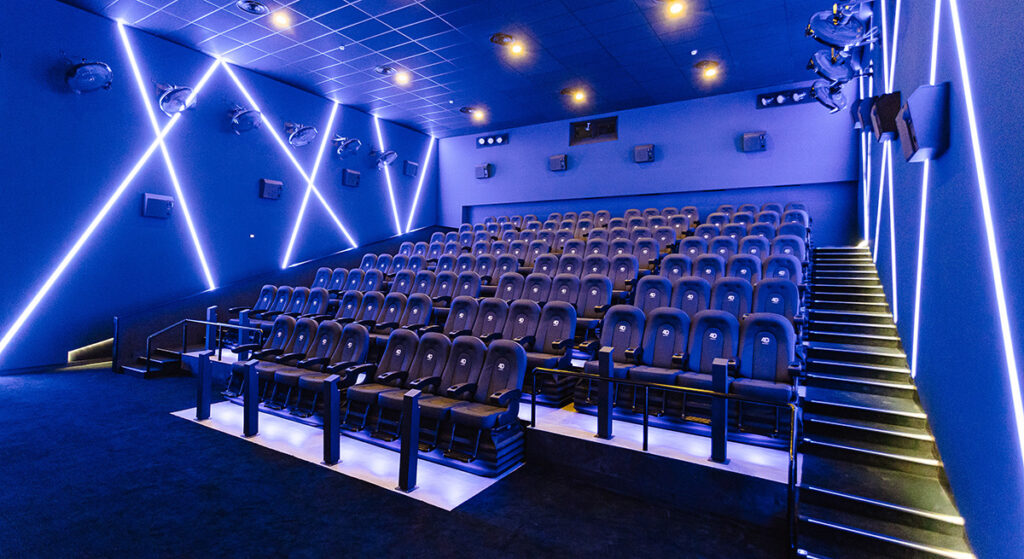
Rather than pause, Lumma’s founding team — Marcos Franco, Sebastián Franco, Antonela Salvador, and Gabriel Castarés — used the ‘downtime’ to press forward with research and development. “We are always looking for new solutions,” explained Sebastián Franco, the company’s Chief Operating Officer and Lead Innovator. “During the lockdown we asked: how do we create something that still delivers immersion, but is affordable, scalable, and easy to install, providing a different experience from current products in the marketplace but can also co-exist with our own 4D E-Motion?”
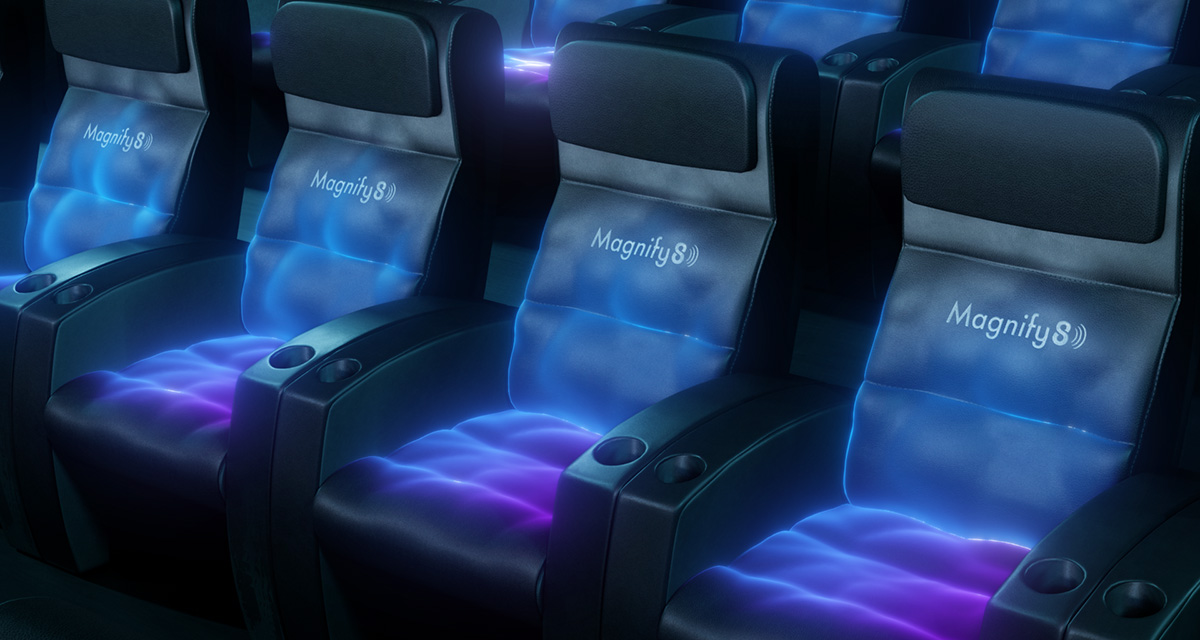
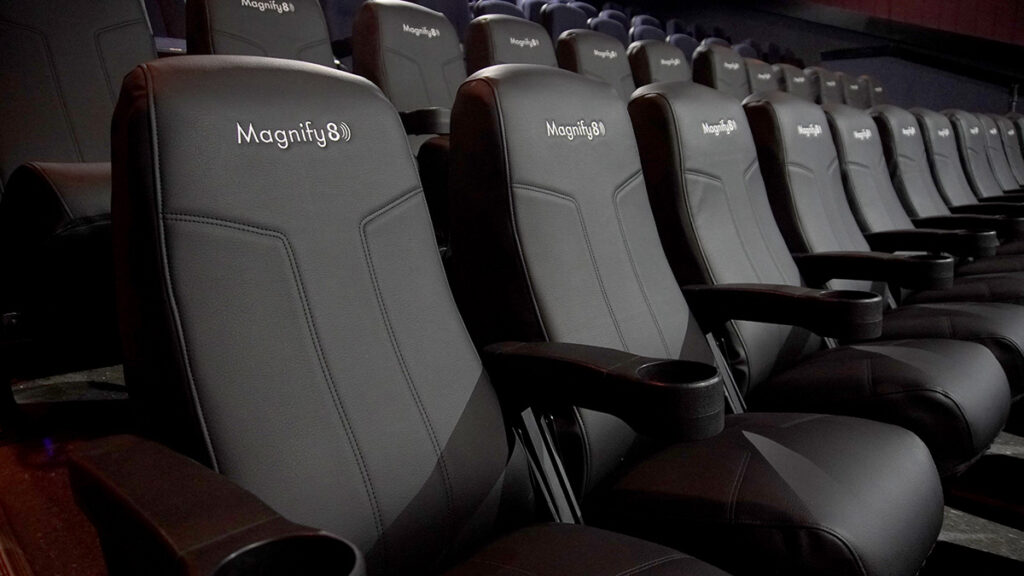
The answer, after years of trial and error, became Magnify 8; a system that fits over an existing cinema seat rather than replacing it. What emerged was a different approach: eight vibration actuators embedded in either a new chair, a retrofit, or a custom-designed seat cover. Each vibration effect is carefully programmed and synchronized with the on-screen action, from the low rumble of a chase sequence to the sudden jolt of a horror scare.
Made in Argentina, Built for the World
Lumma’s journey began more than 18 years ago with its founders developing attractions for theme parks and museums. The company’s engineering team built rides and simulators that required a high degree of precision — experiences more elaborate than those typically found in cinemas.
“We were building rides for theme park attractions,” said Rolando Rodriguez, who joined as Partner and Board Member in 2024. “That meant we were pushing the technology to its limits before adapting 4D E-Motion to a movie theatre environment.”
The shift from theme parks to cinemas came in 2015, when Lumma showcased their technology at a regional exhibition in Argentina. Two major exhibitors — Cinépolis and an independent operator named Multiplex — were interested enough to install the first 4D E-Motion theatres in 2016. That early success in Argentina paved the way for a broader expansion. Today, there are 26 4D E-Motion theatres across the country, and more than 70 installations worldwide. That steady expansion set the stage for the next challenge. Indeed, it was the constraints of 2020 that would lead to Lumma’s most democratizing innovation.
The Cover Breakthrough
As theatres shuttered globally, Lumma faced the same challenges as every cinema technology provider: exhibitors had no money, no certainty about reopening, and when they did return, they needed solutions that offered maximum impact with minimal risk. The company’s response was in keeping with their track record — they didn’t pause product development experimentation, they accelerated it.
“We started in the pandemic, actually, 2020, developing some new products,” said Marcos Franco, CEO of Lumma. “And this Magnify 8 was a spin-off of one of these products.”
The insight was deceptively simple: vibration was one of the most impactful effects in their full 4D E-Motion system. What if they could refine just that single element, making it affordable and easy for theatres that couldn’t afford or accommodate full-motion seats?
There was also another reason for focusing on vibration, as Sebastián Franco revealed, “At Lumma, one of our core values is preserving the artistic criteria of the movie while enhancing it through our technology and the Magnify 8 vibration system is carefully designed to support that vision.”
What began as an enhancement to Lumma’s vibration technology inside 4D E-Motion chairs grew into a standalone product. Sebastián Franco was the most persistent voice pushing for the seat cover concept, convinced exhibitors needed something low-risk and fast to deploy — a premium solution that was both affordable and flexible enough to work with existing infrastructure, even if it were being installed alongside 4D E-Motion auditoriums in the same multiplex.
The technical challenge, however, was significant. Lumma’s engineers needed to miniaturize technology designed for full seat integration into something that could work as a cover. How do you hide the actuators in a seat cover without compromising comfort? They also needed to make it wireless to avoid installation complexity. How do you avoid wireless latency so vibrations remain perfectly in sync with the screen?
“As we developed Magnify 8, a lot of focus was placed on enabling precise programming of the vibration effects, in terms of frequency, intensity, and movement path, across both the seat and backrest, to ensure they perfectly match what is happening on screen,” recalled Sebastián Franco, of the engineering process and choice to use wireless technology. “Every detail we added to the various prototypes was carefully designed to provide exhibitors with a unique system that is both highly effective and incredibly simple to implement.”
From Prototype to Studio Approval
By mid-2023, Lumma had a working prototype, which they began testing with select exhibitors at industry events like CineEurope.
“It seemed to solve two problems at once,” Rodríguez said, recalling how the timing was fortuitous: cinemas reopening after COVID found many seats worn from constant cleaning. Magnify 8 not only transformed a conventional auditorium into a premium experience, or added value to an existing PLF auditorium, it also refreshed the look and feel of aging seats. “Exhibitors didn’t have the capital to invest in a full auditorium overhaul, but audiences were demanding premium experiences. Magnify 8 offered theatres a practical way to refresh their auditoriums and capture some additional revenue.”
The feedback was encouraging, but the key validation would come from Hollywood studios, whose approval was essential for synchronized content.
“We had meetings with every single one,” Marcos Franco stated. “They are always opting for 4D for every big movie. So we started doing special invitations to have them approve all the Magnify 8 technology.”
The process took approximately six months, with studio executives visiting Lumma’s North Hollywood facility to experience the technology firsthand. Studio approval was important not just for content synchronization, but for exhibitor confidence. With studios blessing the technology, theatre operators could invest knowing they’d have a steady stream of synchronized content. And having received this crucial studio support, Lumma launched its cover-based system at CinemaCon 2024. The first film released with Magnify 8 coding was “Beetlejuice Beetlejuice” in October 2024.
“The format was enthusiastically embraced by exhibitors and studios, and once it was introduced to the audiences, the response was excellent,” said Antonela Salvador, Partner and Director at Lumma, which now expects more than 70 movies annually to be available in the Magnify 8 format, from global blockbusters to mid-sized releases and local productions.
Promising Early Results During Global Rollout
The final Magnify 8 system distributes eight strategically placed actuators — three in the seat base, five in the backrest — that deliver effects ranging from gentle vibrations to intense tremors. Each effect is independently programmed for intensity and frequency, with user controls allowing moviegoers to adjust their experience across three levels or turn it off entirely. For exhibitors, the key point is the system works wirelessly, requiring only standard power outlets, and fits any seat type; traditional or recliner, new or existing.
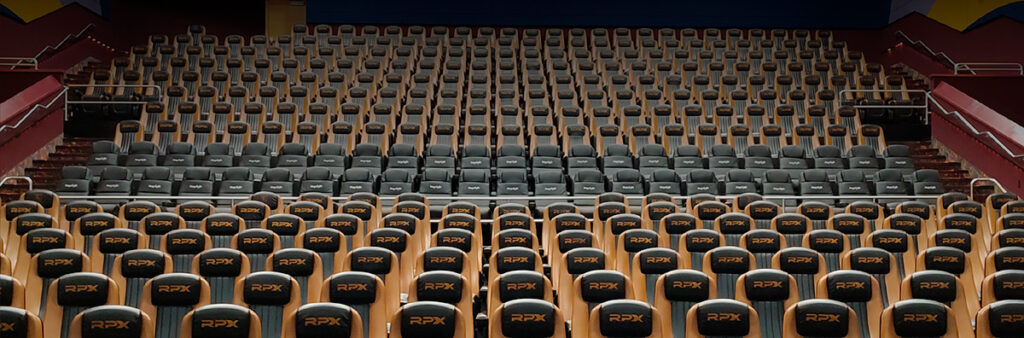
The market response has supported Lumma’s pandemic pivot strategy. Exhibitors who have installed Magnify 8 in premium large format (PLF) screens have in some cases reported attendance lifts of 50–100% in those auditoriums. Because the system is modular, theatres can start with a few rows or a single screen, then expand over time.
Magnify 8 has already been adopted by leading circuits in Argentina and rolled out in the United States, with additional projects under way in Europe, the Middle East, and Southeast Asia. Lumma’s headquarters in Buenos Aires, Argentina, and Montevideo, Uruguay, handle manufacturing, while its Los Angeles office works closely with Hollywood studios to synchronize every title.
Cinema operators who have already deployed Magnify 8 have been generally pleased with their patrons’ response to the system. “Audiences recognize the added value and are willing to pay an upcharge for it,” said Gonzalo Lopez, the CEO of Multicines Ecuador. “For us, it’s a powerful opportunity to broaden our offerings, drive revenue growth, and, most importantly, deliver an elevated experience to moviegoers.”
For Lumma, the product marks more than a technical achievement; it highlights how a company rooted in Argentina has been able to compete in the global cinema technology arena. From its roots building theme park attractions, the company has evolved into a global cinema technology supplier with a reputation for reliability, innovation and customer focus. Its 4D E-Motion systems are often cited by exhibitors and studios as a benchmark for immersive systems.
The company’s expansion has been steady but ambitious: starting with Argentina in 2016, then Uruguay (2017), Paraguay (2018), Brazil (2018), and Ecuador (2019). By 2021, they had reached Colombia, followed by expansion into the Middle East (Bahrain and Oman), Central America (Panama), Europe (Spain and France), the Caribbean (Puerto Rico), Africa (Morocco), and finally, North America.
This geographic diversity has been crucial to Lumma’s development philosophy. Each market has provided feedback that shaped the technology, from the harsh environmental conditions in Middle Eastern installations to the varied seating types across European chains. The result is a product that’s adaptable across markets while still reflecting its Argentine engineering DNA.
The Future of Premium Formats
Now Magnify 8 extends Lumma’s product lineup to a wider range of theatres, from independents that once couldn’t justify premium motion seating to major chains looking to expand their PLF offerings. For many exhibitors it has created a new revenue opportunity and, in some cases, a natural path toward full 4D E-Motion systems.
“We’re always looking for different solutions,” Marcos Franco emphasized. “Innovation is at the heart of what we do. We’re always looking for ways of improving things and coming up with new technology.”
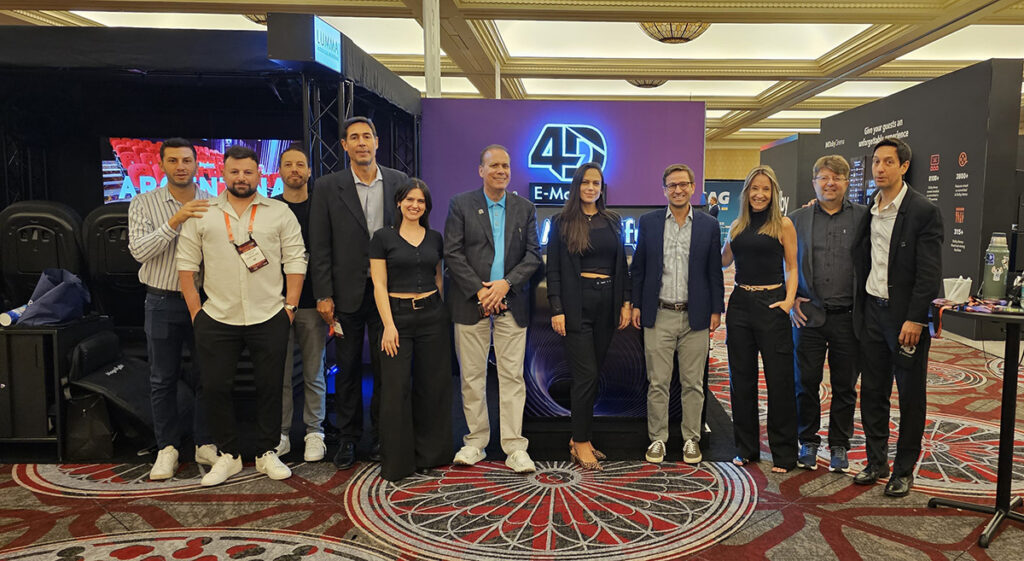
With CineLATAM opening in Miami this month, Lumma is likely to be part of the wider discussion about the future of premium formats in Latin America and beyond. Yet the story of Magnify 8 extends further than any single trade show. It is, at its core, a story of resilience: how a group of Argentine entrepreneurs used a crisis to rethink immersion and, in the process, offered exhibitors another way to enhance the moviegoing experience.

- Can Cinema LED Scale? Samsung Bets Trilith Cinemas Can Help Prove It - March 24, 2026
- A Quiet Player Makes a Big Move: Qube Cinema Acquires Arts Alliance Media - February 23, 2026
- As Sundance Says Goodbye to Park City, Its Films Look Forward - January 21, 2026