


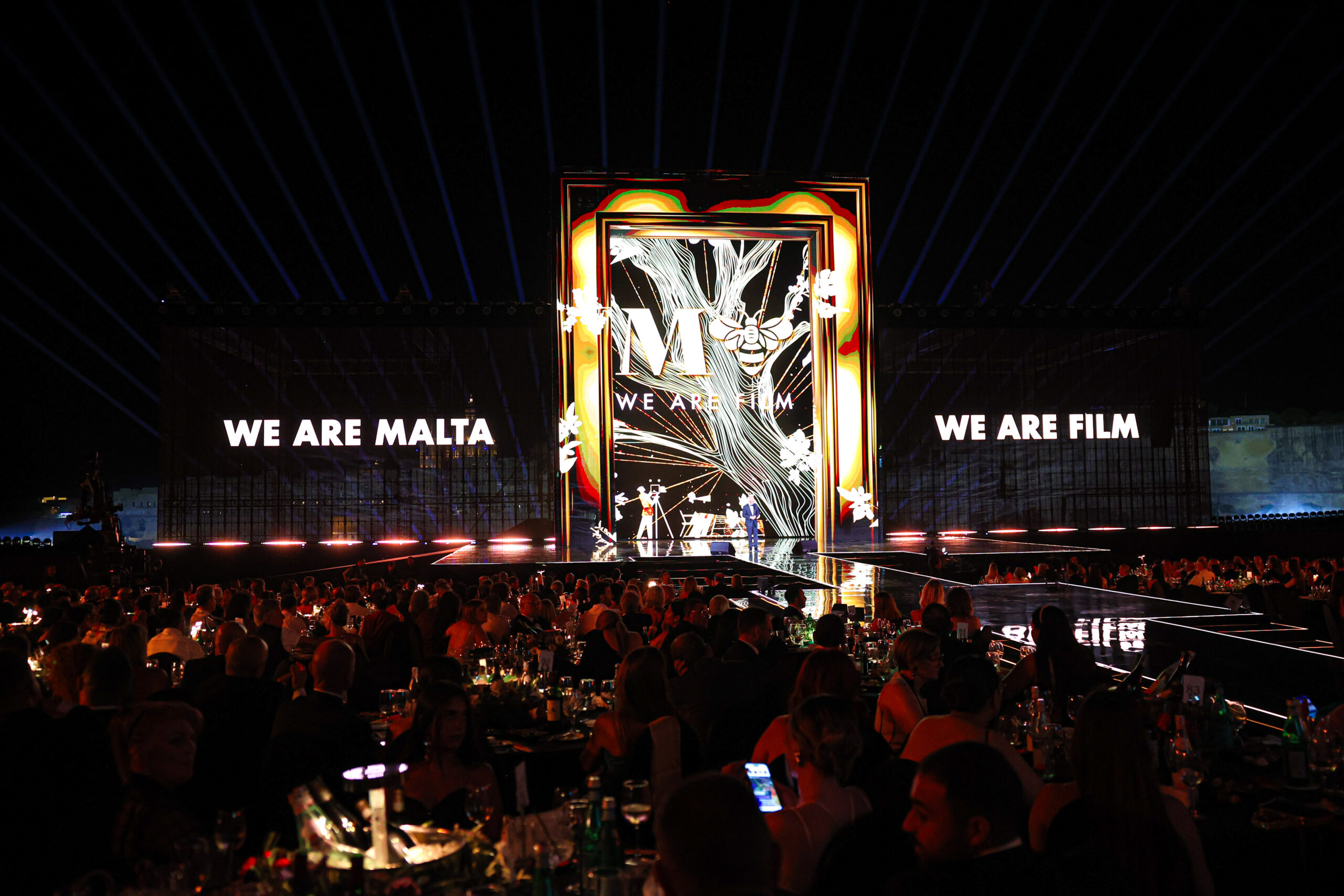
Most film festivals are designed to bring together audiences with the latest movies from both established directors and rising stars. Now in its third year, the Mediterrane Film Festival (MFF) seemingly has a different mission. Hosted on the island of Malta during the last ten days of June, it’s as much a showcase for its location as it is for films and filmmakers. As its artistically designed website says, the MFF “serves as a vibrant platform for Malta to strengthen its film brand image internationally.”
This year, the MFF celebrated 100 Years of Film in Malta. The first ever film shot on the island was 1926’s “Sons of the Sea”, but Malta has in the past five decades become a major go-to destination for Hollywood productions. Famously, Robert Altman’s 1980 family film “Popeye” – starring Robin Williams as the spinach-eating cartoon character – was shot on the island, with its sets then being turned into the theme park, Popeye Village, which remains one of Malta’s major tourist attractions.
Together with a selection of new films, many of which screened at the plush Embassy Cinemas in the Maltese capital Valletta, the 2025 edition of the MFF programmed celebratory screenings, at both the stunning Fort Ricasoli and Laparelli Gardens. Among them, blockbuster epics like Justin Kurzel’s “Assassin’s Creed”, Wolfgang Petersen’s “Troy”, and Renny Harlin’s “Cutthroat Island”, all of which were partly shot in Malta, and took advantage of the stunning landscapes (and in some cases, generous tax breaks – now at 40% for international producers).
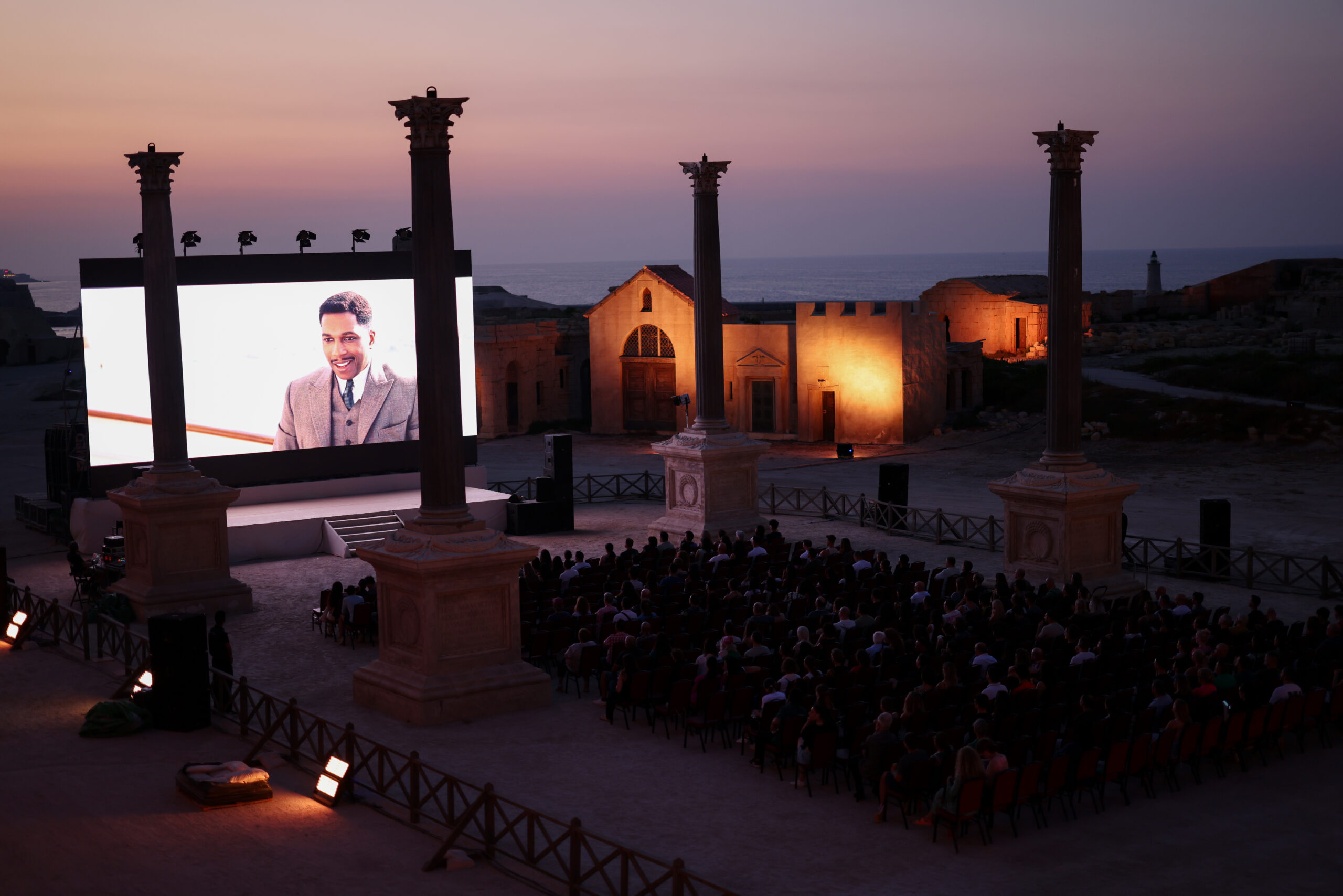
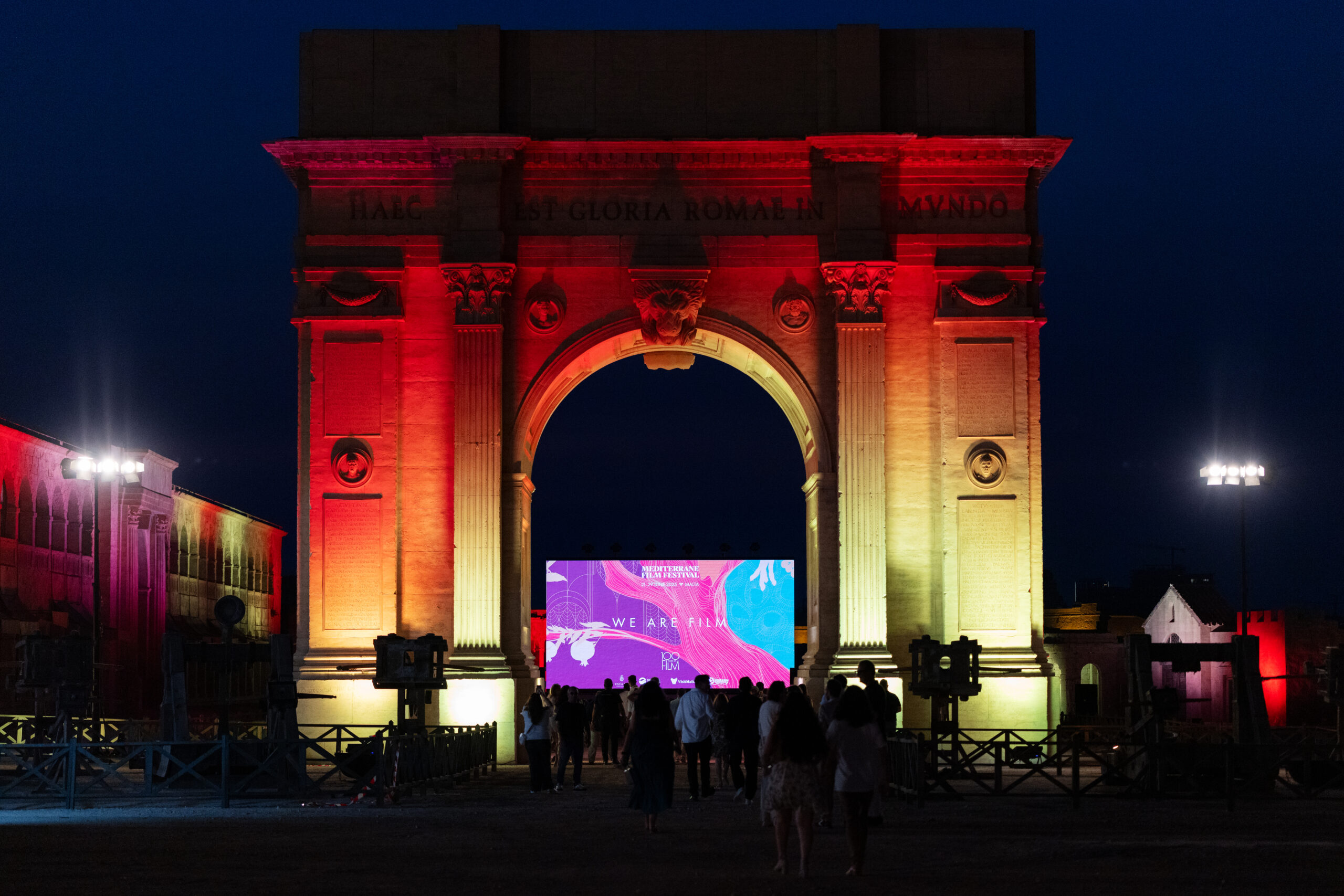
More than any other major director, Ridley Scott has returned time and again to Malta, shooting both the Oscar-winning “Gladiator” and its 2024 sequel “Gladiator II” there, as well as parts of his historical epic “Napoleon.” Last year, Scott caused a furore when he said that while the country was a “treasure trove” of architecture, “I wouldn’t advise going there on holiday.” With a record EUR €47 million in rebates awarded to “Gladiator II” alone, his remarks caused outrage in Malta. “Allow me to advise you not to visit at all,” retorted Maltese opposition MP Adrian Delia on social media.
Yet by the time this year’s MFF opened, all had clearly been forgiven, with “Gladiator II” the festival’s curtain-raiser, playing on a huge outside screen on a balmy night in the grounds of Fort Ricasoli. For the duration of the festival, the fort also had various costumes on display from “Gladiator” and “Napoleon” to several other movies. You could even visit some of the exact locations inside the fort where Scott shot “Gladiator II”, including the very alcove where Paul Mescal’s Lucius discovers the armour worn by his father, Maximus.
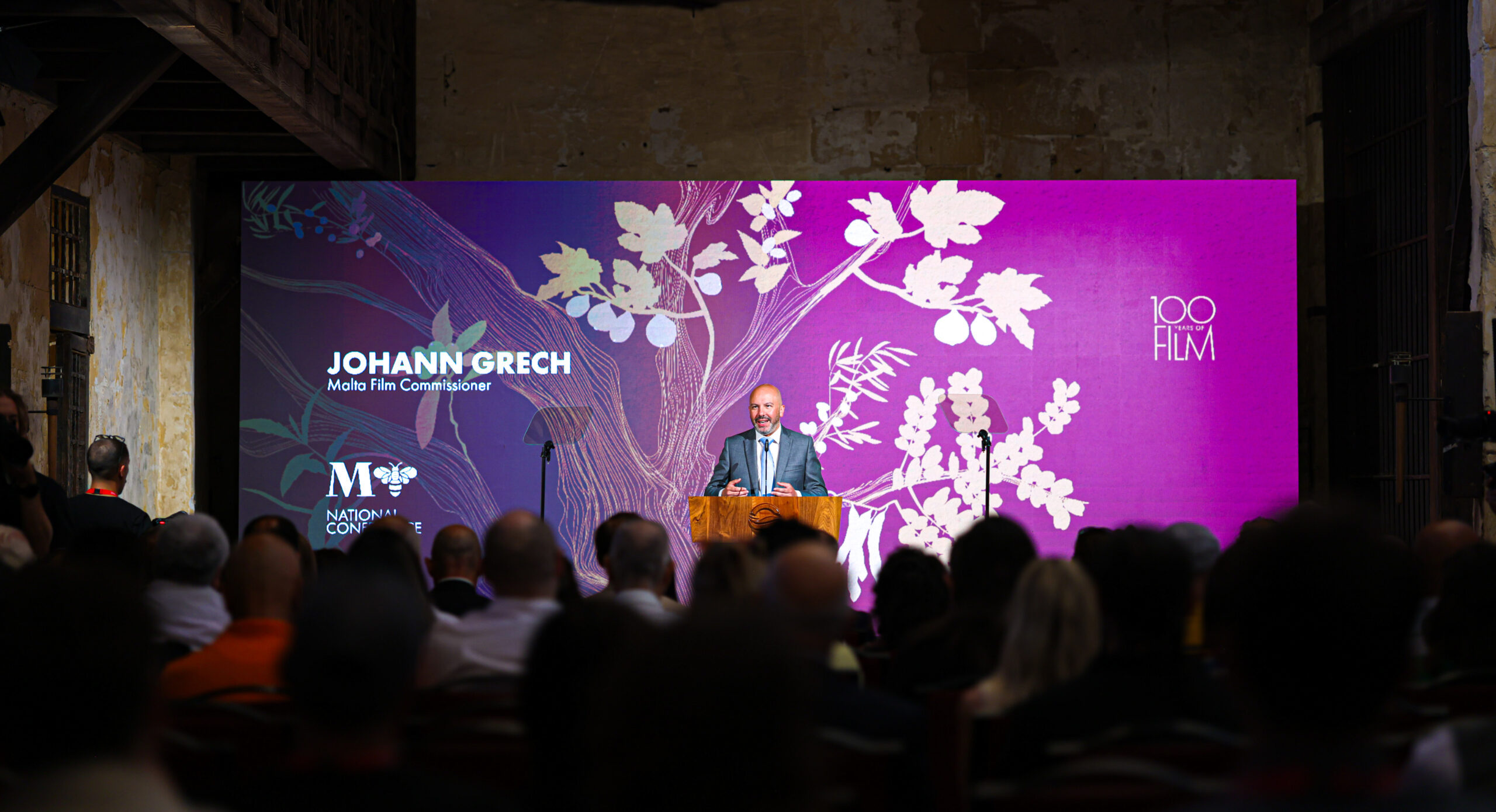
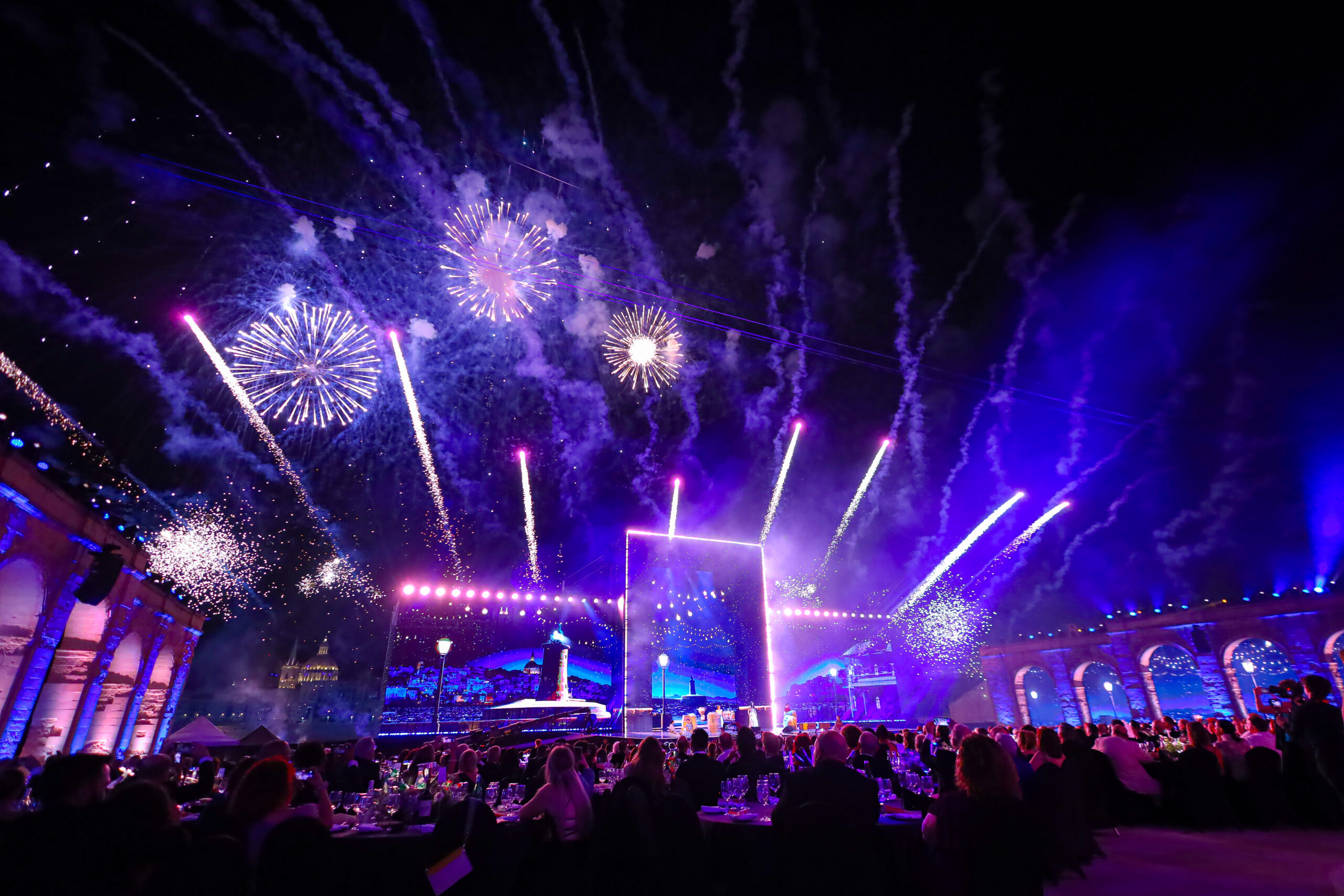
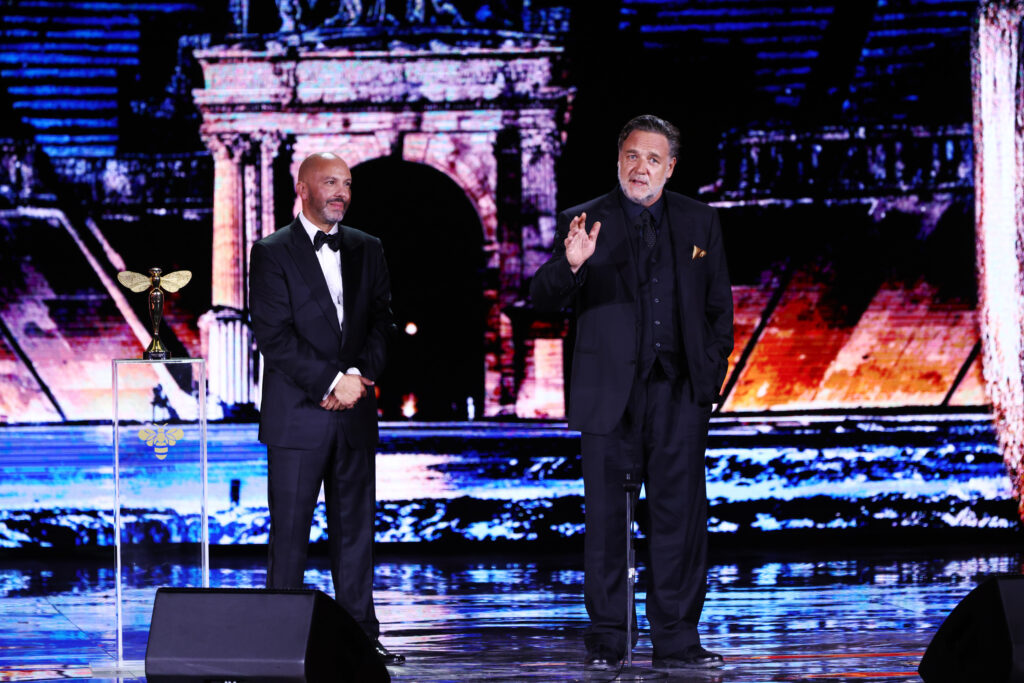
That the nine-day festival concluded with an appearance by Maximus himself – actor Russell Crowe – shows just how determined the MFF and the Malta Film Commissioner, Johann Grech, are to recognise the nation’s recent strategic position in Mediterranean moviemaking. At the glitzy (and very expensively produced) Golden Bee Awards, held at Fort Manoel, Crowe arrived to collect the Malta Film Legends award.
“I would encourage [the Maltese] government to keep adding to their commitments to the arts and to support the further education of young Maltese people who want to explore film as a career in whatever capacity, because it truly takes a village to make a movie,” said Crowe. “It’s not just actors, writers, directors. But cinematographers, electricians, riggers, gaffers, carpenters, painters, the myriad of jobs in the wardrobe department – hair, makeup – special effects, catering, editors, composers and on and on and on.”
With the Golden Bees hosted for the third year running by British comedian David Walliams, the ceremony played up the theme of Malta’s 100 Years of Film, recalling films made in Malta across the decades, in between firework displays and lavish musical numbers. With prizes presented by jury members, including renowned production designer Rick Carter, Best Film went to the road movie “Where The Wind Comes From”, a Tunisian-French-Qatari co-production, written and directed by Amel Guellaty. Basque filmmaker Julio Medem also claimed two prizes, Best Screenwriter and the Jury’s Choice Award, for his new movie, “8.”
Malta Film Studios
Yet perhaps the most instructive element of the festival came with a trip organised to Malta Film Studios, which is just a short hop from Fort Ricasoli on the outskirts of Valletta. Built in 1964, special effects expert Jim Hole and Maltese construction manager Paul Avellino initially conceived of a specially-designed shallow tank for maritime filming, taking advantage of the spectacular Mediterranean horizon backdrop. Then known as the Malta Film Facilities, it was first used to shoot “The Bedford Incident”, the 1965 Cold War thriller starring Richard Widmark and Sidney Poitier.
Initially constructed as a special effects tank, its evolution came in the 1970s in the wake of “Jaws”, Steven Spielberg’s shark thriller often seen as the film that created the modern blockbuster. “Jaws” created a sub-genre of men against fish, men against everything,” explained Alan Cassar, the Studios and Locations Manager at Malta Film Studios, who guided us. “There was a whole exploitation of the shark movie. So Malta benefitted a lot.” Most notably, the Dino De Laurentiis-produced “Orca: the Killer Whale” was shot there.
Things changed further with “Raise the Titanic”, the 1980-made drama that detailed the tragedy of the unsinkable ocean liner. To accommodate the 55-foot-long model of the Titanic, a second concave tank was built – a decision that has ultimately led filmmakers to repeatedly return here. Measuring 125 meters by 97 meters, and able to hold 23 million litres of water, the tank has been home to everything from Ray Harryhausen’s “Clash of the Titans” to Scott’s “Gladiator II” – including the crazed sequence in the flooded Colosseum, complete with ships and (digital!) sharks.
Most recently, the tank accommodated the production needs of the just-released Universal blockbuster “Jurassic World: Rebirth” for the scenes where the characters face off with the giant aquatic beast, the Mosasaurus. “At the beginning of January 2024, we did not know anything about the next “Jurassic” happening,” said Cassar. “Then March and April [the production team] came, and I thought it’s going to be [scheduled for] the next year but they said ‘No, we’re setting up in May. We’re shooting in June.’ Everybody just has to make it happen.”
The cast and crew shot in Malta in the searing heat in July 2024, something Cassar didn’t think was wise, “Everybody told them, go to the UK in August, come to Malta in October. It would have been a wiser decision, because Malta in October would be cooler, 8, 10, degrees less than today, and would be adequate to work. Because we were working in an open space. We did not have much [in the way of] night shoots. Night shoots are pleasant!”
Developing the Maltese Film Industry
While the main tank is filled with seawater from the Mediterranean, the smaller tank can be filled with fresh water and heated. But there are further plans afoot, with a proposal to build soundstages near to the water tanks, thereby turning Malta Film Studios into an all-encompassing facility. “That’s what’s missing in our ecosystem, a couple of stages. With the introduction of stages, I think we will go to another level. We will raise the bar even more,” said Cassar. “So the future is here.”
Planning permission for the sound stage was approved in 2022 and blueprints have already been drawn up for the facility that is also set to hold an indoor water tank. Although no timescale has been set yet, meetings with potential investors were scheduled to take place during the MFF, with Malta Film Commissioner Johann Grech believing the ambitious project should take two years to build.
Certainly, it would cap what already has been an impressive period for Malta. Between 2005 and 2024, the Maltese film industry has contributed more than EUR €1.3bn to the Maltese economy – aiding everything from restaurants and hotels to retail and even agriculture, forestry and fishing. Currently, various productions across the island are utilising up to 50 different Maltese locations and employing 1,300 crew members, with a thousand of them local to the island.
Among others, Malta is currently hosting the shoot for “Apollo Has Fallen”, the television series sequel to “Paris Has Fallen” (itself a spin-off of the film franchise that began with 2013’s “Olympus Has Fallen”). Also shooting just yards away from Fort Ricasoli is “Enola Holmes 3”, the Netflix-backed film starring Millie Bobbie Brown as the sister sleuth to the famous fictional detective Sherlock Holmes. “Malta in general, is very popular at the moment,” said Cassar. “Now we have romantic comedies, action sequences, spy movies.”
Malta has frequently proved itself capable of being an adaptable backdrop for all sorts of films. When Spielberg set out to shoot “Munich”, his 2005 drama about the Munich Olympics terror attacks, he found almost everything he needed in Malta. Republic Square in Valletta stood in for Athens. Sliema’s seaside promenade was refashioned as coastal Tel Aviv. And a café and piazza in Rabat were passed off as Rome. “The art department had the headache of changing all the labels and signs and traffic but it was shot in Malta,” added Cassar.
While the MFF is evidently an impressive showcase for what Malta has to offer, it also needs to turn its attention to its own film industry. Sadly, the festival’s world premiere, the Valletta-set “The Theft of the Caravaggio”, left much to be desired. Directed by Joshua Cassar Gaspar, a Maltese-born commercials director, this amateurishly acted and shot drama told the story of a troubled priest (Paul Kissaun) who discovers that a priceless Caravaggio painting has been stolen from St. John’s Cathedral in Valletta on his watch.
Surely, in the years to come, Malta must encourage its own nation’s homegrown writers, directors and producers to flourish or risk being no more than a pit-stop for Hollywood. As Crowe pointed out in his acceptance speech, ultimately the aim must be “telling stories hopefully of this place – ancient stories, historic stories and contemporary, sharing Maltese stories with the world.”
- Berlinale 2026: Political Strife, Homegrown Success Stories and An Uncertain Future - February 25, 2026
- Pearl & Dean Partner Emirates with Everyman for a First-Class Experience - February 5, 2026
- A Complete Service: Trafalgar Releasing’s End-to-End Offering - December 5, 2025