





Moviegoing Is The New Black
First, thank you to everyone who reached out after last week’s Marquee to say how much you enjoyed it. I never would have guessed that so many people would appreciate a story about my daughters researching the optimal bathroom-break moment during Christopher Nolan’s nearly three-hour “The Odyssey.” More importantly, it was gratifying to hear that so many of you find The Marquee useful. Please feel free to forward it to anyone who might benefit.
A special thank you as well to Christie, whose support — and patience — during the relaunch of the newsletter has been very much appreciated.
This week’s Marquee is arriving a little later than planned, though thankfully not because of late-breaking news about the Paramount Skydance–Warner Bros. Discovery merger. There are still plenty of developments to discuss, along with no shortage of public opinions from people with agendas of their own, but that analysis is best left to the pages of Celluloid Junkie. That is also where you will find our in-depth coverage of the 2026 ICTA Barcelona Cinema Technology Experience, with similar reporting from CineEurope publishing over the coming week.
I actually had a perfectly good editorial prepared. It began with the biblical warning that “all who draw the sword will die by the sword,” which seemed appropriate for explaining how the mainstream media’s favorite cinema industry weapon — the movie-theatres-are-dying story — had suddenly been turned on itself. The pandemic spawned thousands of obituaries for moviegoing. Christopher Nolan’s “The Odyssey,” on the other hand, has generated a wave of stories announcing its rebirth.
The New York Times, in particular, cannot stop talking about the film. It has profiled moviegoers turning up for sold-out screenings at two in the morning and parents bringing babies to special matinees. Its columnists — including Maureen Dowd, Ross Douthat and Ezra Klein — have weighed in on everything from Greek mythology and culture wars to what the story might foretell about our own future. The paper even devoted a feature to collectible popcorn buckets becoming a USD $100 million business. The paper of record now seems determined to record every possible way people are going to the movies.
And if the only bad publicity is no publicity, classicist and Homer translator Emily Wilson’s thrashing of Nolan’s screenplay in the London Review of Books should probably be quoted on the poster. I can see it now: “There are no sex scenes, and all the food looks horrible.” Not since “You’ll believe a man can fly” has a studio had such an obvious marketing opportunity.
The movie has become so popular that newly added IMAX 70mm screenings at London’s BFI IMAX sold out in under 30 minutes, while stories continue to surface about scalpers asking extraordinary prices for tickets. Pro tip: anyone unable to score an IMAX seat can always watch London filmmaker Will Norman’s adaptation, shot entirely on Apple iMacs. Perhaps after three hours nobody will notice the difference.
If media punditry spent the better part of six years killing off movie theatres, then over the past month it has used the same tool — or sword, in my increasingly strained analogy — to resuscitate the business. Moviegoing, apparently, is the new black.
Then Spider-Man swung in and ruined my neat ending.
Before I could proofread that opus and send The Marquee on Monday morning, we were flooded with press releases from exhibitors around the world announcing record-breaking weekends driven by “Spider-Man: Brand New Day.” AMC, Regal, Cinemark, Marcus Theatres, HOYTS and others reported historic results. The film ultimately opened to USD $360 million in North America and USD $932 million worldwide, while the overall North American box office reached a record USD $429 million for the three-day weekend. Once again, mainstream media joined the chorus — this time with plenty of receipts.
Somewhere in Burbank, Disney’s distribution team should also be smiling: “Brand New Day” broke the domestic opening record without a single North American IMAX screen, while other premium large formats still accounted for 24% of the gross — an encouraging signal for the studio’s Infinity Vision rollout ahead of “Avengers: Doomsday.”
Michael O’Leary, President and CEO of Cinema United, captured the moment nicely: “Our industry is at its best when there is something for everyone to see on the big screen.” Pairing great films with innovative, high-quality theatres, he added, is what turns a strong slate into a genuine industry event. Had political strategist James Carville delivered the message, he might have put it more bluntly: “It’s the movies, stupid.”
Of all the figures released, however, the one that may best illustrate the importance of the weekend came from Cinergy Entertainment Group. The Dallas-based exhibitor generated approximately USD $3 million across its 10 locations from Thursday through Sunday, including nearly USD $2.5 million over the three-day weekend. That beat the company’s previous weekend record, set during the June opening of “Toy Story 5,” by 19%. More tellingly, Cinergy’s Elite Plus subscription program recorded its highest-ever weekend for new sign-ups, exceeding last summer’s previous high by more than 20%.
That is more than a record weekend. It is a record weekend creating future customers.
So I will set aside the biblical verse for now and borrow an old English proverb instead: winning begets winning. Or, in this case, moviegoing begets more moviegoing.

“Spider-Man: Brand New Day” Was Shot for ScreenX — And Audiences Showed Up
Sony Pictures’ “Spider-Man: Brand New Day” became the first Hollywood blockbuster to be Shot for ScreenX, with CJ 4DPLEX collaborating alonside filmmakers from on-set production through theatrical exhibition. Rather than simply extending selected scenes onto the auditorium walls after the film was finished, the 270-degree presentation was considered during production as part of the filmmakers’ creative canvas. The experiment arrived with a rather convincing proof of concept: ScreenX and 4DX generated more than USD $31 million globally during the film’s opening weekend, the biggest debut in CJ 4DPLEX history. Domestic ScreenX alone grossed USD $7 million, 2.6 times its previous opening-weekend record.
The format was also wrapped into the film’s broader event marketing. CJ 4DPLEX, Sony and Kinepolis created seven fully themed ScreenX auditorium takeovers across Europe and North America, while “Spider-Man: Brand New Day” established ScreenX opening records in 34 countries. Regal reported its biggest-ever weekend for ScreenX, 4DX and RPX as the circuit generated more than USD $160 million in worldwide box office and concession revenue. Meanwhile, the film delivered AUD $30.4 million and attracted more than 1.8 million admissions in Australia, giving HOYTS its biggest weekend of 2026. Apparently, surrounding moviegoers with Spider-Man is a reasonably effective way to demonstrate what cinemas can provide that the living-room television cannot.
HOYTS is now adding 12 ScreenX auditoriums across Australia and New Zealand, increasing its footprint from two locations to 14 by 2028—the largest ScreenX deployment by any circuit in the region. The first new site, at HOYTS Broadway in Sydney, opened alongside “Spider-Man: Brand New Day,” joining strong-performing installations at Melbourne Central and Blacktown. The timing is more than a convenient bit of corporate web-slinging. Premium formats expand fastest when distinctive content, studio marketing and exhibitor investment arrive together. For ScreenX, the real breakthrough may not be having more walls on which to show the movie, but giving filmmakers a reason to think about those walls before the cameras begin rolling.
Source: Celluloid Junkie
South Korean Box Office Rebounds 42% Behind Local Blockbusters
South Korea’s box office staged a sharp recovery during the first half of 2026, with revenue climbing 41.9% year-on-year to KRW 579 billion (USD $397 million) and admissions rising 34.2% to 57 million. The turnaround follows a dismal first half of 2025, when attendance fell to roughly 42 million, the market’s weakest non-pandemic performance in more than two decades. Korean moviegoers, it turns out, had not permanently left the building; they needed a slate worth returning for.
Local films powered the rebound, generating KRW 370.2 billion (USD $254 million), an 81.7% increase, from 37.37 million admissions. Korean titles captured 63.9% of box office revenue, recovering to 94.2% of the average recorded during the first halves of 2017 through 2019. Jang Hang-jun’s period drama “The King’s Warden” led the market with KRW 163.1 billion (USD $111.7 million) and 16.9 million admissions, becoming the highest-grossing Korean film of all time. “Colony” followed with KRW 60.5 billion, while low-budget horror “Salmokji: Whispering Water” earned KRW 33.3 billion. Showbox distributed all three and finished the half with a commanding 48.6% revenue share; an extraordinary result, albeit one that also shows how concentrated the recovery was around a handful of breakout releases.
Imports offered exhibitors a different kind of win. Foreign-film revenue edged up 2.3% to KRW 208.8 billion (USD $146 million) even as admissions declined 6.9% to 19.68 million. “Project Hail Mary” was the leading import with KRW 33 billion (USD $23.1 million), while revenue from IMAX, 4D, ScreenX, Dolby Cinema and other premium formats jumped 56.3% to KRW 45.7 billion (USD $32 billion). For exhibitors, that may be the more durable takeaway: Korean blockbusters restored audience volume, while premium formats helped extract more value from Hollywood releases attracting fewer patrons.
Source: Variety
CANAL+ Throws Down a €980 Million Gauntlet for French and European Cinema
CANAL+ has committed EUR €980 million (USD $1.13 billion) to French and European cinema under an unprecedented five-year agreement beginning in 2028, signed with BLIC (Liaison Bureau of Cinematographic Organizations) a major trade association representing French film industry organizations such as SPI (Syndicat des Producteurs Indépendants) and the filmmakers’ group ARP (Société civile des Auteurs Réalisateurs Producteurs). The deal averages EUR €196 million (USD $226 million) annually and gives producers something increasingly scarce in the entertainment business: a reasonably predictable financing partner willing to remain in the room for more than the next quarterly earnings call.
The agreement directs support toward first features, emerging filmmakers, animation, diverse voices, new forms of storytelling and the increasingly endangered mid-budget film, alongside larger commercial productions intended for broad audiences. In return, CANAL+ retains its prized position in France’s media chronology, allowing films onto its services six months after their theatrical release. That is considerably earlier than Disney+ at nine months and Netflix and Prime Video at 17 months, demonstrating that France’s windowing system is less a brick wall than a negotiated exchange: invest heavily in the theatrical ecosystem and the door opens sooner.
The timing gives the CANAL+ an unmistakable competitive edge. Netflix, Prime Video and Disney+ recently filed appeals against new French diversity sub-quotas governing their mandatory local-content investment, arguing that the requirements are disproportionate, overly prescriptive and restrictive of editorial freedom. CANAL+, meanwhile, has effectively placed nearly EUR €1 billion on the table while reaffirming the theatrical window the global platforms would prefer to shorten. The headline figure is closer to restoring CANAL+’s earlier investment pace than dramatically expanding it, and it arrives after both production cuts and an ugly controversy surrounding the company’s leadership. Still, as a declaration of where CANAL+ intends to stand in Europe’s culture-versus-algorithm debate, the message is fairly blunt: cultural exception works better when someone actually pays for the culture.
Source: Celluloid Junkie
Sundance Expands Its 2027 Festival as the Boulder Era Begins
The Sundance Film Festival is not simply trading Park City for Boulder in 2027; it is using the move to become larger, more concentrated and more international. Running 21-31 January, the first Colorado edition will expand each of its four central competition sections from 10 to 12 films, with Premieres, NEXT, Midnight, Family Matinee and Offscreen programming also growing. New Frontier returns after a two-year pause as New Frontier FLUX, while FIPRESCI will introduce awards for debut filmmakers in the World Cinema competitions. As the Toronto International Film Festival prepares to launch a formal market, Sundance is making its own play to remain indispensable: more discovery, greater international reach and more room for business—even without hanging a “market” sign over the door.
The festival will occupy a roughly two-square-mile footprint around downtown Boulder and the University of Colorado campus, far tighter than the former 40-mile spread across Park City, Kimball Junction and Salt Lake City. The 2,036-seat Macky Auditorium will become the flagship premiere venue, with a Dolby upgrade featuring 240 speakers and the largest screen in Sundance history. Other venues receiving improvements include the Roe Green Theatre, Boulder Theater, Canyon Theater and Chautauqua Auditorium, while Cinemark Century will host press and industry screenings. Sundance is effectively underwriting a citywide cinema upgrade that Boulder gets to keep after the lanyards disappear.
Whether Boulder can comfortably absorb the crowd remains the practical question. Sundance drew approximately 85,400 attendees in 2025 and is promoting a home-rental program, lodging assistance, free shuttles and more than 30 international routes into Denver. Yet our own early searches suggest “more inventory” has not yet meant “affordable inventory.” Apparently Sundance may have left Park City without entirely leaving Park City prices behind. Lodging will be the first real test of whether Boulder makes the festival more accessible, not merely more compact.
Source: Screen Daily
Los Angeles’ Historic Bruin Theater Sets October Reopening
The Bruin Theater in Los Angeles’ Westwood Village neighborhood is expected to reopen in mid-October after Toronto-based exhibitor Rui Pereira signed a lease with the family that owns the building. Closed since July 2024, when Regency Theatres’ lease expired, the 670-seat single-screen cinema will return with first-run films, classics, premieres and special events. Pereira also plans to bring back its 35mm and 70mm projectors while upgrading the digital presentation. In other words, the Bruin is not being preserved merely as a handsome neon relic; its new operator intends to put it back to work.
Pereira, who has operated Toronto’s Kingsway Theatre for 18 years and previously ran the Humber Cinema, says the Bruin remains in remarkably good condition, including its seats and screen, while the sound system has received recent upgrades. “I want to keep the essence of the theater, I don’t want to erase its history or gloss it over,” he told Deadline. Longer-term plans could include adding two 15-seat screening rooms upstairs, and studios have already approached Pereira about premieres and private screenings that might bring audiences through the doors before the official reopening. Meanwhile, the marquee will begin earning its keep early with promotions for Warner Bros.’ “Practical Magic 2” and UCLA.
Designed by prolific cinema architect S. Charles Lee and opened on New Year’s Eve 1937, the Bruin was named for UCLA’s mascot and originally decorated in the university’s blue-and-gold colors. Its revival arrives as Jason Reitman’s Director’s Village across the street prepares for renovation and Sony and Alamo Drafthouse move forward with reopening Hollywood’s Cinerama Dome and former ArcLight complex in 2028. Los Angeles spent decades proving how efficiently it could close beloved movie houses; lately, it seems determined to run the experiment in reverse. The common strategy is telling: these venues are not trying to out-multiplex the multiplex. They are betting that distinctive architecture, analog presentation and event programming can make the building itself part of the attraction.
Source: Deadline
Sponsor Spotlight
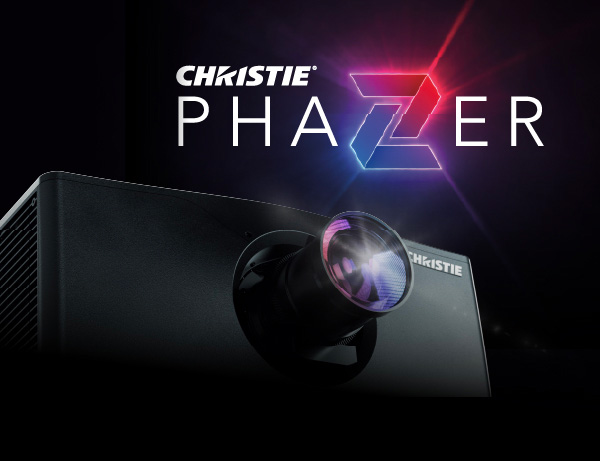
The Next PHAZE of Cinema Illumination is Here!
The new cinema hybrid illumination projectors from Christie® combine RGB pure laser with laser phosphor to create a new level of visual performance for small-to-medium sized theatres. Designed with market-leading energy efficiency to keep operational costs low, these new projectors make a perfect transition point for theatres and post-production houses waiting to upgrade to laser projection. Are you ready to enter the next Phaze of cinema illumination?
