




Last week’s Marquee was a bit of an editorial experiment. For the first time in 19 years, we used what could fairly be called a clickbait headline.
Playing off a joke made by Regal CEO Eduardo Acuña while being honored at the Variety Boys & Girls Club of Boyle Heights sponsorship gala, we put his phrase “natural stupidity” alongside his name in the headline. Given that Acuña began his acceptance speech by telling the friends and family responsible for putting him in the spotlight, “You all suck,” we figured he would probably get the joke.
We wondered whether anyone else would.
Apparently, clickbait became clickbait for a reason. Last week’s newsletter generated nearly triple our usual open rate and was forwarded thousands of times. Hundreds of you clicked through to the Variety Boys & Girls Club donation page, which was an even better result.
Before anyone gets nervous, we won’t be making a habit of it. One clickbait headline in 19 years still feels like a reasonably restrained average.
A few readers also suggested Acuña copyright or trademark the phrase “natural stupidity.” We’ll pass along the advice. He had more pressing matters last week.
On Tuesday, Acuña was likely among those participating in meetings of Cinema United’s executive board as the trade organization representing movie theatre operators drafted and ultimately sent a joint letter to Paramount Skydance CEO David Ellison and California Attorney General Rob Bonta. The letter urged both parties to meet and discuss a settlement of the ongoing antitrust lawsuit seeking to block Paramount Skydance’s USD $110 billion acquisition of Warner Bros. Discovery.
The development was breathlessly reported in some quarters as Cinema United reversing its opposition to the merger, particularly after Regal and Cinemark joined AMC in expressing support for a path toward completing the transaction.
Except Cinema United didn’t endorse the merger. Neither, for that matter, did Regal or Cinemark without conditions.
While supposedly on holiday dropping my daughters off at college, I spent much of last week going back through Cinema United’s public statements since January, reading antitrust filings and trying to determine what had actually changed. The resulting deep dive is considerably longer than anything sensible to reproduce here, but the short answer is: much less than some of the headlines suggested.
Cinema United has consistently warned about reduced film output, shorter theatrical windows, increased film rental, diminished programming flexibility and access to studio film libraries. What changed last week was not the organization’s concerns, but its willingness to say that if those concerns could be addressed through specific, enforceable protections, then Bonta and Ellison should sit down and see whether a settlement was possible.
Keeping the piece current proved nearly impossible. Paramount sought a USD $1.88 billion bond. Settlement discussions appeared to be on, then became more complicated, then a meeting scheduled for Monday was canceled only hours before it was supposed to begin amid another round of accusations and denials.
At some point we simply had to publish.
The Paramount-Warner story will almost certainly have changed again by the time some of you read this. That may be the larger lesson. The fastest-moving stories are often the ones worth slowing down for.
Headlines are easy. Context takes a little longer. We’ll keep doing the hard work to provide the context and focus on what actually matters — even if, every 19 years or so, we can’t resist a little headline experimentation.
India’s Premium Cinema Market Is Getting a Lot More Crowded
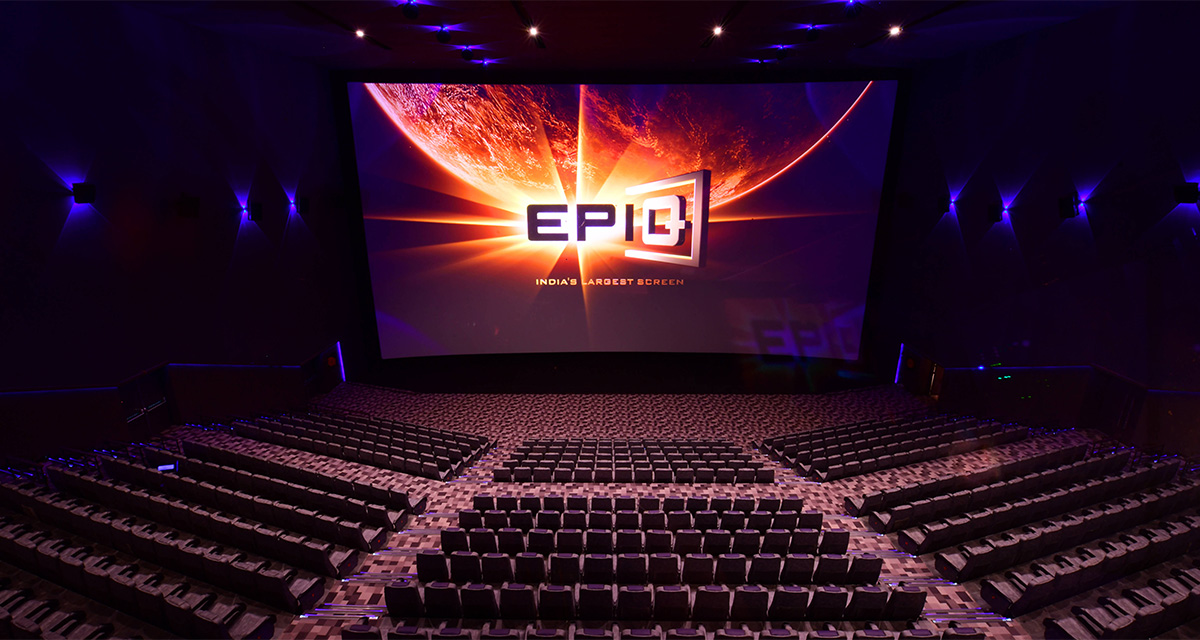
India’s premium large format market is beginning to look considerably more competitive, with Qube Cinema planning a major expansion of its homegrown EPIQ format just as two new direct-view LED concepts arrive in the country.
Qube currently operates around 12 EPIQ screens and expects to reach approximately 20 by the end of 2026. More significantly, the Chennai-based cinema technology company plans to roll out 30 EPIQ screens equipped with Dolby Vision and Dolby Atmos over the next three years. The first location featuring both technologies is expected to open in Kerala later this year.
Qube co-founder Senthil Kumar says the expansion is being driven by demand for premium experiences, which are generating higher occupancy and per-screen revenue. EPIQ is currently limited to India, though Qube ultimately hopes to expand the format internationally once it gains broader support from Hollywood studios. Sony recently supported EPIQ for “Spider-Man: Brand New Day,” but Qube says it will need similar backing from the other majors to take the format abroad.
And EPIQ suddenly has more company at home. As the Indian exhibition industry gathered in Chennai for Big Cine Expo, GDC Technology announced that Vettri Theatres had installed India’s first acoustically transparent Tricorne Premium LED screen at its VOLT auditorium. Meanwhile, HeyLED, developed by Timewaying and supplied through UFO Moviez, is powering the first Magnova PLF auditorium in Kochi with a 14-metre 4K direct-view LED screen and Dolby Atmos.
The technologies and business models differ, but the direction is the same. Indian exhibitors are increasingly betting that audiences will pay more for a demonstrably premium theatrical experience—and suppliers are lining up with plenty of different ideas about what that experience should look like.
Source: The Times of India
Kinepolis Says the Cinema Industry Had a Supply Problem, Not a Demand Problem
Kinepolis has spent the past several years arguing that moviegoing demand remained intact if Hollywood could provide enough films to satisfy it. Its record first-half results for 2026 give CEO Eddy Duquenne some fairly compelling receipts.
The Belgian exhibition group welcomed 19.1 million moviegoers during the first six months of the year, a 33.8% increase over 2025, while revenue climbed 32.6% to €341.8 million (USD $XX million). Profitability increased even faster, helped by Kinepolis’ continued emphasis on premium experiences. The results also benefited from the February acquisition of 14 Emagine cinemas in the United States.
A stronger film slate did much of the heavy lifting. “Avatar: Fire and Ash” and “Zootopia 2” carried momentum into the first quarter, while “The Super Mario Galaxy Movie,” “Michael,” “Project Hail Mary” and “Toy Story 5” helped drive the second. Strong local films in France and Spain provided additional support. Kinepolis says the third quarter has started particularly well thanks to “The Odyssey” and “Spider-Man: Brand New Day.”
Duquenne said the results confirmed what Kinepolis has maintained for some time: the sector faced a “supply issue rather than a demand issue.” That supply problem now appears to be easing just as the company is getting larger. Kinepolis is also in the process of acquiring 13 Showcase Cinemas in the United States, following its Emagine purchase earlier this year.
For an industry that spent years waiting for the release calendar to normalize, Kinepolis is providing some useful evidence of what can happen when it finally does.
Source: Celluloid Junkie
One Screen, £2.7 Million: “The Odyssey” Sets a BFI IMAX Record
Christopher Nolan’s “The Odyssey” has conquered plenty of box office records since opening in July, but one of the more revealing comes from a single 500-seat auditorium in London.
The BFI IMAX has generated GBP £2.7 million (USD $3.7 million) in ticket sales for Universal Pictures’ epic, making “The Odyssey” the highest-grossing film in the venue’s history. More than 101,000 tickets have been sold, pushing the film past the GBP £2.5 million (USD $3.41 million) record previously held by “Avatar.”
Demand was evident well before opening day. The BFI sold 28,000 advance tickets during the first 24 hours of sales, worth GBP GBP £750,000 (USD $1.02 million), and the film generated GBP £220,000 (USD $300,000) during its opening weekend alone. The BFI IMAX is now the highest-grossing IMAX location for “The Odyssey” outside North America and ranks second worldwide behind the TCL Chinese Theatre in Los Angeles, a venue with nearly twice its seating capacity.
The London result is particularly striking because “The Odyssey” has already become the highest-grossing IMAX release globally, with the format generating $289 million in less than a month and accounting for more than 26% of the film’s worldwide box office at that point.
There are plenty of ways to interpret those numbers, but perhaps the simplest is this: audiences aren’t merely paying to see “The Odyssey.” A significant number are paying a premium to see it in a particular way. For exhibitors investing heavily in PLF auditoriums, that distinction matters.
Source: Screen Daily
NEON Turns “Hope” Into a One-Night PLF Event.
NEON is giving Na Hong-jin’s “Hope” a one-night early-access event across 175 premium-format locations, another example of distributors using PLF as a marketing tool rather than simply an upgraded ticket option.
On September 7, two days before the film’s nationwide theatrical release, “Hope” will screen at 175 premium-format locations across the United States. The event spans six formats and technologies, including Dolby Cinema, 4DX, ScreenX, Barco HDR, D-BOX and Dolby Atmos, with participating cinemas in New York, Los Angeles, Chicago, San Francisco, Dallas and other markets.
The strategy is not entirely new for NEON. The distributor used advance premium-format screenings to generate word of mouth for Osgood Perkins’ “The Monkey,” which ultimately earned $40 million theatrically. With “Hope,” however, NEON is substantially widening the approach across multiple PLF brands and 175 locations.
That makes the rollout interesting beyond the film itself. Premium formats have traditionally been viewed primarily as a way to increase average ticket prices once a movie is already in theaters. Increasingly, distributors are treating them as part of the launch campaign—giving fans early access, creating scarcity and turning the theatrical experience itself into something worth marketing.
Source: Celluloid Junkie
Sponsor Spotlight
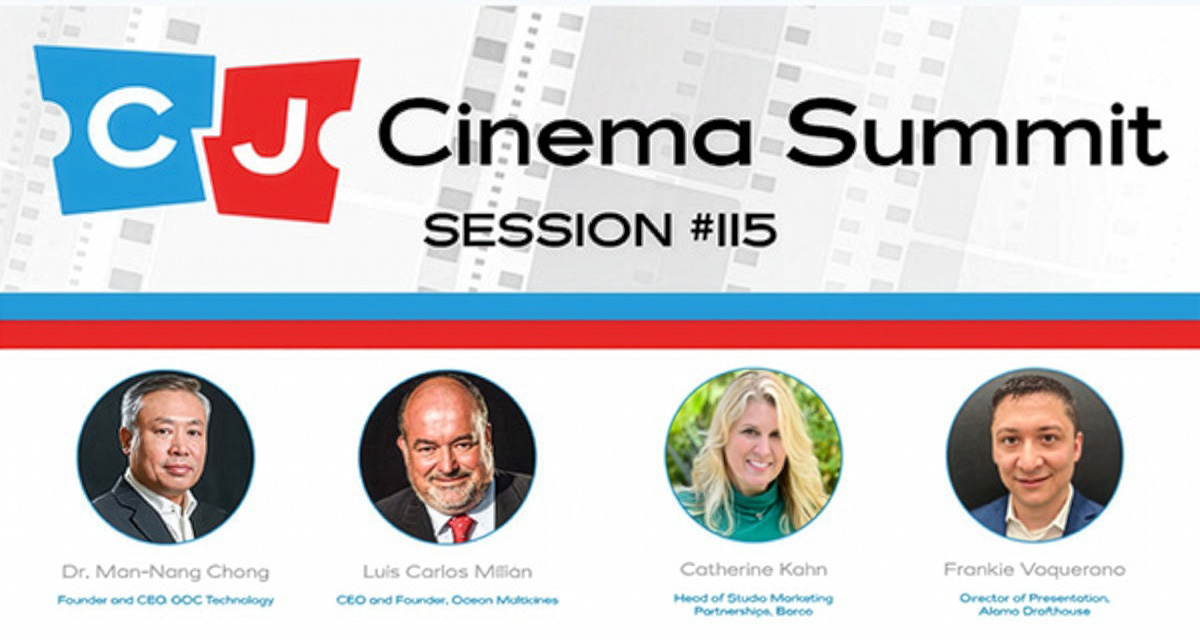
HDR, LED and the Next Wave of Premium Cinema Presentation
Premium cinema presentation is moving beyond any single format, feature or screen size. In CJ Cinema Summit #115, executives from GDC Technology, Barco, Odeon Multicines and Alamo Drafthouse explore the technologies shaping the next generation of theatrical presentation, from HDR and LED cinema screens to the operational and investment questions exhibitors face when evaluating them. The conversation examines where innovation is actually improving the audience experience… and moving the needle for cinemas.
