





The biggest movie in the world last weekend came out seven years ago. “Avengers: Endgame Encore,” a re-release of Marvel Studios’ 2019 blockbuster, earned USD $86 million globally, including USD $26 million in North America. That was enough to make it the No. 1 movie worldwide and give it the second-biggest global opening ever for a theatrical re-release.
There are at least two ways to interpret that. One is that Hollywood is not giving audiences enough new movies they actually want to see, forcing moviegoers to show up for a familiar blockbuster from 2019. Given the industry’s perennial discussion about theatrical supply, that explanation will undoubtedly find some takers.
The problem is that the rest of the weekend doesn’t exactly cooperate. In North America, Sony’s “Resident Evil” earned USD $23 million in its second weekend, admittedly, down 61% from its opening weekend. Paramount’s new “Heart of the Beast” bowed to USD $20 million. A24’s “Primetime” debuted with USD $19.2 million, the distributor’s third-biggest opening ever.
In other words, four very different movies finished within roughly USD $7 million of one another at the top of the box office. Audiences showed up for a seven-year-old Marvel movie, a second-week horror release, a new Brad Pitt studio picture and a decidedly less mainstream A24 crime drama.
So perhaps the more interesting question isn’t why audiences chose an old movie instead of new ones, even if it is one of the highest grossing titles of all time. It’s how Disney managed to turn a movie that has been widely available for years — including on Disney+ — into USD $86 million of new theatrical business.
To be fair, Disney didn’t simply dust off the old DCP and ask everyone to assemble once again. “Endgame Encore” was positioned as a bridge to December’s release of “Avengers: Doomsday,” with new material connected to the upcoming film. Everyone received an exclusive look at “Doomsday,” while audiences seeing the movie in IMAX and Disney’s new Infinity Vision premium-screen program received an additional sneak peek.
And that’s the part that is particularly interesting.
Back in June, Disney’s Head of Global Theatrical Distribution, Andrew Cripps, explained at the ICTA Cinema Technology Experience in Barcelona why the company was creating Infinity Vision. Disney could effectively market globally recognized brands such as IMAX, Dolby Cinema and ScreenX. What it couldn’t realistically do was separately market the more than 75 exhibitor-owned premium large format brands in North America and more than 320 around the world. Infinity Vision was intended to provide a common marketing umbrella for qualifying premium auditoriums.
There was also a rather large Avengers-shaped reason to get it working. As Cripps acknowledged at the time, “Avengers: Doomsday” will not have IMAX screens available when it opens in December. Disney therefore needed another way to market premium presentation at scale.
If “Endgame Encore” was supposed to be the test run, well… consider it tested.
More than 1,300 Infinity Vision screens accounted for roughly 52% of the re-release’s opening-weekend business. IMAX, meanwhile, generated USD $13.7 million worldwide, including USD $4 million domestically.
None of that suggests IMAX suddenly matters less. Quite the opposite: USD $13.7 million from one premium format on a seven-year-old movie is not exactly a disappointing result. But it does suggest that IMAX doesn’t have to be the only premium engine capable of driving a major event release. With three months before “Doomsday” arrives IMAX, that has to be a relief for Disney.
There is, perhaps, a bigger lesson here, and it turns up repeatedly elsewhere in this week’s Marquee. HYBE is building a week-long global cinema festival around concert films and live broadcasts. “V for Vendetta” is turning its 20th anniversary (and the fifth of November) into a theatrical occasion. Twenty-year-old “Doctor Who” episodes are being rebuilt into a movie-length cinema event. Festivals and film markets are experimenting with more direct routes from their programs into commercial theatres.
It is tempting to describe all of this using the industry’s familiar refrain that consumers need an “experience” compelling enough to get them off the couch. Though that may be true, it’s the kind of thing that has been said at just about every cinema conference for the past decade.
I would suggest something more interesting is happening. Traditionally, the theatrical business has relied heavily on new movie with new marketing campaigns and opening weekend headlines before moving on to the next release.
What “Endgame Encore” demonstrates is that theatrical demand can also be created around familiarity if handled properly. A movie doesn’t necessarily have to be new if the reason to see it theatrically is.
That doesn’t solve the cinema industry’s need for a steady supply of compelling new films. But USD $86 million for a movie released in 2019 makes a persuasive case that theatrical inventory may be considerably larger than whatever happens to be opening next Friday.
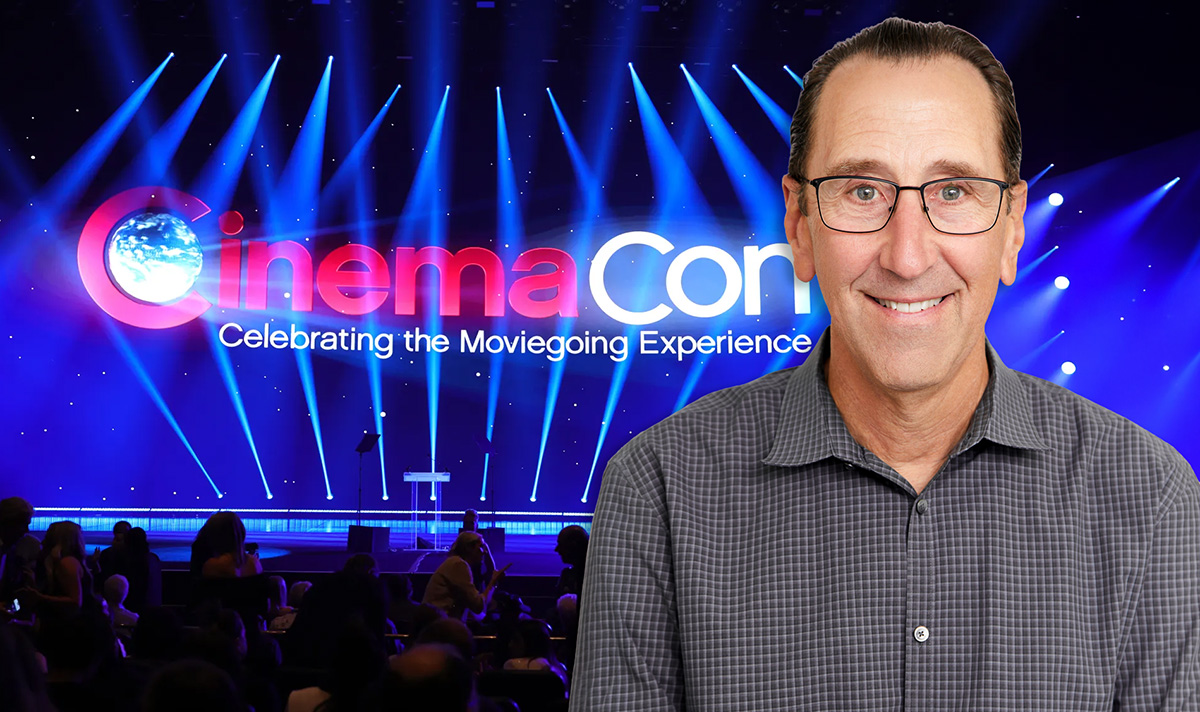
Cinema United Announces Leadership Changes as Neuhauser Plans 2028 CinemaCon Exit
Cinema United used this week’s Fall Summit in Los Angeles to announce several leadership changes, most significantly that longtime CinemaCon Managing Director Mitch Neuhauser will retire following the 2028 show. Matt Pollock, who has worked alongside Neuhauser for nearly two decades, becomes co-managing director immediately and will take over the lead role after Neuhauser departs on 30 June 2028.
That’s an unusually long runway which is arguably necessary. Neuhauser has been closely identified with CinemaCon since helping transform ShoWest into the association-owned event in 2011, and announcing Pollock’s succession nearly two shows in advance removes any uncertainty around one of the exhibition industry’s most important annual gatherings.
Cinema United also promoted Amanda Martin from chief of staff to the newly created role of SVP, External Affairs, where she will oversee advocacy, strategic partnerships and educational programming, while Erin Von Hoetzendorff becomes VP, Membership and Global Affairs with an expanded mandate covering international exhibitors.
Those moves suggest the association is strengthening more than its internal management structure. Advocacy, global membership and industry partnerships have all become more central to Cinema United’s remit in recent years, particularly as the organization has sought a broader role beyond its traditional focus on domestic exhibition.
Meanwhile, Margot Robbie and Jason Blum joined Cinema United’s Filmmaker Leadership Council, alongside Jerry Bruckheimer, Emma Thomas, Ryan Coogler, Brad Bird, Jason Reitman and Celine Song. These announcements look less like routine personnel changes than an effort to put the pieces in place for Cinema United’s growth, including an orderly CinemaCon succession, a wider international reach and closer ties between exhibitors and filmmakers.
Source: Celluloid Junkie
Event Cinema Starts Looking Less Alternative
The autumn theatrical calendar is filling up with programming that would once have been relegated to the catch-all category of “alternative content.” HYBE Cine Fest 2026 may be the clearest example yet of how much that definition has expanded. The week-long global program includes live cinema broadcasts of BTS concerts from Buenos Aires and São Paulo, concert films from Seventeen, Tomorrow X Together and Enhypen, a participatory HYBE Cheering Party and, at selected locations, merchandise, photo zones and other fan experiences. The festival will reach more than 60 territories in October.
Music programming is hardly stopping there. “Ozzy & Black Sabbath: Back to the Beginning,” documenting Osbourne’s final performance with Black Sabbath, begins a limited worldwide cinema run on 28 October, while “Rammstein – Live in Mexico City” follows on 4 November. The latter is already confirmed for roughly 1,200 cinemas across 45 countries, turning three sold-out stadium concerts filmed in 2022 into new theatrical inventory four years later.
Nor is the opportunity limited to concert films. Nor is the opportunity limited to concert films. Fathom Entertainment, Saga Arts and Warner Bros. are bringing “V for Vendetta” back to theatres on 1 and 5 November for its 20th anniversary, complete with an exclusive featurette from director James McTeigue. Naturally the re-release is being built around the film’s famously significant date turns a familiar catalogue title into something closer to an annual occasion than a conventional repertory booking.
Then you have BBC Studios, CinemaLive and Fathom Entertainment who are bringing “Doctor Who: The Satan Pit Extended Cut” to more than 1,000 cinemas across six countries on 23 November for Doctor Who Day. Two television episodes first broadcast 20 years ago have been re-edited into a movie-length presentation with restored deleted scenes, previously unseen extended footage and an exclusive filmmaker interview.
At some point, if there is enough “alternative content” filling cinema calendars around the world, the industry may have to stop calling it alternative.
Source: Celluloid Junkie
Bleecker Street and Marcus Theatres Recruit for a Changing Theatrical Market
Two executive moves this week highlight the kind of experience theatrical companies are prioritizing as they increasingly compete for audiences.
Bleecker Street named Frank Martinez its new head of distribution, bringing him over from A24, where he spent three years as head of theatrical sales. Martinez will oversee theatrical strategy, planning and execution for both Bleecker Street and its Crosswalk label. During his tenure at A24, the distributor’s annual domestic box office grew from USD $151 million in 2023 to more than USD $333 million so far this year, with Martinez working on releases including “Backrooms,” “Civil War,” “The Drama” and “Materialists.”
His arrival also completes an interesting bit of industry musical chairs. Martinez replaces Kyle Davies, who left Bleecker Street in August to lead distribution at AMC Theatres’ newly formed Leawood Films. In the span of a month, Bleecker Street has lost its distribution chief to an exhibitor entering distribution and replaced him with an executive from one of the most aggressive independent theatrical distributors in the market.
Meanwhile, Marcus Theatres has appointed Shannah Miller senior vice president of marketing and sales, effective 19 October. Miller joins from Fathom Entertainment, where she served as vice president of marketing and helped market more than 100 theatrical releases annually across anime, music, faith-based programming, repertory films, gaming, sports and original content.
That background feels particularly relevant at a moment when exhibitors are looking well beyond conventional studio releases to fill screens and reach specific audiences. Marcus isn’t entering the event-cinema business — it is already very much in it — but hiring an executive whose recent work has centered on turning specialized content into theatrical events suggests how important that part of the programming mix has become.
Neither appointment is revolutionary on its own. Together, however, they reflect a theatrical business in which the skills needed to find audiences, position films and create reasons to visit cinemas are becoming increasingly transferable across what were once much more clearly separated parts of the industry.
Source: Variety
Festivals and Film Markets Find New Routes Into Cinemas
Film festivals and markets have traditionally helped movies find distributors, buyers and industry attention before audiences encounter them in commercial cinemas. Now, a trio of recent initiatives suggests that pathway is becoming considerably less linear.
The Netherlands Film Festival partnered with private-cinema operator TheAnyThing to make opening-night film “Downtown” available simultaneously with its official premiere on 25 September in three two-seat auditoriums at Pathé Utrecht Leidsche Rijn. The collaboration extends beyond opening night, with a dedicated NFF collection available across TheAnyThing’s five Dutch locations, where customers choose both the movie and their preferred starting time from a catalogue of more than 2,000 titles. The festival isn’t merely promoting theatrical attendance; it is experimenting with a form of exhibition that borrows some of the convenience consumers associate with streaming while keeping the transaction firmly inside a cinema.
In the United States, Harlem Film House has expanded its partnership with LOOK Dine-In Cinemas to give selected films from the 2027 Hip Hop Film Festival a direct route into commercial theatrical engagements. Titles chosen through the program can play LOOK locations in New York, Los Angeles, Atlanta, Washington, D.C. and Texas. It fits neatly with the festival’s “Checks Not Trophies” philosophy: instead of treating a festival screening as the destination, the partnership is designed to turn festival exposure into revenue-generating theatrical distribution.
Even the American Film Market is opening its screening rooms a little wider. At November’s AFM, select sales companies and producers will be able to invite members of AMC Stubs A-List and the Los Angeles-based B-List Movie Club into screenings and slate presentations at AMC Century City 15. AFM is also adding World and Market Premieres, slate showcases and “Amplified Screenings” incorporating hospitality, concessions and red-carpet elements. That gives filmmakers and sales agents something market screenings don’t normally provide: feedback from actual frequent moviegoers alongside the buyers and industry executives traditionally sitting in the room.
None of these models is likely to replace the familiar festival-to-sales-agent-to-distributor-to-exhibitor chain. But all three create additional shortcuts through it. At a moment when independent films are fighting particularly hard for theatrical attention, festivals and markets are becoming less content simply to showcase movies and increasingly interested in helping them reach moviegoers.
Source: American Film Market
PaperAirplane’s Hangar Passes Two Million Downloads as Cinema Marketing Goes Social
PaperAirplane Media‘s The Hangar has surpassed two million downloads of studio-approved digital marketing assets, a significant milestone for a platform launched in October 2020 to solve the rather mundane but logistically convoluted problem of getting the right promotional materials into exhibitors’ hands quickly.
The scale of The Hangar has changed considerably since then. Annual asset additions grew from 2,454 in 2020 to more than 61,000 in 2025, while the number of participating studios, distributors and content partners increased from 11 to more than 105. The platform now serves 27 territories and averages approximately 1,800 unique users each month.
And what are those users downloading? During the summer, social-media video represented 27% of downloads and social graphics another 23%. Digital lobby posters accounted for 19%, followed by web banners at 12% and production stills at roughly 8%. In other words, half of the assets exhibitors pulled from The Hangar were destined for social media.
That is a useful snapshot of how local theatrical marketing has evolved. Exhibitors still need a poster in the lobby, but nowadays they also need a steady supply of video, graphics and other ready-to-use material capable of reaching moviegoers well beyond the cinema itself (that’s a fancy way of saying TikTok and Instagram). The Hangar’s two-million-download milestone therefore says as much about the growing volume and complexity of marketing an individual theatrical release as it does about the success of the platform distributing the assets.
Source: Celluloid Junkie
Sponsor Spotlight
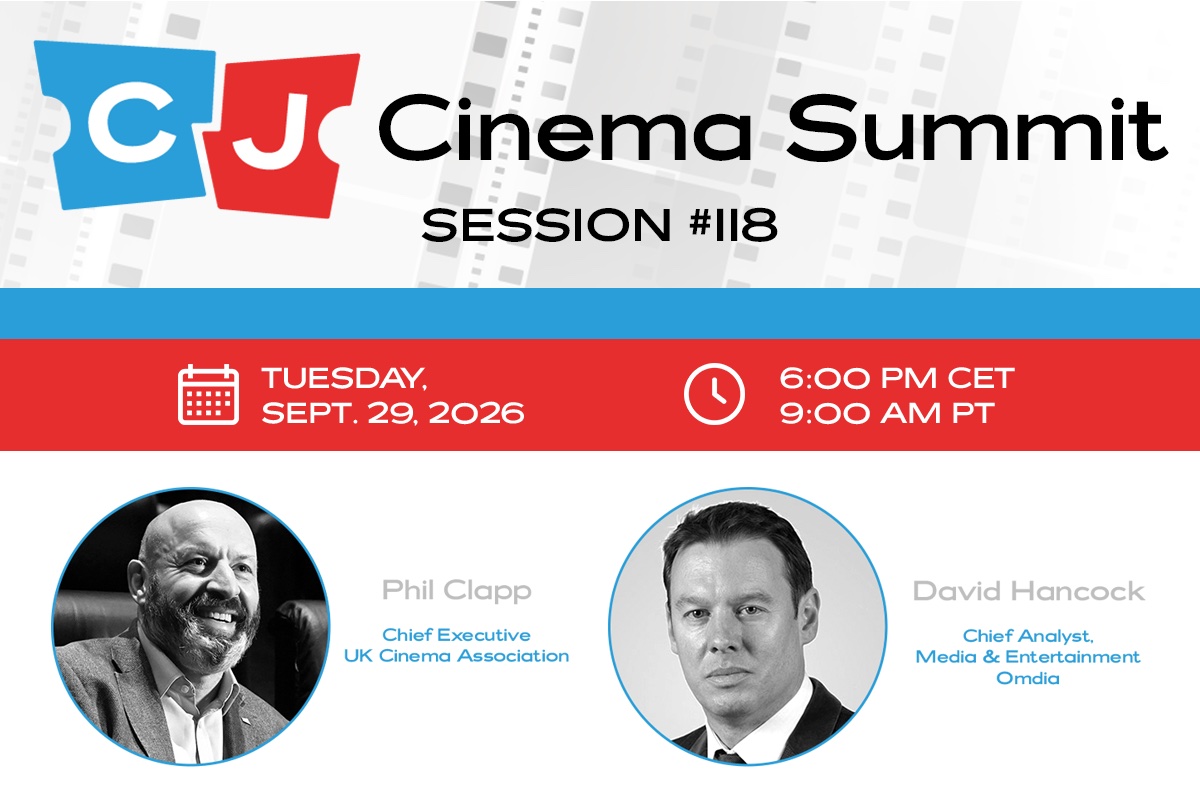
Where Is Global Cinema Really Recovering?
If you missed the latest CJ Cinema Summit this week, have no fear. You can view it on demand. Phil Clapp of the UK Cinema Association and David Hancock of Omdia dissected the latest global cinema research from the CNC in France. The report shows how recovery looks different from one market to the next and makes an argument that the industry should probably stop using the word recovery altogether.
