


- Cinema Equipment
- Exhibitors
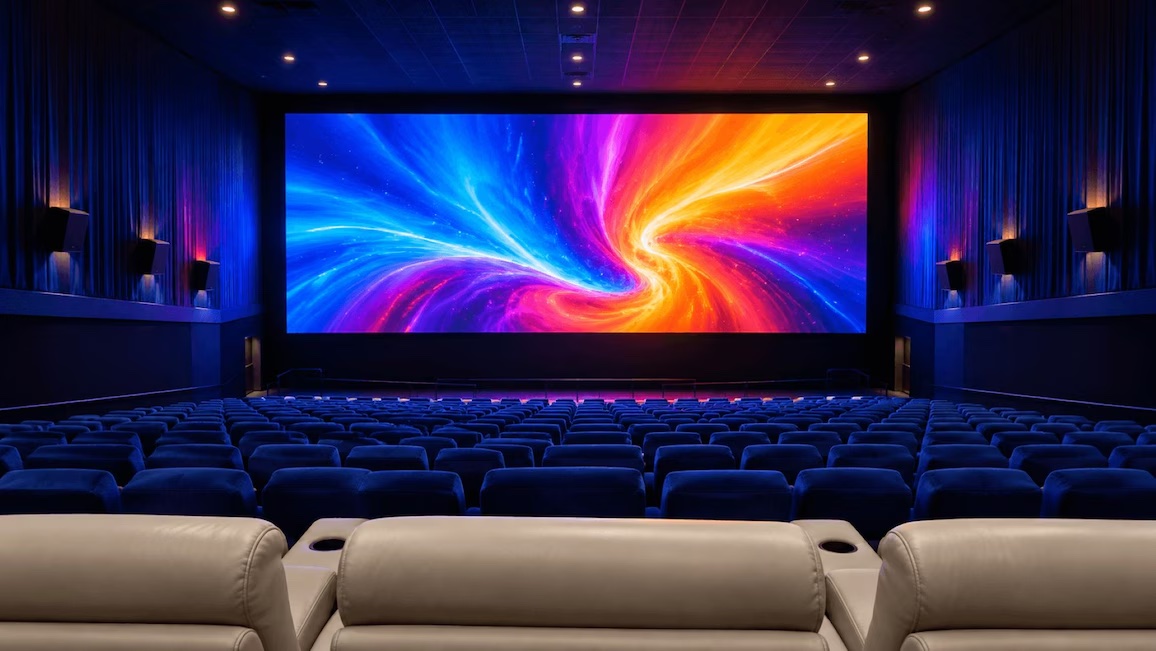
Cinema LED has spent years being discussed as the next big thing in theatrical presentation. Lately, however, it has been doing something more useful: turning up in actual cinemas. Within a matter of weeks, four different LED projects were announced or opened across the U.S., Brazil and Hungary.
In Pennsylvania, Oaks Center Cinema is building what will be the world’s first theatrical auditorium combining a Samsung Onyx direct-view LED screen with D-BOX motion seating. The 38-foot display and 41 D-BOX recliners are scheduled to open in December.
Meanwhile, in Texas, Schulman Theatres installed North America’s first acoustically transparent Tricorne Premium LED cinema screen at Film Alley Bastrop. The screen is part of the circuit’s SPX Direct premium-format auditorium and supports HDR, high frame rates and 3D presentation.
GDC Technology also announced that São Paulo’s historic Nu Cine Copan will install a 20-meter Tricorne Premium LED screen when the restored 440-seat cinema reopens next year. The company says it will be the world’s first acoustically transparent native 8K LED screen designed specifically for a premium large-format cinema auditorium.
And in Budapest, in a deal initially announced in June, Lurdy Cinema has opened an auditorium with a 62-square-meter Samsung Onyx 4K display, giving Central and Eastern Europe its first Onyx LED cinema.
Any one of those installations would be easy to dismiss as another showcase for a technology that remains a tiny fraction of the world’s cinema screens. Four within a few weeks starts to look more like a pattern. The interesting part is not that every exhibitor is suddenly ripping out its projectors. They clearly aren’t. It is that LED is increasingly becoming a legitimate commercial option, adopted by different operators, from different manufacturers, in different countries and in increasingly varied premium configurations.