





If this week’s settlement over Paramount’s USD $110 billion acquisition of Warner Bros. Discovery has made one thing clear, it is how difficult it has become to know what we’re supposed to believe.
That is hardly a problem confined to Hollywood. Across politics and business, institutions ask us to accept an assurance today and make sense of a seemingly contradictory announcement tomorrow. The film industry simply projects the contradiction on a larger screen, often quite literally.
A company tells us its future is bright while exploring a sale. An attorney general says he has resolved his concerns about a merger he still does not support. A studio promises to make more movies, and the cinema operators who depend on those movies want that promise written into a federal court order.
These positions can all be explained. But exhibitors must make programming and business decisions now based on commitments that extend years into the future. That makes knowing which promises they can count on more than a philosophical exercise.
California Attorney General Rob Bonta provided the week’s most elaborate example. After spending the summer trying to block Paramount’s acquisition of Warner Bros. Discovery, he announced a settlement that resolves the states’ antitrust concerns. He said, “I don’t think these two companies should merge,” while stressing that the agreement was “not a vote of support for this merger.”
Both positions can be sincere. Bonta may still believe the companies should remain separate while concluding that a settlement offers more certain protections than continued litigation. If you want the version that fits on a bumper sticker, though: The merger is bad. The settlement is good. Please read the court filing for details.
The harder part is reconciling that outcome with Bonta’s earlier argument that a structural problem required structural remedies. Paramount is not required to sell a studio or cable network before acquiring Warner Bros. Instead, the proposed consent decree relies largely on behavioral rules governing what the combined company must do afterward.
Sure, the rules are significant. Output commitments, theatrical windows, film-rental protections and catalogue access would have considerably more force in a court order than in a CinemaCon presentation. Apparently sincerity is even more reassuring when backed by an independent monitoring trustee.
Still, the need for one tells us something. Hollywood’s problem is not a shortage of promises. It is how little confidence anyone has that a promise will survive a change in ownership, management or economic circumstances. We examined the settlement’s protections and limits in our full analysis. Exhibitors secured terms worth having. They did not preserve Paramount and Warner Bros. as independent film suppliers.
Then there is Cineplex, which offered a different variation on the theme. Canada’s largest cinema chain reported its strongest August box office on record. This week it appointed Bill Walker CEO, with its board declaring him “exceptionally well positioned to lead Cineplex,” while simultaneously announcing a strategic review that could include selling the company.
Walker says he is excited about Cineplex’s prospects. The board says the market may undervalue its business. Those ideas fit together: a buyer might pay shareholders for potential the share price does not reflect. The review may also end without a transaction.
But there is a comic economy to announcing a promising new chapter and, in the same press release, asking whether somebody else would like to own the book. The board praised Walker’s “transaction experience and strategic perspective.” Take that for what you will.
This is the atmosphere in which the entire film industry is being asked to plan and execute. A cinema operator cannot wait five years to learn whether a release commitment meant what it appeared to mean. Employees at Cineplex cannot know what a strategic review will produce simply because everyone involved expresses confidence. Both groups must carry on while the people making decisions reserve the right to change course.
Perhaps the only proposition anyone still has faith in is that a billionaire with enough money and determination will eventually find a way to get what they want. Ergo, David Ellison just got the settlement he needed.
The Paramount deal has yet to close, and the proposed consent decree still requires court approval. Cineplex may never be sold. Those distinctions are important to remember. So is what happens after the announcements fade.
Trust will not return because a press release calls an outcome the best possible one. It will depend on whether the people behind these commitments keep their word when doing so becomes inconvenient.
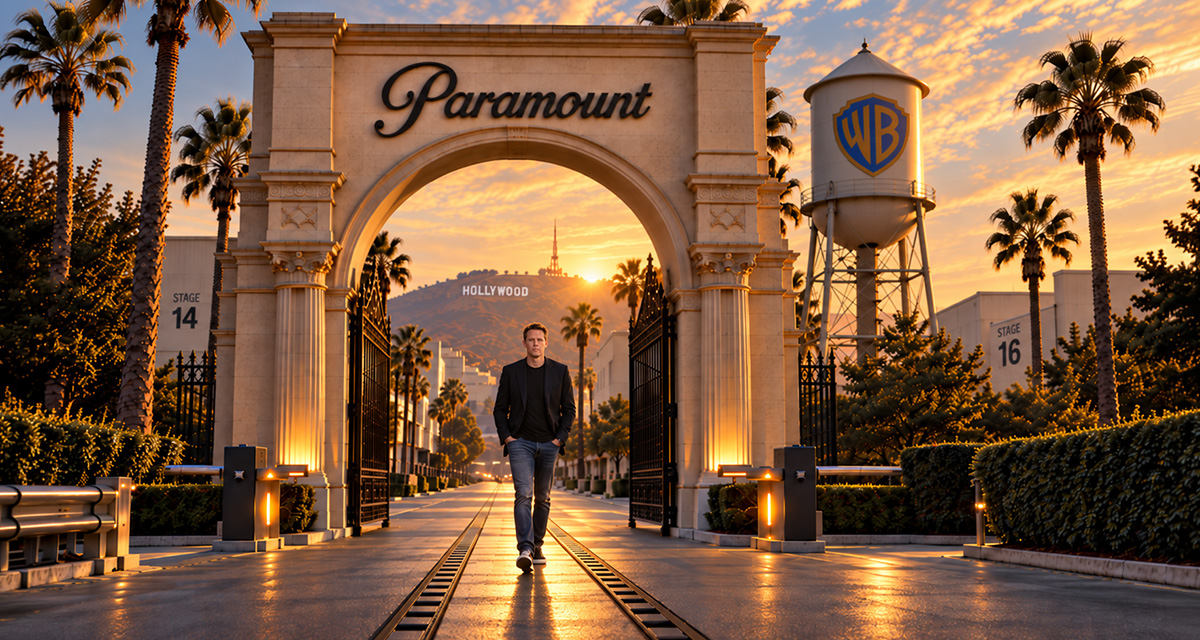
Paramount-Warner’s Protections for Movie Theatres Come With an Expiration Date
California and 11 other states have reached a proposed settlement of their challenge to Paramount Skydance’s acquisition of Warner Bros. Discovery. For cinema operators, it would put more than a headline promise to release 30 films a year into a federal court order. The agreement sets annual release targets, theatrical windows, protections around film-rental terms and continued access to both studios’ catalogues. Those commitments would technically become enforceable if the court approves the decree.
That result is better than what movie theatres got when Disney acquired Fox in 2019. Assuming Paramount complies, it could be particularly meaningful for smaller operators that cannot negotiate such protections on their own. But the agreement requires no studio or cable network sale before the merger. Paramount and Warner Bros. would become one company, while most of the theatrical obligations last five years. Paramount may also ask the court to modify the decree after two full commitment years; that is an opportunity to make its case, not an automatic exit.
Cinema United says the settlement accomplishes many of exhibition’s objectives. It does not resolve every concern the group raised, including explicit protection for theatres’ programming autonomy. Nor can any single exhibitor enforce the decree directly; that responsibility rests with the states.
In our full analysis, we examine what exhibitors secured, the behavioral guarantees Bonta accepted in place of the structural remedies he sought, and why this agreement may become a starting point the next time two major studios try to combine.
Source: Celluloid Junkie
Cineplex Names Bill Walker CEO as Board Explores a Sale
Canada’s largest cinema operator has named Bill Walker as its new chief executive while simultaneously launching a strategic review that could result in the sale of the company. Walker succeeds longtime CEO Ellis Jacob, who will remain as a special advisor to the board through the end of 2026 while the review is underway. Cineplex has retained Goldman Sachs and TD Securities as financial advisors.
Walker is hardly an accidental choice for a company considering its strategic options. He previously spent nine years leading Landmark Cinemas, Canada’s second-largest exhibitor, and played a key role in its 2017 sale to Belgium’s Kinepolis Group before continuing to run the circuit under its new ownership. Cineplex chair Phyllis Yaffe specifically cited Walker’s “transaction experience and strategic perspective” in announcing his appointment. (Note: Read between the lines.)
What makes the timing particularly interesting is that Cineplex hardly appears to be hanging a “distressed asset” sign in the window. Just nine days earlier, the company reported CAD $98 million in August box office revenue, the highest monthly total in its history, capping its strongest summer ever. August box office doubled year over year, while roughly 54% of revenue came from premium experiences. Theatre food service revenue also reached a company record.
Indeed, Cineplex says the reason for examining its options is essentially the opposite: the board believes the company’s current market valuation may not fully reflect the strength of the business and its longer-term prospects. The review could result in a sale, another transaction or no transaction at all, and there is no timetable for completing it.
For an exhibition sector that has spent much of the post-pandemic period talking about recovery, Cineplex presents an intriguing variation on the theme: what happens when business is improving, the box office is setting records and shareholders begin wondering whether that makes now an especially good time to sell?
Source: Celluloid Junkie
Immersive Cinema Goes Global… and Local
Exhibitors are adding immersive formats on several continents at once. Pathé will open four ScreenX auditoriums across France, Belgium and the Netherlands by year’s end, while HOYTS plans three more, including its first in New Zealand. These are additions to existing partnerships, rather than one-off experiments.
Argentina-based Lumma is growing on a parallel track. Cinemark is adding a 4D E-Motion auditorium at Buenos Aires’ Abasto Shopping, opening 12 October. OCINE has opened its fifth in Spain, and Omniplex has inaugurated Scotland’s first at its Glasgow Renfrew Street cinema. Cinemark and OCINE both point to audience demand as reasons to keep expanding, though the announcements do not give us comparable financial results for the auditoriums.
The more revealing development may be on the content side. M Studio, Channel 3 and CJ 4DPLEX are bringing the Thai film “Thi Yod: Saming Khao Khwang” to ScreenX on 30 September, describing it as the first Thai film presented in the format. M Studio says its forest, action and horror elements made it a creative fit for the panoramic presentation. A local production is being adapted for ScreenX, rather than the format relying solely on imported Hollywood releases.
More installations show exhibitors investing in experiences they cannot offer in a standard auditorium. Whether each earns its premium over time remains a question for operators. But the Thai release points to the next opportunity: giving those auditoriums a broader slate of films that audiences in each market already want to see.
Source: Celluloid Junkie
RSIFF Pauses as the Middle East Festival Calendar Changes
The Red Sea International Film Festival has postponed its sixth edition to late 2027, leaving a gap in a festival and market calendar that has helped raise the profile of Saudi and regional cinema. The growing Red Sea Souk has brought filmmakers together with international industry partners, while Fund-supported films have travelled well beyond Jeddah: “Four Daughters,” for example, screened at both Cannes and Toronto on its way to an Oscar nomination.
The decision comes amid renewed fighting in Yemen and attacks on Saudi Arabia. The Foundation cites the timing and logistics of staging the festival, but has not said whether the conflict influenced its decision. Its Fund and Labs will continue during the pause.
Meanwhile, the Doha Film Festival will run from 19–27 November in Qatar. It has selected Sara Ishaq’s Yemeni drama “The Station” as its opening film, a welcome reminder of the regional filmmaking that these gatherings can bring to international attention.
And elsewhere in the region, the Dubai International Film Festival plans to return on 8 December 2027, a decade after its last edition. Organizers say it will focus on Middle Eastern cinema and build an industry platform connecting filmmakers, producers and investors. The details of that platform are still to come.
Doha and Dubai have distinct roles to play, but neither replaces the market and funding network built around Red Sea. The question now is whether the filmmakers, projects and partnerships it has championed can keep moving until RSIFF and the Souk return in full.
Source: Red Sea Film Foundation
Sponsor Spotlight

Where Is Global Cinema Really Recovering?
The latest global cinema research shows progress, but recovery looks different from one market to the next. Join Phil Clapp of the UK Cinema Association and David Hancock of Omdia on 29 September 2026 as they use a new CNC study as a starting point for a wider conversation about audiences, pricing, programming and investment.

Celluloid Junkie is the leading online resource dedicated to the global film and cinema business. The Marquee is our newsletter focused on motion picture exhibition; keeping industry professionals informed of important news, the latest trends and insightful analysis