


- Film Festivals
Film festivals and markets have traditionally helped movies find distributors, buyers and industry attention before audiences encounter them in commercial cinemas. Now, a trio of recent initiatives suggests that pathway is becoming considerably less linear.
The Netherlands Film Festival partnered with private-cinema operator TheAnyThing to make opening-night film “Downtown” available simultaneously with its official premiere on 25 September in three two-seat auditoriums at Pathé Utrecht Leidsche Rijn. The collaboration extends beyond opening night, with a dedicated NFF collection available across TheAnyThing’s five Dutch locations, where customers choose both the movie and their preferred starting time from a catalogue of more than 2,000 titles. The festival isn’t merely promoting theatrical attendance; it is experimenting with a form of exhibition that borrows some of the convenience consumers associate with streaming while keeping the transaction firmly inside a cinema.
In the United States, Harlem Film House has expanded its partnership with LOOK Dine-In Cinemas to give selected films from the 2027 Hip Hop Film Festival a direct route into commercial theatrical engagements. Titles chosen through the program can play LOOK locations in New York, Los Angeles, Atlanta, Washington, D.C. and Texas. It fits neatly with the festival’s “Checks Not Trophies” philosophy: instead of treating a festival screening as the destination, the partnership is designed to turn festival exposure into revenue-generating theatrical distribution.
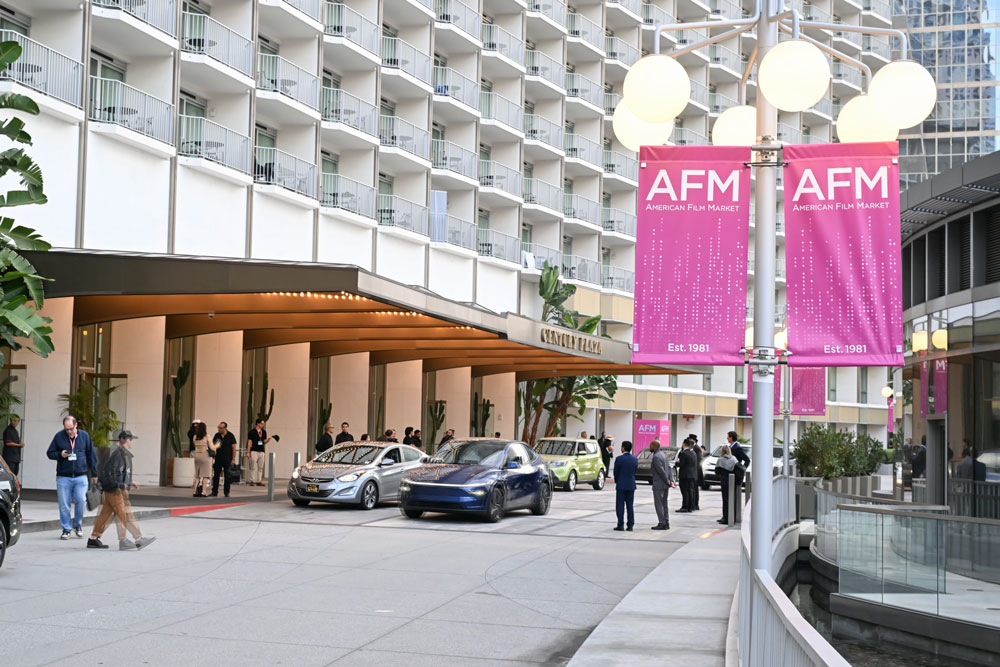
Even the American Film Market is opening its screening rooms a little wider. At November’s AFM, select sales companies and producers will be able to invite members of AMC Stubs A-List and the Los Angeles-based B-List Movie Club into screenings and slate presentations at AMC Century City 15. AFM is also adding World and Market Premieres, slate showcases and “Amplified Screenings” incorporating hospitality, concessions and red-carpet elements. That gives filmmakers and sales agents something market screenings don’t normally provide: feedback from actual frequent moviegoers alongside the buyers and industry executives traditionally sitting in the room.
None of these models is likely to replace the familiar festival-to-sales-agent-to-distributor-to-exhibitor chain. But all three create additional shortcuts through it. At a moment when independent films are fighting particularly hard for theatrical attention, festivals and markets are becoming less content simply to showcase movies and increasingly interested in helping them reach moviegoers.