





There are worse places to spend the last week of August than inside an air-conditioned convention center in Allen, Texas. Outside, temperatures topped 100°F (38°C) well into the evening. Inside, more than 60 cinema operators and 120 vendors and manufacturers gathered for this year’s CinéShow.
North American exhibition is hardly lacking for industry gatherings, but over the past decade CinéShow has grown into arguably the second-most-attended U.S. cinema convention after CinemaCon. Dianne Feffer and the Cinema United of Mid-America team keep panels, the trade show and studio presentations from competing for attention, rather than requiring attendees to be in three places at once. There is even time for the activity at which our industry has traditionally excelled: standing around talking to one another, usually with a drink (or two) in hand.
I was concerned that all anyone would want to talk about was the Paramount-Warner merger, which was still making news as CinéShow began. Just last week we wrote that the battle increasingly seemed to be getting negotiated through the press. Right on cue, details of settlement discussions leaked to The Wall Street Journal, prompting California Attorney General Rob Bonta to call off a planned meeting. Sometimes it is nice when a story goes out of its way to prove your point for you.
Plenty were following the merger closely; a number of people stopped me to mention our piece. They just weren’t spending the entire conference discussing it.
Instead, the conversations sounded much like those we heard at CinemaCon and CineEurope earlier this year: operators were cautious about a fall release calendar that could use a few more obvious blockbusters, but way more positive than during the first few post-pandemic years. Rather than debating whether audiences would ever come back, they were talking about how to improve a business that is finally growing again.
The programming reflected that shift. Chelsea Masters of Denney Law Group tackled something I don’t remember appearing on cinema conference agendas a decade ago: what exhibitors need to know before serving THC-infused beverages. There was a time when alcohol in movie theatres seemed adventurous enough. Other panels explored ticketing data and AI, maximizing food-and-beverage revenue and positioning cinemas as premium destinations, the latter drawing executives from B&B Theatres, Lumma, Cinemark and Regal.
That premiumization discussion felt timely. “The Odyssey” showed what happens when audiences decide a particular film, screen and format are worth planning for months in advance, while demand for “Dune: Part Three” overwhelmed several ticketing platforms. Exhibitors have spent years trying to make moviegoing feel like an event. The next trick is making sure everyone can actually buy a ticket when it works.
But the moment I have thought about most since CinéShow came during Tuesday’s awards luncheon. Cinergy Entertainment received the Exhibitor Marketing of the Year Award, while Cinema United’s Todd Halstead received the Byron Berkley Leadership Award.
Then Flix Brewhouse founder Allan Reagan accepted the Frank Liberto Award.
Thankfully, most people had finished dessert, so the silverware was relatively quiet. More remarkably for a cinema industry conference, hardly anyone was looking at a phone.
Reagan spent the entirety of his acceptance speech talking not about Flix Brewhouse, but about Ukraine. He described helping support a cinema destroyed in Irpin, raising money, delivering vehicles and assistance, and drawing attention to children and families whose lives have been torn apart by a war that has gone on long enough for those of us thousands of miles away to find it distressingly easy to push toward the back of our minds.
I already knew about some of Reagan’s work, though not the extent. Back in 2023, he told me that with Chance Robertson running Flix Brewhouse day-to-day, he was turning much of his attention to an effort with several former Flix colleagues to help Ukraine. At CinéShow I learned that description considerably understated what followed.
I have been deeply moved by the very same documentaries about Ukraine that Reagan referenced. But I didn’t get into a vehicle retrofitted for military use and drive it to Kyiv.
Reagan did.
He mixed his presentation with enough humor to keep the room from becoming unbearably heavy, including joking that at 72 his wife has asked him to stop describing himself as middle-aged. Nobody mistook it for the usual awards-luncheon remarks.
Afterward, Todd Halstead mentioned to me that he was thankful he didn’t have to accept his award after Reagan. He had a point. Reagan’s was not an easy speech to follow. (Read more about his speech here.)
The entertainment business is not exactly famous for its shortage of self-involvement. That makes it all the more worthwhile when someone from our relatively small corner of it uses the attention being given to them to redirect that spotlight somewhere it matters considerably more.
We’ll have much more from CinéShow, its panels and exhibitors over the next week or two.
But the thing I remember most from this year’s CinéShow wasn’t about premium formats, ticketing systems, concession revenue, THC beverages or even Paramount and Warner.
It was a reminder that every once in a while, something happens at an industry gathering that puts all the things we spend our working lives thinking and talking about into a much larger perspective.
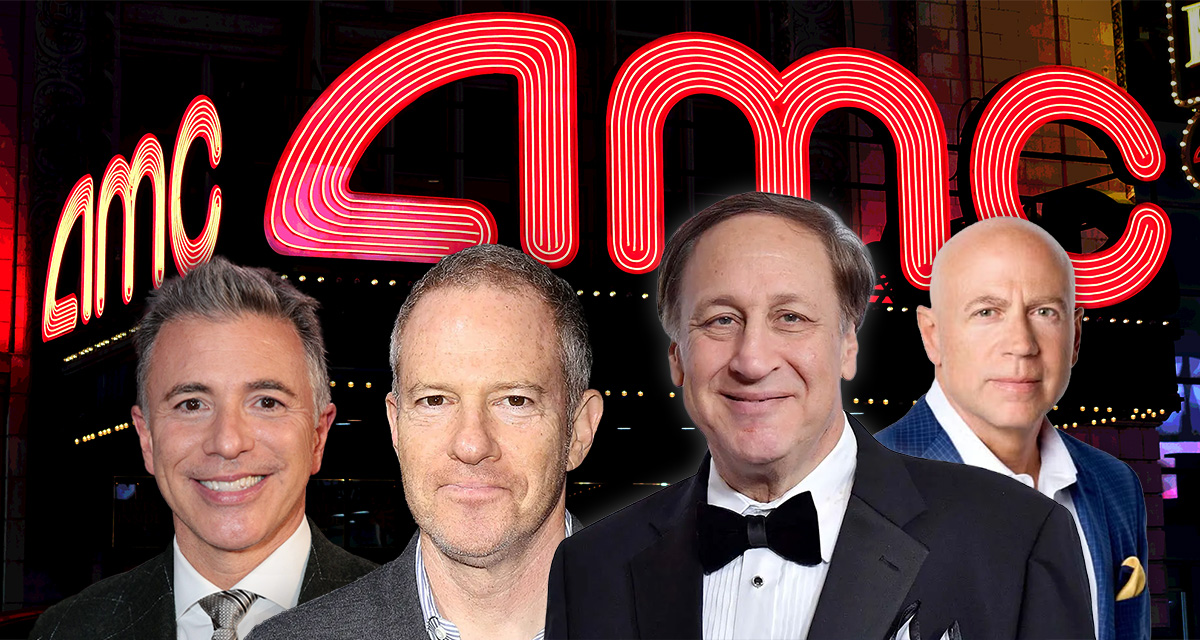
AMC Expands Its Distribution Ambitions With Leawood Films
AMC Entertainment is expanding its film distribution business with the creation of Leawood Films, a new company aimed at bringing more small and mid-budget movies to theaters. Rather than financing or developing films itself, Leawood will focus primarily on fully financed or completed projects that might otherwise struggle to secure meaningful theatrical distribution.
AMC Chairman and CEO Adam Aron said the rationale is straightforward. “Leawood Films is being created with a straightforward objective, given that substantial excess capacity exists in the movie theatre industry: to bring more movies to theatres.” Aron said even a few additional films each year would provide incremental revenue for AMC, its Odeon subsidiary in Europe and other exhibitors.
The company has assembled an experienced advisory team that includes former Warner Bros. Pictures Group chairman Toby Emmerich and former Walt Disney Studios marketing president Ricky Strauss. Veteran distribution executive Kyle Davies, who has left his position as President of Distribution at Bleecker Street, will lead distribution at Leawood Films. Variance Films is expected to assist with North American releases, while Piece of Magic Entertainment will work internationally.
Leawood plans to maintain theatrical windows of at least 45 days before PVOD and 90 days before SVOD. Filmmakers will generally retain ownership of their intellectual property and the majority of downstream revenue after theatrical release. No initial slate has been announced, with the first releases not expected until 2027 or 2028.
Despite some headlines suggesting AMC is newly entering film distribution, the exhibitor has been here before. AMC Theatres Distribution handled “Taylor Swift | The Eras Tour” and “Renaissance: A Film by Beyoncé” in 2023 and subsequent event releases. AMC is also a founding co-owner, with Regal and Cinemark, of Fathom Entertainment, which has grown into a significant specialty theatrical distributor.
That makes Leawood less AMC’s entry into distribution than an expansion of its ambitions in the business. The bigger question will be how other exhibitors respond as one of their largest competitors increasingly becomes a supplier of the films appearing on their screens.
Source: Celluloid Junkie
StudioCanal and TheaterEars Give Catalogue Cinema a New Theatrical Life
As exhibitors continue looking for programming that can turn a trip to the cinema into something audiences cannot replicate at home, StudioCanal and TheaterEars are taking two different approaches to the same opportunity: making catalogue titles feel like events again.
StudioCanal has launched StudioCanal Classics, a worldwide catalogue label built around its library of more than 18,000 films spanning 100 years of cinema. The company has invested nearly €25 million over the past seven years restoring almost 1,000 titles in 4K and says the new label will support theatrical releases across independent, repertory and mainstream cinemas around the world.
The initial theatrical slate demonstrates how broadly StudioCanal is thinking about catalogue exploitation. Michael Mann’s newly restored “Manhunter: The Final Cut” is receiving anniversary releases in the U.S. and UK, Guillermo del Toro’s “Pan’s Labyrinth” returns this fall in a new 4K restoration with 3D availability, and a Jacques Tati retrospective is headed to European theaters. A David Lynch collection is planned as part of the label’s 2027 slate.
Then there is “Terminator 2: Judgment Day,” which returned to cinemas for its 35th anniversary in 2D, 3D, 4DX and D-BOX. For U.S. screenings, TheaterEars added another reason for fans to revisit the film: the first theatrical availability of James Cameron and co-writer William Wisher’s original commentary track, previously confined to DVD and Blu-ray releases. Using TheaterEars’ Director’s Experience, moviegoers can listen through their own phones and headphones while the commentary remains synchronized with the film. No additional cinema hardware or ticket surcharge is required.
TheaterEars is simultaneously applying the concept to new releases. NEON’s “It Ends” launched with a newly recorded synchronized commentary from writer-director Alexander Ullom and producers Carrie Carusone and Evan Barber, available while the movie is still in its theatrical run.
For exhibitors, the larger opportunity goes beyond another round of anniversary screenings. With studios sitting on decades of recognizable IP, the back catalogue is increasingly looking less like an archive and more like another theatrical programming pipeline.
Source: Celluloid Junkie
UK Cinemas Move to Restrict Smart Glasses Over Piracy and Privacy Concerns
Cinema operators in the United Kingdom are beginning to restrict the use of camera-enabled smart glasses, including Meta’s increasingly popular AI eyewear, as the technology creates a new set of questions around film piracy, customer privacy and accessibility.
The UK Cinema Association (UKCA) said operators are aware of the increasing use of wearable technology such as smart glasses and “the extent to which these can provide benefits to those with specific access requirements.” At the same time, cinemas are “mindful of the issues around privacy and film piracy” created by the technology. As a result, UKCA says many operators are introducing policies to prohibit or restrict camera-enabled smart glasses in their venues.
Unlike someone holding up a smartphone during a screening, smart glasses can be difficult for cinema staff to spot. Current Meta models resemble conventional eyewear while incorporating cameras, microphones and hands-free recording capabilities, creating an obvious enforcement challenge for exhibitors attempting to prevent unauthorized recording.
The accessibility issue makes a blanket prohibition less straightforward. The same technology that could potentially be used to record copyrighted material may also provide meaningful assistance to guests with disabilities or other access needs. UKCA called this “clearly a developing area” and said it will continue working with its members to ensure their approach remains “relevant and proportionate.”
The issue is unlikely to remain confined to the UK. As camera-equipped eyewear becomes more commonplace, exhibitors around the world will need policies that protect copyrighted content and customer privacy without unnecessarily excluding guests who use wearable technology for accessibility. Deciding what is permitted inside an auditorium may ultimately prove easier than enforcing those rules. The industry has spent years learning how to deal with smartphones. Smart glasses present much the same problem, only this time the camera may be considerably harder to see.
Source: Fast Company
Marc Whitten to Succeed Kevin Yeaman as Dolby CEO
Dolby Laboratories is preparing for a major leadership transition, with Kevin Yeaman retiring after 17 years as CEO. He will be succeeded by veteran technology executive Marc Whitten, who has been named President, Chief Executive Officer and a member of Dolby’s Board of Directors. Yeaman will remain as an advisor during the transition.
Yeaman joined Dolby as Chief Financial Officer in 2005 and became CEO in 2009. His tenure coincided with the company’s expansion beyond its traditional audio roots, including the growth of Dolby Atmos, Dolby Vision and Dolby Cinema into major consumer and theatrical brands. Dolby Chairman Peter Gotcher credited Yeaman with helping lead the company through “the era of immersive audio and visual experiences.”
Whitten arrives with a very different résumé. Over more than three decades he has held senior roles at Microsoft, Amazon, Sonos, Unity, Cruise and Meta, working across entertainment, gaming, artificial intelligence and consumer technology. Among the products he helped develop or scale are Xbox, Xbox Live, Alexa, Kindle and Fire TV.
“Dolby has set the standard for how people experience sight and sound for decades and I believe the company’s greatest opportunities are still ahead,” Whitten said, pointing to the evolution of content, platforms and technology as opportunities to expand Dolby’s relevance.
For the cinema industry, the change is worth watching. Dolby remains one of theatrical exhibition’s most influential technology companies through Dolby Atmos, Dolby Vision and Dolby Cinema, but its business increasingly extends far beyond the auditorium. Cinema also serves as a highly visible showcase for technologies whose commercial reach stretches across streaming platforms, televisions, mobile devices and other consumer products.
After 17 years under Yeaman, the question is not whether Dolby will remain important to cinemas, but how important cinemas will remain to Dolby as Whitten shapes its next generation of technology and growth.
Source: Celluloid Junkie
Record Turnout for CICAE’s Arthouse Cinema Training in Berlin
The 23rd edition of CICAE’s Arthouse Cinema Training concluded in Berlin with a record 60 participants from 25 countries, bringing together a new generation of independent cinema operators, programmers and managers for a week focused on the business and future of arthouse exhibition.
Held from August 24–30, the program featured more than 30 speakers and covered current issues facing arthouse cinemas, with participants exchanging ideas on programming, management and audience development. At the center of the training was the development of a business plan, created in small groups over the course of the week and evaluated by a team of international tutors.
This year’s tutors came from Spain, the Netherlands, Poland, Germany, the United States and Rwanda, reflecting the increasingly international nature of the program. Participants also visited several Berlin cinemas, including the newly renovated Kino International, Sinema Transtopia and Arsenal. The training was organized by the Confédération Internationale des Cinémas d’Art et d’Essai (CICAE) in cooperation with AG Kino-Gilde, with support from Medienboard Berlin-Brandenburg and the FFA.
For an arthouse sector often characterized by small organizations operating with limited resources, the record participation is encouraging. More importantly, the emphasis on business planning and practical cinema management underscores that sustaining independent exhibition requires more than good programming. It also requires giving the next generation of operators the tools to make those cinemas viable.
Source: Film New Europe
Sponsor Spotlight

Join the Conversation Shaping Cinema
After a brief summer break, the CJ Cinema Summit is returning with a new season of live conversations featuring the executives, operators, technology leaders and industry experts shaping theatrical exhibition.
From audience behavior and programming to premium formats, food and beverage, technology, distribution and business strategy, upcoming sessions will dig into the issues that matter most to the global cinema business.

Celluloid Junkie is the leading online resource dedicated to the global film and cinema business. The Marquee is our newsletter focused on motion picture exhibition; keeping industry professionals informed of important news, the latest trends and insightful analysis