


- Exhibitors
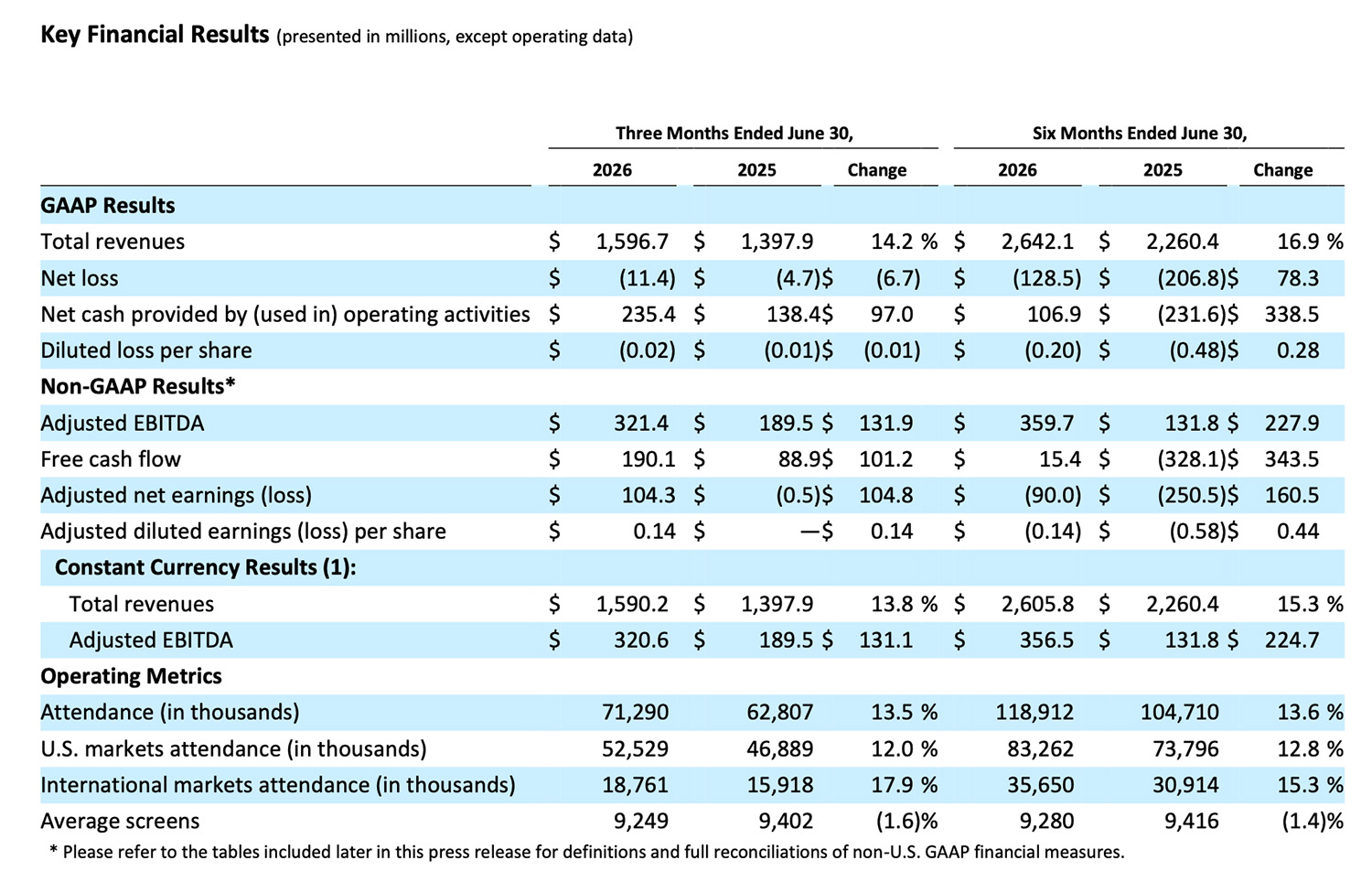
AMC Theatres posted the strongest quarterly revenue and Adjusted EBITDA in its 106-year history, as a healthier film slate finally gave the world’s largest cinema operator something more substantial to celebrate than another creatively engineered refinancing. Second-quarter revenue rose 14.2% to USD USD $1.60 billion, while Adjusted EBITDA surged 69.6% to $321.4 million, crossing USD $300 million for the first time. Attendance increased 13.5% to 71.3 million patrons, free cash flow more than doubled to USD $190.1 million, and AMC handily beat earnings expectations. However, its GAAP net loss widened to USD $11.4 million, while the company still carried a USD $1.45 billion stockholders’ deficit at the end of the quarter.
The quarter also demonstrated just how much operating leverage remains buried inside the exhibition business. According to CFO Sean Vivin, approximately USD $200 million of additional revenue produced USD $131.9 million in incremental Adjusted EBITDA, an impressive 66% flow-through that lifted AMC’s margin from 13.6% to 20.1%. Premium formats continue doing much of the heavy lifting: premium and XL auditoriums represent only about 8% of AMC’s screens but generated more than half of the company’s ticket revenue during the opening weekend of “The Odyssey.” Fewer screens, better screens appears to be more than a slogan.
AMC’s financial sequel remains less tidy. The company extended maturities, converted USD $155.8 million of notes into shares and launched equity offerings totaling USD $350 million, moves that will eliminate near-term debt maturities but further dilute shareholders. Vivin acknowledged that leverage below 6.5 times EBITDA is “not our target,” with AMC ultimately aiming for approximately 3.0 times. The record quarter proves AMC can generate serious cash when the movies arrive. It does not yet prove that the company has escaped its debt-heavy third act, but for once, the plot is moving in the right direction.