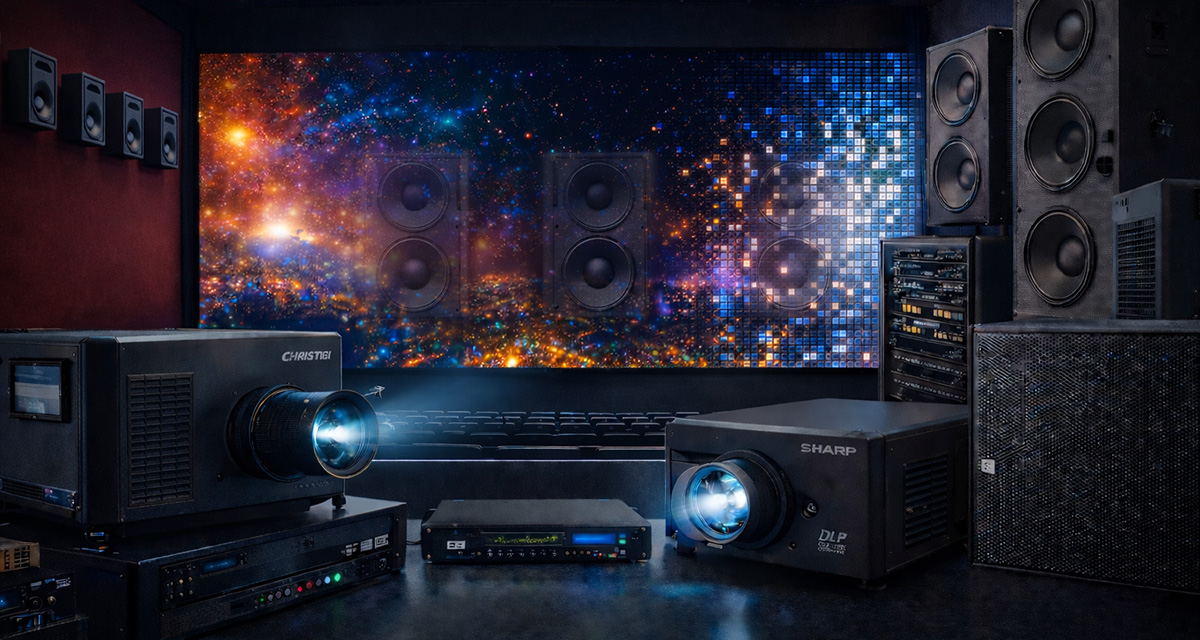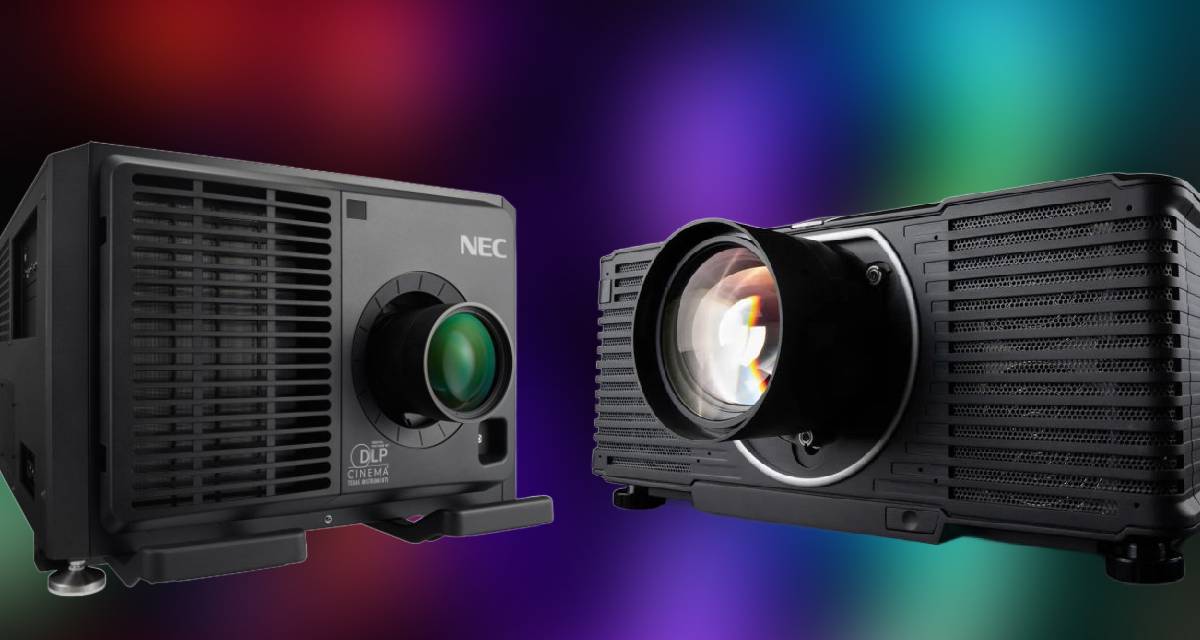
Who said recessions can’t be good for something? After spending the last two years lugging countless 4K projectors around the world to show them off to exhibitors Sony now finds itself with an inventory of B-stock units they would like to unload. Last week the manufacturer sent out an email to industry executives and equipment vendors announcing a a 50% off promotion on its SXRD 4K projectors. According to the email all of the units that are up for grabs are completely refurbished and carry the same warranty and service options available on A-stock units.
So if you find yourself with a spare USD $34,000 and have a movie theatre you have always wanted to convert to digital, you can pick up Sony’s low-end SRX-R105. The top of the line model, the SRX-S110 projects 10,000 lumen and is going for a mere USD $51,000. Heck at those prices you may as well pick one up for your home so you can enjoy the upcoming Academy Awards telecast in all its 4K glory!
Read More »
Popularity: 21% [?]

Sometimes rebound relationships can really pay off. At least that’s what Walt Disney Studios is hoping now that it has agreed to enter a long-term agreement with DreamWorks to distribute upwards of six films a year starting in 2010. The deal was put together very quietly over the last several weeks as DreamWorks simultaneously tried to negotiate an agreement with Universal Pictures which had originally been announced back in October of last year. That deal fell apart late last week when Universal and DreamWorks could not agree on a set of terms and as Universal reportedly discovered DreamWorks was negotiating with Disney. When speaking with The Hollywood Reporter on Saturday the studio’s official line was:
“Universal Pictures has ended discussions with DreamWorks for a distribution agreement. Over the past several weeks DreamWorks has demanded material changes to previously agreed upon terms. It is clear that DreamWorks’ needs and Universal’s business interests are no longer in alignment. We wish them luck in their pursuit of funding and distribution of their future endeavors.????”
What a few of those “material changes” amount to says a lot about theatrical motion picture distribution and just where a studio realizes a profit when releasing a film. The deal that DreamWorks was originally negotiating with Universal was a straight distribution partnership. Such deals will usually see the production company paying for the production of a film while the studio pays for film prints, marketing and advertising in exchange for recouping costs and a share of the box office gross. That share can range anywhere from 8% to 15% of the gross – not the net – receipts. Read More »
Popularity: 30% [?]
One of the messages emerging from the recently concluded iDIFF conference in Paris – other than the fact that French penchant for strikes remains undiminished in the current economic downturn – is that active 3D glasses are still going strong in continental Europe, which is holding out against the RealD hegemony of US and UK. This is good news for market leader XpanD (nee NuVision), which had just launched its latest generation of glasses, called X101 Series.
From the press release:
XpanD’s new X101 Seriesof 3D active glassesrepresent several months of comprehensive R&D, engineering and design to equip them with state-of-the-art technical features and a streamlined, stylish appearance to optimize guest experience, comfort and to ease exhibitor operations. The core 3D viewing technology is the company’s patented “pi-cell” system, in which a specialized, fast-switching liquid crystal cell provides rapid, stereoscopic shutter action to deliver alternate right- and left-eye images.
New and upgraded features of the redesign were added with both exhibitors and their customers in mind. They include rugged construction with built-in flex points and replaceable batteries that extend product life, a lightweight and stylish form factor that is comfortable even when worn over eyeglasses, a modular design to accommodate both adults and children, environmentally friendly diodes, and a power-saving auto on/off mechanism. The light-efficient technology delivers the brightest possible picture and saves projector lamp power. The glasses also feature long-range IR signal activation, compatibility with DLP cinema chips, and a choice of two elective anti-theft systems.
Read that in reverse and you get a litany of the problems that have bedeviled active glasses: short life span batteries, one-size-don’t-fit-all, IR signal reception problems, ugly bulky look and high cost for shrinkage (loss/theft) is what has weighed the scale down, that was boosted on the other end by no need to install silver screen, no need for complicated gears in front of the projector, ability to move between different auditoria and, most importantly to some exhibitor, no need to pay ongoing licence fees to RealD. The latter point in particular has been a sore spot in discussions between RealD and some European exhibitors.
Read More »
Popularity: 16% [?]

As if the recent quarterly earnings reports from Warner Bros, Walt Disney and News Corp were not proof enough that the entertainment industry is far from recession proof, news is out that Dolby Laboratories will be closing down its UK manufacturing operation. Some 60 people will lose their jobs from the shuttering of their UK manufacturing base. From BBC news website:
The company, which provides products for the cinema industry, is closing the manufacturing arm of its UK operation in Wootton Bassett in April.
It blamed “changing market conditions” for its decision to close the site which employs 170 people.
Dolby says other business activities at the site will be not be affected.
This is a bitter blow for a company that started in the UK and whose British operation still sees itself as the carrier of founder Ray Dolby’s torch, even when the man himself moved back to the UK and most of the company’s activities is out of San Francisco these days. But it would not be true Brit grit if they did not put a brave face on the decision and declared in their recent earning’s statement: “Having concluded a comprehensive consultation process with our UK employees, the proposal to close our UK manufacturing operation at Wootton Bassett and consolidate manufacturing operations at a single facility has been accepted.”
Read More »
Popularity: 44% [?]
These days, with the global financial meltdown in full swing, any announcement about a rollout of digital cinema installations is big news. Just ask Arts Alliance Media. The U.K. based integrator had a press release picked up by several trade publications that announced an agreement to install and support d-cinema equipment in 20 independently run theatres in the Netherlands. AAM negotiated the deal with Amsterdam Booking Company, a film buying firm which represents the theatres.
While the agreement only covers 68 screens, or 1o% of the screens in the Netherlands, it’s notable for being the first rollout of digital cinema kit in Holland to be funded by virtual print fees provided by the major Hollywood studios. Until now, d-cinema installations in the Netherlands have been one-offs to facilitate 3D releases. This fact didn’t escape ABC’s owner Paul Visser when he provided a quote for the press release about the deal:
“We see clearly what the future of cinema is going to be – digital, 3-D and live events. AAM is the best partner to make that happen and enable us to be the first widespread movers in the Netherlands.”
Read More »
Popularity: 26% [?]
As the entire world continues to experience a global economic meltdown, those of us living in North America have apparently decided to throw some financial support behind one of our leading exports; movies. Box office tracker Media By Numbers is reporting that January’s box office figures top out at USD $1.03 billion, up 19% from the January of last year when a measly USD $867.2 million was taken in. This is the first time on record. . . or ever. . . that box office revenue has surpassed USD $1 billion in January.
These figures only account for movie tickets, not concessions sold in theatres, and of course there will be skeptics who claim that the price of a movie ticket rose from one year to the next which accounts for the revenue increase. According to Media By Numbers however, the average price of a ticket only rose 1.5% from USD $7.18 to USD $7.29, while the number of tickets sold to moviegoers rose from 121 million in January of 2008 to 141 million this year. That’s an increase of 16%. Go figure, one of the few industries that can report an increase in revenue and customers in these troubled times is the movie business.
Read More »
Popularity: 20% [?]

From the moment Dreamworks Animation first announced that it would run a 3D trailer for it’s March release “Monsters. vs. Aliens” during Super Bowl XLIII everyone working in the entertainment industry took notice, especially those in distribution and exhibition. Now that the big game is over and sports pundits have begun recapping every play, marketing experts and the public at large will spend the next several days discussing which Super Bowl commercials worked, which were forgettable and which were downright embarrassing. This year, Dreamworks’ 1:30 second trailer for “Monsters vs. Aliens” will definitely be one of the ads which is hotly debated in regards to whether it helped or hindered the film it was meant to promote, specifically because it aired in 3D.
Certainly the Super Bowl telecast is no stranger to advertising stunts, though not all of them turnout as expected. (remember Budweiser’s Bud Bowl?). Over the years, giving moviegoers a first glimpse of upcoming tent pole releases during the Super Bowl has become an important part of many blockbusters’ marketing campaigns, not to mention one of the most expensive parts. Ads for this years Super Bowl cost USD $3 million for a 30 second spot.
Nobody needs to be told, at least nobody in the United States, that the Super Bowl has become a premiere event for launching advertising campaigns. In fact, it may be the single most important event in the North American ad world each year. During the last four decades numerous memorable television spots first aired during the Super Bowl. In 1973 Master Lock set the bar by firing a bullet through it’s product. Coca-Cola, a perennial Super Bowl advertiser had a huge hit with it’s spot featuring hall-of-famer Mean Joe Green in 1979. Beer commercials, such as Budweiser’s “True” spots, have also been a big hit through years. But by far, the most referenced Super Bowl commercial of all time was Apple’s 1984 ad to introduce the Macintosh computer. The spot, which first aired 25 years ago, is still deemed one of the most successful ads to ever run during the telecast, even though it never even showed the product.
Read More »
Popularity: 28% [?]